

Hisar Intercontinental Hospital
JCI-accredited multi-specialty hospital in Ümraniye with a dedicated orthopedics and traumatology unit
- Founded
- 2005
- Theatres
- 7
Key takeaways
- 1Hisar Intercontinental Hospital is a private multi-specialty hospital in Ümraniye, on the Anatolian side of Istanbul, and its website says it opened in 2005.
- 2The hospital states a building of 8 floors with 7 operating rooms and 33 intensive care beds; its Turkish and English pages give different bed and clinic counts, so confirm current capacity.
- 3Its website says it holds JCI accreditation, renewed for the sixth time after an inspection on 6-10 May 2024, with a certificate valid until May 2027.
- 4The orthopedics and traumatology department lists eight units, including arthroscopic surgery, joint prostheses, a spine surgery centre, sports traumatology and trauma and deformity care.
- 5The international office assigns each patient a dedicated recovery specialist, and the English pages list interpreting, airport transfers and help with admission and follow-up.
- 6Emergencies and acute trauma should always be treated locally first; a trip to Istanbul suits stable or planned patients only.
About Hisar Intercontinental Hospital
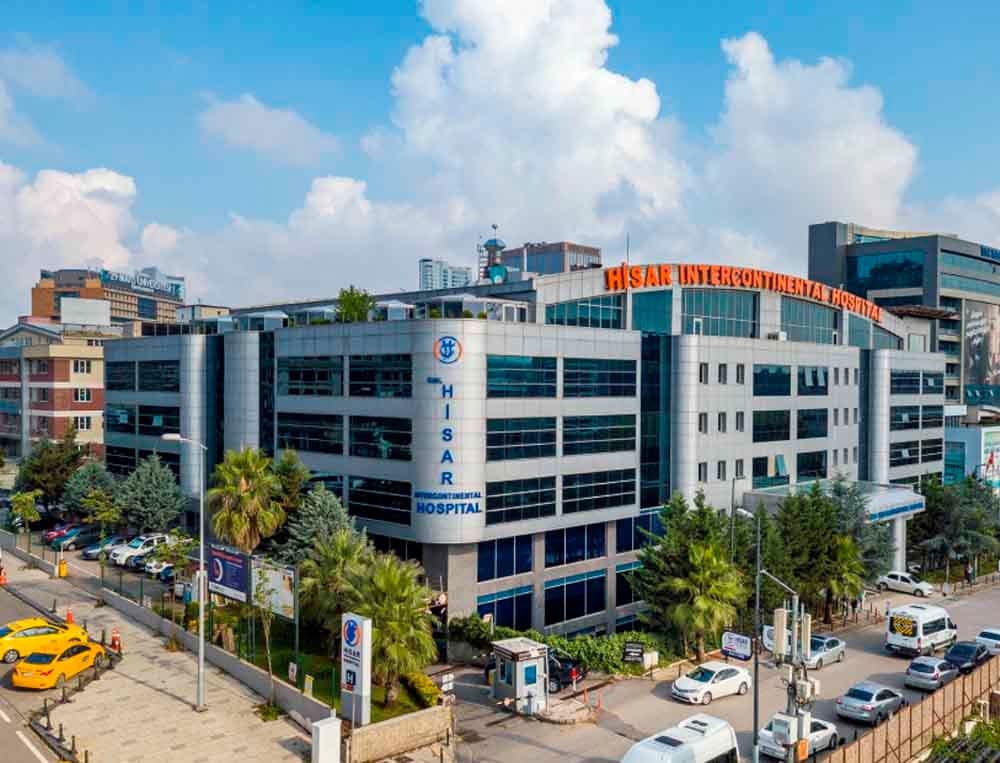
Hisar Intercontinental Hospital is a private, multi-specialty hospital in the Ümraniye district of Istanbul, on the Anatolian side of the city. The hospital's website says it began operating in 2005 and describes itself as a reference hospital for patients from turkey and from abroad. You may also see it called Hisar Hospital Istanbul; the site itself uses Hisar Hospital Intercontinental. For an international orthopedic patient, it is a general hospital with a dedicated orthopedics and traumatology department rather than a stand-alone orthopedic clinic.
The main building stands on Site Yolu Street in the Yamanevler quarter. According to the hospital's pages, the building has 8 floors, 7 operating rooms and 33 intensive care beds. Other figures, such as bed capacity, floor area and the number of clinics, differ between its Turkish and English pages, so we do not quote them. A coordinator can confirm current numbers before you plan travel.
What the hospital says about itself
The site presents Hisar Intercontinental Hospital as a place where many departments work under one roof. Besides orthopedics and spinal health, it names cardiology, gynaecology, oncology, hematology and neuroscience among its fields, and the English pages also mention bariatric surgery, dental treatment, IVF and health check-ups. A broad hospital can be useful for orthopedic patients who also have heart, diabetes or other conditions that need review before anaesthesia.
The hospital also runs a second site, the Çamlıca branch, on Cengiz Topel Street in Ümraniye. This page concerns the main hospital on Site Yolu Street, which is where the orthopedics and traumatology department is described.
The orthopedics and traumatology department
The Hisar Intercontinental Hospital orthopedics page says the department deals with diseases of bones, joints and muscles, covering the arms, legs, spine and pelvis, including tumours of the musculoskeletal system. It lists eight units. They are arthroscopic surgery, adult reconstructive surgery with joint prostheses, shock wave therapy, a page on back pain in young adults and a spine surgery centre. The rest are sports traumatology and joint surgery, trauma and deformity care, and orthopedic cancers.
The same page names non-surgical tools as well, such as medication, physiotherapy and rehabilitation, joint injections and casting, and its article list also covers PRP and stem cell treatment for the knee. Which of these suits you is a medical decision for the treating surgeon after reviewing your scans.
Why an international patient might consider it
Three published facts stand out for Hisar Intercontinental Hospital. First, the hospital states JCI accreditation, which is an international quality framework many overseas patients look for. Second, it runs an international patient office with English pages and a dedicated recovery specialist for each overseas patient. Third, its location in Ümraniye places it on the Anatolian side, which some patients prefer for quieter recovery stays than the busy historic centre.
Orthopedics Abroad does not own or run Hisar Intercontinental Hospital. The hospital is available through Orthopedics Abroad's network, which means we can help you assemble records, compare it with other options in Istanbul and ask the hospital's coordinators the right questions. You can browse the wider hospital directory or read how orthopedic care in turkey is organised.
No page can replace a surgeon's opinion. If you have a sudden injury, a hot swollen joint, loss of limb feeling or loss of bladder control, seek emergency care where you live. Emergencies and acute trauma are treated locally first. Travel for surgery is for stable or planned cases once your own doctors agree.
Hisar Intercontinental Hospital is a general hospital whose orthopedic unit relies on the departments around it: imaging, anaesthesia, intensive care, pharmacy systems and rehabilitation. This section describes the wider hospital as its website presents it, so that you understand the setting in which an orthopedic operation would take place.
History and size
The website gives 2005 as the year the hospital started serving patients. It also says the hospital was accredited by JCI in its first year and has renewed that accreditation since. The hospital describes a building of 8 floors and lists 7 operating rooms. Its Turkish and English pages disagree on bed capacity, usable floor area and the number of clinics. We leave those figures out. Ask for current numbers in writing.
The English pages do not publish a surgeon headcount for the whole hospital. The orthopedics department page lists its specialists by name and title. We do not repeat names here. For orthopedic surgery in Istanbul at this hospital, ask the coordinator which specialist would handle your case and how often they perform your specific procedure.
Imaging and diagnostics
For orthopedics, imaging often decides the plan. The hospital's about page mentions a 640-detector CT system, described as an Aquilion One, and a 3 Tesla MRI unit with a video system, described as making scanning more comfortable. These details come from the hospital's own description. If you already have scans, the team will normally want the original image files and not only the written reports.
Medication safety and special units
The hospital says it uses a fingerprint-activated computerised medication cabinet system known as PYXIS, a way of controlling who can take which medicine and when. It also lists a hyperbaric oxygen centre. A hyperbaric unit is not part of routine joint replacement, but it shows the breadth of the hospital's services.
Intensive care
The hospital states 33 intensive care beds. For orthopedic patients this matters mostly when surgery is complex, when the patient is older, or when heart and lung conditions raise the risk of major surgery. Ask in advance whether a planned operation would normally involve an intensive care stay.
Quality and safety systems
The JCI page says the hospital's latest routine three-year inspection took place from 6 to 10 May 2024. It calls this the sixth renewal and says the certificate remains valid until May 2027. The same page says the hospital also works within the national healthcare quality standards set by the turkey Ministry of Health. JCI describes an accreditation as a snapshot of standards at inspection time, so patients should ask for the current certificate before booking.
Digital services
The website offers online appointment booking, an electronic results platform, an ask-the-doctor feature and online doctor consultations. For a patient abroad, the results platform and online consultations can make pre-operative review and later follow-up easier. Confirm the exact process for foreign patients with the international office.
Where it sits in Istanbul
The Ümraniye hospital stands in Ümraniye, a large residential and business district on the Anatolian side. The site says the hospital is around 20 minutes from Sabiha Gökçen International Airport and from the Bosphorus. Journey times depend on traffic, which varies strongly by hour in Istanbul. Treat this as a general guide and ask the coordinator for a realistic estimate for your arrival time.
To understand how this hospital sits within the wider city, read the Istanbul city page and the guide to why patients choose turkey.
Photos of Hisar Intercontinental Hospital
Orthopedics and traumatology at Hisar Intercontinental Hospital
The Hisar Intercontinental Hospital orthopedics unit is an orthopedic hospital Istanbul patients can reach on the Anatolian side, and it covers the musculoskeletal system from the spine to the limbs. Its department page organises the work into eight named units. This section explains each in plain terms and links to the matching procedure guides where the hospital's own wording clearly supports it.
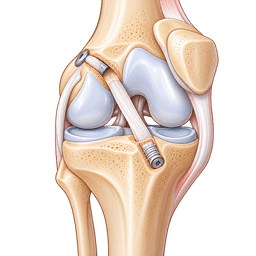
Arthroscopic surgery
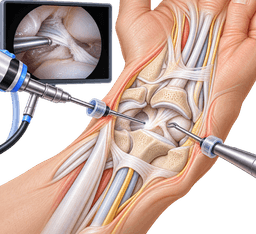
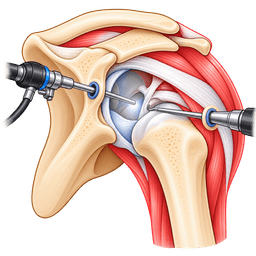
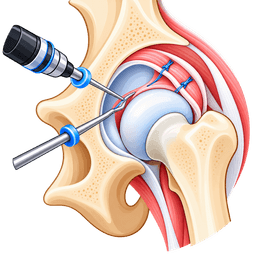
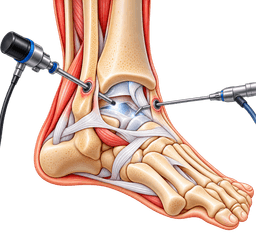
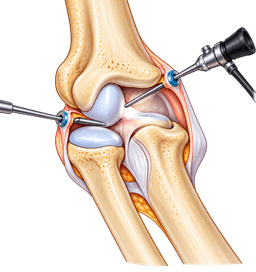
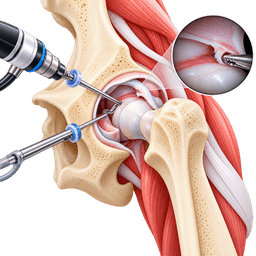
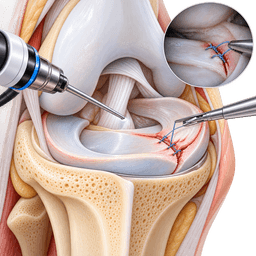
The department describes arthroscopic surgery as minimally invasive treatment of joint injuries and certain joint problems through small incisions with a camera. The hospital's pages name the knee as the most common site, and also describe arthroscopy of the shoulder, ankle and hip, with the elbow and wrist mentioned as further joints. You can read about knee arthroscopy, shoulder arthroscopy, ankle arthroscopy and hip arthroscopy. Ask which joints your surgeon performs most often.
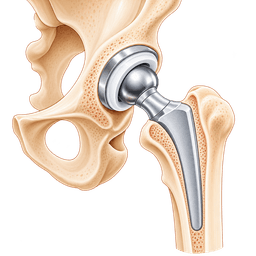
Adult reconstructive surgery and joint prostheses
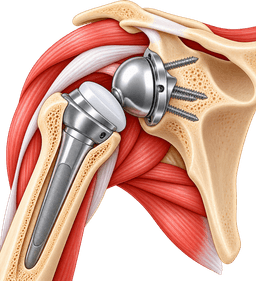
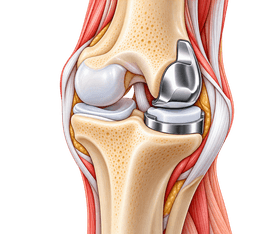
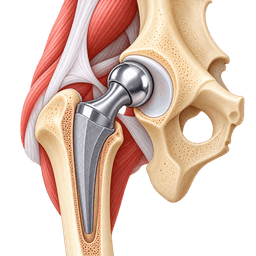
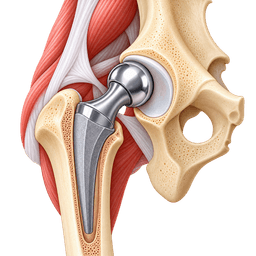
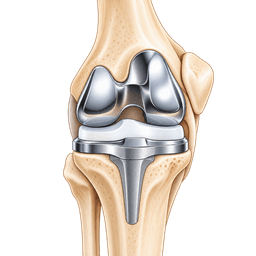
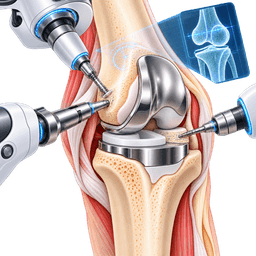
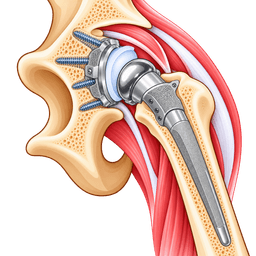
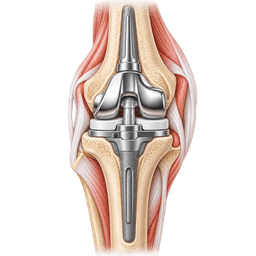
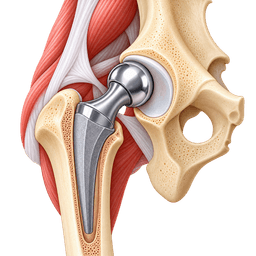
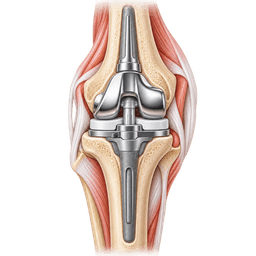
This unit covers reconstruction and the placement of joint prostheses in adults, and its page describes prostheses mainly for the hip and knee. For worn joints, the usual operations are total knee replacement and total hip replacement. Patients with advanced knee osteoarthritis often come to such a unit when injections and physiotherapy no longer control pain. The site does not publish implant brands or whether robotic systems are used, so these questions belong on your checklist.
Sports traumatology and joint surgery
The sports unit deals with injuries to joints, muscles and tendons that come from sport or activity. The hospital's pages say knee arthroscopy is used for meniscus tears and anterior cruciate ligament injuries. Related guides cover an ACL tear, ACL reconstruction and meniscus repair. Confirm with the surgeon that your exact case falls within their routine work.
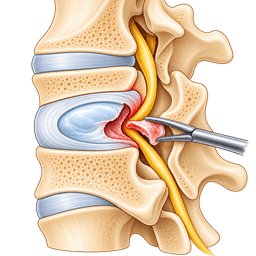
Spine surgery centre
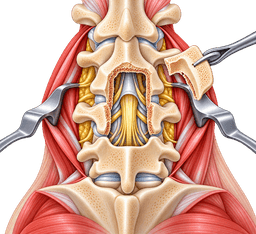
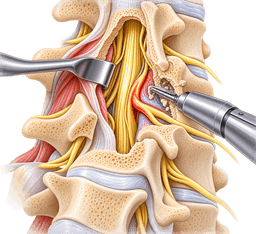
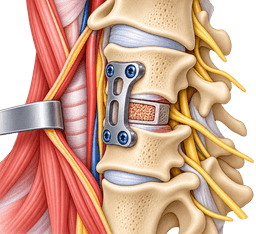
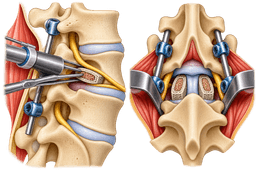
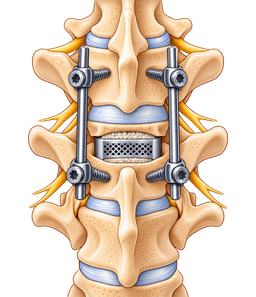
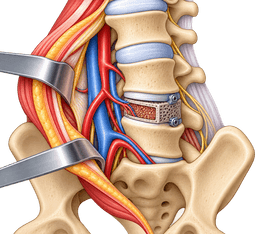
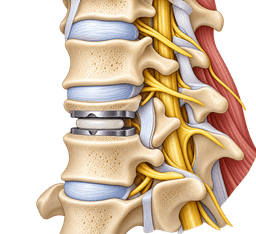
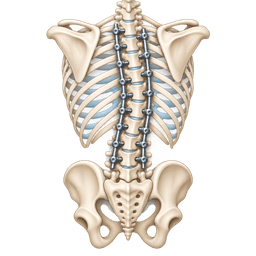
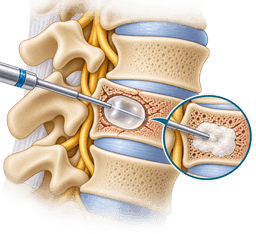
The hospital's spine surgery centre page describes care for spinal curvature such as scoliosis and kyphosis. It also names slipped vertebrae, spinal fractures and dislocations, infections, tumours and degenerative narrowing of the spinal canal. It also mentions vertebroplasty and balloon kyphoplasty for osteoporotic fractures, and monitoring of the spinal cord during operations. Related guides include herniated disc, spinal stenosis and scoliosis, with procedure pages on scoliosis surgery and kyphoplasty. The site does not say how many cases the team handles, so ask for experience with your exact diagnosis.
Trauma and deformity
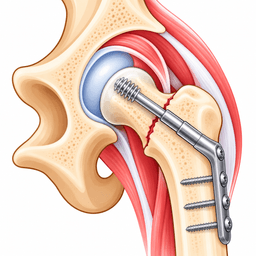
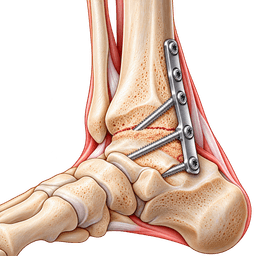
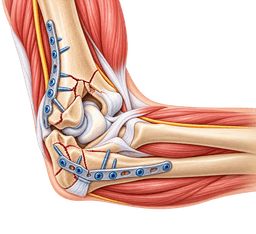
This unit covers fractures, dislocations and deformities that follow injury. The hospital describes a trauma team working 24 hours a day. It names external fixator techniques, including the Ilizarov method for limb lengthening and deformity correction. It also names treatment of bones that fail to heal and care of chronic bone infection. Its article list also covers hip fracture treatment; see our guide to hip fracture surgery. However, fresh fractures are emergencies. If you break a bone abroad or at home, you should be treated where it happened, and later planned corrective surgery can be considered elsewhere.
Shock wave therapy, back pain and orthopedic oncology
The department also lists extracorporeal shock wave therapy as a non-surgical option. The hospital describes it for problems such as slow-healing fractures, heel spurs, tennis elbow and shoulder calcification. It also has a section on back pain in young adults and a unit for bone tumours. Tumour care is a specialist field and usually needs a full oncology team; ask how cases are reviewed.
Non-surgical treatment
The department says treatment can include medication, physical therapy and rehabilitation, joint injections with steroid or hyaluronic acid and casting, as well as surgery. Its article list also covers PRP and knee stem cell treatment. Evidence for injections like these varies by condition, so ask your surgeon what benefit to expect.
Orthopedic services at a glance
| Unit named by the hospital | What it covers (paraphrased) | Related guide |
|---|---|---|
| Arthroscopic surgery | Keyhole treatment of joint injuries | Knee arthroscopy |
| Adult reconstruction and joint prostheses | Joint replacement and reconstruction | Total hip replacement |
| Spine surgery centre | Deformity, fractures, stenosis, tumours | Scoliosis surgery |
| Sports traumatology | Joint, muscle and tendon injuries | ACL reconstruction |
| Trauma and deformity | Fractures, dislocations, deformities | Hip fracture surgery |
| Shock wave therapy | Non-surgical orthopedic option | Ask the unit |
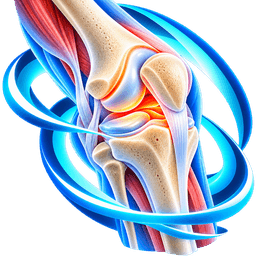
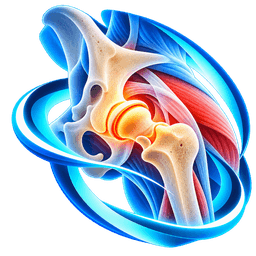
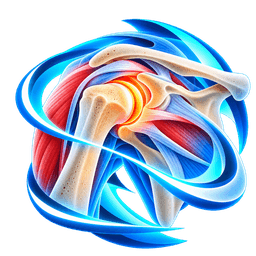
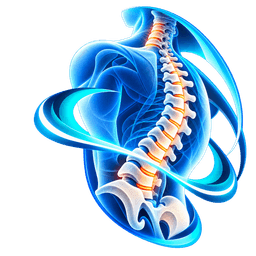
For body-area overviews, see our pages on the knee, hip, shoulder, foot and ankle and spine. To understand costs, read the total knee replacement cost guide or the total hip replacement cost guide; we do not quote figures on hospital pages.
Hisar Intercontinental Hospital: accreditations, technology and facilities
Accreditations
- The hospital's website says it holds JCI (Joint Commission International) accreditation, achieved in its first year and renewed for the sixth time.
- The most recent routine JCI inspection described on the site took place on 6-10 May 2024, and the certificate is stated as valid until May 2027.
- The hospital says it also works within the Ministry of Health's national healthcare quality standards.
- Ask the coordinator for a copy of the current certificates before you travel, because validity dates change.
Technology
- A 640-detector CT scanner, described by the hospital as an Aquilion One system.
- A 3 Tesla MRI unit with a video system for patient comfort.
- Arthroscopic (minimally invasive) techniques for joint surgery.
- Extracorporeal shock wave therapy for suitable orthopedic conditions.
- Spinal cord monitoring during spine operations, according to the spine centre page.
- An electronic results platform and online doctor consultations.
Facilities
- A building of 8 floors, according to the hospital's about pages.
- 7 operating rooms, according to the hospital's about pages.
- 33 intensive care beds.
- Suite rooms and large waiting and social areas, as described on the about page.
- A hyperbaric oxygen centre.
- A computerised, fingerprint-activated medication system called PYXIS.
- A second site, the Çamlıca branch, also in Ümraniye.
International patient services
- A dedicated recovery specialist for each international patient, from first enquiry to follow-up, according to the hospital, who is described as sharing the patient's language and culture.
- Interpreter and translation services; the website itself is offered in several languages.
- Airport transfers with a greeting service, and air and ground ambulance services.
- Accommodation advice and reservations; the site lists contracted hotels near the hospital.
- Help with admission and discharge, plus communication with insurers and payment arrangements.
- Second opinions and telemedicine consultations.
Orthopedic procedures available at Hisar Intercontinental Hospital
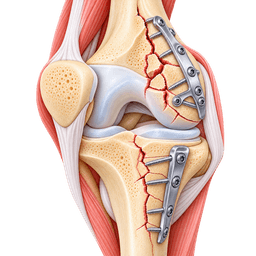
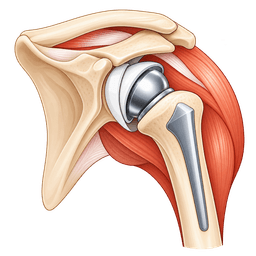
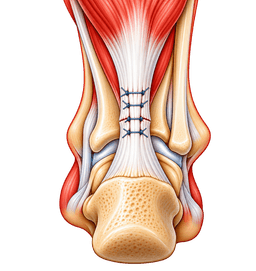
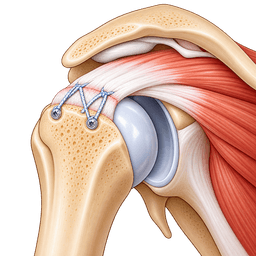
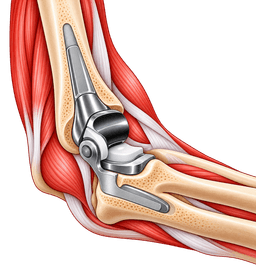
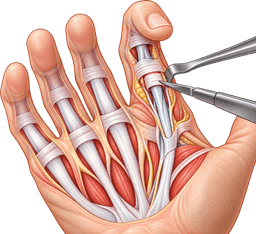
61 procedures listed from the hospital's own pages. Hover to pause, select one to read about it.
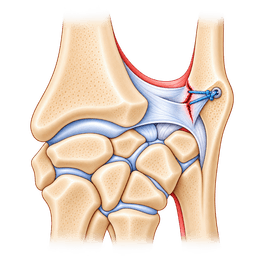
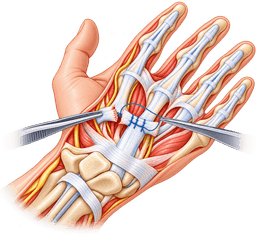
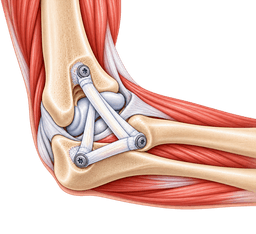
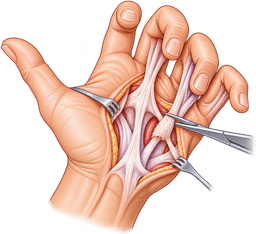
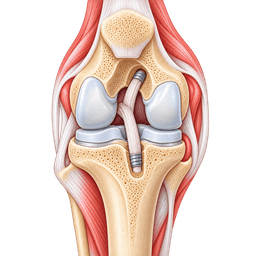
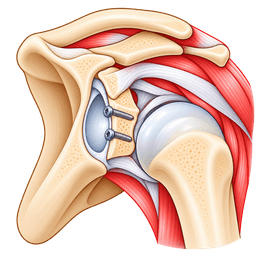
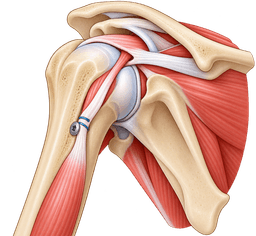
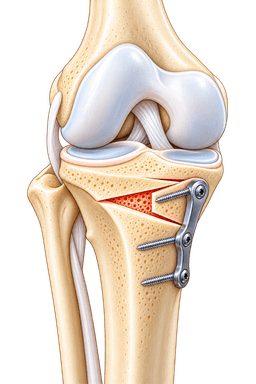
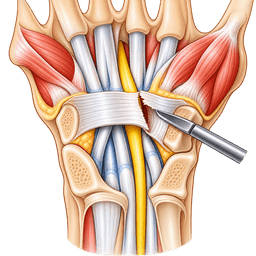
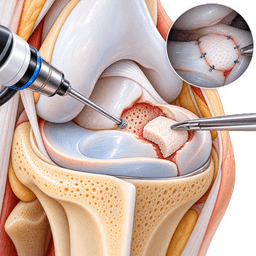
- Carpal Tunnel Release
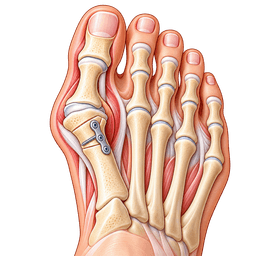
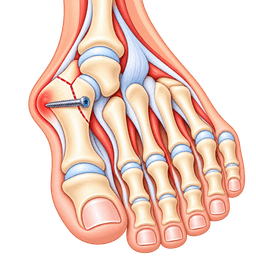
- Bunion Surgery
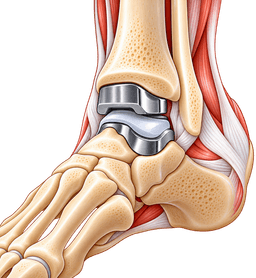
- Total Ankle Replacement
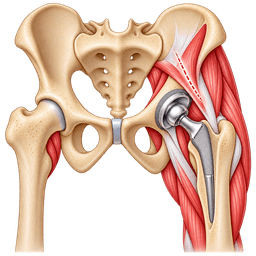
- Anterior Hip Replacement
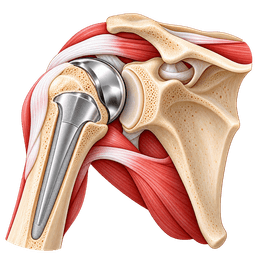
- Partial Shoulder Replacement
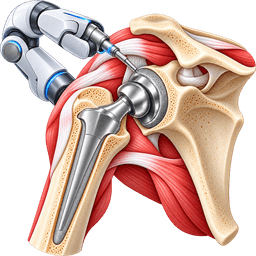
- Robotic Hip Replacement
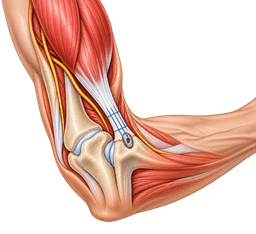
- Distal Biceps Repair
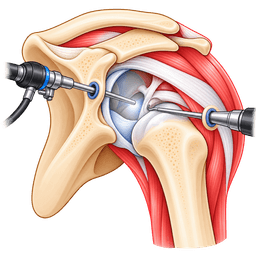
- Shoulder Arthroscopy
- Knee Arthroscopy
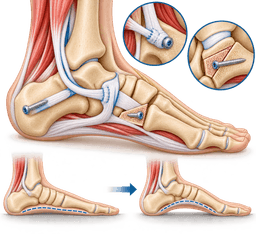
- Flatfoot Reconstruction
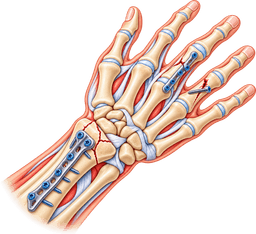
- Hand / Wrist Fracture Surgery
- Forefoot Surgery
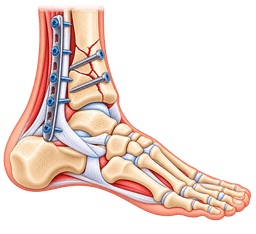
- Foot & Ankle Fracture Surgery
- Cartilage Restoration
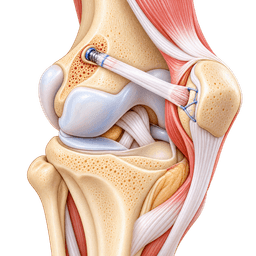
- MPFL Reconstruction
International patients at Hisar Intercontinental Hospital
Hisar Intercontinental Hospital runs an international patient office that, according to its English pages, assigns a dedicated recovery specialist to each overseas patient. This section describes what the hospital says it offers and how the process usually works when you use Orthopedics Abroad to organise the steps around it.
What the hospital states
The hospital's international pages list scheduling of appointments, airport transfers with a greeting service, air and ground ambulance transport, interpreting, help with hotels, guidance through admission and discharge, contact with health insurers, payment arrangements, second opinions, telemedicine consultations and follow-up after discharge. It also says its recovery specialists reply to every enquiry within 24 hours after the initial medical reports have been reviewed. We have not tested these services ourselves, so confirm each one in writing.
How the process usually runs
Most planned orthopedic journeys follow the same path. First, you share your diagnosis, scans and medical history. Our medical record review guide lists what is useful. Second, the hospital's surgeons review the file and tell you whether surgery is advisable, which operation they suggest and what they need to see in person. Third, you plan travel, using the travel and accommodation guide and the treatment planning guide.
On arrival, the hospital handles registration and tests. Our hospital admission guide explains the usual steps. After surgery, the team plans rehabilitation, and our follow-up guide explains how to stay in touch with your home physician once you return.
What to organise before you travel
| Item | Why it matters | Who helps |
|---|---|---|
| Scans and reports (MRI, CT, X-ray files) | The surgeon needs the originals to decide the plan | You, with our coordinators |
| Medication list and allergies | Needed for anaesthesia and safety checks | Your home doctor |
| Written surgical plan and implant details | Useful for later checks at home | Hospital coordinator |
| Travel dates and companion | Allows time for tests, surgery and early recovery | You and the coordinator |
| Insurance and payment arrangements | Clarifies what is covered before admission | Hospital office |
| Follow-up plan with a local physician | Wound checks and rehabilitation after you fly home | You and your home team |
Honest limits
The hospital's public pages do not publish the number of orthopedic operations performed, implant brands, infection rates or outcomes, and we have not invented any. Language support is listed, but ask whether your surgeon speaks your language directly or through an interpreter. Flying after surgery has its own rules, so read our guide on flying after surgery and plan a companion using the companion guide.
When you are ready, send your records through the quote request form. We pass your file to the hospital and report back what its team says; we do not promise a result or a date.
Is Hisar Intercontinental Hospital right for your orthopedic surgery?
Hisar Intercontinental Hospital may suit adults with planned orthopedic problems who want a JCI-accredited, multi-specialty hospital on Istanbul's Anatolian side, with an international office and a stated range of orthopedic units. It is not a ranking claim, and it will not suit every case. This section lists the points worth checking before you decide.
Patients who may find it relevant
People looking at joint replacement Istanbul options and considering a joint prosthesis, such as a knee or hip, may find the adult reconstruction unit relevant. Anyone comparing spine surgery Istanbul options may start with the spine centre. Patients with a herniated disc, narrowing of the spinal canal or scoliosis may look at the spine surgery centre. Active people with ligament or meniscus injuries could ask about the sports traumatology unit. Patients who have other health conditions may value having cardiology, hematology and intensive care in the same hospital.
Questions about case complexity
Simple, well-defined operations are easier to plan remotely than complicated ones. If your case involves revision surgery, major deformity, a tumour, or previous infection, ask the surgeon directly how often they treat similar cases. Also ask whether the intensive care unit and other specialists would be involved. A hospital's general strengths do not tell you about one surgeon's experience with your problem.
Surgeon fit and implants
We do not name surgeons on this page. Ask the coordinator who would operate, what their subspecialty is, and whether you can have a video call before you commit. Ask which implant will be used, whether the manufacturer is established, and whether the implant card will be given to you. These details matter if you need later care in another country.
Language and communication
The hospital says its international office provides interpreter and translation services, but the language skills of an individual doctor may differ from those of the office staff. Confirm whether consultations will be held in your language, with an interpreter, or in English. Make sure written discharge papers are in a language that your home physician can read.
Recovery and follow-up
Consider how long you can stay, who will accompany you and how rehabilitation will be arranged. The hospital mentions follow-up appointments and ongoing support. Ask exactly what happens after you return home. Find out how to send wound photos, whom to contact if there is a problem and how physiotherapy at home is coordinated. Our rehabilitation guide explains what a typical programme involves.
Questions to take with you
- Is my diagnosis one the unit treats regularly, and who would be my surgeon?
- What anaesthesia and ICU plan is expected for my health profile?
- Which implant, and will I receive the paperwork?
- How many days must I stay in Istanbul before flying?
- Who handles complications after I leave?
For a longer checklist, use our guide on questions to ask before surgery abroad. It is also sensible to compare more than one hospital through the hospital directory before choosing.
Getting to Hisar Intercontinental Hospital in Istanbul
Hisar Intercontinental Hospital is in Ümraniye, on the Anatolian side of Istanbul, so most international visitors arrive through one of the city's airports and travel overland. The hospital's website says the main building is roughly 20 minutes from Sabiha Gökçen International Airport, though traffic in Istanbul changes this quickly.
Reaching the hospital
The main address is Yamanevler Mah. Site Yolu Cad. No: 7, Ümraniye. Sabiha Gökçen is the closest of Istanbul's two big airports and sits on the same side of the Bosphorus. Istanbul Airport is on the European side, and the transfer from there crosses the strait and can take much longer in busy hours. We do not publish exact distances or times because they vary with the hour. The hospital's English pages mention airport transfers with a greeting service, so ask the coordinator to arrange a pick-up and confirm the plan for your arrival time.
The district
Ümraniye is a large, mostly residential and commercial district rather than a historic tourist area. That can mean quieter surroundings, practical access to shops and transport, and less sightseeing on your doorstep. If you want to see the old city after recovery, expect a cross-city journey. For general background, read the Istanbul guide.
Where to stay
The hospital's international pages say it works with contracted hotels and can help with reservations. We have no price or distance data to share, so ask the coordinator for hotels close to the hospital with lifts, step-free access and good rooms for patients on crutches. For longer stays, apartment-style rentals may suit companions, but check that they are near pharmacies and taxis. See the travel and accommodation guide for more.
Season and recovery
Istanbul has hot summers and cooler, wetter winters. Summer heat can make wearing a brace or compression stockings uncomfortable, while winter rain and wet pavements raise the risk of slips for patients using crutches. Spring and autumn are milder. Your surgeon may also advise on the timing of flights, which depends on the operation, so check the guide to flying after surgery.
Contact before you go
The hospital lists a main number and a call-centre number on its contact page. Use our quote form if you would like us to open the conversation on your behalf, and arrange your first video call before booking flights.
Sources for this Hisar Intercontinental Hospital guide
Peer-reviewed guidance and institutional sources used to write and review this page.
- 01Orthopedics and Traumatology
Hisar Intercontinental Hospital, 2026
https://hisarhospital.com/bolumler/ortopedi-ve-travmatoloji/
- 02
- 03
- 04International Patient Services
Hisar Intercontinental Hospital, 2026
https://hisarhospital.com/en/international-patient-services/
- 05
- 06JCI accreditation for hospitals
Joint Commission International, 2026
https://www.jointcommissioninternational.org/
- 07
Hisar Intercontinental Hospital: frequently asked questions
Does Hisar Intercontinental Hospital treat international patients?
Where is Hisar Intercontinental Hospital located?
Which orthopedic treatments does Hisar Intercontinental Hospital offer?
Is Hisar Intercontinental Hospital accredited?
Does the hospital offer joint replacement?
Does Hisar Intercontinental Hospital treat spine problems?
How do I send my medical records?
Can I have a remote consultation first?
Which languages are supported?
How far is the hospital from the airport?
How long should I stay in Istanbul after surgery?
What if I have an accident or an emergency?
Does Orthopedics Abroad own Hisar Intercontinental Hospital?
Other partner hospitals
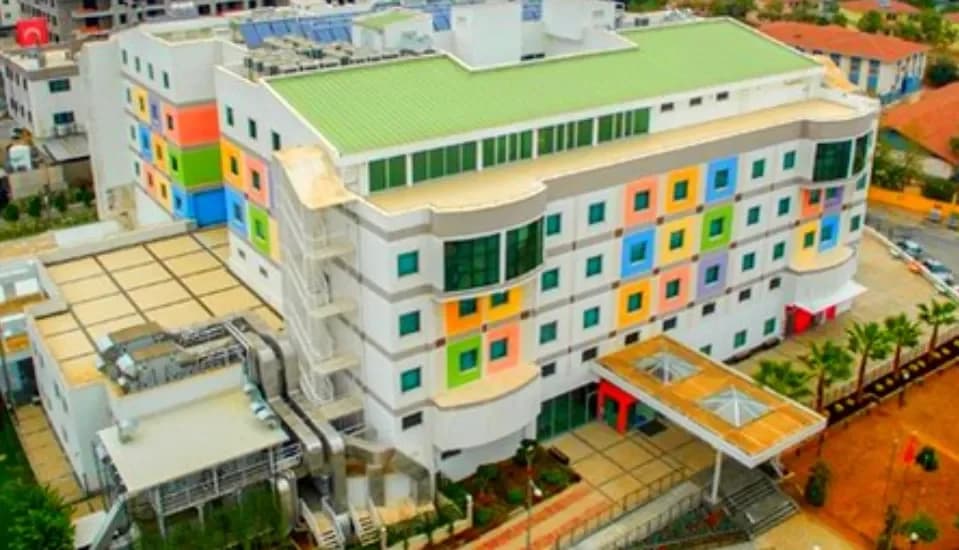
Antalya Yaşam Hospital
Private hospital in Muratpaşa, Antalya, with an orthopedics and traumatology department

BHT Clinic Istanbul Tema Hospital
Large private hospital in Atakent, Küçükçekmece, with an orthopedics and traumatology unit

Biruni University Hospital
University hospital in Küçükçekmece, Istanbul, with a published orthopedics and traumatology department