





Key takeaways
- 1Hand and wrist fracture surgery realigns a broken bone and holds it in place with a plate, screws, wires or a frame, so that the joint surface and the hand can work normally again.
- 2A broken hand or wrist needs urgent local assessment first; planned care abroad is only sensible for stable patients or for follow-on operations once the injury has been treated and the swelling has settled.
- 3The operation usually takes about 60 minutes, is done under regional or general anaesthesia and is most often a day case with 0 hospital nights.
- 4Most people wear a splint or cast for 2 to 6 weeks, start finger and wrist movement early under guidance, and need around 8 weeks before the hand feels useful for daily tasks.
- 5Finger stiffness, hardware irritation, nerve symptoms and slow bone healing are the main hand and wrist fracture surgery risks, and early movement and careful technique reduce most of them.
- 6Many breaks do not need an operation at all, so a cast is often the right first choice when the bones are stable and well aligned.
- 7Planned hand and wrist fracture surgery in turkey, such as correcting a bone that healed badly, can suit well-prepared patients who send full imaging and can stay for 7 to 10 days.
Overview
Hand and wrist fracture surgery is an operation that puts a broken bone back into its normal position and holds it there with metal implants until it heals. It treats breaks of the wrist bones, the palm bones and the finger bones when a cast alone would let them slip. The operation takes about 60 minutes and most people go home the same day.
What is hand and wrist fracture surgery?
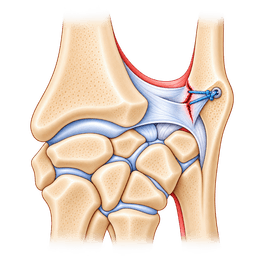
The hand and wrist contain 27 bones. The forearm bone on the thumb side, the radius, widens at the wrist. Eight small carpal bones sit between it and the five long bones of the palm, the metacarpals. Each finger then has two or three short bones, the phalanges. A fall, a sports collision or a crush injury can break any of them.
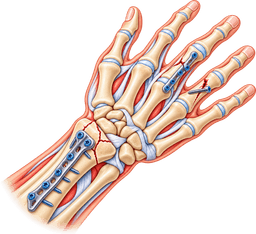
This surgery realigns the pieces, a step called reduction, and then fixes them. Fixation may be a plate and screws, thin wires known as Kirschner wires, a single compression screw or an external frame. The aim is a straight bone, a smooth joint surface and a hand that can move early. Our hand and wrist fractures page describes the injuries themselves.
Why does urgent local care come first?
A fresh fracture is an emergency. Nobody should wait to travel for treatment. Go to a local emergency department for X-rays, pain relief, a splint and a check of the circulation and nerves. Open wounds, a hand that is pale or cold, a bone pushing the skin, or numb fingers need same-day care. Sometimes an operation is needed within hours.
Treatment abroad only makes sense for stable patients. That means someone whose injury has been splinted and assessed locally. It also means someone who needs a planned or follow-on operation, for example correcting a bone that healed crooked or fixing a break that has not united. Our hand and wrist fracture surgery in turkey page explains how that planning works.
What problems does hand and wrist fracture surgery treat?
The most common target is the broken wrist, usually a distal radius fracture, a break of the forearm bone just above the wrist joint. It is one of the commonest fractures in adults, particularly after a fall on an outstretched hand. Surgery is considered when the bone is displaced, the joint surface is stepped, or the break is unstable.
The same surgery also treats scaphoid fractures, breaks of a small thumb-side wrist bone with a delicate blood supply. It also treats metacarpal fractures in the palm and phalangeal fractures in the fingers. A broken bone that has failed to heal, called a nonunion, or one that healed in a bad position, called a malunion, can also need an operation.
How does the operation work?
The surgeon exposes the break through a small cut or, for some fingers, through the skin without opening the fracture. The pieces are moved back into line under X-ray guidance. A plate is then screwed to the bone, or wires or screws cross the break. The implant acts like internal scaffolding while the body builds new bone across the gap over the following weeks.
Different bones call for different tools. A wrist fracture plate sits on the palm side of the radius and supports the broken joint surface. A scaphoid is usually held by one headless compression screw buried in the bone. Finger fractures may use fine wires, mini plates or tiny screws that leave the tendons room to glide.
Is hand and wrist fracture surgery major surgery?
It is a short operation, usually under 90 minutes, and most people do not stay overnight. It is nonetheless real surgery on a precise area. The hand packs tendons, nerves and joints into very little space, so swelling and stiffness matter more here than the size of the cut suggests. Rehabilitation is a large part of the result, not an optional extra.
How does it differ from other hand operations?
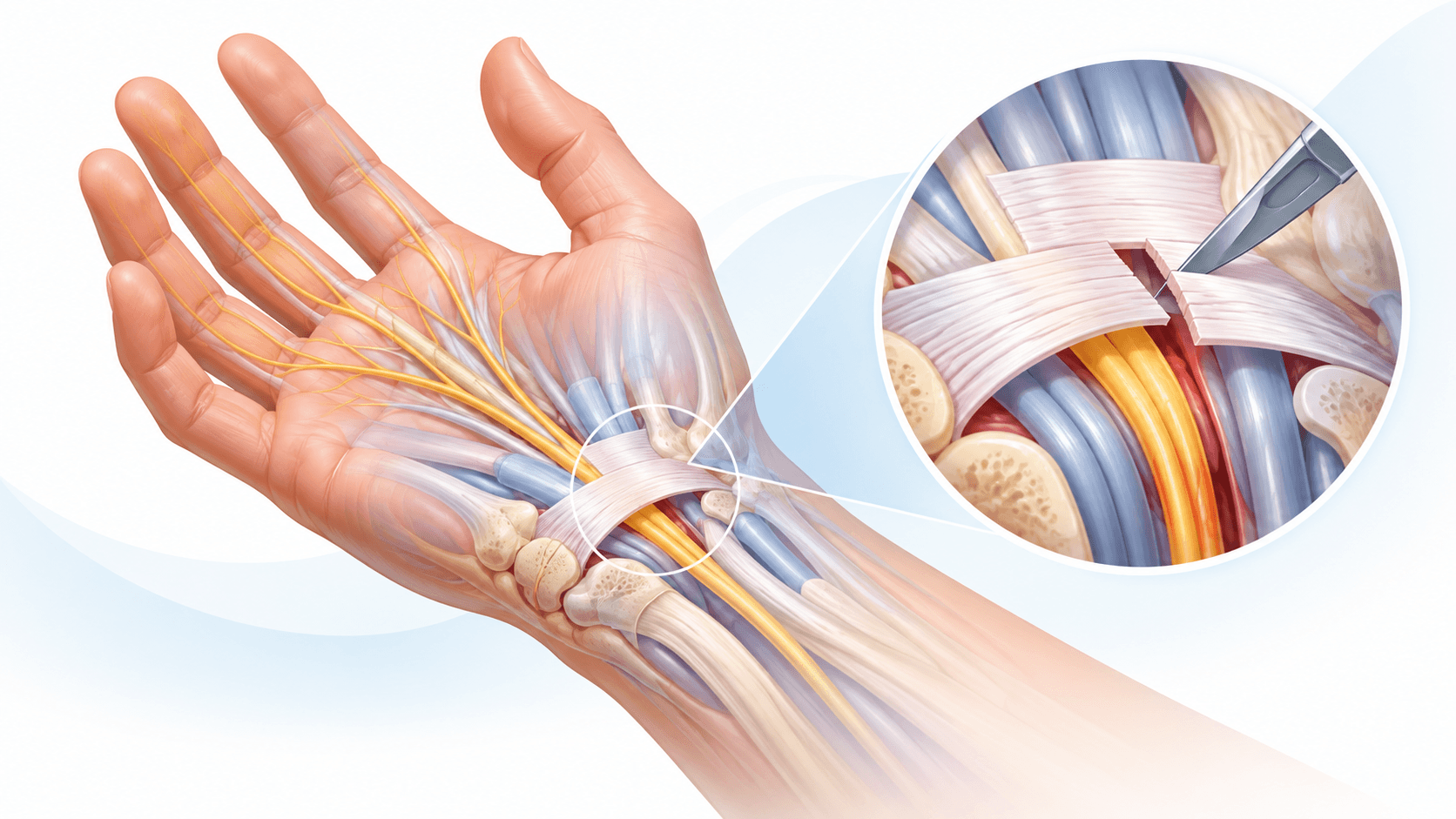
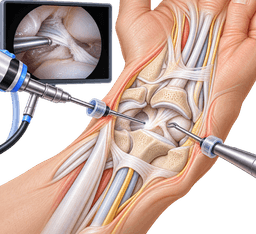
Unlike carpal tunnel release, which opens a ligament to free a nerve, this surgery repairs bone. It differs from hand tendon repair, which sews divided tendons, although a severe injury can need both. It is also different from wrist arthroscopy, which uses a small camera and is often added to check the cartilage and ligaments after a break.
What are the main benefits and trade-offs?
The main benefit is a stable, well-aligned bone that allows the fingers and wrist to move within days instead of weeks, which protects against stiffness. Surgery can also restore the smooth joint surface that helps prevent early arthritis. The trade-offs are the usual operative risks, a scar, the possibility of hardware that irritates a tendon, and a recovery that still takes months.
Who should think twice?
People with a stable, well-aligned break often heal as well in a cast as with an operation. For some older adults with low demands, studies suggest the difference in daily function is small. Anyone with an active skin infection, poor circulation or uncontrolled diabetes should discuss timing carefully. Smokers should know that nicotine slows bone healing.
If you are unsure which route suits your injury, ask for a second opinion with your images. Our hand and wrist section lists related conditions, and the cost guide explains what a planned operation usually includes.
Conditions treated
Who it's for
- A displaced distal radius fracture, where the broken end has shifted, tilted or shortened enough to change how the wrist works.
- A wrist break with a step or gap in the joint surface, which can lead to early arthritis if left uneven.
- An unstable fracture that slipped in a cast on follow-up X-rays, even though it looked acceptable at first.
- A displaced scaphoid fracture, or a scaphoid break that is not healing with cast treatment alone.
- A rotated or overlapping metacarpal or finger fracture, where a finger crosses its neighbour when you make a fist.
- An open fracture or one with major soft tissue damage, treated urgently in a local emergency centre.
- A fracture that has failed to unite after several months, known as a nonunion, which needs fresh fixation and sometimes bone graft.
- A fracture that healed in a poor position, called a malunion, causing pain, weakness or a loss of forearm rotation.
- A break combined with a ligament injury, such as damage to the scapholunate ligament or the TFCC, where fixing the bone alone is not enough.
Good candidates
A good candidate for hand and wrist fracture surgery has a break that is displaced, unstable or involves the joint surface, and is fit enough for anaesthesia. The decision rests on the X-ray or CT pattern, your age and activity level, your dominant hand, and what you need your hand to do. Many people in good alignment are best treated without surgery.
Who is a good candidate for this surgery?
People who are most likely to benefit include working-age adults and active older adults with displaced wrist fractures. Athletes and manual workers with unstable finger or palm fractures also benefit, as does anyone whose break slipped after casting. A surgeon will also weigh dominant hand use, since a few degrees of malalignment matter more to a pianist or a carpenter than to someone with limited demands.
Who is less suited to an operation?
If the bone sits in a good position and is not likely to move, a cast or splint is usually enough. Frail adults with very low physical demands may do nearly as well with casting even when the break looks untidy on X-ray. Surgery is also delayed or avoided when there is infection near the site, severe uncontrolled illness, or a skin wound that must heal first.
How is the decision made?
The surgeon reviews your images, checks the skin, the circulation and the sensation in each finger, and asks about your job and hobbies. A CT scan is added for joint fractures and many scaphoid breaks. Measurements such as the tilt of the wrist surface and how much the bone has shortened guide the choice, together with your own goals.
| Situation | Surgery likely appropriate | Non-surgical care first | Not advised |
|---|---|---|---|
| Wrist break, bone aligned, stable | Rarely | Cast, repeat X-rays in the first 2 weeks | Operating without a clear reason |
| Wrist break, displaced or slipping | Often, with plate or wires | Cast only for low-demand patients | Waiting for months with a crooked joint |
| Joint surface stepped by 2 mm or more | Usually | Not usually | Ignoring it, because arthritis risk rises |
| Scaphoid break, undisplaced | Sometimes, for a faster return to work | Cast for about 8 to 12 weeks | Skipping imaging after a wrist injury |
| Rotated finger or palm bone | Yes, since rotation seldom corrects itself | Buddy strapping if aligned | Leaving a scissoring finger |
| Open wound over the break | Urgent local surgery | None | Travel before wound care |
When is surgery abroad sensible?
Planned care abroad suits a stable patient with the injury already assessed. Examples are a malunion, a nonunion or a follow-on operation to remove a frame. A new break with swelling, bleeding or numbness is not a travel problem to solve. Read our guide on treatment planning before you decide.
Before surgery
Preparation for hand and wrist fracture surgery starts with a clear picture of the break, a check that you are fit for anaesthesia and a plan for the weeks of one-handed life afterwards. If the injury is recent, much of the preparation happens in a local emergency department. For a planned or follow-on operation there is more time to organise it well.
Which scans and tests are needed?
Plain X-rays from several angles show most breaks. A CT scan gives a three-dimensional view of the joint surface and is common for complex wrist fractures. MRI may be added for suspected ligament injury or an uncertain scaphoid. Blood tests, an ECG and a medicines review are done when your age or health calls for them. Bring the images on disc or send them digitally.
How should I prepare my health?
Stop smoking and vaping nicotine as early as you can, since nicotine slows bone healing and raises the chance of a nonunion. Good blood sugar control matters for people with diabetes. Tell the team about blood thinners, steroids and anti-inflammatory medicines, and about any previous reaction to metal or anaesthesia. Bone health is worth a mention too: a wrist break after a minor fall can be an early sign of osteoporosis.
What should I send for a remote review?
For a planned operation, a surgeon can usually give a first opinion from your records. Send the original images, the radiology report, the emergency or clinic notes, a list of medicines and a few photos of the hand showing swelling and finger posture. Our guide to a medical record review lists what is useful, and the quote request form takes the files.
What do I arrange at home and at work?
Plan for one working hand. Practise dressing, cooking and opening jars with your other hand beforehand if you can. Stock easy-grip kitchen items, loose sleeves and shoes without laces. Ask a family member to help with the first few days. Tell your employer about the time off. Be realistic: desk work often resumes within 1 to 2 weeks, while heavy manual work needs several months.
What do I bring on the day?
Bring your images, medicines list, a loose top with wide sleeves and any splint you were given. Remove rings from the injured hand early, ideally before swelling prevents it, because a ring may need cutting. Follow fasting instructions exactly: usually no solid food for 6 hours and clear fluids until 2 hours before, unless the team tells you otherwise.
What questions should I ask before surgery?
Ask which implant will be used, whether a second small operation to remove it is likely and who does the hand therapy. Also ask how a problem would be handled if you are travelling. The guide on questions to ask before surgery abroad helps you prepare a list. The cost guide shows which items a package normally contains.
How the operation is performed
The technique of hand and wrist fracture surgery follows one logic: reach the break, reduce it, hold it with the lightest stable fixation, check it on X-ray and close. The details change by bone. A wrist plate, a scaphoid screw and a finger wire are three quite different operations. That is why the plan is made on your own images.
How is anaesthesia given?
Most operations use regional anaesthesia, where an injection near the nerves in the armpit or above the collarbone numbs the whole arm for several hours. You may also have light sedation or a full general anaesthetic if you prefer to sleep. A finger fracture may need only a local block at the base of the finger. A tourniquet on the upper arm gives the surgeon a dry field.
What are the steps of a wrist plate operation?
For a displaced distal radius fracture the surgeon usually makes a 5 to 8 cm cut on the palm side of the forearm. The flexor tendons and the nerve are gently moved aside, and a thin muscle over the bone is lifted. The pieces are brought back into line, often with temporary wires, and a pre-shaped locking plate is screwed to the radius. Fluoroscopy, a live X-ray, confirms the position.
How are scaphoid fractures fixed?
The scaphoid is a small bone with a fragile blood supply, which is why it heals slowly. The surgeon uses a small cut, or sometimes the skin only. A guide wire runs along the bone's long axis and a headless compression screw follows it. The screw draws the fragments together without a head that would catch on cartilage. A displaced or unhealed break may need bone graft as well.
How are palm and finger breaks fixed?
A metacarpal or phalangeal fracture may be held by thin Kirschner wires placed through the skin. Mini plates and screws are another option, and a long spiral break may need only a screw. The incision is small and usually on the back of the hand or along the side of the finger. Surgeons choose the method that lets the tendons glide early, because stiff fingers are the commonest long-term problem.
When is an external frame used?
An external fixator uses pins in the bone connected by a bar outside the skin. It is helpful for badly shattered wrist fractures, open injuries or swollen skin that cannot take a plate yet. It is often a temporary stage before definitive fixation, and it is another reason why the first treatment should be local and urgent.
How is the operation finished?
The surgeon washes out the wound, repairs the covering layer over the tendons where needed, closes the skin with fine stitches or glue, then applies a padded dressing and splint. Final X-rays are saved. The team checks finger movement. They also look for pinching of the median nerve, which runs through the carpal tunnel and can swell.
How long does hand and wrist fracture surgery take?
Typically about 60 minutes, though a simple wire fixation may take 20 to 30 minutes and a complex joint fracture 90 minutes or more. Time in the building is longer, since the anaesthetic block takes time to set and you are watched afterwards. Most people are home within 4 to 6 hours.
Three terms come up often in consultations. Distal radius fracture surgery is the commonest of them and usually means a volar plate. Scaphoid fracture surgery is more delicate, because the blood supply runs in from one end and the screw must sit centrally. Metacarpal fracture fixation is the third. It focuses on rotation, because a finger that crosses its neighbour makes gripping awkward even when the bone looks straight on X-ray.
In all three, the surgeon plans the order of steps before the first cut. Which fragment is anchored first, where the screws will pass and which landmarks guide the length are decided from the scans. Having this plan on paper shortens the operation and reduces X-ray exposure. It also leaves a clear record for your home surgeon.
How do the surgical options compare?
| Method | Best for | Advantages | Drawbacks |
|---|---|---|---|
| Volar locking plate | Displaced distal radius fractures | Strong hold, early movement | Tendon irritation, plate sometimes removed |
| Kirschner wires | Simple wrist, finger and metacarpal breaks | Small cuts, easy removal | Pin site care, longer splinting |
| Headless compression screw | Scaphoid fractures | Buried, allows early use | Narrow margin for screw placement |
| Mini plates and screws | Unstable palm and finger fractures | Rigid hold for early finger motion | Can cause tendon scarring |
| External fixator | Severe or open injuries | Spans damaged skin | Pin tract infection, bulky |
The surgeon weighs the bone quality, the pattern of the break, the state of the skin and your goals when choosing between these. The overall decision is a balance between stability and the amount of soft tissue disturbed.
Hospital stay
Most people have hand and wrist fracture surgery as a day case and go home on the same day, with 0 nights in hospital. You usually arrive 1 to 2 hours before surgery, spend about 60 minutes in the operating theatre, then recover for a few hours before discharge. Overnight stay is kept for open injuries, other medical needs or when pain control is poor.
What happens on the day of surgery?
You change into a gown, the arm is marked and the anaesthetist places a nerve block or gives a general anaesthetic. After the operation you wake in recovery with a splint, a bulky dressing and a numb or heavy arm. A nurse checks the colour and warmth of the fingers, and a physiotherapist or nurse shows you how to elevate the arm.
How is pain controlled?
The nerve block can last 8 to 24 hours. Before it wears off, start regular paracetamol and an anti-inflammatory medicine if allowed. A stronger tablet is added for the first few days. Taking the tablets on schedule keeps pain low when the block fades overnight. Ice through a cloth and elevation also help the swelling.
What are the discharge criteria?
You can go home when you are awake, eating, passing urine, have pain under control with tablets, and the fingers are pink, warm and moving. You also need clear written advice on swelling, the dressing and who to call. A responsible adult should take you home, and you should not drive or sign important papers for 24 hours after sedation.
What does wound care involve?
Keep the dressing clean, dry and intact until the first review, usually at 10 to 14 days. Cover it with a plastic bag to shower. Do not lean on the hand. Move the fingers straight away, making a full fist and straightening them every hour while awake. This moves the tendons, reduces swelling and prevents stiffness.
What should international patients plan?
Planned care abroad suits stable patients who have already had local treatment. Plan 7 to 10 days in the country for the operation, the first wound review and a hand therapy session. Wait for medical clearance before flying. The flying after surgery guide explains the timing, and the travel and accommodation guide covers a stay close to the clinic.
It helps to have a companion who can carry bags and help with dressing. Read the companion guide and the hospital admission overview beforehand. Ask for images and the operation note on disc so that your home clinic can continue care. See accredited hospitals for options.
Recovery
Recovery from hand and wrist fracture surgery takes about 8 weeks to a hand that works for daily life and 3 to 6 months to near-full strength. The first 2 weeks are about swelling and the first moves of the fingers. Weeks 2 to 6 protect the bone. The weeks that follow rebuild movement and grip. Hand therapy shapes the outcome.
How long is the hand and wrist fracture surgery recovery time?
The hand and wrist fracture surgery recovery time depends on the bone and the fixation. A stable plate allows a removable splint and early wrist movement within 1 to 2 weeks. A wire fixation often needs 4 to 6 weeks of protection before the wires come out. Scaphoid fractures run longer, as bone union can take 8 to 12 weeks. Full strength may take 3 to 6 months.
What does pain and swelling look like?
Pain is usually strongest for the first 2 to 3 days and then eases quickly. Swelling of the hand and fingers is expected, peaks around day 3 to 5 and then falls over weeks. Raising the hand above the level of the heart is the most useful habit, for the first fortnight especially. Persistent burning pain out of proportion, or fingers that turn stiff and shiny, should be reported early.
How important is finger movement?
It is the key to avoiding a stiff hand. From the first day you open and close the fingers fully, as long as the surgeon permits. Tendons glide through swollen tissue and can stick if they are not moved. Thumb and forearm rotation exercises begin when the surgeon allows. Many people feel a little awkward at first, but gentle regular movement beats rare large efforts.
When can I drive?
Driving is usually allowed once the splint is off, you can grip the wheel, steer and react safely without strong painkillers. That is often 4 to 8 weeks, depending on the wrist and the type of car. Check the insurance terms, and do not drive until you can make an emergency movement without pain. Short trips as a passenger need no restriction.
When can I return to work?
Desk work with one hand is possible within 1 to 2 weeks if pain is controlled and the hand can be elevated. Typing with both hands usually follows at 4 to 6 weeks. Jobs that require lifting, gripping or vibrating tools may need 8 to 12 weeks or longer. Your surgeon may suggest light duties first.
When can I exercise or play sport?
Walking and leg exercise are fine early on. Light cycling or gym work for the legs often restarts at 2 to 4 weeks with the hand protected. Contact sport, racket sport, climbing and weight bearing through the hand are usually delayed for 3 to 4 months. They wait until X-rays show healing and grip is strong. Protective splints may be advised for return.
Is flying safe after surgery?
Short flights are often possible within about 1 week once the wound is dry and the surgeon is happy, but keep the hand elevated. A cast should be split if swelling is expected. Move the fingers during the flight. See the flying after surgery guide, plus the follow-up after returning home and rehabilitation guides.
What do normal milestones look like?
| Time | What is normal | Typical activity |
|---|---|---|
| 2 weeks | Stitches out or checked, swelling falling, mild ache | Fingers moving, light personal care, desk work for some |
| 6 weeks | Early bone healing on X-ray, splint weaned | Wrist exercises, light household tasks, wires removed if used |
| 12 weeks | Bone mostly united, grip returning | Driving, most work, light strength training |
| 6 months | Near-final movement and strength | Sports, heavy lifting, full return |
Which symptoms need urgent attention?
Contact your surgical team for increasing pain that tablets do not help. Other warning signs are fingers that turn blue, white or cold, new numbness, fever, a leaking wound, or redness spreading up the forearm. A cast that feels tight and gets worse as the hand swells also needs to be loosened. Do not wait to see if it settles.
Recovery timeline
- Protect and elevate1Protect and elevate
Days 0–3
Keep the splint on, the hand above heart level and the dressing dry. Take pain tablets on schedule while the nerve block wears off. Open and close all fingers fully every hour you are awake, within the surgeon's advice. Expect swelling and some bruising to the fingertips. Report any colour change or severe pain.
- Control swelling2Control swelling
Days 4–14
Continue elevation and finger exercises. Pain falls steadily and strong tablets are often stopped. Light personal care is possible with the other hand. A first review at about 10 to 14 days checks the wound, takes stitches out and repeats X-rays. Some people start desk work with one hand towards the end of this phase.
- Start wrist movement3Start wrist movement
Weeks 2–4
A removable splint may replace the bulky dressing after a plate fixation, allowing gentle wrist bending and forearm rotation with a hand therapist. Scar massage begins once the wound has healed. Wire fixations stay protected. Avoid lifting anything heavier than a cup and keep elevating at night.
- Bone healing4Bone healing
Weeks 4–6
X-rays show whether the bone is knitting. Kirschner wires are usually removed around 4 to 6 weeks in a short clinic visit. Wrist and finger range improves with therapy. Grip training starts with soft putty. Light driving may begin for some, but only once you are off strong painkillers.
- Daily function returns5Daily function returns
Weeks 6–8
The splint is weaned off. Most people use the hand for dressing, eating, typing and light kitchen tasks. Therapy adds forearm rotation and gentle strengthening. Swelling after long days is normal. Scaphoid fractures may remain in a cast or splint for longer, depending on scan findings.
- Build strength6Build strength
Weeks 8–12
Progressive grip, pinch and wrist strengthening begin. Lifting increases in small steps. Many people go back to normal work, including some manual tasks. Stiffness at the end of range is common and improves with persistent exercise. A further check with X-ray confirms that the bone has united.
- Return to sport7Return to sport
Months 3–6
Contact sport, racket sport, weights and climbing return in a staged way once strength is about 80 percent of the other side and the bone is healed. Protective taping or a brace may be used. Remaining stiffness is addressed with therapy, and any irritating hardware can be discussed.
- Final result8Final result
Months 6–12
Strength, movement and comfort reach their plateau, usually by 6 to 12 months. Mild aching with weather changes or heavy use is common. A final review judges the result. Removal of a plate or screw is considered only if it causes symptoms.
Outcomes and success rates
Most people regain a useful, comfortable hand after hand and wrist fracture surgery, with good movement and strength for daily activities by about 3 to 6 months. Success means the bone healed in a good position, the joint surface is smooth, and you can do the tasks you need. A small number have lasting stiffness, aching or reduced grip.
What is the hand and wrist fracture surgery success rate?
The hand and wrist fracture surgery success rate is high when a displaced break is fixed well and rehabilitation is followed. Studies suggest that the large majority of fractures unite, with most people returning to their usual activities. Exact figures vary by bone, age and injury severity, so treat any single number carefully. Scaphoid breaks and badly shattered joints do less predictably well.
Does surgery give a better result than a cast?
It depends on the break. For unstable or displaced fractures, surgery improves alignment and allows earlier movement. For many older adults with distal radius fractures, studies suggest that the long-term function after a cast is similar, even when the X-ray is less tidy. Surgery therefore targets patients where alignment will change function, rather than every fracture.
What factors improve the result?
Good bone quality, accurate reduction, stable fixation, early finger movement, not smoking, and consistent hand therapy all help. An experienced hand surgeon and a clear plan for the soft tissues are equally important. People who keep up the exercises usually regain more movement than those who rest the hand for weeks.
What factors worsen the result?
Smoking, diabetes with poor control, severe osteoporosis, open or crush injuries, and joint surface damage reduce the odds of an excellent result. A delay in moving the fingers causes stiffness. Complex regional pain syndrome, a rare pain condition, can also hold back recovery and needs early recognition.
Will my wrist be completely normal again?
Many people are happy with a wrist that is nearly normal, but a few degrees of lost movement or some aching with heavy use is common. The wrist and hand may look slightly different, and a small scar remains. Bone has healed, although a plate in a thin person can be felt under the skin.
How durable is the repair?
Once the bone has united, the repair is permanent in most people, and implants may stay for life. Arthritis can develop years later if the joint surface was damaged at the time of injury, even if the alignment is excellent. Regular use does not wear out a united bone.
When is further surgery needed?
A second operation is uncommon but possible. Reasons include removal of a plate or wire that irritates tendons, release of tight scar tissue around stiff fingers, correction of a malunion, bone graft for a nonunion, or a salvage procedure for post-injury arthritis. Discuss these possibilities beforehand, since planning ahead is easier than reacting afterwards.
Implants and technology
Hand and wrist fracture surgery relies on small metal implants, imaging during the operation and precise instruments. Implants are usually made of titanium or stainless steel and are designed to stay in the body safely for life, although they can be removed if they cause problems. Technology here serves one purpose, which is stable alignment with minimal disturbance of tendons.
Which implants are used?
The commonest is the volar locking plate for the wrist, whose screws lock into the plate and hold small fragments under the joint surface like a shelf. Mini plates and screws serve the palm and fingers. Headless compression screws are used for scaphoid fractures. Kirschner wires, which are smooth stainless steel pins, may be left outside the skin or cut under it. Absorbable pins are used in a few cases.
What imaging is used during surgery?
Fluoroscopy, a mobile X-ray that gives live images, confirms alignment and screw length. A mini C-arm is used for hand cases and keeps the radiation dose low. Before surgery, CT scans, sometimes with three-dimensional reconstructions, help the surgeon plan the plate position and see joint fragments that plain films hide.
Is arthroscopy used?
For some wrist fractures involving the joint, a small camera is used to check the cartilage and ligaments and to guide the reduction of the joint surface. This is known as arthroscopically assisted fixation. It can detect injuries to the TFCC, the cartilage pad at the little finger side, which is covered on our TFCC repair page, as well as ligament tears.
What about bone graft and substitutes?
When a bone has failed to heal or a hole is left after reducing a crushed fragment, the surgeon may add bone graft from your own hip or forearm, or a graft substitute. Graft supports healing but adds another small wound if it is taken from your own body. Whether it is needed is judged on the scan.
Are there newer developments?
Patient-specific plates, three-dimensional planning, low-profile plates that sit closer to the bone and bioabsorbable implants are in use or under study, but plain plates and wires remain the standard and work well. Ask your surgeon why a particular implant is chosen. Newer does not always mean better for your injury.
Can implants be removed?
Plates and screws may stay for life. If they irritate a tendon, are felt under the skin or limit movement, removal can be done after the bone has fully healed, usually after 6 to 12 months. Wires are removed in clinic. Most metal in the hand does not set off airport scanners, although you may carry a card.
Risks and how they are managed
All surgery carries risk. Partner hospitals follow enhanced-recovery and infection-prevention protocols, and your surgeon will discuss the risks specific to your case before consent.
- Anaesthesia and general surgical risks: reactions to medicines, nausea, chest problems and clots are uncommon, and screening, fasting rules and early movement lower them.
- Infection: a wound or pin-site infection can occur, particularly with open injuries or smoking; antibiotics, clean technique and dressing care reduce it, and deep infection is rare.
- Stiffness of the fingers and wrist: the commonest problem; early finger movement, elevation and hand therapy lower it, and occasionally scar release is needed.
- Tendon irritation or rupture: plates or screw tips can rub tendons; careful placement and, if needed, plate removal after healing reduce it.
- Nerve problems: the median nerve can be bruised or swollen, and small skin nerves can be numb around the scar; most settle, and a nerve release may be added if symptoms persist.
- Delayed union or nonunion: the bone heals slowly or not at all, especially in smokers and in scaphoid fractures; imaging follows healing, and graft or revision fixation is used if needed.
- Malunion or loss of position: the break may slip before healing; follow-up X-rays catch it early.
- Complex regional pain syndrome: a rare condition with burning pain, swelling and stiffness; early recognition, movement and therapy help, and vitamin C is sometimes advised.
- Hardware problems: a screw may be too long, loosen or be felt under the skin; a check at surgery and imaging reduce this, and removal solves most cases.
- Post-traumatic arthritis: if the joint surface was damaged, arthritis may appear years later; accurate reduction lowers the likelihood.
- Scar tenderness: a sensitive scar is common and usually eases with massage over several months.
Alternatives
- Cast or splint treatment: chosen for stable, well-aligned breaks and for frail adults with low demands, with repeat X-rays to catch slipping.
- Closed reduction with a cast: the doctor manipulates the bone back into place under anaesthesia and holds it in plaster, which suits some simple wrist breaks.
- Percutaneous wire fixation: thin wires placed through the skin hold the bone in line, chosen for simpler breaks in good-quality bone.
- External fixation: an outside frame is used for severe, open or very swollen injuries and as a temporary measure.
- Buddy strapping: a finger is taped to its neighbour for stable, aligned finger fractures that move together.
- Wrist arthroscopy alone: used for ligament or cartilage injuries without a major bone break, see <a href='/procedures/wrist-arthroscopy'>wrist arthroscopy</a>.
- Salvage procedures: for old injuries with arthritis, motion-sparing or fusion operations are considered after a full assessment.
What hand / wrist fracture surgery costs
The contracted Turkey partner package next to approved self-pay benchmarks. Benchmarks are 20th–80th percentile ranges of approved records, normalised to USD.
Turkey package
$3,000 – $6,000
United States self-pay
$10,400 – $31,150
United Kingdom self-pay
$4,150 – $14,750
Germany self-pay
$3,600 – $13,050
Typical self-pay range by country
Surgeons who perform hand / wrist fracture surgery
All surgeonsHospitals offering this procedure
Antalya Yaşam Hospital
Private hospital in Muratpaşa, Antalya, with an orthopedics and traumatology department
BHT Clinic Istanbul Tema Hospital
Large private hospital in Atakent, Küçükçekmece, with an orthopedics and traumatology unit
Biruni University Hospital
University hospital in Küçükçekmece, Istanbul, with a published orthopedics and traumatology department
Çankaya Hospital for Orthopedic Care
Çankaya Hospital for Orthopedic Care is an orthopedic hospital in central Ankara with robotic-arm assisted surgery
Sources and references
Peer-reviewed guidance and institutional sources used to write and review this page.
- 01Wrist Fractures (Broken Wrist)
American Academy of Orthopaedic Surgeons (OrthoInfo), 2023
https://orthoinfo.aaos.org/en/diseases--conditions/wrist-fractures/
- 02Distal Radius Fractures (Broken Wrist)
American Academy of Orthopaedic Surgeons (OrthoInfo), 2023
https://orthoinfo.aaos.org/en/diseases--conditions/distal-radius-fractures-broken-wrist/
- 03Scaphoid Fractures of the Wrist
American Academy of Orthopaedic Surgeons (OrthoInfo), 2023
https://orthoinfo.aaos.org/en/diseases--conditions/scaphoid-fracture-of-the-wrist/
- 04
- 05Hand Fractures
American Academy of Orthopaedic Surgeons (OrthoInfo), 2023
https://orthoinfo.aaos.org/en/diseases--conditions/hand-fractures/
- 06
- 07Distal Radius Fractures
StatPearls, National Library of Medicine, 2023
https://www.ncbi.nlm.nih.gov/books/NBK536916/
- 08