Key takeaways
- 1Biceps Tenodesis treats painful long-head biceps tendon pathology by detaching the tendon from its attachment inside the shoulder and fixing it securely to the humerus.
- 2The procedure preserves the connection between the biceps muscle and bone while removing the damaged intra-articular portion of the tendon from the shoulder.
- 3Common reasons include persistent biceps tendinopathy, partial tendon tearing, tendon instability, pulley lesions and selected SLAP tears.
- 4Biceps Tenodesis is different from biceps tenotomy, where the long-head tendon is simply released and not reattached.
- 5Tenodesis generally reduces the likelihood of a visible Popeye deformity compared with tenotomy, although it requires a protected healing period.
- 6The procedure can be arthroscopic suprapectoral, open subpectoral, arthroscopic-assisted or performed using another fixation location. Current evidence does not establish one approach as universally superior for every patient.
- 7Fixation can use an interference screw, cortical button, suture anchor or soft-tissue construct. Different methods can provide satisfactory clinical results when performed appropriately.
- 8Most isolated procedures are performed as same-day surgery.
- 9A typical isolated operation takes around 30–90 minutes, but combined shoulder procedures make total operating time longer.
- 10A biceps tenodesis protocol protects tendon fixation during the first several weeks and gradually restores shoulder and elbow motion before significant resisted biceps strengthening.
- 11What can you not do after bicep tenodesis? Early restrictions generally include heavy lifting, resisted elbow bending, resisted forearm supination, pulling, forceful carrying and premature gym exercises involving the biceps.
- 12Sling use is commonly around two to four weeks after an isolated tenodesis, but an associated rotator cuff or labral repair can require four to six weeks or longer.
- 13Major functional recovery commonly occurs over approximately three to four months, while heavy lifting and sport frequently require four to six months or more.
- 14Most appropriately selected patients experience substantial improvement in pain and shoulder function.
- 15Residual anterior shoulder pain, stiffness, cosmetic change, cramping, fixation failure, infection, nerve injury and rare humeral fracture are recognized complications.
- 16Treatment selection should address the entire shoulder. Biceps pain frequently coexists with rotator cuff, subscapularis, labral or pulley pathology.
Overview
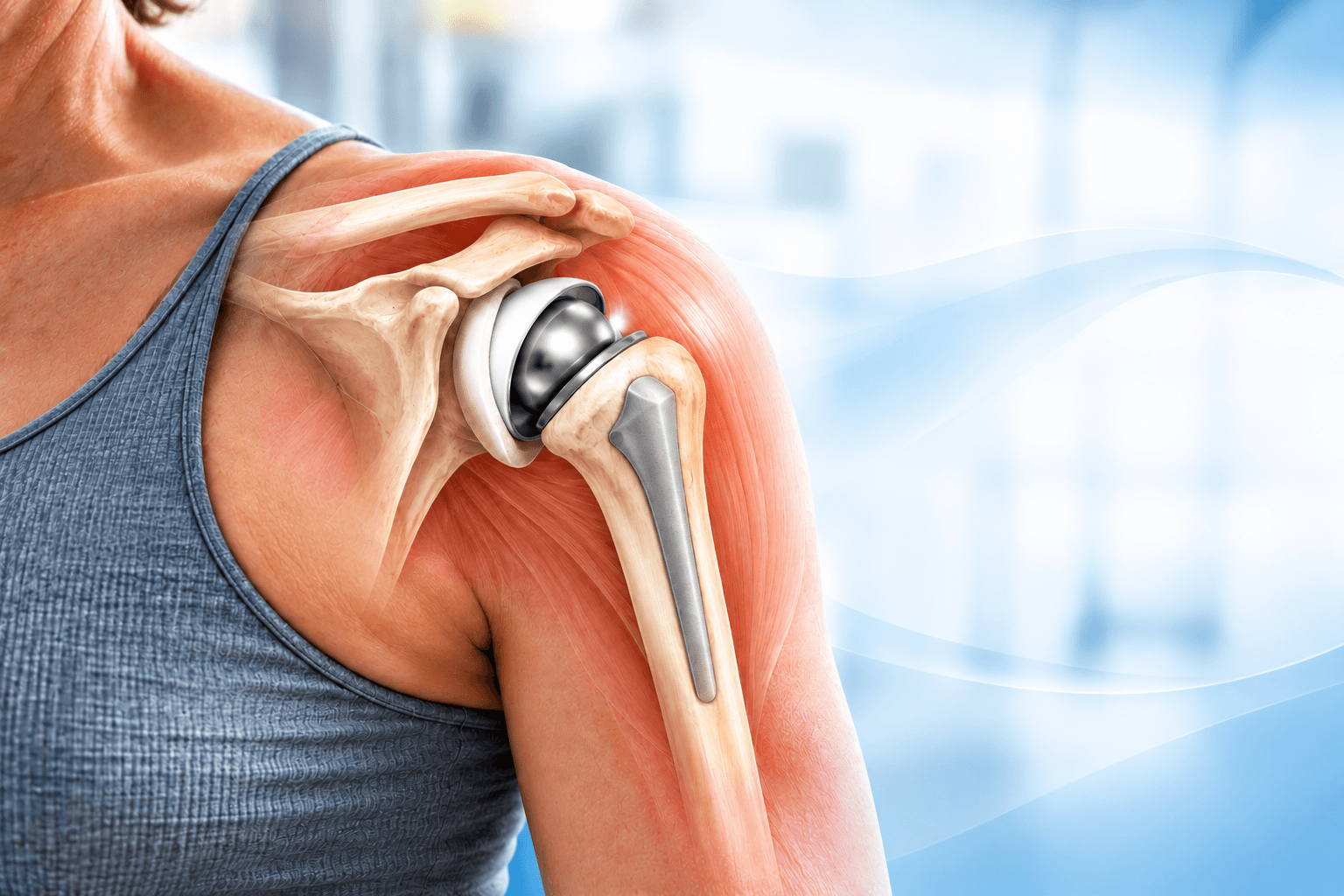
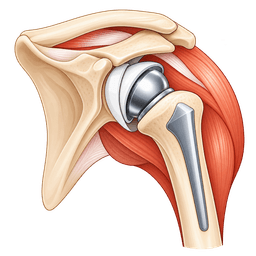
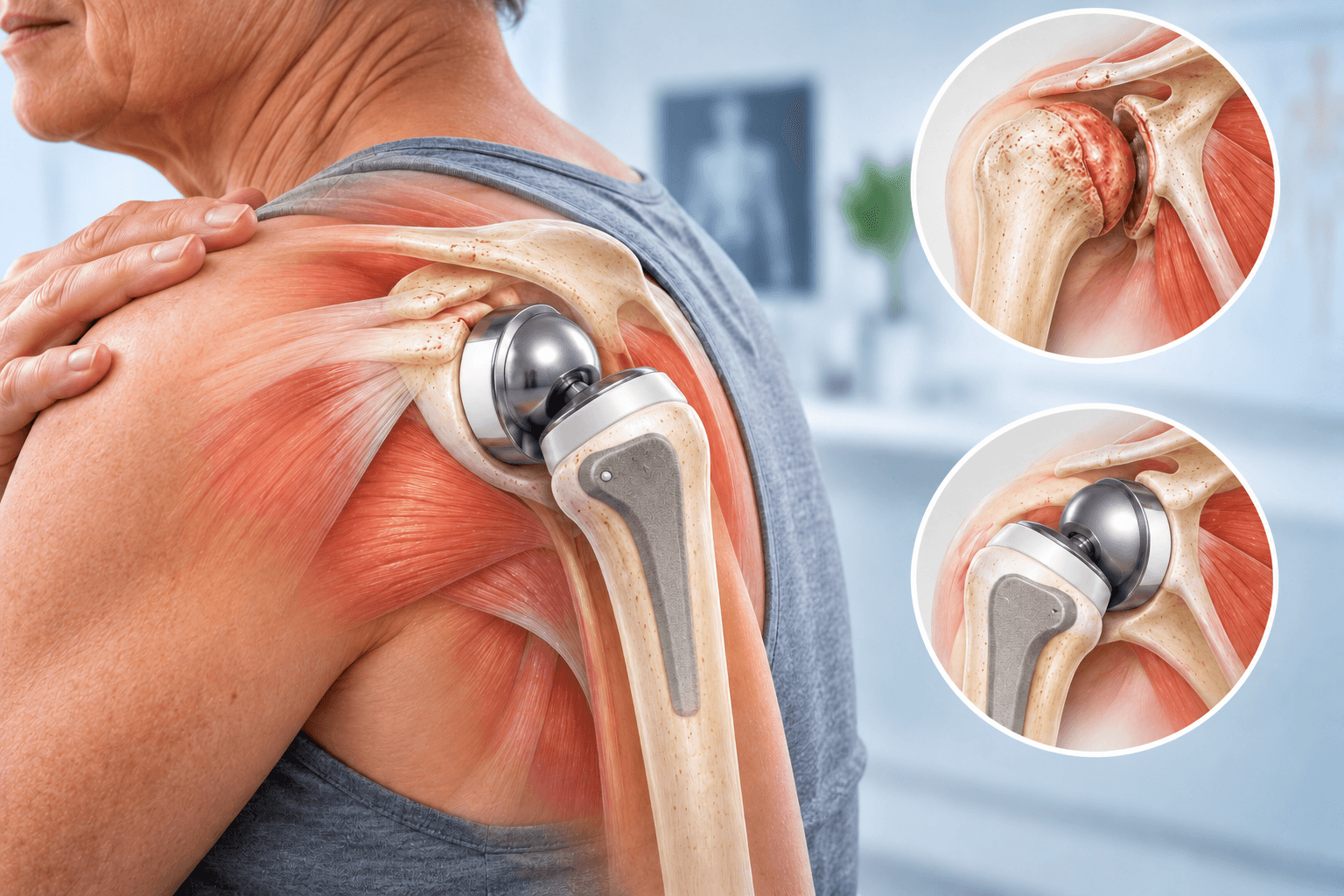
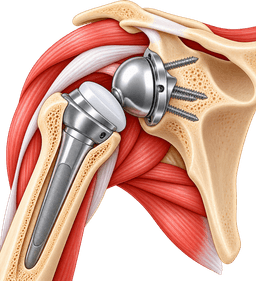
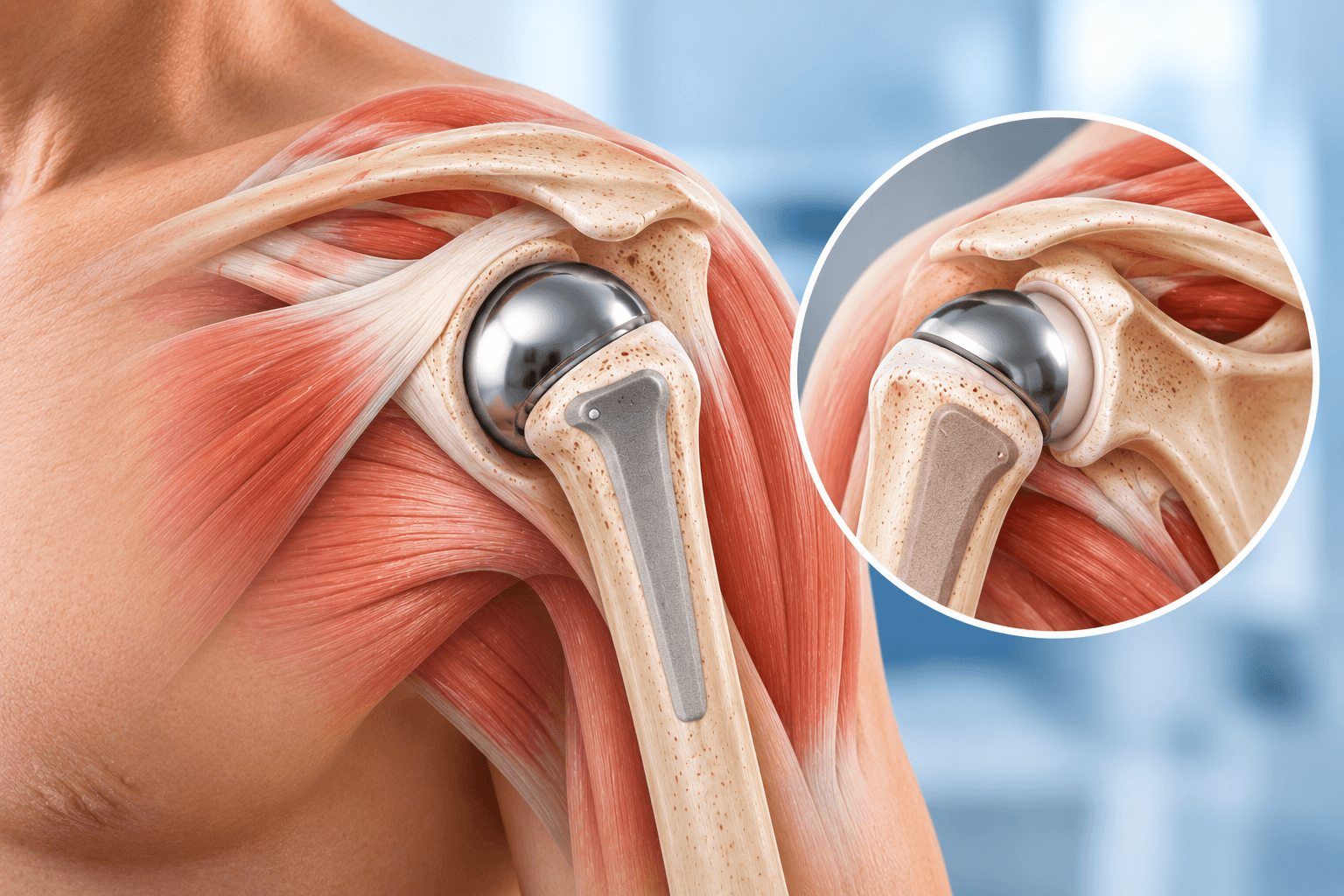
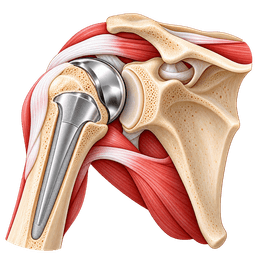
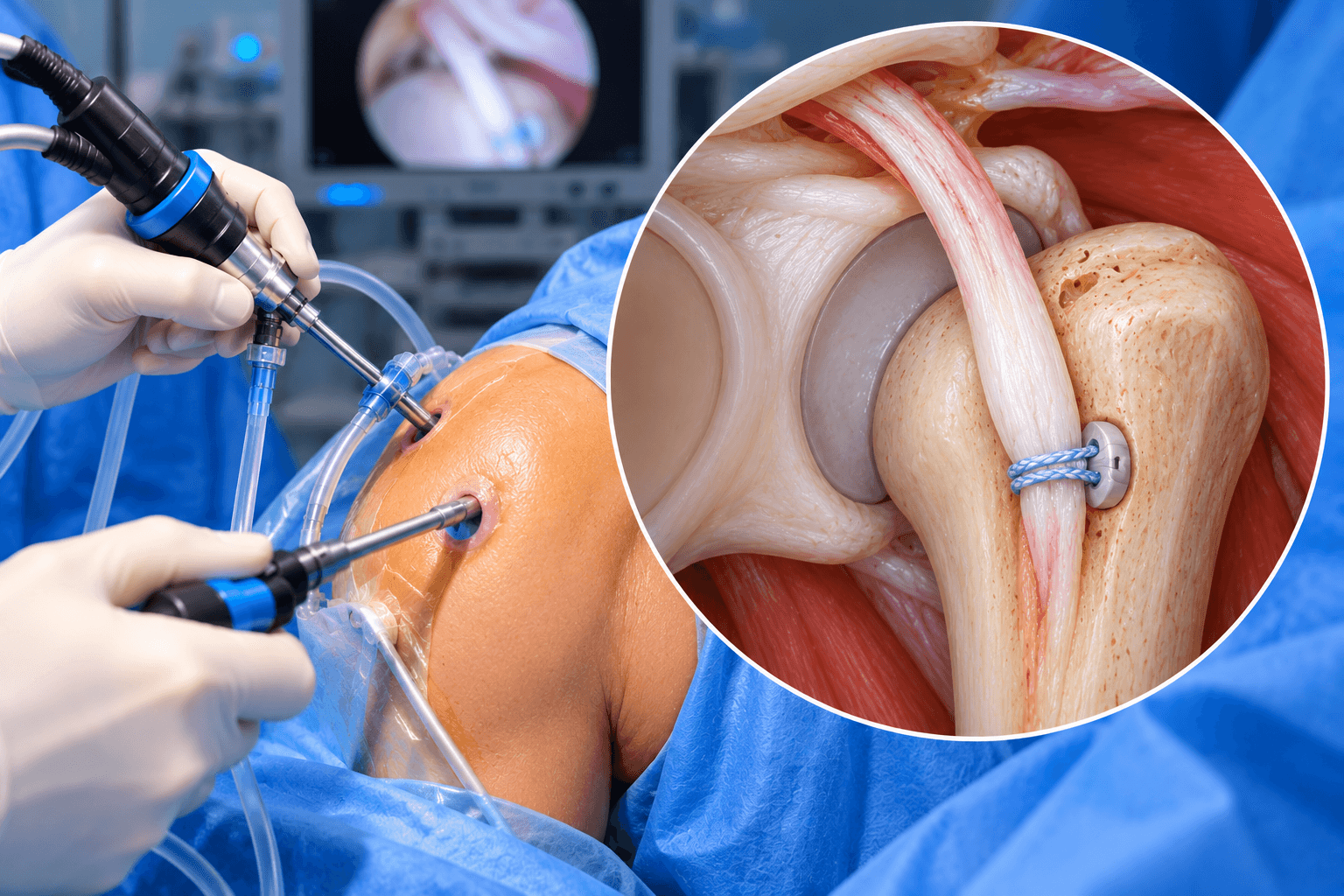
Biceps Tenodesis is surgery in which the long head of the biceps tendon is detached from its painful attachment inside the shoulder and secured to the upper arm bone, or humerus, at a new location.
The operation removes the diseased portion of the tendon from the shoulder joint and bicipital groove while preserving continuity between the biceps muscle and bone.
This distinguishes tenodesis from tenotomy. In a tenotomy, the tendon is released and allowed to retract without being fixed to a new location. Both procedures can reduce biceps-related shoulder pain, but they have different implications for appearance, cramping, fixation and rehabilitation.
What Does “Bicep Tenodesis” Mean?
Patients commonly search for bicep tenodesis, although the standard medical term is biceps tenodesis.
The word “tenodesis” refers to surgical fixation of a tendon.
In this procedure, the long head of the biceps tendon is fixed to the humerus.
The shorter head of the biceps is not removed and remains attached normally near the shoulder through the coracoid process.
Which Part of the Biceps Is Treated?
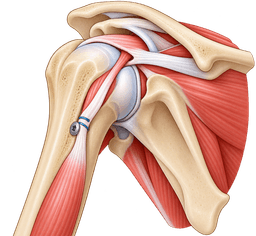
The biceps brachii muscle has two proximal tendon origins: the long head and short head.
The long head of the biceps tendon travels through the bicipital groove in the humerus, crosses the shoulder joint and attaches near the superior glenoid labrum.
Because it passes through the shoulder, it can become inflamed, torn, unstable or involved in superior labral pathology.
Biceps Tenodesis treats this long-head tendon.
The short head remains untouched in routine surgery.
Is Biceps Tenodesis an Elbow Operation?
No.
Proximal Biceps Tenodesis is a shoulder procedure.
A distal biceps tendon rupture occurs near the elbow and is treated by a completely different operation that reattaches the distal tendon to the radius.
The two surgeries have different anatomy, rehabilitation and risks.
This distinction is particularly important when patients search simply for “biceps tendon surgery.”
What Does the Long Head of the Biceps Do?
The biceps muscle is best known for bending the elbow and rotating the forearm so the palm faces upward.
The long head also crosses the shoulder.
Its precise functional contribution to glenohumeral stability is complex and less important than the combined function of the biceps muscle as a whole.
Because the short head remains attached after tenodesis, patients generally maintain useful elbow flexion and forearm-supination function.
Why Can the Long Head of the Biceps Become Painful?
The tendon travels through a narrow anatomical region and is exposed to repetitive motion.
Degeneration can cause thickening and inflammation.
Partial tears can develop.
The tendon can become unstable if the supporting pulley structures or subscapularis tendon are damaged.
It can also be involved in superior labral lesions.
These conditions frequently coexist rather than appearing in isolation.
Biceps Tendinitis
Biceps tendinitis describes inflammation or irritation of the long-head tendon.
Patients commonly report pain at the front of the shoulder.
Pain may worsen with lifting, reaching overhead or repetitive activity.
Early treatment is usually nonsurgical.
Persistent structural disease that does not improve with appropriate treatment can eventually lead to consideration of surgery.
Biceps Tendinopathy
“Tendinopathy” is a broader term than tendinitis.
Chronic tendon disease often involves degeneration rather than pure acute inflammation.
The tendon can become thickened, frayed and structurally abnormal.
Removing or relocating the diseased portion through tenodesis can reduce the pain generated by the tendon.
Partial Long-Head Biceps Tear
The tendon can partially tear.
Some tears are relatively small and can be managed without surgery.
Larger symptomatic tears can cause persistent pain, mechanical symptoms and weakness.
Biceps Tenodesis removes the abnormal intra-articular tendon from its painful environment and secures healthier tendon distally.
Biceps Tendon Instability
The long-head tendon normally runs through the bicipital groove.
A pulley system formed by surrounding soft tissues helps keep it centered.
Subscapularis tearing and pulley lesions can allow the tendon to subluxate or dislocate.
Patients may report painful snapping or clicking at the front of the shoulder.
Tenodesis can remove the unstable tendon from the groove when restoration of normal tendon tracking is unlikely to provide durable relief.
Biceps Pulley Lesion
The biceps pulley is formed by portions of the superior glenohumeral ligament, coracohumeral ligament and adjacent rotator cuff structures.
Injury can destabilize the biceps tendon.
Pulley lesions often coexist with upper subscapularis tears.
An experienced shoulder surgeon therefore inspects the subscapularis carefully rather than treating the biceps as an isolated problem.
SLAP Tears and the Biceps
The long-head biceps tendon attaches near the superior labrum.
A SLAP tear involves this superior labral region.
In some patients, repairing the labrum is appropriate.
In others, especially when degenerative biceps-labral pathology is present, Biceps Tenodesis can provide more predictable relief by removing tension from the painful superior labral complex.
Biceps Tenodesis vs SLAP Repair
The choice depends on age, activity, tear mechanism, tissue quality and the condition of the biceps.
A younger athlete with an acute unstable labral injury and healthy biceps can still be a candidate for SLAP repair.
A patient with substantial biceps tendinopathy, degenerative labral tissue or persistent biceps-related pain may be better treated with tenodesis.
Recent comparative literature has increasingly supported Biceps Tenodesis as a useful option even in selected younger patients rather than considering it only an operation for older adults.
Why Has Biceps Tenodesis Become More Common?
Understanding of superior labral and biceps pathology has evolved.
Surgeons increasingly recognize that an MRI diagnosis of “SLAP tear” does not always mean the labrum should be repaired.
Tenodesis can remove the pain-generating biceps traction from the superior labrum while preserving the biceps muscle's distal function.
Improved fixation systems and arthroscopic techniques have also made the procedure reproducible.
What Is Biceps Tenotomy?
Tenotomy releases the long-head biceps tendon without reattaching it.
The procedure is fast and avoids the need for tendon-to-bone healing.
It can provide excellent pain relief.
However, the tendon and muscle can retract, producing a visible bulge known as a Popeye deformity.
Some patients also experience cramping or fatigue.
Biceps Tenodesis vs Tenotomy
Both operations can produce good pain and functional outcomes.
Randomized evidence generally shows that broad shoulder outcome scores can be similar between the procedures.
Tenodesis is commonly favored for younger, active or cosmetically concerned patients because it better preserves the normal contour of the biceps.
Tenotomy remains a reasonable option for selected older or lower-demand patients, particularly when minimizing operative complexity is desirable.
Does Tenodesis Prevent Popeye Deformity?
It substantially reduces the risk compared with tenotomy but does not eliminate it completely.
Fixation can fail.
The tendon can elongate.
Muscle contour can still differ slightly.
The aim is to maintain a more anatomical length-tension relationship while relieving the diseased proximal tendon.
What Is the Popeye Deformity?
A Popeye deformity is a prominent bulge of the biceps muscle lower in the arm caused by proximal tendon retraction.
It is named after the cartoon character's exaggerated arm shape.
The deformity is mainly cosmetic for many patients, although some experience cramping.
Tenodesis aims to reduce this displacement by fixing the tendon to the humerus.
Does Biceps Tenodesis Preserve Strength?
Most patients retain excellent functional elbow flexion and forearm supination strength.
The short head remains normally attached.
The long head remains connected to the humerus through the tenodesis.
Small measurable differences can exist, but clinically important strength loss is not expected in a successful isolated procedure.
Does Biceps Tenodesis Change the Shape of the Arm?
Usually very little.
One purpose of tenodesis is to preserve the biceps muscle's general resting position.
Minor contour differences can still occur.
A frank Popeye appearance is possible if fixation fails or the tendon migrates.
Where Is the Tendon Fixed?
The tendon can be fixed at several levels along the upper humerus.
A suprapectoral tenodesis places fixation above the upper border of the pectoralis major.
A subpectoral tenodesis fixes the tendon below the pectoralis major, generally through a small open incision.
There are also techniques within or just distal to the bicipital groove.
Suprapectoral Biceps Tenodesis
Suprapectoral fixation is commonly performed arthroscopically.
The tendon is secured along the upper humerus while the surgeon works through shoulder portals.
This can avoid an additional open axillary-region incision.
Multiple fixation techniques are available.
Subpectoral Biceps Tenodesis
Subpectoral fixation generally uses a small incision near the upper arm beneath the pectoralis major tendon.
The diseased proximal tendon is removed from the bicipital groove.
The remaining healthy tendon is fixed to the humerus at a lower level.
Advocates of this technique emphasize removal of potentially painful tendon from the groove.
Is Subpectoral Better Than Suprapectoral Tenodesis?
Current evidence does not justify declaring one technique universally superior.
Both can provide substantial pain relief and good functional outcomes.
Recent systematic evidence involving large patient numbers continues to show broadly favorable results for both approaches, while suggesting somewhat different complication profiles rather than a dramatic difference in overall effectiveness.
Technique selection should therefore depend on pathology, surgeon experience and the patient's anatomy.
Arthroscopic vs Open Tenodesis
An arthroscopic technique allows treatment through shoulder portals, often during another arthroscopic procedure.
Open subpectoral tenodesis uses a small additional incision.
Both approaches have strong clinical track records.
Open does not automatically mean “old-fashioned,” and arthroscopic does not automatically mean “better.”
The relevant question is whether the chosen technique adequately removes the painful tendon and provides secure fixation.
Biceps Tenodesis With Rotator Cuff Repair
This combination is very common.
Biceps disease frequently accompanies rotator cuff tearing.
The surgeon can repair the cuff and perform tenodesis during the same operation.
The rehabilitation then usually follows the more restrictive rotator cuff protocol rather than an isolated tenodesis protocol.
Biceps Tenodesis With Subscapularis Repair
Long-head biceps instability frequently occurs with upper subscapularis tearing.
The surgeon can stabilize the biceps through tenodesis and repair the subscapularis during the same operation.
This creates more shoulder-motion restrictions than an isolated tenodesis.
External rotation can be particularly protected during subscapularis healing.
Biceps Tenodesis With Shoulder Labral Surgery
Tenodesis can accompany other labral treatment.
For example, a patient can have anterior instability requiring Bankart repair plus clinically important biceps-superior labral pathology.
The surgeon treats each pathology according to its role.
The rehabilitation protocol is then designed around the combined repairs.
Biceps Tenodesis With Shoulder Decompression
Subacromial bursectomy or selected decompression can be performed during the same operation.
These additions generally do not prolong protection as dramatically as cuff or labral repair.
However, modern practice does not support performing acromioplasty simply because arthroscopy is already underway.
Each additional procedure should have a clinical indication.
Can Biceps Tenodesis Be Performed Without Arthroscopy?
Yes.
Selected isolated biceps pathology can be treated through an open subpectoral approach.
However, many patients benefit from arthroscopic shoulder evaluation because biceps disease commonly coexists with rotator cuff and labral pathology.
The surgeon chooses the approach based on the diagnostic certainty and planned treatment.
Is Biceps Tenodesis a Major Surgery?
An isolated Biceps Tenodesis is smaller than shoulder replacement or major reconstructive surgery, but it is still a true tendon-fixation operation.
The tendon has to heal securely to the humerus.
Patients should not interpret same-day discharge and a small incision as meaning unrestricted use is safe immediately.
Premature loading can jeopardize fixation.
Conditions treated
Who it's for
- Persistent symptomatic long-head biceps tendinopathy that has not improved with appropriate nonsurgical treatment
- Partial tearing of the long-head biceps tendon causing persistent pain or functional limitation
- Long-head biceps instability or subluxation
- Dislocation of the biceps tendon from the bicipital groove
- Biceps pulley lesions associated with symptomatic tendon instability
- Biceps pathology associated with an upper subscapularis tear
- Selected symptomatic SLAP tears where tenodesis is preferred to labral repair
- Degenerative superior labral pathology associated with clinically important biceps pain
- Persistent symptoms after previous SLAP repair in selected patients
- Biceps pathology encountered during rotator cuff repair
- Symptomatic tendon fraying identified during shoulder arthroscopy
- Chronic proximal long-head biceps rupture in selected patients with persistent cramping, pain or cosmetic concern
- Selected revision cases after failed previous biceps surgery
- High-demand patients for whom preserving biceps contour and minimizing cramping is particularly important compared with tenotomy
Good candidates
The ideal candidate has symptoms that genuinely arise from the long-head biceps tendon and has failed reasonable nonsurgical treatment when conservative treatment is appropriate.
Anterior shoulder pain alone is not enough.
The surgeon needs to distinguish biceps pain from subscapularis disease, rotator cuff pathology, AC joint pain, arthritis and referred cervical pain.
This is particularly important because several of these conditions frequently coexist.
Patients With Chronic Biceps Tendinopathy
A patient with persistent groove pain, tenderness and imaging evidence of tendon disease may benefit when rehabilitation and other appropriate measures have not produced adequate relief.
The surgeon should confirm that the biceps is likely to be a meaningful pain generator.
A normal-looking tendon should not be tenodesed solely because the patient has nonspecific anterior shoulder pain.
Patients With Partial Tears
Structural tearing creates a stronger indication when symptoms correlate.
The tendon can become irregular and mechanically painful as it moves through the groove.
Tenodesis removes the damaged proximal segment.
The remaining healthy tendon is secured to the humerus.
Patients With Biceps Instability
Instability is an especially logical indication because the tendon is no longer tracking normally.
The surgeon should also inspect the subscapularis and pulley structures.
Simply treating the tendon without recognizing an important associated cuff tear can leave the shoulder incompletely addressed.
Patients With SLAP Tears
Tenodesis is increasingly considered for symptomatic superior labral pathology, particularly when the biceps itself is abnormal.
Age is useful but should not be treated as an absolute cutoff.
A younger patient with clear biceps-related pain can still benefit.
Conversely, not every older person with an MRI SLAP abnormality needs surgery.
Overhead Athletes
The decision is nuanced.
The long-head biceps and superior labrum participate in the complex mechanics of throwing.
Tenodesis can relieve pain, but return to elite throwing performance is less predictable than return to ordinary recreational sport.
Pitchers and other high-level overhead athletes should receive sport-specific counseling rather than a generic success percentage.
Weightlifters
Weightlifters can be good candidates when biceps pathology prevents training.
They also have demanding postoperative goals.
The fixation needs adequate healing before curls, rows, pull-ups, chin-ups and heavy pressing are resumed.
Returning too quickly because the shoulder feels pain-free can compromise the tendon attachment.
Manual Workers
Patients whose occupations require lifting, pulling or carrying can benefit substantially from successful tenodesis.
However, return to unrestricted work takes longer than return to office duties.
Employers should ideally provide temporary modified duties.
The surgeon should discuss occupational demands before surgery.
Older Adults
Tenodesis remains an option for older adults.
Tenotomy can also be highly effective in this population.
The decision depends on activity level, cosmetic preference, cramping concern, associated surgery and willingness to protect the tenodesis during healing.
Age alone does not mandate one procedure.
Younger Adults
Tenodesis is commonly chosen in younger active patients because of cosmetic and functional considerations.
Recent comparative literature has expanded its role in younger patients with SLAP pathology.
The patient should still understand that overhead return can vary considerably.
Patients Undergoing Rotator Cuff Repair
These patients commonly have associated biceps pathology.
Performing both procedures during one anaesthetic can address multiple pain generators.
However, the recovery becomes primarily dictated by the cuff repair.
A patient should not read an isolated Biceps Tenodesis protocol and apply it to a combined large cuff repair.
Poor Candidates
Patients with uncontrolled infection, severe medical instability or pain arising from another untreated shoulder problem may not benefit.
A completely asymptomatic abnormal biceps seen on MRI does not need surgery.
Poor rehabilitation compliance is also a concern because fixation requires several weeks of protection.
The goal is not to treat images but to treat clinically important pathology.
Before surgery
Confirming the Pain Source
The evaluation begins with a detailed history.
Biceps pain is commonly located at the front of the shoulder and can worsen with lifting or repetitive overhead activity.
Patients can report painful clicking.
The surgeon asks whether symptoms occur during elbow flexion, shoulder elevation or rotation.
The pattern helps distinguish biceps disease from other causes of shoulder pain.
Physical Examination
The surgeon palpates the bicipital groove and evaluates shoulder movement.
Specific provocative tests can increase suspicion of biceps or superior labral disease, although no single physical test is perfectly diagnostic.
Rotator cuff strength is examined.
The subscapularis receives particular attention because of its relationship with biceps instability.
The neck and neurological status are also assessed.
X-Rays
X-rays do not show the biceps tendon itself but remain valuable.
They can identify arthritis, calcification, prior surgery or abnormal bone anatomy.
The presence of advanced glenohumeral arthritis changes treatment planning.
A tendon operation cannot correct severe cartilage loss.
MRI
MRI can show tendon thickening, tearing, instability, SLAP pathology and associated rotator cuff injury.
Imaging is interpreted with symptoms and examination.
Biceps and labral abnormalities can occur in asymptomatic shoulders.
The MRI report should therefore support rather than replace clinical diagnosis.
Ultrasound
Ultrasound is useful for evaluating the biceps within the groove.
Dynamic ultrasound can demonstrate subluxation or instability.
It can also assess rotator cuff tendons.
The quality depends on operator experience.
Deep superior labral pathology is better evaluated through MRI or arthroscopic assessment.
Diagnostic Injection
A targeted injection can occasionally help clarify pain origin.
Relief after an accurately placed injection supports the suspected region as a pain generator.
An injection does not mechanically repair tendon damage.
It should be used as part of a diagnostic or therapeutic strategy rather than as proof by itself.
Physical Therapy Before Surgery
Most atraumatic biceps tendinopathy starts with nonsurgical treatment.
Therapy addresses shoulder mechanics, rotator cuff strength and scapular control.
Posterior shoulder stiffness or poor scapular function can increase stress on anterior structures.
Treating the whole shoulder can sometimes avoid surgery altogether.
Medication
Anti-inflammatory medication can help selected patients when medically appropriate.
Acetaminophen or other analgesics can be used for symptom control.
Medication does not reverse structural tendon tearing.
Treatment should balance short-term symptom relief with the underlying diagnosis.
Corticosteroid Injection
Corticosteroid can temporarily reduce inflammation.
Injection directly into tendon substance should be avoided because steroid can weaken tendon tissue.
Image-guided placement around the tendon sheath may be considered selectively.
The timing of recent injections should be discussed before surgery.
When Conservative Treatment Can Be Shorter
Acute structural instability of the biceps or significant tearing associated with another repairable shoulder injury can create a stronger surgical indication.
Not every patient requires months of ineffective treatment merely to satisfy a predetermined timeline.
The decision is individualized.
The surgeon considers tissue damage, age, activity and associated pathology.
Reviewing Associated Procedures
Before surgery, the patient should know whether rotator cuff repair, subscapularis repair, labral treatment or other surgery is expected.
This dramatically affects recovery.
A patient expecting two weeks in a sling can be surprised if a substantial cuff tear is found and repaired.
The consent process should discuss these possibilities.
Choosing Tenodesis vs Tenotomy
This decision should ideally occur before surgery.
The surgeon explains cosmetic differences, rehabilitation requirements and potential cramping.
Tenodesis involves fixation and therefore needs protection.
Tenotomy is simpler but more likely to alter muscle contour.
The patient's age, activity and preferences contribute.
Choosing Tenodesis Location
The surgeon decides between arthroscopic suprapectoral, subpectoral or another technique.
Evidence supports good outcomes with several approaches.
The discussion should focus on why the surgeon's chosen technique fits the pathology rather than claiming one approach is universally superior.
Preparing for Anaesthesia
General anaesthesia is common.
An interscalene block can reduce early postoperative pain.
The anaesthetist reviews heart and lung history, medication, allergies and previous reactions.
Patients receive fasting instructions.
These instructions must be followed carefully.
Smoking and Nicotine
Tenodesis requires tendon-to-bone healing.
Nicotine can impair biological healing and wound quality.
Stopping before surgery is strongly encouraged.
This is particularly important when other tendon repairs are performed simultaneously.
Diabetes
Good glucose control reduces wound and infection risk.
Diabetes can also affect tendon quality.
The perioperative medication plan is individualized.
Patients using insulin or other glucose-lowering medication receive specific fasting-day instructions.
Anticoagulants
Patients should provide a complete list of anticoagulants, antiplatelet medication and supplements.
Changes require coordination between the surgical team and the clinician managing the medication.
Stopping these drugs without guidance can be dangerous.
Preparing the Sling
An isolated tenodesis commonly requires a sling for comfort and protection during the early phase.
The sling should fit correctly.
The elbow should be supported without excessive neck strain.
An associated cuff repair can require a larger sling with an abduction pillow.
Planning for One-Handed Life
The dominant arm can be particularly inconvenient.
Patients should prepare front-opening clothing, easy meals and household items positioned within reach.
Heavy pans, bags and doors can place unexpected load through the biceps.
A few days of practical preparation makes early recovery considerably easier.
Sleeping
Many patients prefer a recliner or wedge pillows.
The shoulder and elbow can be supported with pillows.
The sling is often worn at night early after surgery.
Sleep generally improves as pain decreases and sling use is reduced.
Planning Time Off Work
Office workers can potentially return within days to a few weeks depending on pain and associated surgery.
Manual workers require substantially longer.
The patient should not base work planning only on the small incision.
Tendon fixation needs biological healing before repetitive lifting and pulling are safe.
Planning Physiotherapy
A physiotherapist should know whether the procedure is isolated or combined with another repair.
The programme should specify elbow restrictions.
Generic shoulder rehabilitation can be problematic if it introduces resisted curls too early.
The operative report is particularly valuable for patients continuing rehabilitation in another country.
How the operation is performed
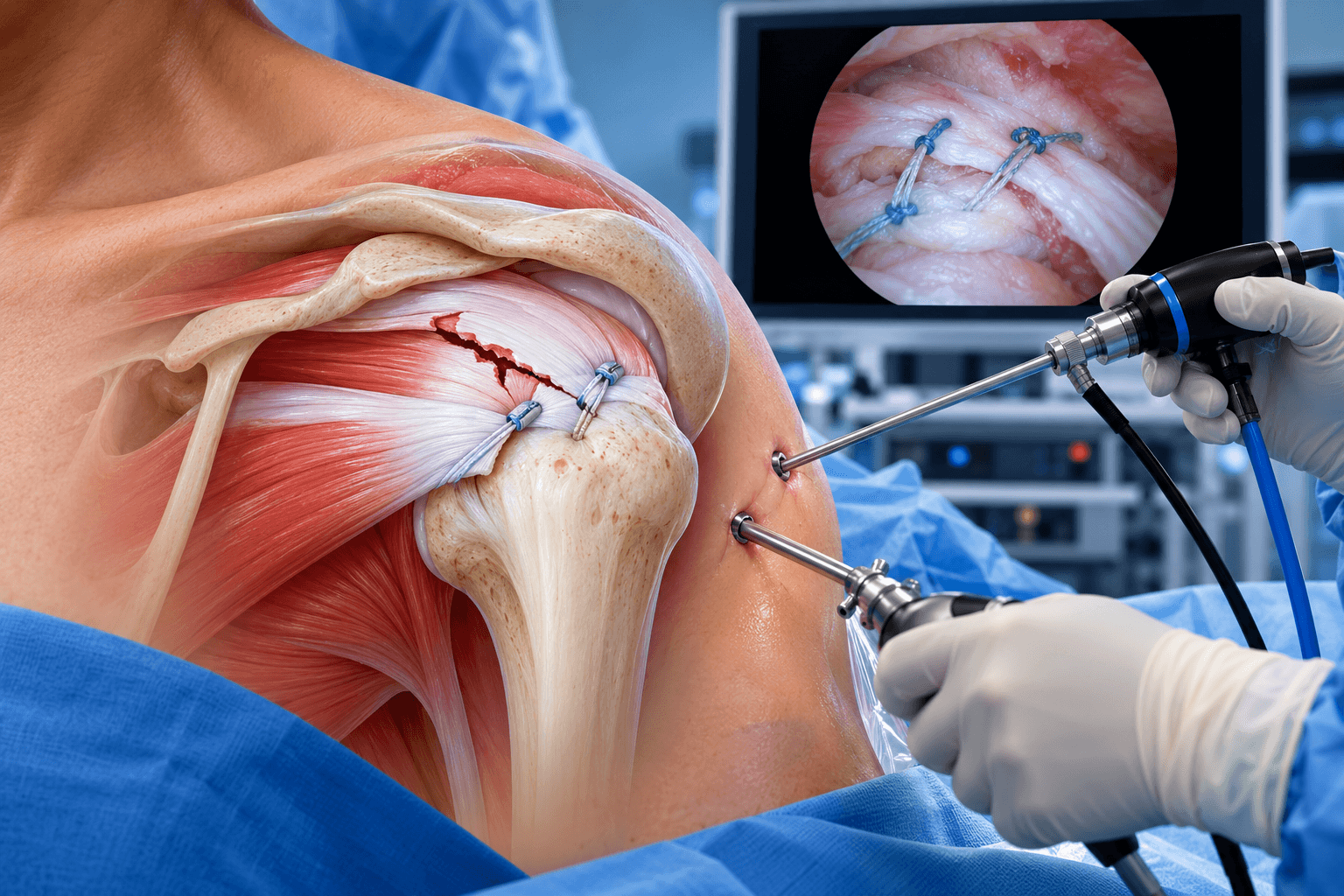
Biceps Tenodesis surgery releases the long-head biceps tendon from its attachment near the top of the shoulder socket, removes or bypasses diseased tendon tissue and secures the healthier tendon to the humerus.
The operation can be entirely arthroscopic, open through a small incision or combined.
Fixation can use an interference screw, cortical button, suture anchor or suture-based technique.
The surgeon aims to eliminate the painful intra-articular tendon while preserving an appropriate biceps length-tension relationship.
General Anaesthesia
Most procedures use general anaesthesia.
A regional block can be added for pain control.
The patient is positioned in the beach-chair or lateral position depending on the procedure and surgeon preference.
If associated arthroscopy is planned, the entire shoulder is prepared sterilely.
Diagnostic Shoulder Arthroscopy
Many tenodeses begin with arthroscopy.
The surgeon examines the rotator cuff, labrum, cartilage, biceps tendon and pulley.
The tendon can be probed to assess instability and tearing.
This confirms whether the biceps pathology correlates with the preoperative plan.
Associated conditions can be treated during the same operation.
Evaluating the Biceps Tendon
A healthy tendon appears smooth and stable.
A diseased tendon can be frayed, red, thickened, partially torn or unstable.
The surgeon may pull additional tendon into the joint temporarily to inspect the portion usually hidden in the groove.
This is important because significant tendon disease can exist beyond the visible intra-articular segment.
Releasing the Tendon
The tendon is detached from its superior labral attachment.
This step resembles a tenotomy initially.
The difference is that tenodesis subsequently fixes the tendon to the humerus.
Any unstable residual stump at the superior labrum can be smoothed when necessary.
Preserving Biceps Length
The surgeon tries to secure the tendon at an appropriate tension.
If fixation is too proximal or too tight, the muscle can be overtensioned.
If it is too distal or loose, contour and function can be affected.
Several anatomical landmarks and technical methods help maintain the proper length-tension relationship.
Arthroscopic Suprapectoral Technique
The surgeon identifies the tendon along the proximal humerus.
A fixation site is prepared above the upper border of the pectoralis major.
An anchor or screw construct secures the tendon.
The diseased proximal tendon segment is removed.
This can be performed through arthroscopic portals without a larger open incision.
Open Subpectoral Technique
After arthroscopic release, a small incision is commonly made near the upper inner arm at the lower border of the pectoralis major.
The tendon is retrieved from the bicipital groove.
The abnormal proximal segment can be removed.
The healthier tendon is fixed to the humerus below the pectoralis tendon.
The wound is then closed in layers.
Why Use a Subpectoral Technique?
One rationale is removal of tendon from the bicipital groove.
If residual diseased tendon remains within the groove, it has historically been considered a potential source of persistent pain.
Clinical evidence, however, has not demonstrated a simple universal advantage of one location.
The technique remains highly effective when appropriately performed.
Why Use a Suprapectoral Technique?
It can be completed arthroscopically and avoids the additional subpectoral incision.
It is convenient when the surgeon is already performing shoulder arthroscopy.
Fixation can be strong.
Modern studies show good patient-reported outcomes with both suprapectoral and subpectoral approaches.
Interference Screw Fixation
The surgeon prepares a socket or tunnel in the humerus.
The tendon is inserted into the bone and secured with a screw alongside it.
This creates tendon-bone contact within the socket.
Interference screws have a long history in tenodesis.
Different materials and diameters are available.
Cortical Button Fixation
A small cortical button can secure the tendon through a relatively small bone tunnel.
The button engages the far or near cortex depending on the system.
Biomechanical literature supports strong fixation.
The surgeon must still choose the fixation location and tunnel carefully because drilling alters the local bone structure.
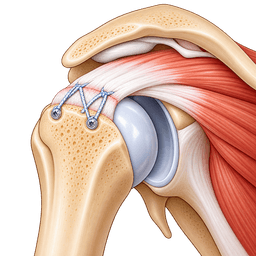
Suture Anchor Fixation
An anchor is inserted into the humerus.
Sutures from the anchor secure the tendon against or into bone.
This method can avoid a larger-diameter interference-screw tunnel.
Clinical outcomes depend on secure fixation and biological healing rather than implant marketing.
Soft-Tissue Tenodesis
Some techniques secure the tendon to surrounding soft tissue rather than using a bone implant.
These techniques avoid drilling.
However, fixation characteristics and maintenance of tendon length differ.
The approach is selected according to surgeon preference and the clinical situation.
Onlay vs Inlay Tenodesis
An onlay technique fixes the tendon against the surface of the humerus.
An inlay technique places part of the tendon into a bone socket.
Both concepts are used.
Evidence has not established that one configuration is clinically superior in every patient.
Fixation strength must be combined with preservation of bone and safe surgical technique.
What Is the Best Fixation Method?
There is no single implant that has proved universally best in clinical practice.
Biomechanical studies show that several modern constructs provide strong fixation.
Interference screws can demonstrate high stiffness in laboratory testing, while buttons and anchors also provide effective constructs.
Laboratory load-to-failure testing does not automatically translate into superior patient outcomes.
Surgeon familiarity and safe placement matter.
Bone Tunnel Size
Any drilled hole creates a temporary stress riser in bone.
Larger tunnels can theoretically reduce local resistance.
Humeral fracture after Biceps Tenodesis is rare but recognized.
Techniques that preserve bone can be attractive, particularly in athletes exposed to rotational loads.
The patient's activity restrictions allow biological adaptation during early recovery.
Protecting Nearby Nerves
Subpectoral dissection occurs near important neurovascular structures.
The surgeon avoids aggressive medial retraction.
Proper exposure and instrument direction reduce risk.
Nerve complications remain uncommon but are part of informed consent.
Treating the Superior Labrum
After the biceps is released, the remaining superior labrum is inspected.
Degenerative unstable fragments can be smoothed.
A separate clinically important labral tear can require repair, but tenodesis itself generally reduces the need to maintain the biceps attachment at the superior labrum.
Treating the Subscapularis
If biceps instability is caused by an upper subscapularis tear, the tendon injury can be repaired arthroscopically.
This is a significant addition.
The postoperative protocol then protects both the subscapularis and the tenodesis.
The patient should expect greater shoulder-motion restrictions.
Treating the Rotator Cuff
A supraspinatus or other cuff tear can be repaired during the same operation.
Suture anchors reattach the cuff to the greater tuberosity.
The cuff repair generally dictates sling duration and shoulder-motion progression.
Resisted biceps activity remains restricted as well.
Treating SLAP Pathology
The painful biceps-labral complex can be addressed by releasing the biceps and performing tenodesis.
This removes traction from the superior labrum.
The surgeon can debride unstable tissue.
Formal superior labral repair is usually unnecessary when the treatment strategy intentionally transfers the biceps away from that attachment.
Closing the Arthroscopic Portals
Small portal incisions are closed with sutures or adhesive strips.
Dressings are applied.
If a subpectoral incision was used, it is closed in layers.
The arm is placed into a sling.
How Long Does Biceps Tenodesis Surgery Take?
An isolated bicep tenodesis surgery commonly takes approximately 30 to 90 minutes.
The exact time depends on whether the technique is arthroscopic, open or combined.
A tenodesis performed together with rotator cuff repair, labral surgery or other procedures can make total operating time two hours or considerably longer.
Hospital time also includes preparation and recovery from anaesthesia.
Hospital stay
Is Biceps Tenodesis Outpatient Surgery?
Yes.
Most isolated tenodesis procedures are performed as day surgery.
The patient goes home once alert, medically stable and able to manage pain and nausea.
An overnight admission can still be appropriate for medical or logistical reasons.
Recovery Room
The arm can remain numb after a nerve block.
Circulation and neurological status are checked.
Pain medication is adjusted.
Patients should not actively test elbow strength while the arm remains numb.
The fixation is new even though pain sensation is temporarily reduced.
Pain After Surgery
Pain is usually greatest during the first few days.
An interscalene block can reduce immediate discomfort.
Oral medication is then used as sensation returns.
Pain should progressively decrease.
Increasing severe pain after an initial improvement should be discussed with the surgical team.
Sling
A sling protects the arm and improves comfort.
For isolated tenodesis, two to four weeks is common, although protocols differ.
Some surgeons allow earlier discontinuation.
A concomitant rotator cuff or labral repair can require substantially longer immobilization.
Elbow Motion
Elbow motion can often begin relatively early, but it may initially be passive or assisted.
The key concern is avoiding forceful biceps contraction.
Straightening and bending the elbow gently are very different from lifting a weight with the elbow.
The surgeon's protocol should specify the distinction.
Hand and Wrist Motion
Finger and wrist movement generally begins immediately.
This reduces stiffness and swelling.
The patient can perform light hand activities as long as they do not indirectly load the biceps through carrying or pulling.
Wound Care
Small arthroscopy portals and any open tenodesis incision need to remain clean and protected.
Mild bruising is common.
Increasing redness, persistent drainage, fever or worsening swelling requires medical advice.
Subpectoral wounds should be monitored particularly carefully because of their location near a skin fold.
Discharge
The patient leaves with instructions for pain medication, wound care, sling use and permitted exercises.
A responsible adult should accompany the patient after general anaesthesia.
The patient should also have clear information about when physiotherapy and postoperative review begin.
Recovery
Recovery after Biceps Tenodesis usually takes several months because the tendon needs to heal securely to the humerus before heavy biceps loading is safe.
Patients frequently feel much better before biological healing is complete.
The early phase therefore focuses on protection.
Shoulder and elbow movement then increase gradually.
Resisted biceps strengthening comes later.
Biceps Tenodesis Protocol
A typical biceps tenodesis protocol progresses from protection to active motion, light strengthening and eventually unrestricted lifting or sport.
One widely used institutional protocol divides recovery into an early protection phase during the first four weeks, an active-motion phase through approximately six weeks, initial strengthening thereafter and progressive return to advanced activity over roughly three to four months or longer.
These timeframes are guides rather than guarantees.
Associated procedures can change almost every milestone.
Bicep Tenodesis Protocol and Individualization
Patients often search for a single bicep tenodesis protocol, but the surgeon's instructions should take priority over an internet template.
Fixation method, tendon quality and associated shoulder surgery matter.
A healthy athlete with isolated subpectoral fixation can progress differently from a patient undergoing tenodesis plus a massive cuff repair.
The safest rehabilitation programme is based on the actual operative report.
Phase 1: Protecting the Fixation
During the first few weeks, the central goal is to avoid excessive tension through the healing tendon.
The sling supports the arm.
Shoulder motion is allowed according to the procedure.
Elbow movement is introduced without significant resistance.
Heavy lifting, pulling and carrying are prohibited.
Why Biceps Loading Is Restricted
The fixation initially depends primarily on sutures, screw or button mechanics.
Over time, tendon tissue bonds to bone.
The biological attachment becomes progressively stronger.
Premature repetitive contraction can cause the tendon to migrate or fixation to fail before this interface matures.
This is why a patient who feels almost pain-free at three weeks is not automatically ready for curls.
What Can You Not Do After Bicep Tenodesis?
During early recovery, you should generally not lift heavy objects, perform resisted elbow flexion, perform forceful forearm supination, pull heavy doors or objects, carry bags with the operated arm, perform curls, rows, chin-ups or pull-ups, or use the arm for forceful manual work until your surgeon progresses you.
Sudden catching loads are particularly undesirable.
Patients should also avoid using the operated arm to push themselves out of bed or a chair if that movement places substantial stress through the shoulder and elbow.
Restrictions become less strict as healing progresses.
Lifting Restrictions
Many protocols initially limit the operated arm to very light functional use.
Even an object that seems light can generate substantial tendon force when held away from the body.
The surgeon can progressively increase limits as healing advances.
An exact kilogram or pound restriction should come from the treating team rather than being universally applied.
No Biceps Curls Early
A curl directly activates the healing muscle-tendon unit.
It is therefore one of the most obvious early restrictions.
Resistance begins only after sufficient healing.
The first strengthening is usually much lighter than the patient's preoperative gym routine.
Avoid Resisted Supination
The biceps is a powerful forearm supinator.
Turning a screwdriver, opening a tight jar or carrying an object with the palm upward can generate biceps force.
Patients often remember not to curl a dumbbell but forget that everyday twisting can also load the tendon.
Early activity should therefore remain deliberate.
Pulling Restrictions
Rows, pulling luggage, opening heavy doors and walking a strong dog can activate the biceps abruptly.
These activities are restricted during early healing.
A sudden leash pull is particularly problematic because the load is unpredictable.
Patients should plan around these situations.
Pushing
Pushing relies less directly on the biceps than pulling, but heavy pushing can still place stress through the shoulder.
If tenodesis is combined with cuff or labral surgery, pushing can be significantly restricted.
Patients should not use the operated arm to push up from a chair unless specifically permitted.
First 24–72 Hours
The priority is pain control and protection.
The nerve block can keep the arm numb.
Finger, wrist and permitted elbow motion begins.
The patient sleeps with the shoulder supported.
Ice can be used according to the hospital's instructions.
Week 1
Pain and swelling begin to improve.
Sling use continues.
The patient learns how to dress and perform hygiene without forceful shoulder movement.
Passive or assisted exercises are started when prescribed.
No meaningful biceps resistance is used.
Weeks 2–4
The incisions continue healing.
Shoulder range progresses if no associated repair limits it.
Elbow motion becomes more natural.
The sling can sometimes be weaned near the end of this phase after an isolated tenodesis.
The patient still avoids lifting and resisted biceps work.
Weeks 4–6
Active shoulder and elbow motion can increase.
Many isolated tenodesis patients discontinue the sling.
The arm can be used for light daily activities.
This does not mean normal lifting has resumed.
Tendon-to-bone healing remains incomplete.
Weeks 6–8
Light strengthening commonly begins or increases during this period.
Shoulder strengthening can include the rotator cuff and scapular muscles.
Direct biceps resistance is introduced cautiously according to the surgeon's protocol.
Exercises begin with very low load.
Technique and control matter more than weight.
Weeks 8–12
Strength progressively improves.
The patient can perform more normal household activities.
Resistance exercises are advanced.
The biceps can tolerate increasing load, but maximal curls or explosive pulling remain inappropriate.
Patients returning to manual employment begin job-specific preparation.
Months 3–4
Many isolated tenodesis patients approach broad functional recovery.
Strengthening becomes more demanding.
Gym activity can expand.
Functional pulling and carrying are gradually reintroduced.
Athletes begin more specific training when strength, motion and pain criteria are satisfactory.
Months 4–6
Heavy lifting and sports return progressively.
Athletes should regain strength and endurance rather than simply waiting for a date.
Overhead athletes can need more time.
Patients with combined rotator cuff repair frequently remain on a slower trajectory.
Sling After Biceps Tenodesis
Isolated procedures commonly require a sling for approximately two to four weeks.
Some surgeons use shorter or longer periods.
The sling can be removed for permitted exercises and hygiene.
When cuff or labral repair is performed, sling duration commonly increases because those repaired structures need additional protection.
Sleeping in the Sling
Many patients sleep in the sling during the early phase.
A reclined position is often more comfortable.
A pillow under the elbow supports the arm.
Sleeping instructions become less restrictive as sling use ends.
When Can I Sleep on the Operated Side?
Direct pressure is usually uncomfortable early.
Patients can return once the incision is healed, sling restrictions have ended and lying on the shoulder is comfortable.
Associated cuff repair can delay this considerably.
There is no benefit in forcing side sleeping before the shoulder tolerates it.
Showering
Patients follow dressing instructions.
The surgical wounds should not be soaked until healed.
The arm can be supported during showering.
Patients should avoid holding the arm overhead or forcefully reaching behind the back during the early phase.
Dressing
Front-opening clothing is practical.
The operated arm goes into the sleeve first.
Pulling a tight shirt over the head can unexpectedly load the shoulder.
Clothing becomes easier as motion improves and the sling is discontinued.
Driving
Driving should wait until the sling is no longer needed, sedating medication has stopped and the patient can control the vehicle safely.
A sudden steering correction can require both arms.
Associated surgery can delay driving beyond what would be expected after isolated tenodesis.
Returning to Desk Work
Desk work can sometimes resume within several days to two weeks after isolated surgery.
The forearm should be supported.
Typing itself usually generates relatively low tendon load.
Commuting, dressing and prolonged sling discomfort can be bigger barriers than computer work.
Return to Manual Work
Manual work commonly requires several months.
The exact timeline depends on lifting demands.
A worker repeatedly carrying 20-kilogram loads needs more healing and strength than someone performing light assembly work.
Temporary restrictions should be written clearly for the employer.
Return to Heavy Labor
Heavy pulling, lifting and overhead tasks commonly return around four to six months in uncomplicated isolated cases, although some patients progress faster or slower.
Combined rotator cuff repair often pushes the timeline later.
The worker should demonstrate practical strength before resuming unrestricted duty.
Gym After Biceps Tenodesis
Gym return is staged.
Lower-body training can resume earlier if the operated arm remains protected.
Stationary cycling and walking can also be useful.
Upper-body training returns gradually.
A patient should not substitute a different exercise that secretly loads the biceps just because curls are prohibited.
Biceps Curls
Curls are introduced with very light resistance after the surgeon permits active strengthening.
The patient progresses slowly.
Good form is important.
The first objective is rebuilding endurance and tendon tolerance, not restoring a preoperative one-repetition maximum.
Rows
Rows place substantial load through the biceps and shoulder.
They are reintroduced later than basic motion exercises.
Cable or machine resistance can begin light.
Heavy barbell rows are an advanced activity.
Pull-Ups and Chin-Ups
These are high-load biceps exercises.
Chin-ups can particularly stress the biceps because of the supinated grip.
They should not be used as an early “test.”
Return generally occurs only after substantial strength recovery and surgeon clearance.
Bench Press
Bench pressing is less biceps-dominant than curls but still stresses the shoulder.
The timing depends partly on associated pathology.
If the tenodesis was combined with rotator cuff or labral repair, bench pressing can be delayed for several months.
Depth, load and technique should be advanced gradually.
Push-Ups
Push-ups are generally reintroduced after the shoulder has recovered sufficient strength.
Wall and elevated push-ups can precede floor versions.
Although the biceps is not the primary mover, the shoulder must stabilize the arm under body weight.
Associated procedures determine the timeline.
Swimming
Swimming requires repeated shoulder and biceps activity.
The patient needs near-full comfortable motion and adequate endurance.
Return begins gradually.
Long-distance or competitive swimmers need substantially more preparation than someone swimming casually.
Golf
Putting can return before full swings.
The swing requires coordinated shoulder motion and arm control.
Patients can progress through partial swings.
Heavy lifting of the golf bag should be considered separately from swinging.
Tennis and Racquet Sports
Groundstrokes and serves create repeated shoulder forces.
The patient first restores motion and strength.
Serving generally returns after lower-demand strokes.
Competitive athletes need a gradual volume progression.
Throwing Sports
Throwing places significant demand on the shoulder.
For patients who underwent tenodesis for SLAP pathology, returning to throwing is especially important but can be unpredictable.
An interval throwing programme is used.
Velocity, distance and volume increase gradually.
Return to Sport
A systematic review of athletic activity following Biceps Tenodesis reported that most patients returned to sport, with an average return around five months in the included literature, although studies varied considerably.
Return to the same preinjury level is less consistent than return to some sport.
Overhead athletes require particularly realistic counseling.
The surgeon should avoid promising a specific competitive performance level.
Intimacy
Sexual activity can resume when the operated shoulder can remain protected and the arm does not need to support substantial body weight.
The patient should avoid sudden pulling or lifting.
Comfort usually improves rapidly after isolated tenodesis.
Combined procedures can create more substantial restrictions.
When Does the Tendon Heal to Bone?
Tendon-to-bone healing develops gradually over weeks and continues maturing over months.
There is no single day when the tendon changes from “unhealed” to fully healed.
This gradual biology explains why rehabilitation progressively increases load.
Fixation provides initial stability while the biological attachment develops.
What If I Accidentally Use the Biceps?
Minor accidental activity does not automatically mean the repair has failed.
Sudden severe pain, a popping sensation, new bruising or a visible change in biceps contour can be concerning.
The surgeon should assess major new symptoms.
Patients should not repeatedly test the tendon afterward.
Signs of Fixation Failure
Potential signs include a sudden painful pop, new distal migration of the biceps muscle, bruising or persistent weakness.
Some failures produce primarily cosmetic change.
Imaging can be used when diagnosis is uncertain.
Treatment depends on symptoms and activity demands.
Biceps Tenodesis Scar
Arthroscopic techniques leave several small portal scars.
A subpectoral technique adds a short incision near the upper inner arm.
The scar initially appears pink or raised and generally fades over time.
Scar length varies according to technique and patient anatomy.
Scar Care
Once the incision is completely healed, massage and silicone-based scar products can be considered according to the surgeon's advice.
Sun protection reduces pigmentation.
Patients should not apply creams or adhesive products onto an incompletely healed incision.
Full Recovery
Many patients feel substantially improved by three months.
Strength can continue improving for several additional months.
High-demand sport commonly requires four to six months or more.
If the tenodesis accompanies cuff repair, the complete recovery can extend toward six to twelve months.
Recovery timeline
- Protect the tenodesis fixation and control postoperative pain.1Protect the tenodesis fixation and control postoperative pain.
Days 0–14
The sling supports the arm. Hand and wrist movement begins, and elbow movement follows the surgeon's permitted passive or assisted range. The patient avoids resisted elbow flexion and forearm supination, lifting, pulling and forceful carrying. Shoulder motion depends on whether another procedure was performed.
- Maintain protection while restoring comfortable basic mobility.2Maintain protection while restoring comfortable basic mobility.
Weeks 2–4
Pain and swelling decrease. Shoulder range progresses after isolated tenodesis. The sling can begin to be reduced near the end of this period in some protocols. Normal light hand use increases, but the patient still avoids meaningful biceps resistance and heavy household activity.
- Transition toward normal active motion.3Transition toward normal active motion.
Weeks 4–6
The sling is commonly discontinued after isolated surgery. Active shoulder and elbow motion become more natural. Scapular control improves. Heavy lifting remains prohibited because the tendon-bone interface continues to mature.
- Introduce and progressively develop strength.4Introduce and progressively develop strength.
Weeks 6–12
Rotator cuff and scapular strengthening become more substantial. Direct biceps resistance is gradually introduced according to surgeon instructions, beginning with low load. Patients progressively return to normal household use and prepare for more demanding work activities.
- Restore practical strength, endurance and occupational function.5Restore practical strength, endurance and occupational function.
Months 3–4
Resistance exercises become heavier. Controlled pulling, carrying and gym activities return gradually. Many isolated tenodesis patients feel close to normal in ordinary daily life, although maximal biceps loading remains a later milestone.
- Return to heavy lifting, sport and high-demand activity.6Return to heavy lifting, sport and high-demand activity.
Months 4–6+
Athletes and manual workers complete advanced strengthening and functional testing. Pull-ups, heavy curls and high-force sport are reintroduced only after strength and pain criteria are satisfactory. Overhead athletes and patients with associated repairs can require a longer timeline.
Outcomes and success rates
Biceps Tenodesis generally provides substantial pain relief and functional improvement for appropriately selected patients.
The procedure has been studied in patients with isolated biceps pathology, SLAP tears and combined shoulder disorders.
Broad patient-reported outcomes are usually favorable.
Results are influenced by the underlying shoulder pathology, not only by the tenodesis itself.
Pain Relief
Removal of the diseased proximal tendon from the shoulder can substantially reduce anterior shoulder pain.
Persistent pain can still occur.
This can result from residual bicipital pain, rotator cuff pathology, arthritis, stiffness or another diagnosis.
Correct preoperative identification of the pain generator is therefore crucial.
Functional Improvement
Most patients regain strong everyday arm function.
Shoulder scores generally improve substantially after surgery.
The biceps remains functionally connected through the tenodesis and intact short-head tendon.
Successful recovery typically allows return to lifting, work and recreational sport.
Strength
Clinically important long-term elbow-flexion weakness is uncommon after successful tenodesis.
Supination function is also generally well preserved.
Specific high-level athletic demands can reveal smaller performance differences not obvious during ordinary daily activity.
Training quality and associated shoulder pathology matter.
Cosmetic Outcome
Tenodesis generally maintains a more normal biceps contour than tenotomy.
This is one reason active and cosmetically concerned patients often prefer it.
A Popeye deformity can still occur if fixation fails or tendon length changes.
The risk is lower than when the tendon is intentionally left unattached.
Cramping
Biceps cramping can occur after either procedure but is commonly one factor considered when choosing tenodesis over tenotomy.
Most patients do not experience disabling long-term cramping.
Persistent cramping should be assessed along with tendon position and muscle function.
Tenodesis vs Tenotomy Outcomes
High-level randomized evidence demonstrates that both procedures can improve pain and general shoulder function.
The clearest consistent difference favors tenodesis for reducing cosmetic Popeye deformity.
Other differences in strength, cramping and outcome scores are smaller or inconsistent across studies.
Patient preferences therefore remain important.
Outcomes in Younger Patients
Systematic evidence in patients aged 35 or younger has demonstrated generally favorable clinical scores after tenodesis.
Return-to-sport rates vary considerably between studies, particularly for overhead athletes.
This variation should discourage overly confident promises.
The operation can be effective in young people, but returning to elite athletic performance depends on much more than tendon healing.
Biceps Tenodesis vs SLAP Repair in Younger Patients
Systematic comparative literature has reported similar postoperative pain improvement with both treatments and has suggested favorable return-to-sport and reoperation patterns for tenodesis in selected younger patients.
This has changed the historical assumption that young age automatically requires SLAP repair.
Patient selection remains essential.
A healthy traumatic labrum in a very young overhead athlete can still be treated differently from degenerative biceps-labral pathology.
Return to Sport
Most athletes can return to some athletic activity.
A systematic review reported an overall return to sport above three-quarters of studied patients, with the average return around five months.
Returning to exactly the same competitive level is less certain.
The available studies also vary in their criteria for clearing athletes, so a single percentage should not be presented as a personal guarantee.
Overhead Athletes
Results are more variable.
Pitchers and other high-level throwing athletes depend on extremely precise shoulder mechanics.
Pain relief does not automatically equal return to previous velocity or workload.
These athletes need a carefully structured throwing programme.
Expectations should be discussed before surgery.
Open vs Arthroscopic Outcomes
Systematic reviews generally show good outcomes with both techniques.
No major universal functional advantage has been established.
Recent large reviews have suggested differences in the types of complications reported: arthroscopic suprapectoral surgery can have somewhat more stiffness or reoperation in some datasets, while open subpectoral surgery can show more wound or nerve-related events.
The overall message remains that both approaches are valid.
Suprapectoral vs Subpectoral Outcomes
Clinical outcome scores are generally similar.
Some recent meta-analyses report complication differences favoring subpectoral techniques in certain comparisons, while other large reviews show a more nuanced pattern depending on complication type.
These differences should be interpreted in the context of study design, associated procedures and surgeon experience.
A patient should not select an operation based solely on a headline that one location is universally safer.
Fixation Method Outcomes
Interference screw, cortical button and suture-anchor fixation can all produce satisfactory results.
Laboratory studies show biomechanical differences between constructs, but clinical superiority is less clear.
A stronger laboratory failure load does not necessarily produce a better long-term shoulder.
Tendon biology, tunnel location and surgical technique are equally important.
Persistent Anterior Shoulder Pain
A minority of patients experience ongoing anterior pain.
Large clinical series show that persistent pain can occur regardless of fixation location.
This reinforces the importance of recognizing other shoulder conditions before surgery.
Tenodesis is not a universal treatment for all anterior shoulder pain.
Revision Surgery
Revision is uncommon but possible.
Reasons include fixation failure, painful residual tendon, persistent groove pain, infection or another untreated diagnosis.
Revision frequently uses a subpectoral site below the previous fixation.
The surgeon first determines why the original surgery failed.
How Long Does Biceps Tenodesis Last?
Once the tendon has healed securely to the humerus, there is no routine expiration date for the repair.
Many patients maintain durable improvement for years.
The shoulder can still develop new rotator cuff disease, arthritis or other pathology later in life.
These future conditions are separate from the integrity of the original tenodesis.
Implants and technology
Interference Screws
An interference screw compresses the tendon within a bone socket.
The technique creates a broad tendon-bone interface.
Screws can be made from different materials.
The surgeon selects diameter and location according to tendon and bone size.
Large unnecessary tunnels should be avoided because preserving humeral bone remains important.
Cortical Buttons
A cortical button provides fixation through a small drilled tunnel.
The tendon is secured using sutures connected to the button.
Buttons can provide high initial fixation strength.
Their relatively small tunnel can preserve bone.
Accurate drilling and implant deployment are essential.
Suture Anchors
Suture anchors are embedded into the humerus.
High-strength sutures secure the biceps tendon.
Anchor-based techniques are familiar to shoulder surgeons because similar technology is used in rotator cuff and labral repair.
Different anchor materials and configurations exist.
All-Suture Anchors
All-suture anchors use a compact textile implant that expands within bone.
They require relatively small drill holes.
Bone preservation can be useful.
Long-term clinical success still depends on tendon healing rather than anchor size alone.
PEEK and Other Polymer Implants
Polymer materials are used for some screws and anchors.
They can be radiolucent and durable.
Other implants use biocomposite materials designed to change within bone over time.
There is no need for patients to choose an implant based solely on material marketing.
Tenodesis Screws
Some implant systems are specifically designed to hold the tendon within a prepared humeral socket.
The screw size is chosen in relation to the tendon and tunnel.
Secure seating is important.
Excessively aggressive drilling or screw placement can increase bone-related risk.
Soft-Tissue Fixation
Implant-free or soft-tissue fixation can be used in selected techniques.
The tendon is secured to nearby structures rather than a drilled bone socket.
The biomechanical and anatomical considerations differ.
It remains one of several established approaches.
Arthroscopic Cameras
Modern high-definition arthroscopes allow detailed inspection of the intra-articular tendon, superior labrum and pulley.
The surgeon can identify subtle instability and partial tearing.
The camera also helps evaluate the subscapularis and rotator cuff before deciding whether tenodesis alone is sufficient.
Suture-Passing Devices
Specialized instruments pass sutures through the tendon.
They allow secure locking configurations.
The surgeon aims to distribute force without cutting through tendon tissue.
Tendon quality influences which stitch pattern is appropriate.
Radiofrequency and Shaver Devices
These tools help expose the fixation site and manage surrounding tissue.
They can also smooth unstable superior labral remnants after tendon release.
The surgeon avoids unnecessary thermal damage.
Direct visualization is maintained throughout use.
Ultrasound-Guided Diagnosis
Although not an implant, ultrasound technology plays an important role in diagnosing long-head biceps instability and groove pathology.
Dynamic examination can show tendon movement.
This can be particularly useful when symptoms occur during specific arm positions.
MRI
High-quality MRI helps identify tendon degeneration and associated pathology.
It is particularly important when the treatment decision depends on whether the rotator cuff or superior labrum also needs surgery.
Imaging is not a substitute for clinical evaluation.
Biologic Augmentation
Routine PRP, stem-cell treatment or other biological augmentation is not required for standard Biceps Tenodesis.
Evidence does not support promising dramatically faster healing through such add-ons.
The core treatment remains secure fixation, healthy tendon contact with bone and appropriate rehabilitation.
Risks and how they are managed
All surgery carries risk. Partner hospitals follow enhanced-recovery and infection-prevention protocols, and your surgeon will discuss the risks specific to your case before consent.
- Persistent anterior shoulder pain: Some patients continue to experience pain despite successful tendon fixation, particularly when another shoulder condition is contributing.
- Fixation failure: The tendon can pull away from its new attachment, especially if heavily loaded before healing.
- Popeye deformity: Distal migration of the biceps muscle can occur if fixation fails or the tendon elongates.
- Biceps cramping: Some patients experience intermittent muscle cramping after surgery.
- Residual weakness: Most patients recover useful strength, but subjective or measurable weakness can persist.
- Shoulder stiffness: Postoperative stiffness can occur, particularly when the procedure is combined with other shoulder surgery.
- Loss of shoulder motion: Scar formation or associated repair restrictions can delay restoration of full motion.
- Infection: Infection is uncommon but can involve the arthroscopy portals or open subpectoral incision.
- Wound problems: The small open incision used for subpectoral tenodesis can develop delayed healing or superficial infection.
- Nerve injury: Nearby nerves can be irritated or injured during open or arthroscopic surgery.
- Musculocutaneous nerve injury: This is an uncommon but important risk during subpectoral dissection.
- Other neurological symptoms: Temporary numbness or weakness can also result from surgical positioning or regional anaesthesia.
- Blood-vessel injury: Major vascular complications are rare.
- Bleeding or hematoma: Blood can collect around the surgical site, particularly in patients with bleeding risks.
- Humeral fracture: Drilling a fixation hole creates a local stress riser. Systematic review data confirm that postoperative humeral fracture is rare but recognized.
- Anchor or implant pullout: Fixation hardware can lose purchase in bone.
- Implant reaction: Local reaction to implant material is uncommon but possible.
- Tendon migration: The tendon can heal at an altered length even without complete fixation failure.
- Continued groove pain: Pain can persist if residual tendon or another structure remains symptomatic.
- Failure to relieve SLAP-related symptoms: Tenodesis does not guarantee complete relief when the superior labrum is not the primary pain source.
- Rotator cuff symptoms: Untreated or progressive cuff pathology can continue to cause pain after successful tenodesis.
- Complex regional pain syndrome: Persistent disproportionate pain and autonomic changes can rarely occur.
- Blood clots: Venous thromboembolism is uncommon after shoulder surgery but possible.
- Anaesthetic complications: General anaesthesia can cause respiratory, cardiovascular and other complications.
- Regional block complications: Temporary numbness, diaphragm effects and rare nerve injury can occur after interscalene block.
- Scar sensitivity: The subpectoral incision can remain sensitive temporarily.
- Cosmetic dissatisfaction: Even a technically successful repair may not exactly reproduce the preinjury biceps contour.
- Need for revision surgery: Persistent pain, fixation failure or another mechanical problem can occasionally require further surgery.
Alternatives
- Physical therapy: Strengthening the rotator cuff and scapular stabilizers can reduce stress on the biceps and improve shoulder mechanics.
- Activity modification: Temporarily reducing repetitive overhead work, heavy lifting or provocative gym exercises can allow symptoms to settle.
- Pain medication: Acetaminophen and anti-inflammatory medication can be used when medically appropriate.
- Image-guided biceps sheath injection: Selected patients can obtain diagnostic or therapeutic relief, although injection does not repair structural tendon damage.
- Observation: Mild tendon abnormalities that do not meaningfully limit function can be monitored.
- Biceps tenotomy: Releasing the tendon without reattaching it can provide pain relief with simpler rehabilitation but carries a higher risk of cosmetic Popeye deformity.
- SLAP repair: Appropriate for selected younger patients with a true unstable superior labral lesion and healthy biceps tendon.
- Rotator cuff rehabilitation or repair: When cuff pathology is the primary problem, treating the cuff rather than the biceps alone can be more appropriate.
- Subscapularis repair: A symptomatic subscapularis tear associated with biceps instability can require direct tendon repair.
- Continued nonsurgical management: Appropriate when symptoms remain manageable and the expected surgical benefit does not justify the recovery period.
What Biceps Tenodesis costs
The contracted Turkey partner package next to approved self-pay benchmarks. Benchmarks are 20th–80th percentile ranges of approved records, normalised to USD.
Turkey package
$3,500 – $6,000
United States self-pay
$12,800 – $29,850
United Kingdom self-pay
$5,100 – $14,150
Germany self-pay
$4,350 – $12,300
Typical self-pay range by country
Surgeons who perform Biceps Tenodesis
All surgeonsHospitals offering this procedure
Antalya Yaşam Hospital
Private hospital in Muratpaşa, Antalya, with an orthopedics and traumatology department
BHT Clinic Istanbul Tema Hospital
Large private hospital in Atakent, Küçükçekmece, with an orthopedics and traumatology unit
Biruni University Hospital
University hospital in Küçükçekmece, Istanbul, with a published orthopedics and traumatology department
Çankaya Hospital for Orthopedic Care
Çankaya Hospital for Orthopedic Care is an orthopedic hospital in central Ankara with robotic-arm assisted surgery
Sources and references
Peer-reviewed guidance and institutional sources used to write and review this page.
- 01Patient-focused explanation of long-head biceps pathology, nonsurgical treatment, tenotomy and Biceps Tenodesis, including arthroscopic and small open approaches
American Academy of Orthopaedic Surgeons / OrthoInfo, 2026
https://www.orthoinfo.org/diseases--conditions/biceps-tendiniti
- 02Criterion- and time-based postoperative guidance covering early protection, sling use, range-of-motion progression, avoidance of resisted elbow flexion and supination, strengthening and advanced return to activity.
Mass General Brigham Sports Medicine, 2025
https://www.massgeneral.org/assets/mgh/pdf/orthopaedics/sports-medicine/physical-therapy/rehabilitation-protocol-for-biceps-tenodesis.pdf
- 03High-level randomized evidence comparing Biceps Tenodesis and tenotomy, including pain, shoulder outcome scores, strength, range of motion and cosmetic deformity.
Journal of Shoulder and Elbow Surgery / PubMed, 2021
https://pubmed.ncbi.nlm.nih.gov/33373685
- 04Comparative evidence evaluating Biceps Tenodesis and SLAP repair in patients younger than 40, including pain improvement, return to sport and reoperation.
Arthroscopy, Sports Medicine, and Rehabilitation / PubMed, 2022
https://pubmed.ncbi.nlm.nih.gov/36312714/
- 05Systematic review supporting favorable clinical outcomes in younger Biceps Tenodesis patients while demonstrating considerable variability in return-to-sport outcomes, especially among overhead athletes. PubMed
Arthroscopy / PubMed, 2023
https://pubmed.ncbi.nlm.nih.gov/36528216
- 06Systematic evidence on return to sport and duty after Biceps Tenodesis. The review reported an overall return-to-sport rate of approximately 81% among patients with available data and an average return at approximately 5.4 months, while highlighting the lack of standardized objective return-to-play criteria.
Knee Surgery, Sports Traumatology, Arthroscopy / PubMed, 2021
https://pubmed.ncbi.nlm.nih.gov/32185452/
- 07Contemporary meta-analysis comparing suprapectoral and subpectoral fixation and evaluating clinical outcome scores, range of motion and complications.
PubMed-indexed orthopedic literature, 2025
https://pubmed.ncbi.nlm.nih.gov/39998641