
Key takeaways
- 1Anterior hip replacement is total hip replacement performed through the front of the hip using the direct anterior approach.
- 2The approach generally works between major muscle groups rather than routinely detaching the principal posterior hip muscles and tendons, which is why it is often described as muscle-sparing.
- 3The implants are fundamentally the same types of hip replacement components used through other approaches. The main difference is how the surgeon reaches the joint.
- 4Some patients experience faster early functional recovery after the anterior approach, but long-term function is generally excellent with several established hip replacement approaches.
- 5Anterior does not automatically mean better. Surgeon experience, accurate implant positioning and choosing the appropriate approach for the individual patient are more important than marketing terminology.
- 6The anterior approach has specific risks, including numbness or altered sensation involving the lateral femoral cutaneous nerve and technical difficulties during femoral exposure.
- 7Most patients begin walking very early after surgery, often on the day of the operation.
- 8Anterior hip replacement precautions are often less restrictive than traditional historical posterior precautions, although activity instructions should still come from the operating surgeon.
- 9Anterior versus posterior hip replacement should be considered a comparison of surgical approaches rather than two different implants or two different joint replacements.
Overview
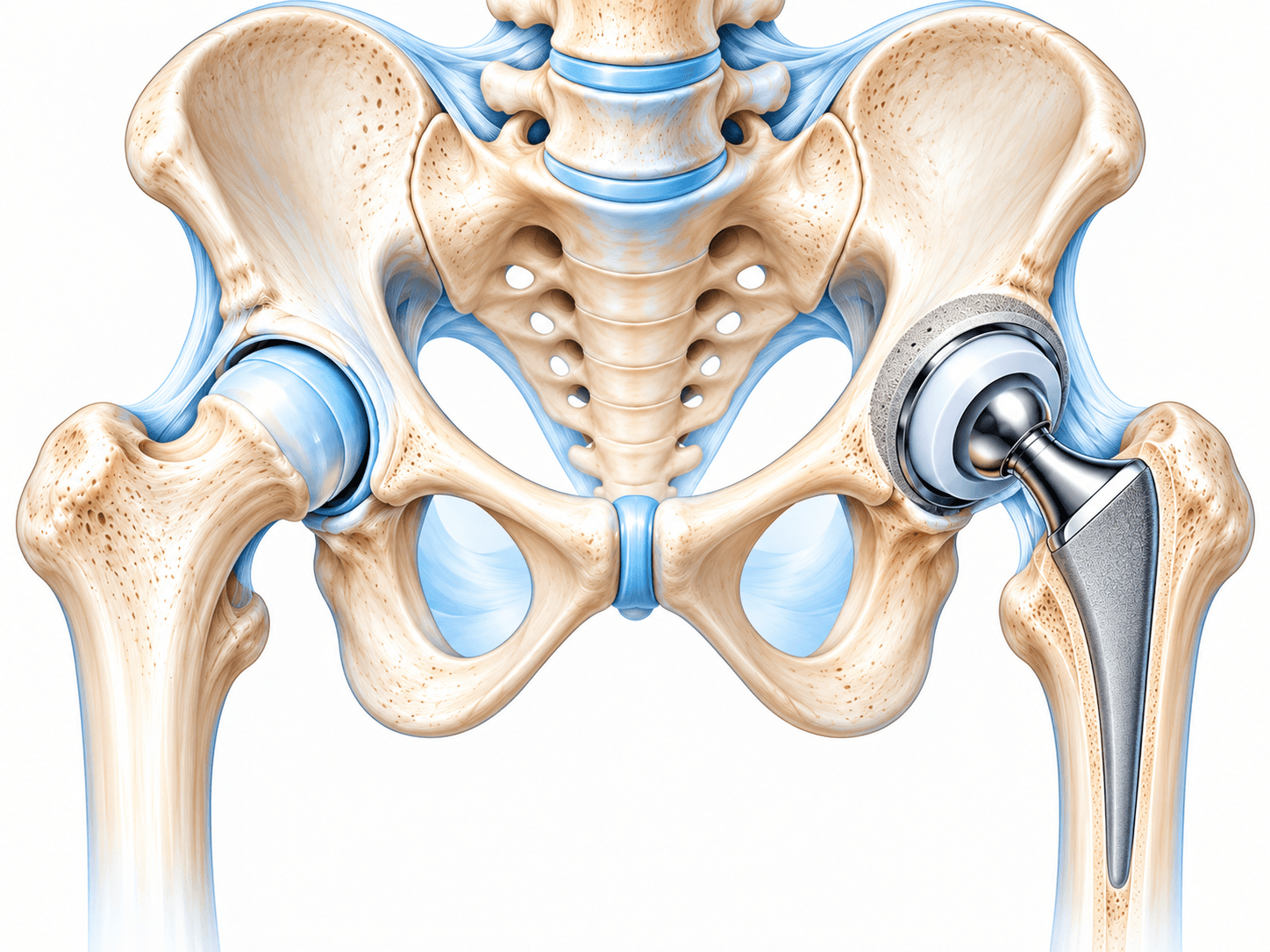
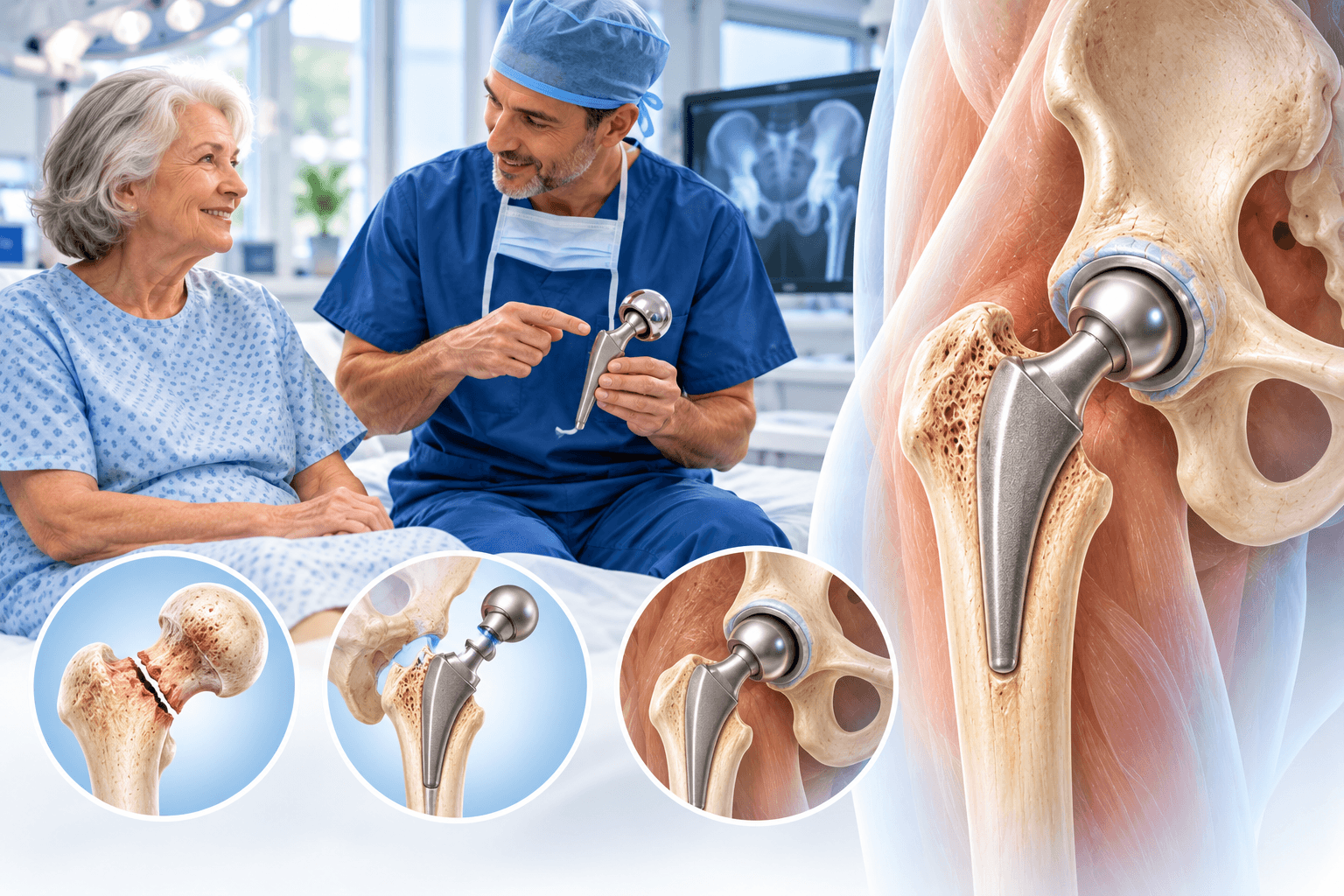
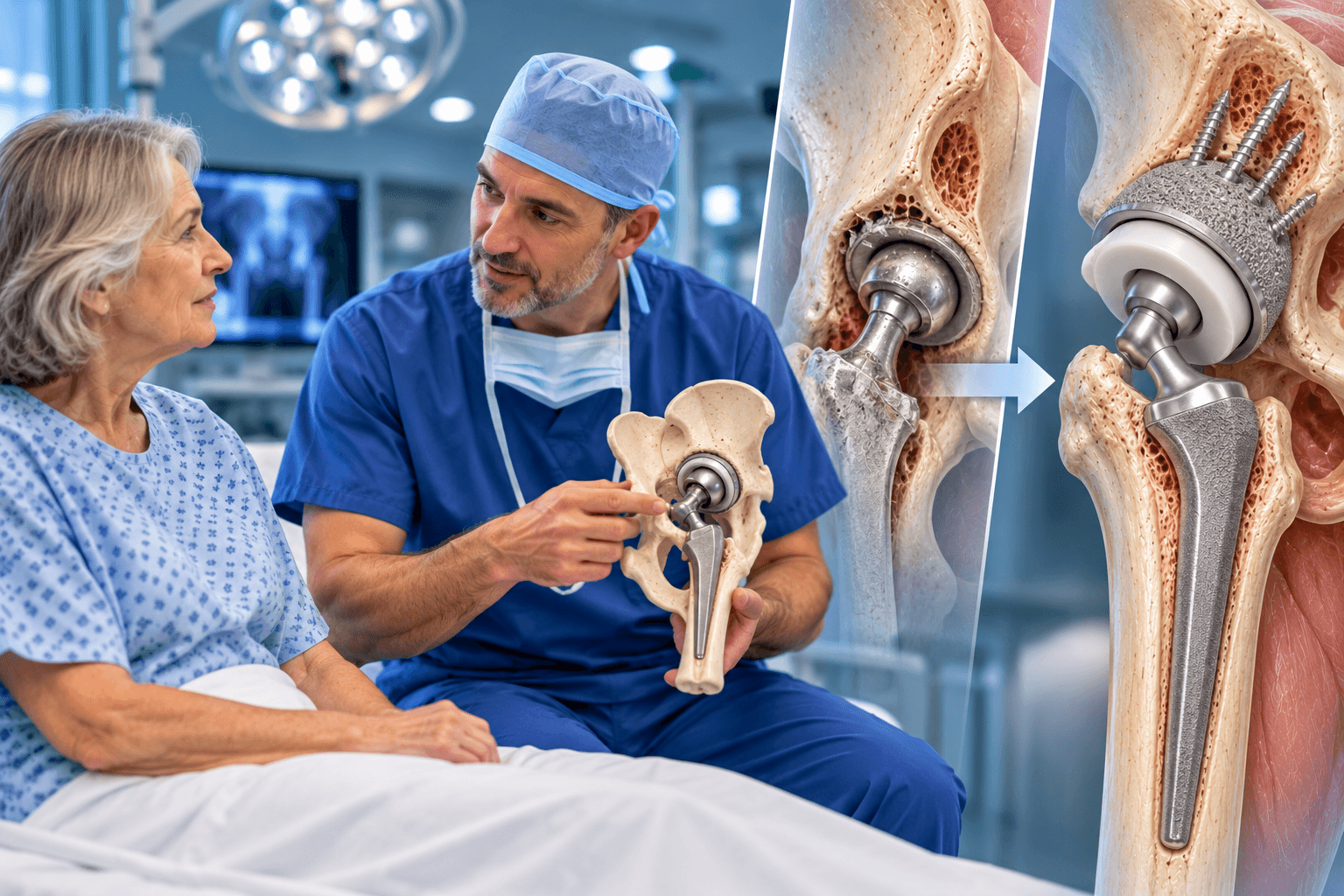
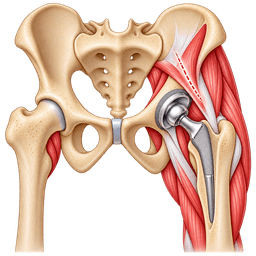
Anterior hip replacement is a total hip replacement performed through an incision at the front of the hip using the direct anterior surgical approach. The surgeon removes the damaged femoral head, prepares the acetabulum and femur, and implants artificial components that recreate the ball-and-socket joint.
The operation itself is still a total hip arthroplasty. The term anterior describes the route used to reach the hip rather than a different type of prosthesis. A patient undergoing anterior hip replacement typically receives the same broad categories of acetabular cup, liner, femoral stem and artificial femoral head that can be implanted through posterior or lateral approaches.
What distinguishes the direct anterior approach is the path through the surrounding soft tissues. The surgeon reaches the joint from the front and works through an interval between muscles. Major muscle groups can often remain attached to the bone rather than being routinely released and repaired.
This has made the technique increasingly popular among patients looking for a muscle-sparing hip replacement and among surgeons who have developed substantial experience with the approach.
However, anterior hip replacement is technically demanding. It provides a different surgical view of the hip and requires specific experience with femoral exposure, implant positioning and protection of structures at the front of the hip.
What Does “Direct Anterior Approach” Mean?
The direct anterior approach, often abbreviated DAA, enters the hip from the front.
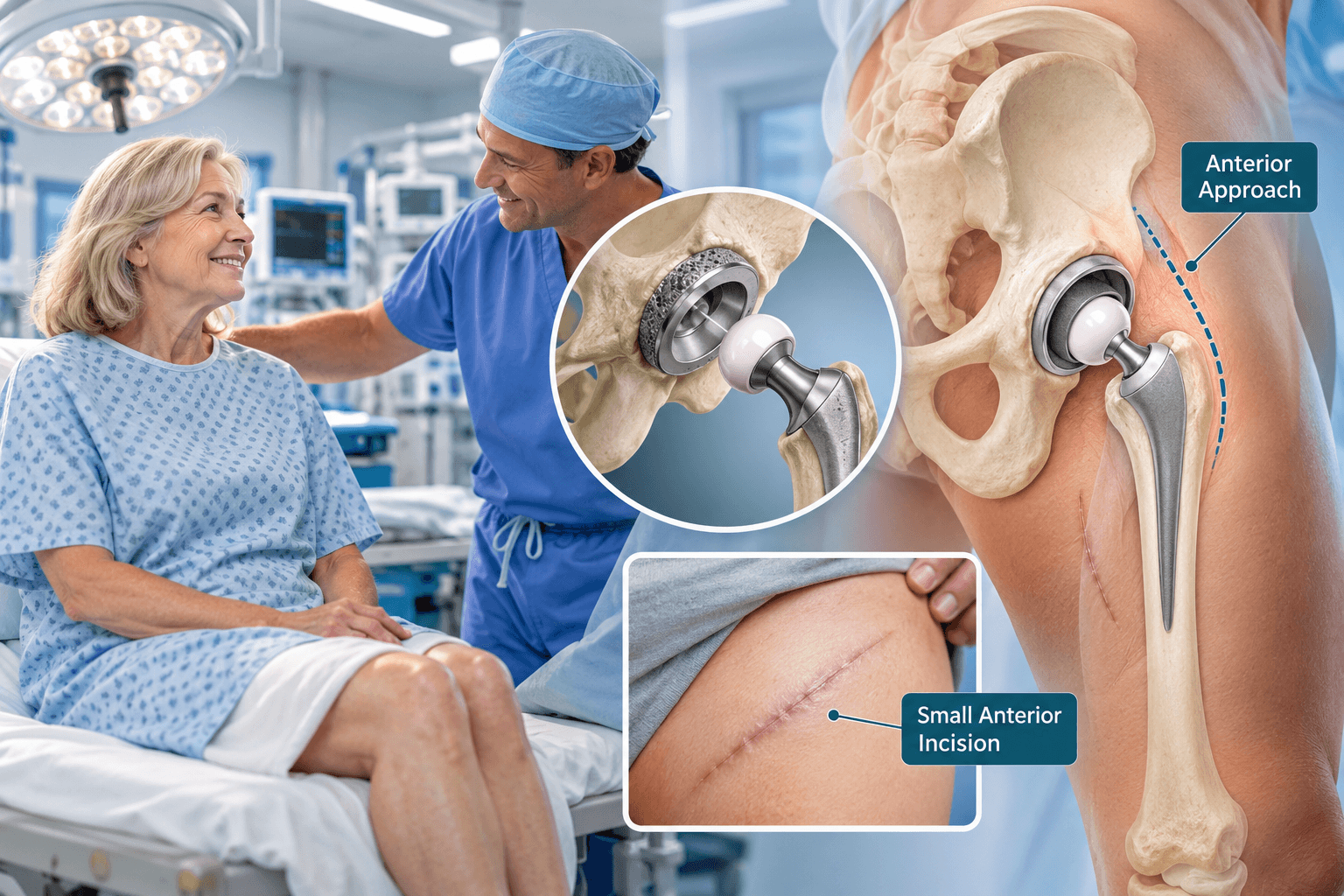
The skin incision is commonly positioned near the front and outer part of the upper thigh, close to the natural interval used to reach the joint. After passing through the superficial tissues, the surgeon develops an anatomical plane between muscles rather than cutting directly through a major muscle belly.
The approach is sometimes described as both intermuscular and internervous because it follows a plane between muscle groups supplied by different nerves.
This does not mean that no soft tissue is affected. Retractors must still be placed, the joint capsule is opened and surrounding tissues are manipulated. Total hip replacement remains significant orthopedic surgery.
The term muscle-sparing is therefore more accurate than describing the operation as completely muscle-free or tissue-free.
What Is Replaced During Anterior Hip Replacement?
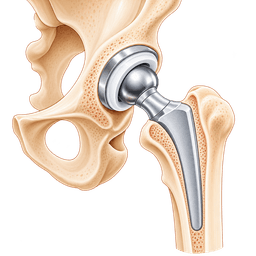
A total hip replacement replaces both sides of the damaged ball-and-socket joint.
The natural femoral head is removed. The surgeon prepares the femoral canal and inserts a stem into the upper thigh bone. A new ball is attached to the stem.
The damaged cartilage and a controlled amount of bone are removed from the acetabulum. A hemispherical cup is inserted into the socket and a liner is placed inside it.
The new ball then articulates with this liner.
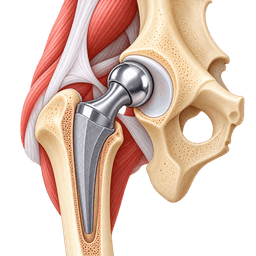
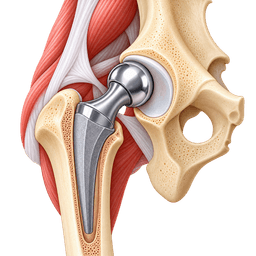
The prosthesis can therefore consist of a metal acetabular shell, highly cross-linked polyethylene liner, metal or ceramic femoral head and metal femoral stem.
The exact materials and fixation strategy are chosen according to age, bone quality, anatomy, surgeon preference and implant system.
Why Is Anterior Hip Replacement Called Muscle-Sparing?
The direct anterior approach takes advantage of an anatomical interval at the front of the hip.
Instead of deliberately releasing some of the posterior tendons used to expose the joint through a conventional posterior approach, the surgeon can usually separate muscle groups and retract them.
Preserving muscle attachments can contribute to faster early recovery in some patients.
The advantage should not be exaggerated. Muscles still experience retraction and temporary weakness can occur. The capsule is still opened, the femoral head is removed and implants are still inserted.
The operation should therefore be understood as a less disruptive route through certain soft tissues, not as a minor procedure.
What Is Anterior Method Hip Replacement Surgery?
The phrase anterior method hip replacement surgery is commonly used by patients searching for the direct anterior approach.
Medically, the preferred terms are direct anterior total hip replacement, direct anterior approach total hip arthroplasty or simply anterior hip replacement.
The word “method” refers to the surgical exposure rather than the implant.
A surgeon can potentially use cementless or cemented components, ceramic or metal femoral heads and different cup designs through the anterior approach.
The approach and the implant should therefore be considered separately.
What Conditions Can Anterior Hip Replacement Treat?
The indications for hip replacement are broadly similar regardless of surgical approach.
Osteoarthritis is the most common reason. Progressive cartilage loss causes pain, stiffness and reduced mobility, eventually producing bone-on-bone changes in advanced disease.
Anterior hip replacement can also be used for selected patients with osteonecrosis of the femoral head, inflammatory arthritis, developmental hip abnormalities, post-traumatic arthritis and certain fractures or fracture consequences.
The surgeon first determines whether the patient needs a hip replacement at all. Only after that decision does the question of surgical approach become important.
Hip Osteoarthritis
Hip osteoarthritis progressively damages the cartilage covering the femoral head and acetabulum.
Patients often develop pain in the groin, front of the thigh or buttock. Stiffness can make putting on shoes, getting into a car and walking difficult.
As disease progresses, pain can occur at rest or at night.
Early treatment is generally nonsurgical.
Exercise, weight management where appropriate, activity modification, medication and selected injections can help control symptoms.
Total hip replacement becomes appropriate when pain and functional limitation remain substantial despite reasonable conservative care and imaging confirms advanced joint disease.
Osteonecrosis
Osteonecrosis occurs when part of the femoral head loses its blood supply.
The bone can weaken and eventually collapse.
Joint-preserving procedures can sometimes be used before collapse, particularly in younger patients.
Once the femoral head has collapsed and secondary arthritis develops, total hip replacement becomes a more predictable reconstructive option.
The anterior approach can be used for many of these replacements if the patient's anatomy and surgeon's experience make it appropriate.
Inflammatory Arthritis
Inflammatory conditions can damage the hip joint.
Modern medical treatment has reduced the frequency of severe joint destruction in many inflammatory diseases, but some patients still progress to advanced cartilage and bone damage.
Total hip replacement can relieve pain and improve mobility when medical treatment can no longer preserve useful joint function.
The surgical approach is selected according to anatomy, deformity, bone quality and surgeon experience.
Anterior exposure is one option rather than a separate treatment for inflammatory arthritis.
Post-Traumatic Arthritis
A previous fracture of the acetabulum or femoral head can eventually lead to arthritis.
These hips can be more complex because old scars, plates, screws or altered anatomy may be present.
Anterior hip replacement is technically possible in selected post-traumatic cases, but not every patient is an ideal candidate.
The surgeon may prefer another approach when it provides safer access to previous implants, bone defects or scarred structures.
The principle is to choose the approach that allows accurate reconstruction rather than insist on anterior surgery regardless of anatomy.
What Makes the Anterior Approach Different?
The main difference is the direction from which the surgeon approaches the hip.
The anterior surgeon works with the patient commonly lying on the back.
This position can make fluoroscopy or other imaging relatively convenient during surgery.
The surgeon can assess component position, leg length and implant relationships using intraoperative imaging when desired.
Posterior hip replacement usually approaches the joint through the back or posterolateral side.
The surgeon typically releases and later repairs selected short external rotator tendons and the posterior capsule.
Both approaches can provide excellent implant positioning and durable outcomes when performed well.
Anterior vs Posterior Hip Replacement
Anterior vs posterior hip replacement is primarily a comparison of how the surgeon accesses the same hip joint.
The anterior approach works from the front between muscle planes.
The posterior approach works from behind the hip and generally requires controlled release and repair of posterior structures.
The anterior approach may provide modest advantages in early pain, early mobility or length of stay in some patient groups.
The posterior approach can provide excellent visualization of the femur, is familiar to a very large number of surgeons and can be adapted easily to complex primary and revision situations.
Long-term functional outcomes are generally excellent with both approaches.
Current comparative evidence does not support presenting one approach as universally superior.
The quality and experience of the surgeon remain major considerations.
Is Posterior Hip Replacement More Painful Than Anterior?
There is no rule that every posterior hip replacement is more painful.
Some comparative studies find slightly lower pain during the first days after direct anterior replacement. This is biologically plausible because certain muscle attachments can remain undisturbed.
However, modern posterior surgery has also become less invasive. Smaller incisions, careful tendon handling, multimodal anaesthesia and rapid-recovery protocols have reduced early pain considerably.
Individual pain experience varies.
A patient undergoing technically difficult anterior surgery can experience more discomfort than another patient undergoing an efficient posterior procedure.
Any early difference also tends to become less important as recovery progresses.
The decision should therefore not be based solely on expectations of a few days of postoperative pain.
Which Approach Recovers Faster?
Anterior hip replacement can provide a modest early recovery advantage for some patients.
Walking, basic mobility and early functional scores can improve somewhat faster during the first few weeks.
By later follow-up, differences between well-performed approaches commonly become much smaller.
This is important for patient expectations.
The anterior approach is not a different artificial joint that continues functioning better because the scar is on the front.
Once the soft tissues have healed, long-term hip function depends on implant fixation, component positioning, muscle function, overall health and the condition of the rest of the body.
Is Anterior or Posterior Hip Replacement More Common?
Both approaches are widely used.
The posterior approach remains highly established and, according to major hip-and-knee patient education resources, remains the most commonly used approach overall in many settings.
The anterior approach has become increasingly popular and is now performed routinely in many high-volume arthroplasty centers.
Practice patterns vary considerably between countries, hospitals and surgeons.
A center where almost every surgeon specializes in anterior hip replacement can naturally have a very different distribution from the national average.
Popularity should not be confused with superiority.
The more useful question is which approach the patient's surgeon performs consistently and safely.
Why Do Some Surgeons Prefer the Anterior Approach?
Surgeons who regularly perform the anterior approach may value muscle preservation, supine patient positioning and the ability to use fluoroscopy easily.
They may also find that selected patients mobilize rapidly and require fewer traditional movement restrictions.
Once a surgeon has passed the learning curve, the procedure can be highly reproducible.
High-volume anterior surgeons may therefore consider it their preferred approach for most routine primary hip replacements.
The important phrase is high-volume and experienced.
The approach can be more technically difficult during the surgeon's transition period.
Why Do Some Surgeons Prefer the Posterior Approach?
The posterior approach provides broad and familiar access to the hip.
Femoral exposure is generally straightforward.
The approach can be extended when a difficult primary replacement or revision requires greater exposure.
Surgeons who perform posterior THA frequently can achieve excellent component positioning, rapid recovery and low complication rates.
Modern posterior soft-tissue repair techniques can also reduce instability concerns.
A patient should therefore not assume that a surgeon using the posterior approach is using an outdated operation.
Why I No Longer Do Anterior Hip Replacement: What Does This Search Mean?
The phrase “why I no longer do anterior hip replacement” appears frequently in online searches because some surgeons have publicly discussed changing their preferred surgical approach.
There is no universal medical conclusion that surgeons should stop performing anterior hip replacement.
Individual surgeons can change approaches because of their own training, complication experience, patient population, operating environment or preference.
The direct anterior approach has a documented learning curve. Femoral exposure can be technically challenging, and complications can increase during early adoption if training and case selection are inadequate.
An experienced surgeon who performs the approach routinely can have excellent outcomes.
Conversely, a highly experienced posterior surgeon should not be expected to change techniques simply because anterior replacement is heavily marketed.
The appropriate conclusion is that surgeon proficiency matters more than following a trend.
Is Anterior Hip Replacement Really Minimally Invasive?
The expression minimally invasive can be misleading.
The anterior incision can be relatively short and the approach can preserve important muscle attachments.
However, the same diseased femoral head still needs to be removed and the same artificial components still need to be implanted.
Bone is prepared in the acetabulum and femur regardless of approach.
The operation is therefore not “minor.”
A better description is tissue-sparing total hip replacement.
The approach can reduce certain forms of soft-tissue disruption without changing the fact that THA is a major reconstructive orthopedic operation.
What Does an Anterior Hip Replacement Scar Look Like?
The typical anterior hip replacement scar is located at the front or slightly toward the outer side of the upper thigh, near the crease where the hip meets the thigh.
Scar length varies.
Many incisions are roughly several inches long, but there is no medically ideal scar length.
Larger patients, muscular patients, complex anatomy and difficult femoral exposure can require a longer incision.
A surgeon should extend the incision when necessary rather than compromise component positioning merely to advertise minimally invasive surgery.
Over time, the scar generally becomes flatter and lighter, although individual scar formation varies.
Where Is the Incision for Anterior Hip Replacement?
The anterior hip replacement incision is usually placed on the front and slightly lateral aspect of the hip, extending onto the upper thigh.
The exact direction differs according to technique.
Many surgeons use a longitudinal or slightly oblique incision.
Some use a transverse bikini incision positioned along a natural skin crease.
Both can access the direct anterior interval.
The superficial scar does not determine how accurately the prosthesis is implanted.
The surgeon should prioritize safe access and component positioning over cosmetic incision length.
Bikini Incision Anterior Hip Replacement
The bikini incision is a variation of the direct anterior approach in which the skin cut follows a natural crease.
Some patients prefer the cosmetic appearance.
The deeper surgical approach remains anterior.
Research suggests that scar satisfaction can be high, but the technique has its own exposure considerations and is not appropriate merely because a smaller or less visible scar sounds attractive.
The surgeon needs sufficient access to position the components safely.
Cosmetic priorities should remain secondary to the quality of the hip reconstruction.
What Happens to the Hip Capsule?
After reaching the front of the hip, the surgeon exposes the joint capsule.
The capsule can be opened in several ways.
Some surgeons remove part of it, while others preserve and repair portions.
The femoral head is then accessed through this opening.
The exact capsular technique varies.
The capsule is only one part of hip stability, along with muscle tension, implant orientation, femoral head size and patient anatomy.
This is why dislocation risk cannot be attributed exclusively to the direction of the skin incision.
Conditions treated
Who it's for
- Advanced hip osteoarthritis causing persistent pain and functional limitation
- Severe hip stiffness affecting walking, sleep or daily activities
- Failure of appropriate nonsurgical treatment for symptomatic hip arthritis
- Osteonecrosis of the femoral head after collapse or advanced joint destruction
- Inflammatory arthritis with severe structural hip damage
- Selected post-traumatic hip arthritis
- Selected developmental hip conditions requiring total hip replacement
- Certain femoral neck fractures when total hip arthroplasty is appropriate
- Patients seeking primary total hip replacement whose anatomy is suitable for the direct anterior approach
- Active patients who may benefit from early muscle preservation and rapid mobilization
- Patients suitable for outpatient or short-stay total hip replacement when other medical and social criteria are satisfied
- Patients whose surgeon has substantial experience performing the direct anterior approach
Good candidates
A good candidate first needs to be a good candidate for total hip replacement itself. The presence of arthritis on an X-ray is not enough. Symptoms should be significant enough to justify replacement, and reasonable nonsurgical treatment should generally have failed to provide adequate relief.
Once hip replacement is indicated, the surgeon determines whether the direct anterior approach is suitable.
Many adults with routine primary hip osteoarthritis can undergo anterior replacement successfully. Age alone is not a strict limitation.
Body shape, muscularity, femoral anatomy, deformity, previous surgery and bone quality can affect technical difficulty.
The surgeon should choose the approach that provides safe exposure for that particular hip.
Patients With Primary Osteoarthritis
Primary osteoarthritis represents one of the most straightforward indications.
These patients commonly have progressive groin pain and stiffness with advanced cartilage loss on X-rays.
When anatomy is otherwise relatively normal, the direct anterior approach can provide predictable access.
Many high-volume anterior surgeons perform the majority of uncomplicated primary hip replacements this way.
The patient still requires standard medical optimization before arthroplasty.
Younger Active Adults
Younger adults often place greater demands on a hip replacement.
The anterior approach can be attractive because of early muscle preservation and rapid functional recovery.
However, younger age also means the prosthesis may need to function for many decades.
Implant selection, bearing material, component position and long-term activity choices are therefore more important than the surgical scar.
A younger patient should not choose a surgeon solely because they advertise a rapid anterior recovery.
Experience in hip arthroplasty and long-term reconstruction is essential.
Older Adults
Older age is not a contraindication.
Many older adults can undergo direct anterior replacement successfully.
Medical health, frailty, bone quality and home support matter more than age alone.
Patients with severe osteoporosis require careful femoral preparation because fracture risk can be higher when bone is fragile.
Some surgeons may prefer another approach when it provides greater control of a challenging osteoporotic femur.
Others with extensive anterior experience can safely manage these cases using DAA.
Patients With Obesity
Anterior hip replacement can be performed in patients with obesity, but body habitus can make exposure and wound management more difficult.
The incision lies near a region where abdominal tissue can overlap the upper thigh.
This can increase moisture and wound-management challenges.
Femoral exposure can also become technically more demanding.
Obesity does not automatically exclude the anterior approach, but risk needs individualized assessment.
Weight optimization can reduce several general joint replacement complications regardless of approach.
Muscular Patients
Large muscular patients can be technically challenging because substantial muscle mass needs to be retracted even when muscles are not intentionally cut.
Femoral elevation and exposure can become more difficult.
This does not make anterior replacement impossible.
Experienced surgeons can perform the procedure successfully in many muscular individuals.
The important point is that the term muscle-sparing does not mean the patient's muscle size is irrelevant to surgical access.
Patients With Osteoporosis
Low bone density deserves attention because the femur must be prepared for a stem.
Femoral exposure during the anterior approach can place stress on the upper femur if technique is not controlled.
Osteoporotic bone is less tolerant of excessive force.
An experienced surgeon modifies preparation and implant selection accordingly.
Cemented fixation may be appropriate in selected patients, although many anterior replacements use cementless stems.
The approach should not force a particular fixation philosophy.
Previous Hip Surgery
Previous surgery can alter anatomy and create scar tissue.
A prior fracture operation, osteotomy or reconstructive procedure may make the direct anterior approach more challenging.
Existing implants can require removal.
The safest exposure should be selected based on the old incisions, hardware and expected reconstruction.
Anterior replacement remains possible in some cases, but insisting on it regardless of previous surgery is inappropriate.
Hip Dysplasia
Developmental dysplasia can alter acetabular orientation, femoral rotation and leg length.
Mild dysplasia can often be treated through the anterior approach.
Severe dysplasia may require more extensive reconstruction, shortening osteotomy or specialized implants.
The need for complex femoral exposure can lead some surgeons to favor another approach.
Others with substantial anterior experience can perform even complex dysplastic reconstructions using DAA.
Surgeon experience and individual anatomy therefore become particularly important.
Patients With Severe Deformity
Major proximal femoral deformity, previous fracture malunion or unusual anatomy can make anterior femoral access difficult.
These patients may require a more extensile surgical approach.
The priority is safe reconstruction.
A larger scar or different approach is a small issue compared with femoral fracture, implant malposition or incomplete deformity correction.
The correct approach is the one that allows the surgeon to solve the actual anatomical problem.
Who May Not Be an Ideal Candidate?
There is no universal list of patients who can never undergo anterior hip replacement.
However, severe deformity, complex revision surgery, extensive previous hardware, major obesity, very muscular anatomy and certain fracture situations can make the procedure less attractive.
Some surgeons routinely perform DAA in these situations while others appropriately use posterior or lateral exposure.
The surgeon's own expertise matters.
A patient should not pressure an experienced surgeon to use an approach they do not routinely perform.
Before surgery
Confirming That Hip Replacement Is Necessary
The first question is not whether the approach should be anterior or posterior. The first question is whether total hip replacement is appropriate.
The surgeon reviews symptoms, physical examination and imaging.
Pain should generally correspond to significant structural disease.
Hip arthritis commonly produces groin pain, stiffness and limitation with walking or activities such as putting on shoes.
X-rays demonstrate narrowing of the joint space, osteophytes and other degenerative changes.
Total hip replacement is considered when symptoms have become sufficiently severe to outweigh the risks of surgery.
Nonsurgical Treatment
Most patients with hip osteoarthritis try nonsurgical care before replacement.
Exercise can maintain mobility and surrounding strength.
Weight reduction can reduce mechanical stress when appropriate.
Medication can help control pain.
A walking aid can reduce joint load.
Some patients receive image-guided corticosteroid injections for temporary relief.
The decision to move toward replacement is based on persistent pain and disability rather than simply exhausting an arbitrary checklist.
Medical History
The preoperative assessment includes cardiovascular disease, diabetes, kidney disease, lung conditions, previous blood clots and other relevant problems.
Previous infections should be discussed.
Patients need to tell the surgical team about earlier hip or spine surgery.
Medication history is also important.
Anticoagulants, diabetes medications and immunosuppressive drugs can require specific perioperative plans.
The objective is to reduce avoidable surgical risk.
Physical Examination
The surgeon assesses hip motion, gait and leg lengths.
Loss of internal rotation and flexion is common in advanced arthritis.
Muscle strength and neurological function are evaluated.
The surgeon also considers the spine and opposite hip because both can influence posture and apparent leg length.
Anterior hip replacement planning needs to account for the functional relationship between the pelvis and spine.
Hip X-Rays
Standard pelvic and hip X-rays show the joint and surrounding bone.
The surgeon evaluates arthritis severity, acetabular shape, femoral geometry and bone quality.
These images are used to estimate implant size and position.
Leg-length relationships can also be assessed.
Complex deformity can require additional imaging.
Routine primary osteoarthritis often requires only good-quality radiographs for implant planning.
CT Scan
CT is not required for every anterior hip replacement.
It can become useful for significant deformity, previous fractures, unusual acetabular anatomy or robotic and navigation systems that require three-dimensional preoperative mapping.
CT can show bone stock and version in greater detail.
Technology should be used when it improves planning rather than simply because it sounds advanced.
Many excellent anterior hip replacements continue to be performed using standard radiographic planning.
Dental and Infection Considerations
Active infection should be addressed before elective arthroplasty.
The surgical team may ask about skin infections, urinary symptoms or significant dental infections.
Policies regarding routine dental clearance vary.
The key principle is that major active infection should not be ignored before implantation of a permanent artificial joint.
Patients should follow the protocol of their treating hospital.
Blood Tests
Routine testing can include complete blood count, kidney function, electrolytes and other measurements depending on age and medical history.
Anaemia deserves particular attention.
Optimizing haemoglobin before surgery can reduce transfusion risk.
Diabetes control can also be assessed.
Additional cardiovascular investigations are ordered according to the patient's medical risk rather than solely because hip replacement is planned.
Medication Review
A complete medication list should be provided.
Blood thinners require individualized instructions.
Some drugs are temporarily stopped, while others must continue.
Patients should not independently discontinue anticoagulants or cardiovascular medication.
Diabetes medication also requires planning because fasting and reduced oral intake affect blood sugar management.
Supplements should be disclosed because some can influence bleeding.
Smoking and Nicotine
Smoking can increase wound-healing and infection risks after joint replacement.
Nicotine also affects blood vessels and tissue healing.
Stopping before surgery is therefore strongly encouraged.
Some surgical programs require a defined period of cessation.
This applies to hip replacement regardless of approach.
An anterior incision is not protected from smoking-related wound problems simply because it is described as minimally invasive.
Weight Optimization
Weight management can reduce surgical and medical risk for some patients.
The goal should be realistic improvement rather than an arbitrary promise that every patient must achieve a particular body weight.
Severe obesity can increase wound problems, infection and technical difficulty.
For the anterior approach specifically, the location of the incision near the groin crease can add wound-management considerations.
The surgeon assesses these issues individually.
Prehabilitation
Preoperative exercises can help maintain upper-body and lower-limb strength.
Patients learn how to use a walker or crutches.
They can also practice safe transfers and stairs.
Prehabilitation does not rebuild severely arthritic cartilage.
Its purpose is to enter surgery with the best practical level of strength and understanding.
Education about the recovery pathway can reduce anxiety and make early mobilization easier.
Planning the Home
Many patients return directly home after anterior hip replacement.
Loose rugs and other trip hazards should be removed.
Frequently used objects can be placed at an accessible height.
A stable chair with arms is helpful.
The patient should arrange support for the first days when possible.
Same-day discharge should not mean recovering alone without an appropriate safety plan.
Choosing the Surgical Approach
Patients should discuss why their surgeon recommends anterior hip replacement.
A useful conversation includes the surgeon's experience with the technique and how frequently they perform it.
Patients can also ask whether their anatomy creates any special difficulty.
A surgeon should be comfortable recommending another approach when it is safer.
Choosing an approach should be an anatomical and technical decision rather than a marketing requirement.
Choosing the Implant
The surgical approach and implant are separate decisions.
The surgeon selects components according to anatomy, bone quality, age and expected fixation.
A cementless acetabular cup is common.
The femoral stem can be cementless or cemented.
The bearing surface commonly uses highly cross-linked polyethylene against a ceramic or metal head.
Patients should ask which implant system is being used and why rather than assuming there is a special “anterior implant.”
Planning Leg Length
Hip arthritis can produce true and apparent leg-length differences.
During replacement, the surgeon aims to restore stable hip mechanics and an appropriate leg length.
Perfect numerical equality cannot always be guaranteed.
Stability and component position sometimes require small differences.
Intraoperative measurements, fluoroscopy, navigation or clinical landmarks can help assess the reconstruction.
The anterior approach can make fluoroscopic assessment convenient because the patient usually lies on their back.
How the operation is performed
Anterior hip replacement surgery is performed through an incision at the front of the hip. The surgeon reaches the joint through an anatomical interval between major muscle groups, removes the damaged femoral head, resurfaces the acetabulum with an artificial cup and liner, places a stem inside the femur and attaches a new ball before reducing the artificial joint.
Although the skin incision may appear relatively small, the operation requires precise three-dimensional work. Cup inclination and version, femoral stem alignment, soft-tissue tension and leg length all influence the reconstructed hip.
The surgeon can use conventional instruments, fluoroscopy, navigation or robotic assistance according to experience and hospital resources.
Patient Positioning
Most direct anterior hip replacements are performed with the patient lying on their back.
This is called the supine position.
The position allows both legs and the pelvis to remain accessible for comparison.
It also makes fluoroscopic imaging relatively straightforward.
Some surgeons use a specialized orthopedic table that can manipulate the leg during femoral exposure.
Others prefer a standard operating table.
Neither table automatically produces better results. Surgical familiarity with the chosen setup matters more.
Skin Incision
The skin incision is made over the front and slightly outer aspect of the hip.
Its length depends on patient anatomy and the complexity of the replacement.
The surgeon passes through the fatty layer beneath the skin until the fascial structures covering the muscles are reached.
A smaller incision is not always better.
Adequate visualization is necessary to avoid implant malposition and injury to the surrounding structures.
The incision can therefore be extended whenever required.
Protecting the Lateral Femoral Cutaneous Nerve
The lateral femoral cutaneous nerve supplies sensation to the outer thigh.
It passes close to the surgical region used during anterior hip replacement.
The surgeon positions the incision and dissection to reduce the chance of injury.
Despite careful technique, temporary numbness, tingling or burning on the outer thigh can occur after DAA.
In many patients these sensory symptoms improve with time.
A smaller proportion can experience persistent altered sensation.
Because this is primarily a sensory nerve, the typical problem is numbness rather than loss of hip muscle strength.
Intermuscular Interval
The surgeon identifies the interval used to approach the joint.
Instead of cutting directly through a large muscle, the tissues are separated and gently retracted.
Small blood vessels encountered during exposure are controlled.
Retractors are then positioned around the front of the hip capsule.
The capsule becomes visible beneath the muscle layers.
This tissue-preserving route is one of the defining characteristics of the direct anterior approach.
Opening the Hip Capsule
The capsule is opened to expose the femoral neck and head.
Different surgeons use different capsulotomy patterns.
Some preserve more capsule for later repair.
Others remove portions that interfere with exposure.
The femoral neck is then prepared for the planned bone cut.
The surgeon confirms the level according to preoperative planning and intraoperative anatomy.
Femoral Neck Cut
The femoral neck is cut using a powered saw.
The exact level influences leg length and femoral mechanics.
The arthritic femoral head is then removed.
In some anterior techniques, the neck can be cut in more than one step to make head extraction easier through the limited working window.
Once removed, the acetabulum becomes accessible.
Preparing the Acetabulum
The damaged cartilage inside the socket is removed.
Sequential hemispherical reamers prepare the acetabulum to the desired size and orientation.
The surgeon aims to preserve healthy bone while creating a stable surface for the implant.
The final acetabular component is then inserted.
Many modern cups are designed for cementless biological fixation.
Initial mechanical stability is achieved by a press fit.
Bone later grows onto or into the porous implant surface.
Cup Position
Cup orientation influences stability, wear and hip mechanics.
The surgeon evaluates inclination and anteversion.
Traditional anatomical landmarks can guide positioning.
The supine position also makes fluoroscopic imaging convenient for surgeons who use it.
Navigation and robotic systems can provide additional measurements.
No technology eliminates the need for surgical judgment because pelvic position and individual anatomy affect the ideal orientation.
Acetabular Screws
Some cementless cups achieve sufficient stability without screws.
Others receive one or more screws through the shell.
Screws provide additional initial fixation.
Their placement requires awareness of nearby blood vessels and nerves.
The surgeon then inserts the chosen liner into the metal shell.
Highly cross-linked polyethylene is widely used.
Ceramic liners are another option in selected implant systems.
Femoral Exposure
Femoral exposure is one of the technically distinctive parts of anterior hip replacement.
The leg is positioned to allow the upper femur to rise toward the incision.
Capsular releases may be performed to improve mobility.
Special retractors and instruments help access the femoral canal.
This step requires experience because excessive force can contribute to fracture or soft-tissue injury.
A major part of the direct anterior learning curve relates to achieving safe and reproducible femoral exposure.
Preparing the Femoral Canal
The surgeon enters the femoral canal and progressively enlarges it using broaches or other preparation instruments.
Each broach approximates the shape of the intended stem.
The goal is to achieve correct alignment and stable fixation without damaging the cortical bone.
The femoral stem should not be placed excessively in varus or another abnormal position.
Bone quality influences how aggressively the canal can be prepared.
Osteoporotic bone requires particular care.
Cementless Femoral Stem
Many anterior total hip replacements use a cementless femoral stem.
The stem has a surface designed to achieve initial stability and later biological bone integration.
Different stem geometries exist.
Some shorter stems are designed partly to facilitate implantation through minimally invasive approaches.
The implant should be selected because it fits the femur rather than because it has been marketed specifically for anterior surgery.
Cemented Femoral Stem
Cemented stems can also be inserted through the anterior approach.
Bone cement creates immediate mechanical fixation between the implant and femur.
Cemented fixation remains useful for selected older patients or those with poor bone quality.
The anterior approach should not prevent use of cement when it provides the safest fixation strategy.
Approach and fixation philosophy should remain separate clinical decisions.
Trial Components
Before the final femoral head is attached, the surgeon can insert temporary trial components.
The hip is reduced.
Leg length, stability and range of motion are evaluated.
Fluoroscopy or other measurements can assist.
The surgeon can adjust head length, offset or component selection if necessary.
This trial stage helps optimize the reconstruction before final assembly.
Femoral Head
The final ball is attached to the stem.
Ceramic heads are widely used because of their wear properties when combined with modern polyethylene.
Metal heads remain available in selected systems.
Femoral head diameter influences stability and bearing mechanics.
The surgeon chooses the size according to the cup and liner system.
Very large heads are not automatically better because implant design involves trade-offs.
Final Reduction
The ball is guided into the artificial socket.
The surgeon moves the hip to assess stability.
Leg length and implant relationships are checked.
Final imaging can confirm component position.
The joint is then irrigated.
The surgeon repairs selected tissues according to technique.
The fascial layer, subcutaneous tissue and skin are closed.
A sterile dressing is applied.
Fluoroscopy During Anterior Hip Replacement
Fluoroscopy provides real-time X-ray images.
The patient lying supine makes pelvic imaging relatively easy.
Surgeons can check cup orientation, stem position, leg length and implant size.
Some experienced anterior surgeons use fluoroscopy routinely.
Others achieve excellent results without it.
Fluoroscopy should be understood as a tool rather than a guarantee of better surgery.
Poor interpretation of an image can still produce poor component placement.
Navigation
Computer navigation tracks anatomical landmarks and implant position.
The system can estimate cup orientation and other parameters.
Imageless systems use intraoperative landmarks without a preoperative CT.
Image-based systems can incorporate advanced imaging.
Navigation can improve the precision of certain measurements, but the clinical importance of small radiographic differences remains an active area of research.
Surgeon technique remains fundamental.
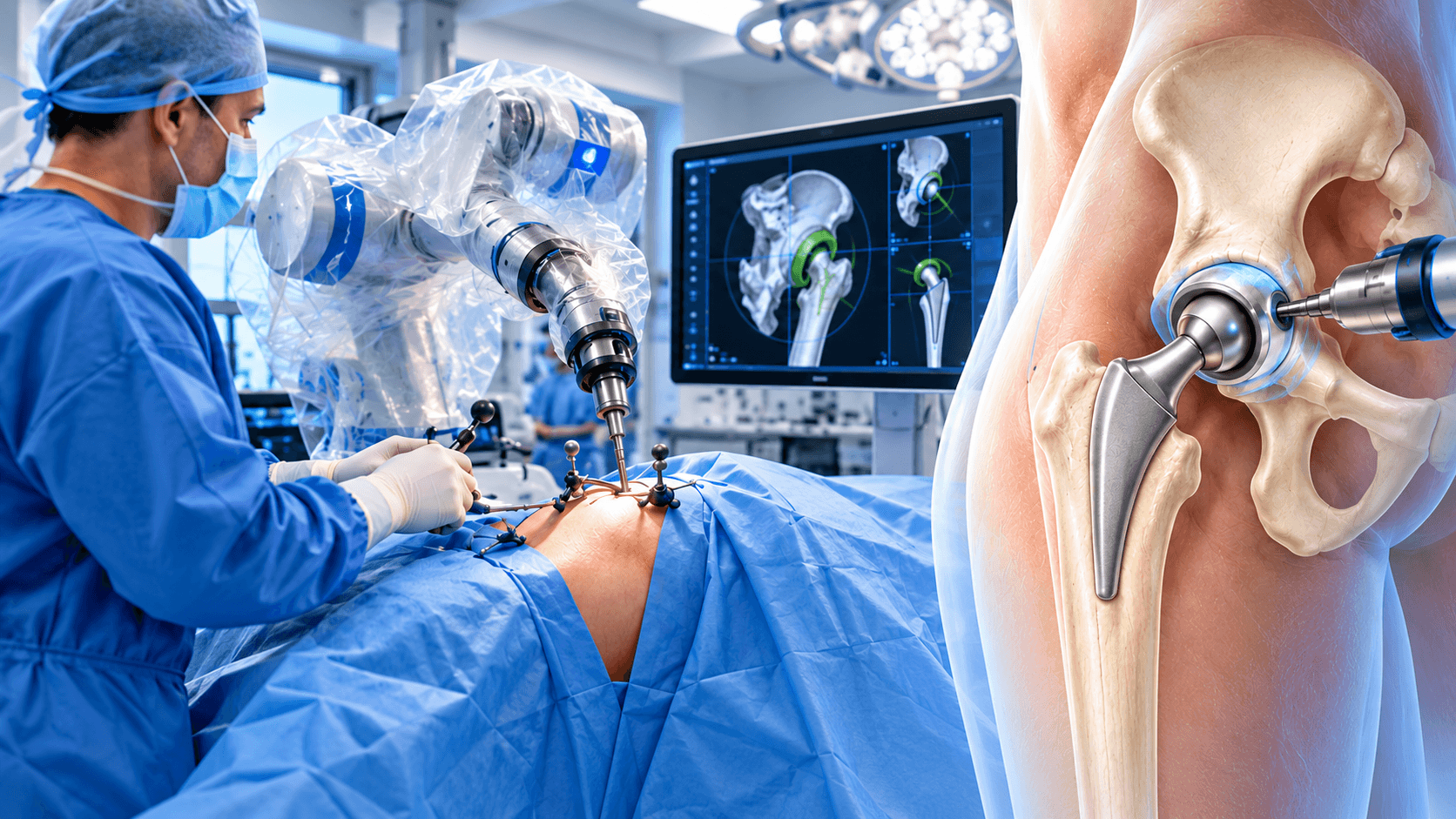
Robotic-Assisted Anterior Hip Replacement
Robotic systems can be combined with anterior THA.
The surgeon creates a preoperative plan, often from CT imaging.
During surgery, the system helps guide acetabular preparation and component positioning within the planned parameters.
The robot does not independently perform the hip replacement.
The surgeon remains responsible for exposure, bone preparation, implant insertion and all clinical decisions.
Current evidence does not justify claiming that every anterior hip replacement needs robotic assistance.
How Long Does Anterior Hip Replacement Surgery Take?
Anterior hip replacement surgery commonly takes approximately one to two hours for an uncomplicated primary replacement, although the range varies considerably.
High-volume surgeons can complete straightforward cases faster.
Severe deformity, obesity, prior surgery, difficult femoral exposure or intraoperative findings can lengthen the operation.
Operating time alone should not be considered a measure of quality.
A surgeon should take the time required for safe exposure and accurate implant positioning.
The same answer applies to the keyword question “how long does an anterior hip replacement surgery take?”: usually around 60–120 minutes, with substantial individual variation.
Does the Anterior Approach Use a Smaller Implant?
No.
The skin incision can be smaller, but the artificial joint must still fit the patient's anatomy.
A smaller scar does not mean a miniature hip prosthesis is inserted.
Implant dimensions are based on the acetabulum and femur.
The surgeon should not choose undersized components merely to pass them through a limited incision.
The incision can be extended whenever required.
Hospital stay
Immediately After Surgery
The patient moves to the recovery area where blood pressure, breathing, pain and neurological function are monitored.
The leg is examined and the surgical dressing is checked.
Anaesthesia gradually wears off.
Modern multimodal pain protocols aim to provide comfort without relying entirely on opioid medication.
Patients commonly receive several types of medication targeting different pain pathways.
Nausea prevention and early hydration are also part of recovery.
Same-Day Anterior Hip Replacement
Selected patients can return home on the same day.
This is not unique to the anterior approach.
Modern posterior and other approaches can also be performed as outpatient hip replacements.
The decision depends on overall health, surgical course, pain control, mobility and home support.
A patient should be able to walk safely, urinate when required, tolerate oral intake and understand medication instructions before discharge.
Same-day discharge is a care pathway, not proof that the operation was less significant.
Overnight Stay
Many patients stay one night.
This can be useful for older adults, patients with medical conditions or people traveling from another city or country.
Pain and mobility can be reassessed the following morning.
A longer stay is appropriate when blood pressure, anaemia, nausea, wound concerns or walking ability require additional treatment.
Discharge should be determined by safety rather than a predetermined marketing package.
Walking After Anterior Hip Replacement
Walking normally begins very early.
Many patients stand and walk with physiotherapy on the day of surgery.
A walker or crutches provide support.
Weight-bearing is commonly allowed as tolerated after an uncomplicated primary replacement with stable implants.
The artificial components are mechanically stable at the end of surgery, although soft tissues and bone still require healing.
The walking aid is reduced when gait becomes safe and controlled.
Stairs
Patients can usually learn stair technique before leaving the hospital.
The physiotherapist teaches how to lead with the appropriate leg while using a handrail or walking aid.
Many patients can manage stairs soon after surgery.
Being technically able to climb stairs does not mean repeated stair exercise should be used as early training.
The priority is safe household mobility.
Anterior Hip Precautions
Historically, hip replacement patients were given strict restrictions to avoid dislocation.
Direct anterior patients often receive fewer formal precautions.
The positions most associated with anterior instability differ from those emphasized after posterior surgery.
However, protocols vary.
Patients should follow their surgeon's actual instructions rather than assume that “anterior means no precautions.”
Extreme combined hip extension and external rotation can place stress on the anterior structures during early healing.
Pain After Surgery
Pain varies considerably.
Many patients describe surgical soreness rather than the deep arthritic pain they had before replacement.
The incision and upper thigh can feel tight.
Femoral preparation can produce temporary thigh discomfort.
Some patients have very little pain, while others require stronger medication during the first days.
The approach does not guarantee a painless recovery.
Pain should gradually improve rather than intensify substantially after initial progress.
Swelling
Swelling around the hip and thigh is common.
Gravity can cause bruising and swelling to move down toward the knee.
This can look alarming but is often expected.
Walking, elevation when appropriate and prescribed exercises can help circulation.
Sudden severe swelling, calf pain, breathing difficulty or significant asymmetry requires medical assessment because blood clots remain a possible complication after joint replacement.
Before Discharge
The patient receives instructions about medications, wound care, walking aids and activity.
The team explains blood-clot prevention.
Patients should know whom to contact for fever, wound drainage, uncontrolled pain or another concern.
International patients need a copy of the operative report and implant information.
A follow-up plan should be arranged before they travel home.
Recovery
Most patients begin walking within hours of anterior hip replacement and notice substantial improvement in everyday mobility during the first several weeks. The early recovery can be faster than many people expect, but the tissues around the hip still need several months to fully recover.
The first days focus on pain control and safe walking. During the first few weeks, patients progressively increase walking and reduce their reliance on mobility aids. Strength and endurance continue to improve over the following months.
The arthritic joint surfaces have been removed, so many patients notice that their original deep joint pain is immediately different. Surgical soreness replaces it temporarily.
Fatigue can remain significant during the first few weeks because joint replacement places substantial physiological demands on the body.
Day of Surgery
Patients are commonly encouraged to stand and walk with assistance.
The physiotherapy team checks balance and leg control.
The operated leg can initially feel heavy.
Residual anaesthesia can also affect confidence.
Short walks are sufficient.
The goal is early safe movement rather than testing how far the patient can walk immediately.
Patients also begin simple ankle and leg exercises.
Days 1–3
Walking becomes easier.
Most patients use a walker or crutches.
Short frequent walks are generally preferable to one long session.
Pain medication is taken according to the prescribed plan.
The incision should remain protected.
Swelling commonly increases before it begins to settle.
Patients should expect the leg to feel weak.
Normal muscle performance does not return simply because major muscle attachments were preserved.
Week 1
The patient usually becomes more independent with household activities.
Getting into and out of bed becomes easier.
Many people can prepare simple meals and perform basic personal care.
Walking distance gradually increases.
Overactivity can cause more soreness and swelling later in the day.
Recovery should therefore progress steadily rather than competitively.
Patients do not receive a better result because they abandon the walker before their gait is ready.
Weeks 2–4
Many anterior hip replacement patients transition from a walker to a cane and then to independent walking.
Some progress faster, while others continue using support.
The incision continues healing.
Bruising usually fades.
Patients begin returning to light social activities and, in some cases, desk work.
Walking remains one of the most useful forms of exercise.
Strengthening can be added according to the rehabilitation programme.
Weeks 4–6
Everyday mobility commonly improves substantially.
Many patients can walk without a mobility aid.
Stairs and ordinary household tasks become easier.
Sleep tends to improve.
The patient can often spend longer periods outside the home.
The hip is still healing, and fatigue after activity is common.
Higher-demand exercise should not be rushed simply because normal walking feels comfortable.
Weeks 6–12
The patient progressively returns toward normal daily life.
Strength training becomes more meaningful.
Low-impact cardiovascular exercise such as cycling and swimming can be introduced when the wound is completely healed and the surgeon permits it.
Many patients feel substantially recovered by this stage.
Some residual weakness, numbness near the scar or start-up stiffness can persist.
Full functional improvement can continue for several months.
Months 3–6
Endurance and muscle performance continue improving.
Patients commonly resume travel and broader recreational activity.
Golf, hiking and similar activities can return progressively.
Higher-impact exercise requires a discussion with the surgeon.
The artificial joint can tolerate substantial everyday loading, but repetitive high-impact activity can influence long-term implant wear and injury risk.
The appropriate activity level depends on age, implant, experience and overall health.
Months 6–12
Many patients continue noticing subtle improvements.
The hip feels increasingly natural during daily activity.
Muscle strength can continue recovering.
Scar sensitivity and residual numbness may decrease.
The patient generally stops thinking about the hip during routine movement.
This longer recovery phase demonstrates why a rapid early anterior recovery should not be confused with complete biological healing after two or three weeks.
Anterior Hip Replacement Recovery Time
Most patients require approximately 6–12 weeks for major everyday recovery, although substantial independence returns earlier.
A return to simple desk work can occur within several weeks.
Physical occupations require longer.
High-demand recreational activity can take several months.
The most useful definition of recovery depends on the patient's goal.
Being able to walk around the house is different from returning to warehouse work, long-distance hiking or competitive sport.
Does Anterior Hip Replacement Heal Faster?
The anterior approach can produce faster early functional recovery in selected patients.
This may relate to preservation of muscle attachments and modern rapid-recovery protocols.
The difference becomes smaller with time.
Bone integration around a cementless implant still occurs over weeks and months.
The incision still needs to heal.
Muscles still need to regain strength.
Anterior surgery therefore should not be described as bypassing normal tissue healing.
Walking Without a Cane
Some patients stop using a cane within one or two weeks.
Others need several weeks.
The decision should depend on gait.
If the patient still leans significantly or limps, a cane can improve mechanics.
Removing it too early can reinforce a poor walking pattern.
The goal is not the fastest possible abandonment of assistance.
The goal is normalized safe gait.
Return to Desk Work
Desk-based employees often return within approximately two to four weeks.
Some people working remotely restart sooner.
Fatigue and the ability to sit comfortably can be more limiting than the hip itself.
Frequent short walks are useful during the workday.
Long uninterrupted periods of sitting can increase stiffness.
Patients should also consider commuting before deciding when to return.
Return to Physical Work
Heavy occupations require more time.
Construction, lifting, repeated stairs and prolonged standing expose the hip to greater forces.
A return between six and twelve weeks can be reasonable for some jobs, while very demanding occupations can require longer.
The surgeon should understand exactly what the patient does at work.
A job title alone does not communicate the physical requirements.
Driving After Anterior Hip Replacement
Driving depends on which hip was operated on, medication use and functional control.
Patients need to enter and exit the vehicle safely.
They must be able to perform an emergency stop without hesitation.
Strong opioid medication prevents safe driving.
Right-sided surgery generally has a greater effect on braking ability.
Many patients return to driving within several weeks, but individual medical clearance is more appropriate than a universal deadline.
Sleeping After Anterior Hip Replacement
Comfort usually determines sleeping position once the surgeon's restrictions are respected.
Patients often sleep on their back initially because the incision and surrounding tissues are sensitive.
Side sleeping becomes more comfortable as soreness improves.
A pillow between the legs can provide comfort.
Patients should not assume that the absence of traditional posterior precautions means every extreme position is immediately appropriate.
The operating surgeon's instructions should take priority.
Putting on Shoes and Socks
One advantage some anterior patients notice is relatively early return to ordinary personal-care movements.
Hip flexibility remains limited by swelling and preoperative stiffness during the first weeks.
A long-handled shoehorn or reacher can make dressing easier.
Patients should avoid forcing the hip through uncomfortable ranges.
Motion gradually improves as inflammation settles.
Physiotherapy After Anterior Hip Replacement
Formal physiotherapy varies by health system and patient needs.
Some patients recover successfully using a structured home exercise and walking programme.
Others benefit from supervised therapy because of preoperative weakness, balance problems or gait abnormalities.
The objective is not to perform large quantities of exercise immediately.
Rehabilitation should restore normal gait, hip strength and functional confidence without repeatedly irritating the recovering tissues.
Return to Gym
Upper-body and carefully controlled lower-body exercise can return progressively.
Cycling and other low-impact cardiovascular exercise are commonly introduced first.
Resistance exercises are added gradually.
Deep loaded positions, very heavy lifting and high-impact movement should wait until the surgeon is satisfied with recovery.
Patients should tell trainers that they have a total hip replacement.
Exercise selection should support the implant rather than test its mechanical limits unnecessarily.
Return to Running
Whether regular running is advisable after total hip replacement remains individualized.
Some experienced runners do return.
Many surgeons encourage lower-impact activities to reduce repetitive loading over decades.
Anterior hip replacement does not change this fundamental implant consideration.
A muscle-sparing approach can help early recovery, but it does not make the artificial bearing immune to wear, fracture or other long-term stresses.
Flying After Anterior Hip Replacement
Flying should be discussed with the surgical team.
Long flights involve prolonged sitting, and joint replacement temporarily increases the risk of venous thrombosis.
The incision also needs to be stable enough for travel.
International patients should plan surgery with enough time for early follow-up before departure.
Being medically ready to leave the hospital is different from being ready for a long intercontinental flight.
Recovery for International Patients
Medical-travel patients need a clear follow-up structure.
The treating hospital should provide implant labels or identifying information, operative report, discharge summary, medication list and rehabilitation instructions.
The patient should know when stitches or staples require removal if non-absorbable closure was used.
A local doctor or physiotherapist can continue routine care.
The overseas surgeon should remain available for review of wounds, X-rays or unexpected symptoms when this service is included.
Recovery timeline
- Walk safely and control postoperative symptoms.1Walk safely and control postoperative symptoms.
Days 0–3
Patients begin standing and walking with appropriate assistance. Pain, nausea and blood pressure are monitored while short exercises maintain circulation and early muscle function.
- Become independent with basic household activities.2Become independent with basic household activities.
Weeks 1–2
Walking distance increases gradually. Patients use a walker, crutches or cane until gait becomes controlled and confidence improves.
- Progress toward independent walking and light daily activity.3Progress toward independent walking and light daily activity.
Weeks 2–6
Many patients reduce walking aids, resume light work and become increasingly independent. Swelling and muscular fatigue continue to improve.
- Restore strength, endurance and normal daily function.4Restore strength, endurance and normal daily function.
Weeks 6–12
Patients progress walking, cycling and resistance exercise while returning to broader social and occupational activity.
- Return to higher-level recreational activity.5Return to higher-level recreational activity.
Months 3–6
Strength and endurance continue improving. Golf, longer walks, hiking and similar activities can be introduced according to individual progress.
- Reach mature functional recovery.6Reach mature functional recovery.
Months 6–12+
Residual weakness, scar sensitivity and awareness of the operated hip generally continue to diminish. Most patients settle into their long-term level of activity during this period.
Outcomes and success rates
Anterior hip replacement is generally highly successful because it is a form of total hip arthroplasty, one of the most established reconstructive procedures in orthopedics.
The majority of appropriately selected patients obtain substantial pain relief and major improvement in function.
The important distinction is between the success of total hip replacement and the smaller differences created by the surgical approach.
Current comparative evidence supports the direct anterior approach as an effective and safe option when performed by experienced surgeons.
It does not demonstrate that every patient will have a superior long-term result simply because the incision is anterior.
Early Functional Recovery
The most consistent potential advantages of the anterior approach occur during early recovery.
Some studies find improved early hip scores, less immediate postoperative pain, shorter incision length or slightly shorter hospital stay.
These differences can be meaningful to an individual patient.
They are generally measured in days or early weeks rather than representing dramatic long-term functional superiority.
By later follow-up, functional differences between anterior and posterior approaches often become small or disappear.
This should be clearly explained in patient-facing content.
Long-Term Outcomes
Long-term total hip replacement outcomes depend primarily on the durability of the implant construct and the biological relationship between implant and bone.
Cup and stem fixation, bearing wear, infection risk and mechanical stability are central.
The direction of the original incision becomes much less important once the soft tissues have healed.
A well-performed anterior THA and a well-performed posterior THA can both provide excellent long-term function.
The ideal approach is therefore the one through which the surgeon can consistently reproduce safe, accurate reconstruction.
Pain Relief
Relief of arthritic pain is one of the major benefits of total hip replacement.
Patients frequently describe the original groin pain as disappearing early, although postoperative soreness takes its place temporarily.
Anterior surgery may reduce early soft-tissue pain for some patients.
However, pain experience varies significantly.
Modern posterior replacement also uses multimodal pain management and tissue-sparing techniques.
The approach alone cannot predict how much pain one specific patient will experience.
Walking Ability
Most patients obtain major improvement in walking capacity once they recover.
Preoperative pain frequently causes limping and avoidance of activity.
After replacement, gait gradually normalizes as muscle strength returns.
Some patients initially continue limping because the muscles have adapted to years of arthritis.
This can persist despite excellent implant positioning.
Walking practice and strengthening therefore remain important even after a muscle-sparing approach.
Hip Range of Motion
Removing the arthritic joint generally improves functional movement.
The amount of motion depends on implant orientation, anatomy and surrounding soft tissues.
Patients frequently notice easier shoe and sock application and easier car entry.
Extremely deep or unusual hip positions are not necessary goals.
The objective is comfortable functional range of motion.
An artificial hip should be respected even when the patient feels much more flexible.
Dislocation Risk
Hip dislocation is possible after any total hip replacement.
The direct anterior approach preserves posterior structures and is associated with low reported dislocation rates in experienced practice.
Modern posterior techniques can also have low instability rates when the capsule and soft tissues are repaired appropriately and components are well positioned.
Comparative evidence does not support telling patients that dislocation cannot occur after anterior surgery.
Component orientation, patient anatomy, neurological conditions and compliance all affect stability.
Revision Surgery
Revision means replacing or modifying one or more components after the primary hip replacement.
Reasons include infection, aseptic loosening, fracture, instability and wear.
Anterior approach THA does not eliminate these risks.
Modern studies comparing anterior and posterior primary THA generally find broadly comparable overall revision outcomes when surgery is performed appropriately.
The best protection against revision is accurate initial reconstruction combined with careful infection prevention and appropriate long-term follow-up.
Implant Longevity
The prosthesis used through an anterior approach has the same fundamental longevity considerations as a prosthesis placed through another approach.
Modern hip replacements can function for many years, and contemporary bearing surfaces have reduced wear substantially.
No implant can be promised to last a lifetime.
Younger patients have a longer period during which wear, loosening or another problem can eventually develop.
Implant registry data are therefore useful when choosing prosthesis systems.
Anterior vs Posterior Hip Replacement Outcomes
Recent large systematic reviews generally find that the direct anterior approach and posterior approach have comparable major outcomes such as revision, dislocation and fracture once the entire evidence base is considered.
Anterior surgery can show advantages in selected early recovery measures.
Posterior surgery can be faster in some studies and remains highly reproducible.
The overall evidence supports both approaches.
This makes surgeon expertise and patient selection especially important because there is no universal clinical reason for every patient to receive the same approach.
Why Surgeon Experience Matters
Anterior hip replacement has a recognized learning curve.
The view of the femur and the mechanics of exposure differ from approaches many surgeons traditionally learn first.
During adoption, operative time and complication risk can be higher.
Experience improves efficiency and familiarity with femoral preparation.
Patients can therefore reasonably ask how often the surgeon performs anterior THA.
A surgeon who performs hundreds of posterior replacements and only occasional anterior replacements should not automatically be assumed to produce a better result simply by switching techniques for one patient.
Can the Anterior Approach Fail?
Yes.
Possible reasons for revision include infection, femoral fracture, cup or stem loosening, instability and implant malposition.
These are complications of hip arthroplasty rather than proof that the anterior approach itself is inherently unsafe.
Some risks have particular technical relevance to DAA, including femoral exposure difficulty and sensory nerve symptoms.
Experienced surgeons anticipate these issues.
The patient should receive balanced information rather than marketing that describes the approach as risk-free.
Patient Satisfaction
Patient satisfaction after hip replacement is generally high when pain relief and function improve.
Rapid early recovery can contribute positively to the experience.
Scar location can also matter to some patients.
Long-term satisfaction, however, is much more closely related to having a comfortable and functional hip than to whether the scar is on the front or back.
A cosmetically attractive scar cannot compensate for an inaccurately positioned implant.
Implants and technology
Are Special Implants Required for Anterior Hip Replacement?
No special prosthesis is mandatory simply because the surgeon uses the anterior approach.
Most established total hip replacement systems can be implanted through several approaches.
Some stem designs are particularly convenient for anterior femoral preparation, but implant selection should remain based on anatomy, fixation and long-term evidence.
Patients should be cautious about marketing that suggests the anterior approach requires a proprietary “anterior hip.”
The approach describes the route to the joint, not the brand of implant.
Acetabular Cup
The acetabular component is a metal hemispherical shell inserted into the prepared pelvis.
Most modern primary replacements use cementless fixation.
The shell has a porous surface designed to allow bone integration.
Initial stability is achieved mechanically.
Additional screws can be used when necessary.
The cup then receives an internal liner that forms one side of the new bearing.
Polyethylene Liner
Highly cross-linked polyethylene is one of the most commonly used bearing materials in modern total hip replacement.
It has substantially improved wear properties compared with earlier polyethylene generations.
The liner locks into the acetabular shell.
The femoral head moves inside it.
Different liner designs can influence stability.
Some patients receive elevated or dual-mobility configurations when the surgeon wants additional resistance to dislocation.
Ceramic Femoral Head
Ceramic heads are widely used with modern polyethylene liners.
Ceramic provides a smooth, hard bearing surface.
It avoids the corrosion considerations associated with some metal-head interfaces, although every implant system has its own engineering characteristics.
Ceramic heads are available in several diameters.
The surgeon chooses the head size according to the acetabular component and desired mechanics.
Metal Femoral Head
Metal heads continue to be used in selected hip systems.
They should not be confused with historical metal-on-metal total hip replacements.
A metal head articulating against modern polyethylene is a different bearing combination.
Material selection depends on implant design, patient factors and surgeon preference.
The patient can ask for the exact bearing combination used in their operation.
Femoral Stem
The stem is inserted into the upper femur.
Cementless stems use geometry and porous surfaces to achieve mechanical and biological fixation.
Different designs transfer stress differently through the bone.
Shorter or curved stems can facilitate insertion through anterior exposure in some cases.
The ideal stem is the one that fits the patient's bone and has appropriate clinical evidence.
Surgical approach should not force the use of an unsuitable implant.
Cemented Stem
Bone cement can provide immediate stem fixation.
It is particularly valuable for some older patients with poor bone quality.
Cemented stems have extensive long-term clinical history.
The direct anterior approach can accommodate cemented fixation when the surgeon is experienced with the technique.
It is therefore inaccurate to describe anterior hip replacement as necessarily cementless.
Dual-Mobility Components
Dual-mobility designs use an additional articulation to increase effective femoral head size and stability.
They can be considered in patients with elevated dislocation risk.
They are also increasingly used in selected primary replacements.
The approach does not determine whether dual mobility is necessary.
Patient anatomy, spine stiffness, neurological risk and previous surgery can influence the decision.
Intraoperative Fluoroscopy
Fluoroscopy is especially associated with anterior hip replacement because the patient commonly lies supine.
The surgeon can obtain images of the pelvis during the operation.
These images can help evaluate cup orientation, stem alignment, leg length and implant size.
Fluoroscopy adds radiation exposure and requires correct interpretation.
It improves information but does not automatically improve every clinically meaningful outcome.
Computer Navigation
Navigation provides real-time measurements of component position.
Systems can be optical, electromagnetic or sensor based.
Some require pins or trackers attached to the pelvis.
Others use different reference technologies.
Navigation can improve reproducibility of cup orientation.
Whether small differences in radiographic precision translate into meaningful long-term improvement for routine patients remains an area of continuing research.
Robotic-Assisted Total Hip Replacement
Robotic hip systems combine digital planning with intraoperative guidance.
CT-based systems create a three-dimensional representation of the pelvis and femur.
The surgeon plans component size and orientation before operating.
The robotic system then assists with execution, especially acetabular preparation and cup position.
The surgeon remains in control throughout.
Robot-assisted anterior hip replacement should not be presented as autonomous surgery.
Digital Leg-Length Assessment
Several technologies can assess leg length during surgery.
Fluoroscopy allows side-to-side visual comparison.
Navigation can provide numerical estimates.
Mechanical measurement devices are another option.
The surgeon combines this information with stability and soft-tissue tension.
Perfect radiographic equality is not always possible or desirable if it compromises stability.
The objective is a balanced functional reconstruction.
Specialized Anterior Table
Some surgeons use a specialized traction or orthopedic table.
The table allows controlled positioning of the leg during femoral exposure.
Hooks or supports can help elevate the femur.
Other surgeons prefer an ordinary operating table because it allows direct manual control of the limb.
Both strategies can produce excellent results.
The table is a tool, not a measure of surgical quality.
Wound Dressings
Modern adhesive and occlusive dressings can remain on the incision for several days.
Some are water resistant.
Negative-pressure dressings are used selectively in higher-risk patients.
They apply gentle suction over the closed wound and may help manage drainage.
Routine use varies.
The type of dressing is much less important than careful wound closure, tissue handling and infection prevention.
Anterior Hip Replacement and Technology Marketing
Anterior replacement is frequently marketed alongside robotics, navigation, specialized tables and rapid discharge.
These technologies can be useful.
They should not be bundled conceptually into one supposedly superior operation.
A patient can have conventional anterior THA without robotics and obtain an excellent result.
Likewise, robotic posterior THA can be performed very accurately.
The important questions are why the surgeon uses a particular technology and whether it improves their consistency.
Risks and how they are managed
All surgery carries risk. Partner hospitals follow enhanced-recovery and infection-prevention protocols, and your surgeon will discuss the risks specific to your case before consent.
- Infection: Prosthetic joint infection is uncommon but serious. Treatment can require antibiotics, surgical washout or staged revision of the hip replacement.
- Blood clots: Deep-vein thrombosis can develop in the leg, and a clot can rarely travel to the lungs as a pulmonary embolism. Preventive medication and early mobilization are commonly used according to individual risk.
- Dislocation: The artificial ball can leave the socket. The anterior approach has low instability rates in experienced hands, but it does not eliminate dislocation.
- Periprosthetic femoral fracture: The femur can fracture during stem preparation or after surgery, particularly in poor-quality bone. Some fractures require fixation or revision of the stem.
- Lateral femoral cutaneous nerve symptoms: Numbness, tingling, burning or altered sensation on the outer thigh can occur because this sensory nerve lies close to the anterior incision.
- Femoral nerve injury: Major femoral nerve palsy is rare but can cause quadriceps weakness and sensory changes and may require prolonged rehabilitation.
- Blood-vessel injury: Important vessels lie near the front of the hip. Major vascular injury is rare but potentially serious.
- Leg-length difference: The operated leg may feel or measure slightly longer or shorter after replacement. The surgeon balances leg length with stability and biomechanics.
- Implant malposition: Incorrect cup or stem orientation can contribute to instability, wear or abnormal mechanics and may require revision in severe cases.
- Femoral stem subsidence: A cementless stem can settle within the femur before full integration. Small amounts can stabilize, while significant migration can require revision.
- Aseptic loosening: An implant can gradually lose fixation without infection and eventually require revision.
- Wear: The bearing surfaces can gradually wear over many years, although modern materials have substantially reduced this problem.
- Wound-healing problems: The anterior incision can develop delayed healing, particularly in patients with obesity, diabetes, smoking exposure or other risk factors.
- Scar sensitivity: The incision can remain sensitive or numb during the first months. Scar appearance varies among individuals.
- Heterotopic ossification: Bone can form within the surrounding soft tissues. Most cases cause little difficulty, while severe cases can restrict movement.
- Persistent hip or thigh pain: Some patients continue experiencing pain despite technically successful replacement. Causes can include muscle problems, spine disease, implant issues or other diagnoses.
- Tendon irritation: Hip flexor structures can occasionally become irritated by implant position or local anatomy.
- Fracture after surgery: A fall or significant trauma can cause a periprosthetic fracture around the femoral stem.
- Anaesthetic complications: Cardiovascular, respiratory, urinary and medication-related problems can occur with any major surgery.
- Need for revision surgery: Infection, loosening, instability, fracture or wear can eventually make another operation necessary.
- Learning-curve-related complications: Direct anterior THA is technically demanding, and complication rates can be higher during a surgeon's early transition to the approach.
Alternatives
- Exercise and physiotherapy: Strengthening, mobility work and activity modification can help manage symptoms before arthritis becomes severe enough for replacement.
- Weight management: Weight reduction can decrease joint load and improve mobility in patients where excess body weight contributes to symptoms.
- Pain medication: Paracetamol or acetaminophen and selected anti-inflammatory medication can reduce symptoms when medically appropriate.
- Walking aids: A cane or walker can reduce load through the painful hip and improve balance.
- Corticosteroid injection: An image-guided injection can provide temporary relief for selected patients, although it does not restore damaged cartilage.
- Continued observation: Patients whose symptoms remain manageable can delay replacement while monitoring the progression of arthritis.
- Posterior total hip replacement: The same damaged joint can be replaced through a posterior or posterolateral surgical approach.
- Mini-posterior hip replacement: A tissue-conscious variation of posterior THA can reduce incision size and soft-tissue disruption.
- Lateral or anterolateral hip replacement: These established approaches provide alternative routes to the hip and can be appropriate according to surgeon experience and patient anatomy.
- Hip resurfacing: Selected younger patients, particularly some active men with suitable anatomy and bone quality, can sometimes be considered for resurfacing rather than conventional total replacement.
- Core decompression: Early osteonecrosis without femoral-head collapse can sometimes be treated with joint-preserving surgery rather than hip replacement.
- Hip osteotomy: Rare selected structural conditions can be treated by realigning the femur or pelvis rather than replacing the joint.
- Posterior instead of anterior approach: Patients who need hip replacement but have anatomy that makes anterior exposure difficult can still obtain excellent results through a different surgical route.
- Continued nonsurgical treatment: Patients who are not medically ready for replacement can continue symptom-management strategies while health risks are optimized.
What anterior hip replacement costs
The contracted Turkey partner package next to approved self-pay benchmarks. Benchmarks are 20th–80th percentile ranges of approved records, normalised to USD.
Turkey package
$9,000 – $14,000
United Kingdom self-pay
$15,250 – $32,050
Germany self-pay
$13,250 – $28,350
Typical self-pay range by country
Surgeons who perform anterior hip replacement
All surgeonsHospitals offering this procedure
Antalya Yaşam Hospital
Private hospital in Muratpaşa, Antalya, with an orthopedics and traumatology department
BHT Clinic Istanbul Tema Hospital
Large private hospital in Atakent, Küçükçekmece, with an orthopedics and traumatology unit
Biruni University Hospital
University hospital in Küçükçekmece, Istanbul, with a published orthopedics and traumatology department
Çankaya Hospital for Orthopedic Care
Çankaya Hospital for Orthopedic Care is an orthopedic hospital in central Ankara with robotic-arm assisted surgery
Sources and references
Peer-reviewed guidance and institutional sources used to write and review this page.
- 01Indications for total hip replacement, anterior versus posterior approaches, scar considerations and selection of surgical approach. AAHKS emphasizes that multiple approaches can provide excellent results and that surgeon experience is important.
American Association of Hip and Knee Surgeons
https://hipkneeinfo.org/hip-care/total-hip-replacement/
- 02General versus regional anaesthesia, spinal anaesthesia and multimodal postoperative pain management
American Association of Hip and Knee Surgeons
https://hipkneeinfo.org/hip-care/anesthesia-options-in-total-hip-arthroplasty/
- 03Outpatient selection and the important point that same-day total hip replacement is not dependent on using the anterior approach
American Association of Hip and Knee Surgeons
https://hipkneeinfo.org/hip-care/when-same-day-hip-surgery-is-right-for-you/
- 04Large systematic review and meta-analysis involving 44,477 patients. It found broadly comparable revision, dislocation and fracture outcomes, with some perioperative advantages for the direct anterior approach.
Journal of Orthopaedics / PubMed, 2025
https://pubmed.ncbi.nlm.nih.gov/40607318
- 05Meta-analysis of randomized clinical trials comparing DAA with posterior and lateral approaches
Journal of Orthopaedic Surgery and Research / PubMed, 2025
https://pubmed.ncbi.nlm.nih.gov/41013681/
- 06Evaluation of meta-analyses comparing DAA and posterior THA. Early pain and function sometimes favored anterior surgery, while later functional differences were limited.
Orthopedic Reviews / PubMed, 2025
https://pubmed.ncbi.nlm.nih.gov/40416593/
- 07Randomized evidence examining incision length, operative time, blood loss and early postoperative pain.
Archives of Orthopaedic and Trauma Surgery / PubMed, 2024
https://pubmed.ncbi.nlm.nih.gov/39287787
- 08Current systematic review of DAA learning-curve complications and reoperations involving more than 96,000 primary hip replacements. The review emphasizes structured training and careful patient selection during adoption. PubMed
Musculoskeletal Surgery / PubMed, 2026
https://pubmed.ncbi.nlm.nih.gov/42384145/