



Key takeaways
- 1A herniated disc is a tear-and-bulge problem in the cushion between two vertebrae, and the pain usually comes from the nerve being squeezed and inflamed rather than from the disc alone.
- 2Most episodes improve on their own, and many large herniations shrink over 6 to 12 weeks as the body clears the leaked disc material.
- 3A lumbar herniated disc usually sends pain down the leg, while a cervical herniated disc sends pain, tingling or weakness into the shoulder, arm or hand.
- 4An MRI scan is the best test to confirm the level and side, but it should always be matched against your symptoms because many people have disc bulges without pain.
- 5Surgery such as microdiscectomy or ACDF is considered when arm or leg pain stays severe after about 6 to 12 weeks of proper care, or sooner when weakness is worsening.
- 6Loss of bladder or bowel control, numbness between the legs, or rapidly spreading weakness is an emergency that needs urgent local care before any travel is considered.
- 7Planned herniated disc treatment in turkey can suit stable, non-emergency cases once your scans have been reviewed and your fitness has been checked.
Overview
What is herniated disc?
A herniated disc is a spinal disc whose soft inner gel has pushed out through a crack in the tougher outer ring, often pressing on a nearby nerve. It is one of the most common reasons for sudden back, neck, arm or leg pain. This page explains the problem and the treatment options, including care in turkey.
What is a herniated disc?
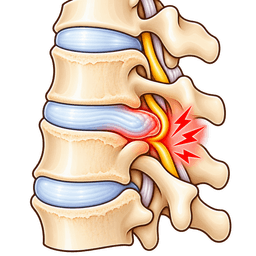
Between each pair of vertebrae sits a disc that works like a small shock absorber. It has a firm outer wall (the annulus fibrosus) and a jelly-like core (the nucleus pulposus). When the wall cracks, some of the core can bulge or leak out. That material is chemically irritating, so it inflames any nerve it touches.
People often call this a slipped disc, but nothing actually slips. The disc stays attached to the bones above and below. The better picture is a jam doughnut that has been squeezed so that some filling oozes out of one side.
Who gets a herniated disc?
A lumbar herniated disc is most often diagnosed in people between roughly 30 and 50 years of age, when the discs are still gel-rich enough to leak. A cervical herniated disc tends to appear a little later, in the 40s and 50s. Men are affected somewhat more often than women. Heavy lifting, long driving hours, smoking and family history all raise the odds.
Many adults have disc bulges on a scan and feel nothing at all. It becomes a medical problem only when it lines up with symptoms.
How serious is a herniated disc?
For most people the outlook is good. The pain can be intense, but the natural course is favourable, and a majority improve without an operation. The serious exceptions are rare: pressure on the bundle of nerves at the base of the spine (cauda equina syndrome) or on the spinal cord in the neck. Both need emergency assessment.
How this page is organised
The sections below follow the path a patient usually takes. We start with anatomy, symptoms, causes and types, then diagnosis and look-alike problems. Next come non-surgical care, self-care, surgery, and how to judge timing. We then cover treatment abroad, risks, prevention, recovery and common questions. For wider background, see our spine overview.
Anatomy
What happens in the body with herniated disc
The spine is a stack of 24 movable vertebrae, and each pair is separated by a disc that lets the column bend while protecting the nerves behind it. A herniated disc occurs when one of those cushions fails at its outer wall. Knowing the layout explains why a small bulge can cause pain far from the spine.
What is the normal structure of a spinal disc and its nerves?
Each disc has three working parts. The nucleus pulposus is a water-rich gel that spreads load. The annulus fibrosus is a ring of about 15 to 25 layers of collagen fibres, arranged like the plies of a tyre. The endplates are thin cartilage caps that attach the disc to the vertebra above and below.
Behind the disc runs the spinal canal. In the neck and upper back it holds the spinal cord. Below roughly the first lumbar level the cord ends and a bundle of nerve roots, the cauda equina, continues downward. At every level a pair of nerve roots leaves through small side openings called foramina.
What changes when a disc herniates?
Most herniations occur toward the back and side of the disc, where the outer wall is thinnest and the nerve root sits close by. The leaked gel presses on the root and also triggers inflammation. That chemical irritation helps explain why pain can be severe even with a modest bulge on the scan.
In the lower back, the L4-L5 and L5-S1 discs carry the most load and herniate most often. In the neck, the C5-C6 and C6-C7 levels are the usual sites. The affected nerve decides where you feel symptoms: for example, an L5 root sends pain along the outer shin and into the top of the foot.
Over weeks, the body treats the extruded gel as foreign material. Immune cells gradually remove it, and the herniation often shrinks. This is why waiting, with sensible care, works so well for many people.
Symptoms & causes
Herniated disc symptoms and causes
Common symptoms
- Sharp or burning arm or leg pain that follows a clear line from the spine toward the hand or foot, often worse than the spine pain itself.
- Back or neck pain that comes with the first episode, often after lifting or twisting, and may ease as the leg or arm pain takes over.
- Pins and needles or tingling in a defined part of the limb, such as the thumb and index finger or the outer foot.
- Numbness or a patch of reduced feeling that matches the area supplied by one nerve root.
- Muscle weakness, for example a foot that drags, difficulty rising onto the toes, or a weaker grip or elbow extension.
- Pain that worsens when sitting, coughing, sneezing or straining, because these actions briefly raise pressure inside the disc.
- Pain that eases when lying down or walking, which suggests mechanical irritation rather than an inflammatory cause.
- Stiff, guarded movement or a tilt away from the painful side in a lumbar herniated disc, as muscles tighten to protect the area.
- Neck pain with arm symptoms and sometimes a headache at the back of the head in a cervical herniated disc.
- Disturbed sleep because many positions pinch the nerve, so patients often find a comfortable posture only after trying several.
Causes and risk factors
- Age-related disc drying: with time the nucleus loses water, the outer wall develops small cracks and can then be pushed through by normal loads.
- Lifting with a bent and twisted spine: sudden heavy loading can force gel through a weakened part of the wall in an already degenerating disc.
- Repetitive strain: years of vibration, long driving or repeated bending can fatigue the annulus fibres gradually.
- Smoking: nicotine reduces the blood supply that feeds the outer disc and is linked with faster disc degeneration.
- Excess body weight: more mechanical load passes through the lower discs, and inactivity weakens the muscles that support them.
- Family history: genes influence disc strength, and relatives of people with a herniated disc more often develop one themselves.
- Past trauma: a fall or road accident can tear the annulus directly, sometimes producing a herniation at a young age.
- Sedentary habits: long sitting hours keep the lower discs under constant pressure and reduce the pumping movement that nourishes them.
Types
Types and stages of herniated disc
Doctors classify a herniated disc by how far the disc material has moved, by its position around the canal, and by the spinal level. These labels matter because they influence the likelihood of natural shrinkage and the choice of operation. The words on a scan report can sound alarming, so it helps to know what each one means.
How is a herniated disc classified by shape?
Radiologists usually use four degrees of change. A bulge is a broad, symmetrical swelling of the disc that has not truly broken through. A protrusion is a focal bulge where the base is wider than the tip. An extrusion has a neck narrower than its tip, as if the gel is escaping. A sequestration means a fragment has separated and moved.
| Type | What it looks like | Typical outlook |
|---|---|---|
| Bulge | Disc extends evenly beyond its normal border | Often silent; rarely needs surgery |
| Protrusion | Focal outward bulge, base wider than tip | Usually settles with non-surgical care |
| Extrusion | Gel escapes through the wall, tip wider than neck | Often shrinks over 6 to 12 weeks |
| Sequestration | Free fragment migrates away from the disc | May resorb, but surgery is more often considered |
How does the location change the picture?
A central herniation presses toward the middle of the canal and, if large, can affect several nerve roots or the spinal cord. A paracentral herniation sits just off to one side and is the most common pattern. A foraminal or far-lateral herniation lies in the exit tunnel and can irritate the root at its own level, often with very sharp pain.
Why do the type and level matter for treatment?
Larger extrusions and sequestered fragments are generally more likely to be absorbed by the body, which is encouraging when waiting is safe. Central herniations in the neck raise concern about the spinal cord and are watched more carefully. The level also guides surgery: a lumbar herniated disc is typically treated through the back, while a cervical herniated disc is often approached from the front of the neck.
What is the difference between a lumbar and a cervical herniated disc?
A lumbar herniated disc affects the lower back and sends symptoms into the buttock, leg or foot. A cervical herniated disc affects the neck and sends symptoms into the shoulder blade, arm or hand. Thoracic herniations in the mid back are far less common. The three regions differ in which operation, recovery plan and safety checks apply.
Diagnosis
How is herniated disc diagnosed?
The diagnosis comes from combining your story, a focused physical examination and, when needed, an MRI scan that is read alongside your symptoms. The scan alone cannot make the diagnosis, because many people with no pain also show disc changes. Matching the findings is the key skill.
What will the doctor ask about?
Expect questions on where the pain travels, when it began, what makes it better or worse, and whether you have numbness, weakness or any change in bladder or bowel control. The clinician will also ask about work, sport, past back problems, smoking and medicines. A pain diagram, where you shade the exact area, is surprisingly helpful.
What happens during the examination?
The examiner watches how you stand, walk and bend, then tests the strength of key muscle groups, light touch over the skin and your reflexes. In a lumbar herniated disc, the straight leg raise test lifts the leg to see whether it reproduces the leg pain, usually between 30 and 70 degrees. In the neck, a Spurling manoeuvre combines neck extension and sideways tilt to reproduce arm symptoms.
A pattern of weakness, reduced reflex and numbness that all point to one nerve root strongly supports a herniation at the matching level.
When is imaging needed?
Scans are not needed for every episode. In the first 4 to 6 weeks of pain without warning signs, most guidelines suggest waiting, because the result rarely changes the early plan. An MRI is advised sooner when there is progressive weakness, suspected cauda equina syndrome, fever or a cancer history, and later when you are considering an injection or surgery.
How do you prepare for a remote review?
If you want a surgeon abroad to assess your case, send the MRI images as digital files (the DICOM disc), not only the written report. Add a short timeline of symptoms, a list of treatments tried and their results, current medicines, allergies and any earlier spine surgery. A clear photo of any medication list can save time. You can start a free case review with these items.
Tests you may have
- MRI of the spine: shows the disc, nerve roots, spinal canal and cord in detail, and is the main test to confirm the level and side of a herniated disc.
- CT scan: images bone well and can be used when MRI is not possible, for instance with certain implants, although it shows nerves less clearly.
- Plain X-rays: show alignment, disc height and instability on bending views; they cannot show the disc itself.
- Nerve conduction studies and electromyography (EMG): measure how well a nerve and its muscles work, useful when the diagnosis is unclear or when symptoms are long-standing.
- Selective nerve root block: a small local anaesthetic injection near one root that confirms whether that nerve is the pain source.
- CT myelogram: dye placed in the spinal fluid before CT, used in selected patients who cannot have an MRI.
- Blood tests: mainly to exclude infection or inflammatory disease when fever, weight loss or night pain raise suspicion.
Look-alikes
Conditions that can feel like herniated disc
Several other conditions can imitate a herniated disc, and sorting them out matters because the treatments differ. The main clue is the pattern of pain, nerve findings and scan results taken together. A herniated disc pushes on one root, while look-alikes act at a different site or by a different mechanism.
Which conditions look like a herniated disc?
| Look-alike condition | How it differs | How doctors tell them apart |
|---|---|---|
| Spinal stenosis | Canal narrowing from bone and ligament thickening; leg pain on walking that eases with sitting | MRI shows canal narrowing at several levels; symptoms are posture related |
| Degenerative disc disease | Mainly axial back pain from disc wear without a leaking fragment | MRI shows dark, thin discs without nerve compression |
| Spondylolisthesis | One vertebra slips forward over the next | Standing or flexion X-rays show the slip |
| Sciatica | A symptom of leg pain along the sciatic nerve, not a diagnosis; herniation is one cause | Scan looks for the source of the nerve irritation |
| Piriformis syndrome | Buttock muscle irritating the sciatic nerve | Normal MRI; tenderness deep in the buttock |
| Hip osteoarthritis | Groin or thigh pain with stiff hip rotation | Hip X-ray and pain on hip movement rather than spine movement |
| Peripheral neuropathy | Symmetric numbness in both feet, often with diabetes | Nerve studies and blood tests |
Why can the scan be misleading?
Studies of people with no back pain show that a large share of them have disc bulges, and the share rises steadily with age. A finding that looks dramatic can therefore be innocent. The reverse also happens: a small herniation in a tight foramen can cause severe symptoms. Doctors rely on the match between the nerve findings and the imaging level.
What about neck and arm look-alikes?
A cervical herniated disc can resemble carpal tunnel syndrome, shoulder problems or tennis elbow. Carpal tunnel numbness is worse at night and spares the neck. A shoulder problem hurts with overhead use rather than neck movement. If your arm pain follows a clear nerve pattern, the neck deserves attention. Our page on cervical radiculopathy explains this overlap.
Non-surgical
Non-surgical treatment for herniated disc
Non-surgical care is the first treatment for almost every herniated disc, and most people recover without an operation. The aim is to calm the nerve, keep you moving and give the body time to reabsorb the herniated material. Care follows a stepwise order and is reviewed every few weeks.
What is the first step?
Stay active within comfort. Short periods of rest on the first 1 to 2 days are reasonable, but prolonged bed rest delays recovery and weakens muscles. Walking, changing positions often and avoiding the specific movement that triggers pain are better. Many patients find that lying on the back with knees on a pillow, or on the side with a pillow between the knees, eases a lumbar herniated disc.
Which medicines are used?
Simple pain relievers and anti-inflammatory tablets (NSAIDs) are usually tried first, for the shortest period that works. If pain has a burning, electric quality, doctors may add a nerve-pain medicine of the gabapentinoid or tricyclic class. A short course of muscle relaxants may help severe spasm. Opioids offer little benefit for nerve pain and carry real risks, so most guidelines advise against routine use.
Always ask your doctor about stomach, kidney and heart risks before taking any anti-inflammatory regularly. Doses and duration depend on your health.
What does physiotherapy involve?
A physiotherapist teaches positions that reduce nerve tension, then gradually builds the muscles that stabilise the spine. Common elements include directional preference exercises such as repeated extension, nerve glides, core and hip strengthening, and walking programmes. Treatment typically runs 6 to 12 weeks, with exercises continuing at home. Manual therapy may relieve short-term pain but works best alongside exercise.
When are spinal injections useful?
An epidural steroid injection places anti-inflammatory medicine near the irritated nerve root under X-ray guidance. It often gives relief that lasts weeks to a few months in patients with severe arm or leg pain, helping them rehabilitate while the herniation settles. It does not shrink the disc or reduce the later need for surgery in everyone, so it is a bridge rather than a cure. Rare risks include infection, bleeding and headache.
How long should non-surgical care continue?
About 6 to 12 weeks is a typical trial for a herniated disc without worsening weakness. Studies comparing early surgery with continued non-surgical care find that surgery relieves leg pain faster, but results at 1 to 2 years are often similar. This is why timing is a shared decision. If you want to compare options, our guide to microdiscectomy sets out what an operation involves.
Self-care
Exercises and self-care for herniated disc
Self-care for a herniated disc centres on staying gently active, protecting the spine during daily tasks and building strength once pain allows. Always check with your doctor or physiotherapist before starting any exercise programme, particularly if you have weakness or numbness. What helps one level of herniation may aggravate another.
What daily habits help?
Alternate sitting, standing and walking about every 30 minutes rather than holding one posture. When sitting, support the lower back with a small rolled towel and keep the hips slightly above the knees. Sleep with a pillow under the knees if you lie on your back. Carry loads close to the body and avoid combined bending and twisting.
Which exercises are commonly used?
Typical early movements include walking for 10 to 20 minutes, pelvic tilts lying down and gentle knee-to-chest stretches if they feel comfortable. A common progression adds bird-dog (opposite arm and leg lifts on hands and knees), side planks and glute bridges. Hold each position for 5 to 10 seconds and build up slowly over several weeks.
For a cervical herniated disc, chin tucks, gentle shoulder blade squeezes and deep neck flexor activation are often prescribed. Avoid forceful neck cracking or aggressive stretching.
How do heat, cold and pacing help?
Heat for 15 to 20 minutes relaxes tight muscles around the spine, while cold packs may calm acute flare-ups. Pacing means splitting a big task into several short bursts with breaks in between. This reduces the boom-and-bust cycle where you do too much on a good day and spend the next 3 days in pain.
What should you avoid?
Avoid heavy lifting in the early phase, deep forward bending with straight legs, long periods of driving without breaks and sit-ups that strongly flex the spine. Stopping smoking is also one of the most useful changes you can make, since nicotine slows disc healing. If any exercise sends pain further down the limb, stop and ask your clinician.
When should self-care stop and medical review start?
Seek review if numbness spreads, weakness increases, or pain is not improving after about 4 to 6 weeks. Urgent care applies to any bladder, bowel or saddle numbness changes, as described in the warning signs below.
Check with your doctor or physiotherapist before starting new exercises, and stop any movement that causes sharp pain.
Treatment
Herniated disc treatment options
When non-surgical care has not worked, several procedures can remove pressure from the nerve. The right choice depends on the level, the size and position of the herniation, and your symptoms. Surgery is generally effective for arm or leg pain, and less predictable for back or neck pain alone.
What is a microdiscectomy?
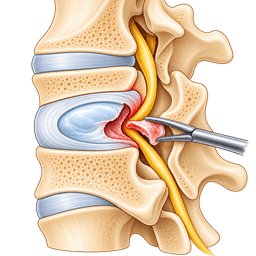
Microdiscectomy is the standard operation for a lumbar herniated disc. Through a small incision of about 2 to 3 cm, the surgeon uses a microscope or loupes, removes a small piece of bone or ligament, and takes out the herniated fragment while preserving the rest of the disc. Many patients go home the same day or after 1 night. You can read about microdiscectomy in turkey and see the microdiscectomy cost guide.
What is spinal decompression surgery?
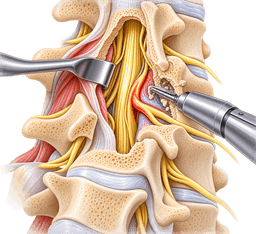
Spinal decompression is a wider term for operations that create more room for nerves, such as removing part of the lamina (laminotomy) or enlarging the foramen. It is chosen when herniation occurs together with canal narrowing. See spinal decompression in turkey and the spinal decompression cost guide.
What is ACDF for a cervical herniated disc?
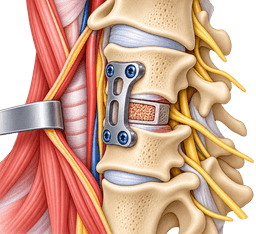
Anterior cervical discectomy and fusion (ACDF) removes the damaged neck disc through a small cut at the front of the neck, relieves the nerve or cord, and fuses the two vertebrae using a bone graft or cage. It is a well-established operation with a long track record for arm pain. The trade-off is that the fused level no longer moves. More details are on the ACDF in turkey page and the ACDF cost guide.
What is cervical disc replacement?
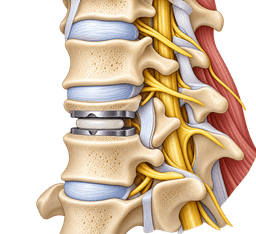
Cervical disc replacement uses the same front-of-neck approach but inserts a mobile artificial disc instead of fusing. It is considered in selected patients with a single-level or two-level herniation, healthy bone and no significant joint arthritis. The aim is to preserve neck motion. See cervical disc replacement in turkey and its cost guide.
How do the operations compare?
| Option | Region | Best suited to | Main trade-off |
|---|---|---|---|
| Microdiscectomy | Lumbar | Leg pain from a single-level herniation | Small chance of recurrence at the same level |
| Spinal decompression | Lumbar or cervical | Herniation with canal narrowing | Slightly larger bone removal |
| ACDF | Cervical | Arm pain, weakness or cord pressure | The treated level no longer moves |
| Cervical disc replacement | Cervical | Younger, active patients with healthy joints | Not suitable for everyone; long-term data are shorter |
What about minimally invasive or endoscopic options?
Endoscopic and tubular techniques use even smaller corridors, and some surgeons use them for selected lumbar herniations. They may reduce muscle damage, but they are not better for every case, and studies show similar nerve outcomes to microdiscectomy. Ask any surgeon how many such cases they do each year and which technique fits your scan.
When surgery is considered
Surgery for a herniated disc is considered when pain or weakness persists despite proper non-surgical care, or earlier if nerve damage is progressing. It is rarely needed in the first 4 weeks unless there are red flags. The decision rests on your symptoms, scan and goals, not on the scan alone.
What are the usual criteria?
Doctors commonly consider an operation when the following apply together: arm or leg pain that is severe and follows one nerve; a matching herniation on MRI; and 6 to 12 weeks of reasonable non-surgical treatment without enough relief. Disabling pain that prevents work or sleep can justify earlier discussion. A foot drop or a weak grip that is getting worse deserves prompt review.
When is surgery urgent?
Cauda equina syndrome in the lower back, or signs of spinal cord compression in the neck such as clumsy hands, unsteady walking or bladder changes, need emergency surgery within hours to days. Do not wait for a routine appointment or plan a trip. Go to the nearest emergency department.
When is surgery unlikely to help?
Operating is less predictable when the main complaint is back or neck pain without limb symptoms, when the scan and the nerve findings do not match, or when symptoms improve steadily week by week. Ongoing smoking, uncontrolled diabetes and untreated depression can also affect outcomes and are worth addressing first.
What questions should you ask a surgeon?
Ask which level and operation they recommend and why, how many similar cases they perform yearly, what the chance of re-herniation is, and what the recovery plan looks like. Ask what happens if you decide to wait. Our questions to ask before surgery abroad guide offers a full checklist.
Procedures
Procedures that may treat herniated disc
Costs
Herniated disc treatment cost in Turkey
| Procedure | Turkey package | US self-pay | Saving |
|---|---|---|---|
| Microdiscectomy | $5,000 – $8,000 | $32,275 | ~80% |
| Spinal Decompression | $5,500 – $9,000 | $42,700 | ~83% |
| Cervical Disc Replacement | $9,000 – $14,000 | $57,800 | ~80% |
| ACDF | $8,000 – $13,000 | $53,900 | ~81% |
Packages are contracted partner prices with validity dates; benchmarks are source-backed estimates. Open a cost guide for the full country comparison.
In Turkey
Treating herniated disc in Turkey
Herniated disc treatment in turkey can be a sensible choice for planned, non-urgent surgery when your scans are clear, your condition is stable and you have time to travel safely. Turkey has many accredited hospitals with dedicated spine teams. This section explains the pathway, what to send, how to check quality and when not to travel.
Is herniated disc surgery in turkey right for you?
Herniated disc surgery in turkey tends to suit people who have already completed a trial of non-surgical care, have a defined single-level problem and are medically fit. It does not suit emergencies. If you have cauda equina symptoms or rapidly worsening weakness, urgent local care comes first. Travel is only considered once you are medically stable and your treating team agrees.
What does the pathway look like?
The usual steps are an online records review, a written surgical plan, travel arrangements, admission, surgery, a short hospital stay and a structured follow-up. Our medical record review guide and treatment planning guide describe each stage, and the surgery day guide explains what to expect.
What should you send for the review?
Send your MRI images in DICOM format, the radiology report, a symptom timeline, a list of treatments tried, current medicines, and any earlier operations. Add recent blood test results if you have them. A good team will ask follow-up questions and may request a video call. The review is free through our case review form.
How do you check quality and experience?
Look for hospitals with international accreditation such as JCI, spine surgeons who perform the planned operation regularly, intraoperative imaging, and a clear plan for complications. Ask for the surgeon's annual volume for your exact procedure and for the follow-up policy once you are home. Our overview of orthopedics in turkey explains the system, and the why turkey guide covers the reasons patients choose it.
How long do you need to stay?
For a lumbar microdiscectomy, many patients plan roughly 5 to 7 days in total, including the hospital stay and a check before flying. Neck operations such as ACDF often need 5 to 8 days. Flying home is usually possible once the surgeon is happy with your wound and mobility. See the flying after surgery guide and travel and accommodation guide.
Where can you be treated?
Major spine centres are found in Istanbul, Ankara, Izmir and Antalya. Choose on the basis of surgeon experience and logistics, not just the city name.
What are the limits?
Avoid travelling with a worsening neurological deficit, an active infection, uncontrolled medical conditions or when you cannot take a long flight comfortably. Plan a follow-up with a local doctor or physiotherapist, and read our follow-up after returning home guide before booking.
Complications
Complications of herniated disc
Most herniated discs do not cause lasting harm, but untreated or severe cases can leave nerve damage, and surgery carries its own risks. Understanding both sides helps you choose with confidence. Frequencies below are approximate and vary with the operation and the patient.
What can happen if a herniated disc is left untreated?
Most mild cases settle. Persistent compression, however, can lead to chronic nerve pain, ongoing numbness or lasting muscle weakness. Foot drop that is ignored for many weeks may not recover fully. In rare cases a large central herniation compresses the cauda equina, causing bladder, bowel and sexual dysfunction that can become permanent without prompt surgery.
What are the risks of microdiscectomy and other lumbar surgery?
Risks include infection, bleeding, a tear in the lining of the spinal canal (dural tear), nerve injury and anaesthetic complications. Each is uncommon. The disc can herniate again at the same level, with studies suggesting roughly 5% to 10% of patients over several years. Some patients keep a degree of back pain even when leg pain resolves.
What are the risks of neck surgery?
ACDF and cervical disc replacement can cause temporary hoarseness or swallowing difficulty, which usually improves within weeks to months. Other risks include infection, failure of the bone to fuse, nerve or cord injury and, over time, extra stress on neighbouring levels. Disc replacement may reduce the second concern, although long-term data are still maturing.
How are complications reduced?
Good selection, an experienced surgeon, careful technique, early walking, blood clot prevention and clear wound care all reduce risk. Stopping smoking before surgery improves healing, particularly for fusion. Report fever, wound discharge, new weakness or severe worsening pain to your surgical team without delay.
Urgent care
When to seek urgent care for herniated disc
- Loss of bladder or bowel control, or being unable to pass urine: this suggests cauda equina syndrome, so go to an emergency department immediately.
- Numbness in the saddle area between the legs or around the genitals: treat as an emergency and seek care the same day.
- Rapidly worsening leg or arm weakness, such as a foot that suddenly drags: arrange urgent assessment within 24 hours.
- Weakness or numbness in both legs, or in both hands, with unsteady walking: this can signal spinal cord compression, so seek emergency care.
- Fever, chills or night sweats with severe spine pain, particularly after a recent injection or surgery: infection must be excluded urgently.
- Unexplained weight loss or a history of cancer with new spine pain: contact your doctor promptly for imaging.
- Severe pain after a significant fall or accident: get emergency evaluation before any exercise or travel.
Prevention
How to lower your risk of herniated disc
You cannot fully prevent a herniated disc, because ageing and genes play a large part, but you can lower the odds and reduce the chance of a repeat episode. Prevention is mainly about keeping the muscles around the spine strong, the load sensible and the habits healthy.
What reduces the risk of a first herniated disc?
Regular exercise that includes the trunk, hips and legs is the best-supported measure. Aim for about 150 minutes of moderate activity per week, plus two strength sessions. Maintaining a healthy weight reduces load on the lumbar discs, and avoiding smoking keeps the disc blood supply healthier.
How should you lift and move?
Bend the hips and knees, keep the load close, tighten the trunk muscles and turn with your feet instead of twisting the spine. Share heavy loads, use trolleys and avoid lifting from awkward positions such as the car boot. These habits help most when repeated every day, not only on heavy days.
What about desk work and driving?
Set your chair so that the hips are slightly higher than the knees, the screen is at eye level and the lower back is supported. Stand up or walk for 2 to 3 minutes every 30 to 45 minutes. On long drives, stop at least every 2 hours. For neck health, keep the head over the shoulders rather than craned forward.
How do you prevent a recurrence after recovery?
Continue the strengthening plan from physiotherapy for the long term. A herniation can recur at the same or another level, so keep the habits that got you better. Return to heavy lifting gradually, and discuss any new symptoms early. A graded return to sport over 8 to 12 weeks is generally safer than an abrupt one.
What cannot be prevented?
Age-related drying of the discs and inherited disc quality are outside your control. Some herniations happen after a single unlucky movement in an otherwise healthy person. The aim is therefore to be resilient rather than to avoid every episode.
Outlook
Living with herniated disc: outlook and recovery
The outlook is generally good. Most people recover substantially within 3 months, either with non-surgical care or after surgery. Recovery is rarely a straight line, and flare-ups can happen. Knowing the typical timeline helps you plan work, travel and exercise.
What is the natural course?
Arm or leg pain from a herniated disc often improves markedly within 6 to 12 weeks, and many large herniations shrink on repeat scans. Numbness may linger longer than pain. Weakness tends to recover more slowly and more variably, sometimes over 6 to 12 months. Back or neck pain may persist as a mild background ache for some people.
What is recovery like after microdiscectomy?
Most patients walk on the day of surgery and feel a clear drop in leg pain within days. Desk work is often possible after about 2 to 4 weeks, while heavy manual work may need 6 to 12 weeks. Driving usually resumes after 1 to 2 weeks if you are off strong painkillers and can brake safely. Your surgeon will individualise these times.
What is recovery like after neck surgery?
After ACDF or disc replacement, many people go home within 1 to 2 days. A sore throat is common for a few days. Office work often resumes in 2 to 4 weeks, and physiotherapy starts around 4 to 6 weeks. For a fusion, solid bone healing takes about 3 to 6 months, so contact sport is delayed until your surgeon confirms it.
Can you return to sport and heavy work?
Most patients return to full activity, including sport, within 3 to 6 months once strength and movement are restored. Some surgeons advise lifestyle modification for very heavy labour. Rehabilitation, described in our rehabilitation guide, plays a major role in how well you do.
What about the long term?
Long-term studies show that most people remain satisfied with their result years later. A minority have further episodes, and some need a second operation, often for a different level or a recurrent herniation. Related conditions such as lumbar radiculopathy or spinal stenosis can appear with age, so keeping fit and staying in contact with a spine clinician is wise.
Surgeons
Specialists who treat herniated disc
FAQ
Herniated disc: frequently asked questions
What is a herniated disc in simple terms?
How long does a herniated disc take to heal?
Can a herniated disc heal without surgery?
What are the main herniated disc symptoms?
What is the difference between a lumbar herniated disc and a cervical herniated disc?
Is walking good for a herniated disc?
When should I worry about a herniated disc?
Will I need surgery for a herniated disc?
Is microdiscectomy for herniated disc in turkey safe?
Is herniated disc treatment in turkey suitable if I have severe weakness?
How long should I stay in turkey after herniated disc surgery?
Can a herniated disc come back after surgery?
Sources
Sources for this herniated disc guide
Peer-reviewed guidance and institutional sources used to write and review this page.
- 01Herniated Disk
American Academy of Orthopaedic Surgeons OrthoInfo, 2024
https://orthoinfo.aaos.org/en/diseases--conditions/herniated-disk-in-the-lower-back/
- 02
- 03Herniated Disk
Mayo Clinic, 2023
https://www.mayoclinic.org/diseases-conditions/herniated-disk/symptoms-causes/syc-20354095
- 04Back Pain
National Institute of Arthritis and Musculoskeletal and Skin Diseases, 2023
https://www.niams.nih.gov/health-topics/back-pain
- 05
- 06Low Back Pain and Sciatica in Over 16s: Assessment and Management
National Institute for Health and Care Excellence, 2020
https://www.nice.org.uk/guidance/ng59