



Key takeaways
- 1Cervical radiculopathy is a nerve-root problem in the neck, and its hallmark is arm symptoms that follow a defined route, often stronger than the neck pain itself.
- 2The nerve roots at C6 and C7 are the most often affected, so thumb, index finger and middle finger symptoms are very common.
- 3Wear of the discs and joints with age is the leading cause after 50 years of age, while a disc herniation is more typical in younger adults.
- 4Most people improve over 4 to 6 months with time, exercise, posture changes and short-term medicines, and studies show a favourable natural history.
- 5Surgery, mainly ACDF, disc replacement or decompression, is for severe pain that does not settle, for progressive weakness or when the spinal cord is also under pressure.
- 6Clumsy hands, trouble with balance or changes in bladder control may signal spinal cord compression and need urgent local assessment before any travel.
- 7Planned cervical radiculopathy treatment in turkey can suit stable patients once scans are reviewed and fitness for anaesthesia is confirmed.
Overview
What is cervical radiculopathy?
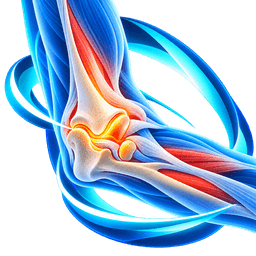
Cervical radiculopathy occurs when a nerve root in the neck is squeezed or inflamed, producing symptoms along the shoulder, arm or hand. It is sometimes described as a pinched nerve in neck problems. This page explains what happens, how it is diagnosed and how it is treated, including in turkey.
What is cervical radiculopathy?
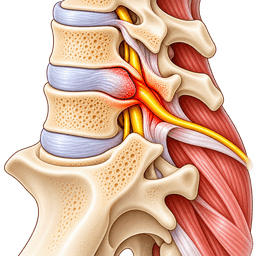
Eight pairs of nerve roots leave the neck portion of the spinal cord and travel to the shoulders, arms and hands. Cervical radiculopathy means that one of these roots is irritated, usually where it exits through a small bony tunnel beside the disc. Because the root carries both sensation and movement signals, the person may feel pain, tingling, numbness or weakness in the arm.
Notice that the problem often lies in the neck while the pain is felt far away. That mismatch is why people sometimes consult for an elbow or wrist complaint first.
Who gets cervical radiculopathy?
The condition is seen most often between 40 and 60 years of age. Younger adults usually develop it after a disc herniation, whereas older adults more often have bony spurs narrowing the exit tunnels. Smokers, people who lift or use vibrating tools, and those with long hours of desk work or phone use appear at higher risk. It affects both men and women.
How serious is cervical radiculopathy?
For most people it is a painful but self-limiting problem. The main concern is when the spinal cord, not just a root, is under pressure. That is called cervical myelopathy, and it can lead to loss of hand skill, walking difficulty and bladder change. Recognising this difference early protects long-term function.
How is this page organised?
We start with anatomy, symptoms and causes, then classification, diagnosis and the conditions that mimic it. Treatment sections cover non-surgical care, exercises and surgery, with timing advice and treatment abroad afterwards. We close with risks, prevention, outlook and questions. For a wider view, see the spine overview.
Anatomy
What happens in the body with cervical radiculopathy
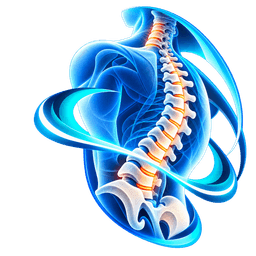
The neck, or cervical spine, has seven vertebrae (C1 to C7) and eight pairs of nerve roots, and it is both the most mobile part of the spine and a busy corridor for nerves bound for the arms. Cervical radiculopathy appears when the exit tunnel of one root becomes tight. Seeing how crowded the neck is helps explain why a small change can cause large symptoms.
How is the neck built?
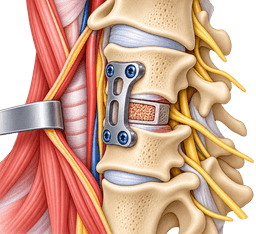
Each vertebra has a body at the front and a bony arch behind, together forming the canal that carries the spinal cord. Discs separate the bodies from C2 downward. Small joints at the back, the facet joints, guide movement. At the sides of each segment, a foramen allows the root to leave the canal, bordered by the disc in front and the facet joint behind. Uncovertebral joints, tiny ridges at the sides of the vertebral bodies, lie right next to the foramen.
Roots are numbered for the vertebra below them in the neck, except at C8, which exits between C7 and T1. This detail matters when reading a scan report.
Which roots supply which part of the arm?
| Root | Pain or numbness area | Weakness |
|---|---|---|
| C5 | Shoulder tip, upper outer arm | Lifting the arm sideways (deltoid) |
| C6 | Outer forearm, thumb and index finger | Bending the elbow, extending the wrist |
| C7 | Back of the arm, middle finger | Straightening the elbow, wrist flexion |
| C8 | Little and ring fingers, inner forearm | Finger grip and hand intrinsic muscles |
What changes in the neck?
With age the discs lose water and height. The bones around them respond by forming spurs (osteophytes), and the uncovertebral and facet joints enlarge. All of these narrow the foramen. A disc herniation can narrow it suddenly. The root becomes swollen and sensitive, so even normal neck movements, especially looking up or turning toward the painful side, can fire pain down the arm.
Symptoms & causes
Cervical radiculopathy symptoms and causes
Common symptoms
- Pain that begins in the neck or shoulder blade and travels down the arm in a belt-like path, sometimes reaching the hand, often sharper than the neck ache.
- Tingling or pins and needles in particular fingers, such as the thumb and index finger in C6 problems or the middle finger in C7 problems.
- Numbness or reduced feeling in a defined patch of the arm or hand, which may make buttons, keys or coins hard to handle.
- Weakness in specific arm muscles, for example trouble lifting the arm, straightening the elbow or gripping, which follows the affected root.
- Pain triggered by turning the head or looking up, which narrows the exit tunnels and squeezes the root.
- Relief when resting the hand on top of the head, a classic sign (shoulder abduction relief) that takes tension off the nerve.
- Aching between the shoulder blades or at the back of the head that accompanies the arm pain.
- Night pain that interrupts sleep, especially when lying on the affected side or with the neck twisted.
- Reduced reflexes at the biceps, triceps or wrist, which a clinician can find during examination even when you have not noticed them.
- Clumsy hands, unsteady walking or electric shocks down the spine on bending the neck: these hint at cord involvement and need quick review.
Causes and risk factors
- Age-related disc and joint wear (cervical spondylosis): spurs and thinner discs narrow the root tunnels, the most common cause after about 50 years of age.
- Disc herniation: a bulge or leak from a neck disc presses on the root, typical in people aged 30 to 50, often at C5-C6 or C6-C7.
- Foraminal stenosis: the exit tunnel narrows from joint enlargement, creating slow, progressive symptoms.
- Neck injury: whiplash, falls or sports collisions can tear a disc or damage a joint, triggering sudden radiculopathy.
- Poor posture and repetitive strain: long hours with the head forward, as with a phone or screen, increase the load on neck discs.
- Smoking: tobacco accelerates disc degeneration and slows tissue repair.
- Less common causes: tumours, infections, cysts and shingles (herpes zoster) can all affect a root and should be considered if the course is unusual.
- Previous neck surgery: stiffness or fusion at one level can transfer stress to adjacent levels over years.
Types
Types and stages of cervical radiculopathy
Doctors classify cervical radiculopathy by the root involved, the cause and how long it has been present. These descriptors help predict who is likely to improve and who may need an operation. They also determine which operation, if any, is most suitable.
How is it classified by cause?
A soft or discogenic radiculopathy results from a disc herniation and tends to come on quickly, often in younger patients. A hard or spondylotic radiculopathy results from bone spurs and tunnel narrowing and develops gradually. A mixed pattern is common in middle age. Recognising the mix tells the surgeon whether to remove the disc, widen the tunnel or do both.
How is it staged by duration?
Acute symptoms last under 6 weeks, subacute symptoms from 6 to 12 weeks and chronic symptoms longer than 3 months. Studies suggest that most patients improve spontaneously, especially within the first few months, so doctors usually wait unless there is progressive weakness or cord involvement.
| Stage | Duration | Typical approach |
|---|---|---|
| Acute | Under 6 weeks | Activity modification, simple medicines, early exercise; no scan unless red flags |
| Subacute | 6 to 12 weeks | Structured physiotherapy, consider MRI and injection |
| Chronic | Over 3 months | Specialist review, MRI, discuss surgery if disabling |
What is the difference between radiculopathy and myelopathy?
Radiculopathy involves a nerve root and gives one-arm symptoms, usually with neck and arm pain. Myelopathy involves the spinal cord itself and causes clumsy hands, balance problems, stiff legs and sometimes bladder changes, often without much pain. Some patients have both. Because myelopathy can progress, it changes the timing of surgery.
Why does the classification matter?
A herniated disc in a healthy neck might be treated with an operation that removes the disc and either fuses or replaces it. Wide spondylosis with several narrow tunnels may require a posterior decompression or a combination. The labels therefore feed directly into the surgical plan and the expected recovery.
Diagnosis
How is cervical radiculopathy diagnosed?
Cervical radiculopathy is diagnosed from the pattern of arm symptoms, a neurological examination and imaging that agrees with both. A typical case can often be recognised in the consulting room within minutes. Scans confirm the level and help plan treatment.
What does the doctor ask?
Expect questions about where the pain travels, which fingers tingle, what movements trigger symptoms and whether the hands or legs feel clumsy or weak. The doctor will also ask about neck injuries, work posture, previous cancer, fever, bladder function, smoking and medicines. A drawing of the area you feel symptoms is often more informative than words.
How is the examination carried out?
The clinician checks neck movement, tests muscle power in the shoulder, elbow, wrist and fingers, and examines sensation and reflexes. The Spurling test, in which the neck is tilted toward the painful side and gently compressed, reproduces arm pain in many patients. The shoulder abduction relief sign and the upper limb tension test add further support. Hand dexterity and gait are tested to look for cord involvement.
When is imaging used?
Imaging is generally delayed in a first episode without red flags, since most patients improve. An MRI is arranged earlier for progressive weakness, signs of cord compression or suspicion of infection or tumour, and later when treatment such as an injection or surgery is being planned. Plain X-rays show alignment and disc space height but not the nerve.
How do you prepare for a remote opinion?
Send the MRI as image files, with the radiology report, a timeline of symptoms, treatments tried and any nerve test results. Describe which activities trigger arm symptoms and whether your hands feel clumsy. A video showing neck movement and grip can help. Submit it through the free case review and a surgeon will advise whether your case suits surgery.
Tests you may have
- MRI of the cervical spine: the best test for discs, nerve roots and the spinal cord, and the main way to confirm the level.
- Plain X-rays with flexion and extension views: show alignment, disc height, spur formation and abnormal movement between vertebrae.
- CT scan: gives sharp detail of bony spurs and foramen size, and is used when MRI is not possible or bone detail matters.
- Electromyography and nerve conduction tests: check whether a root is really injured, and help separate radiculopathy from carpal tunnel or ulnar nerve problems.
- Selective root block: a tiny anaesthetic injection near a suspected root; relief confirms that root as the pain source.
- Blood tests: inflammatory markers and blood counts, requested if infection, rheumatoid disease or another systemic cause is possible.
- CT myelogram: dye is placed in the spinal fluid before CT, for patients who cannot have an MRI scan.
Look-alikes
Conditions that can feel like cervical radiculopathy
Pain and numbness in the arm can come from many places, so a careful look at the pattern is essential. The neck is only one possible source, and shoulder, elbow, wrist or even chest problems can mimic it. Differences in location, triggers and examination findings usually settle the question.
Which conditions look like cervical radiculopathy?
| Look-alike condition | How it differs | How doctors tell them apart |
|---|---|---|
| Carpal tunnel syndrome | Numb thumb, index and middle fingers, worse at night; no neck pain | Positive wrist tests; nerve conduction shows median nerve slowing at the wrist |
| Cubital tunnel syndrome | Numb ring and little fingers with elbow bending | Tenderness at the inner elbow; nerve studies localise the lesion |
| Rotator cuff problems | Shoulder pain with overhead use and weak arm lifting | Pain on shoulder tests, not neck movement; shoulder ultrasound or MRI |
| Cervical myelopathy | Clumsy hands, gait trouble, little pain | Cord signs on examination; MRI shows cord compression |
| Thoracic outlet syndrome | Arm symptoms from overhead activity, hand colour changes | Provocation tests and vascular studies |
| Brachial plexus neuritis | Sudden severe shoulder pain, then patchy weakness | Neck movement does not trigger pain; EMG pattern differs |
| Cardiac pain | Left arm pain with chest tightness or breathlessness | Emergency cardiac assessment; an urgent possibility to exclude |
Why is the double crush idea important?
A nerve can be pinched at two sites at once, for instance at the neck root and again at the wrist. This double crush picture explains why some patients still have symptoms after a carpal tunnel operation. A thorough evaluation of both areas prevents a missed diagnosis.
Which spine conditions overlap?
Disc wear, canal narrowing and herniation commonly coexist. Our pages on herniated disc and spinal stenosis explain how these relate to arm symptoms and when cord involvement becomes a concern.
Non-surgical
Non-surgical treatment for cervical radiculopathy
For most people with cervical radiculopathy, treatment starts without surgery and often ends there. The strategy is to relieve nerve irritation, maintain neck and shoulder function and wait while the body settles the inflammation. Studies suggest that a majority improve substantially over several months.
What should you do in the first weeks?
Stay as active as comfort allows and avoid the postures that trigger arm pain, such as prolonged looking up or turning toward the sore side. Short-term relative rest from heavy lifting is sensible. Many people find that a supportive pillow that keeps the neck neutral, and resting the hand on the head, bring relief.
Which medicines are used?
Anti-inflammatory tablets are often tried for a short time if they suit the stomach, kidneys and heart. Nerve-pain medicines can help burning or electric arm pain, although benefit is modest on average. A short course of oral steroids is sometimes used, but evidence is limited. Muscle relaxants may ease spasm for a few days. Strong opioids are not recommended for routine use.
Is a cervical collar helpful?
A soft collar can offer short-term comfort, for a few days up to 2 weeks, but wearing it longer weakens neck muscles and may slow recovery. It is not a substitute for exercise. Use it only on the advice of your clinician.
What does physiotherapy involve?
Physiotherapists teach deep neck flexor activation, scapular stabilisation, posture correction and gentle range-of-motion work. Some use manual therapy or mechanical traction, though traction evidence is mixed. Most programmes last 6 to 12 weeks. Cervical radiculopathy exercises are generally combined with an ergonomic review of your workspace and phone habits.
When is an injection considered?
An epidural steroid injection in the neck, or a selective root block, can reduce severe arm pain that remains after 4 to 6 weeks. It is carried out under imaging guidance by trained specialists, because the space is close to vital structures. Benefit is often temporary, and serious complications, though very rare, include spinal cord injury and stroke. Discuss risks carefully.
How long should non-surgical care continue?
For radiculopathy without cord signs or progressive weakness, 6 to 12 weeks is a typical trial, and some surgeons wait up to 4 to 6 months when pain is tolerable. After this time, the benefits of surgery are discussed. See ACDF for what an operation involves.
Self-care
Exercises and self-care for cervical radiculopathy
Good self-care for cervical radiculopathy keeps the neck moving within comfort and reduces the load that provokes the nerve. Always ask your doctor or physiotherapist before beginning exercises, particularly when you have weakness, numbness or any sign of cord involvement. Move slowly, and stop if arm symptoms intensify.
Which cervical radiculopathy exercises are usually taught?
Typical cervical radiculopathy exercises include chin tucks, which retract the head over the shoulders, performed 10 times for 5 seconds each. Others are shoulder blade squeezes, gentle neck rotations and side bends within pain-free range, and wall angels to open the chest. Later, resistance band rows and prone Y-raises build the muscles that carry the head.
How should you set up work and screens?
Raise the screen to eye level, keep the keyboard close and support the forearms on the desk. Hold your phone at eye height instead of bending the neck, and use a headset for calls. Take a 1 to 2 minute movement break every 30 minutes. If you drive a lot, adjust the headrest so that the head rests lightly on it.
What about sleep?
Choose a pillow that keeps the neck in line with the spine, neither propped up nor flat. On the back, a small rolled towel under the neck can help. On the side, the pillow should fill the gap between the ear and shoulder. Avoid sleeping on the stomach with the head turned.
What helps with pain flares?
Heat for 15 to 20 minutes can relax tight shoulder muscles, while a cold pack might calm sharp pain. Gentle walking and breathing exercises reduce muscle guarding. Pace the day so that heavy overhead or lifting tasks are spread out.
What should you avoid?
Avoid forceful neck manipulation or sudden twisting, prolonged overhead work, carrying heavy bags on one shoulder, and strong stretching that sends pain into the arm. Smoking should be stopped, as it worsens disc health. If you develop hand clumsiness or leg stiffness, stop and seek advice.
Check with your doctor or physiotherapist before starting new exercises, and stop any movement that causes sharp pain.
Treatment
Cervical radiculopathy treatment options
If cervical radiculopathy remains disabling, or weakness progresses, an operation can free the nerve. Neck surgery works best for arm pain and weakness from a root that is clearly compressed, and it is less predictable for neck pain alone. The choice lies between three main approaches.
What is ACDF?
Anterior cervical discectomy and fusion (ACDF) approaches the spine through a small incision at the front of the neck, roughly 3 to 4 cm long. The surgeon removes the damaged disc and bone spurs, frees the root and fills the space with a cage or graft that fuses the two vertebrae. It has a long track record, and most patients go home within 1 to 2 days. Details are on the ACDF in turkey page and the ACDF cost guide.
Patients often ask about ACDF for cervical radiculopathy in turkey, and the answer depends on the level, the scan and general fitness, all of which are reviewed first.
What is cervical disc replacement?
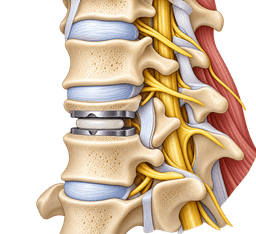
Cervical disc replacement uses the same front-of-neck approach but replaces the disc with a moving implant, aiming to keep motion. It is considered for suitable patients with a one- or two-level disc problem, healthy facet joints and good bone quality. See cervical disc replacement in turkey and its cost guide.
What is spinal decompression from the back of the neck?
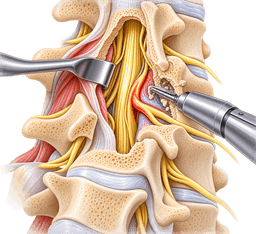
Spinal decompression through the back of the neck, such as a posterior foraminotomy, removes a small part of bone and joint to enlarge the exit tunnel, leaving the disc in place. It suits a single-level, mainly bony or lateral problem and avoids fusion. For multilevel narrowing or cord compression, a laminoplasty or laminectomy may be used. Read about spinal decompression in turkey and the spinal decompression cost guide.
How do the choices compare?
| Operation | Approach | Best suited to | Main trade-off |
|---|---|---|---|
| ACDF | Front of the neck | Disc herniation or spur at one or two levels | The fused level no longer moves |
| Cervical disc replacement | Front of the neck | Younger patients with healthy joints and bone | Not for everyone; long-term data are shorter |
| Posterior foraminotomy | Back of the neck | Single-level lateral root compression | More neck muscle disturbance; limited to selected cases |
What results can be expected?
Studies report that most patients with a well-selected cervical radiculopathy have significant relief of arm pain after surgery, often within days to weeks. Neck pain improves less predictably, and numbness may take months. Neighbouring-level wear over many years is a recognised concern after fusion and is a reason some surgeons favour disc replacement for selected cases.
When surgery is considered
Consider surgery for cervical radiculopathy when severe arm pain continues despite about 6 to 12 weeks of proper non-surgical care, when weakness is getting worse, or when the spinal cord is under pressure. A specialist opinion is sensible at any point if you are uncertain. Matching the scan to your examination is the foundation of a good decision.
What are the usual criteria?
Surgeons typically look for arm pain that is disabling and one-sided, nerve findings that match one level, an MRI showing compression at that level, and an adequate trial of conservative care. Progressive weakness, such as a falling grip or difficulty lifting the arm, shortens the waiting period. Patients with severe pain at night and poor sleep may also decide earlier.
When is it urgent?
Signs of spinal cord compression, including clumsy hands, difficulty with fine tasks, unsteady walking, electric shocks on bending the neck or bladder changes, need prompt assessment. A sudden severe weakness in an arm or both legs after neck trauma is an emergency. Urgent local care comes first, and travel is not appropriate.
When is surgery less helpful?
Operating is less reliable when neck pain is the main symptom with little arm pain, when the scan does not fit the examination, or when symptoms improve week by week. Active smoking, diabetes that is poorly controlled and depression can weaken results, so they are addressed beforehand where possible.
What should you ask the surgeon?
Ask which level and operation are proposed, why that choice over alternatives, how many such operations the surgeon performs yearly, what swallowing or voice problems may occur, and what the recovery timeline looks like. Our guide to questions to ask before surgery abroad offers a ready checklist.
Procedures
Procedures that may treat cervical radiculopathy
Costs
Cervical radiculopathy treatment cost in Turkey
| Procedure | Turkey package | US self-pay | Saving |
|---|---|---|---|
| Spinal Decompression | $5,500 – $9,000 | $42,700 | ~83% |
| Cervical Disc Replacement | $9,000 – $14,000 | $57,800 | ~80% |
| ACDF | $8,000 – $13,000 | $53,900 | ~81% |
Packages are contracted partner prices with validity dates; benchmarks are source-backed estimates. Open a cost guide for the full country comparison.
In Turkey
Treating cervical radiculopathy in Turkey
Cervical radiculopathy treatment in turkey is a practical option for patients with a stable, well-defined problem who are planning an operation rather than facing an emergency. Turkey has a large network of accredited private hospitals with spine units that care for international patients. Below is how the process, safety checks and limits work.
Who is suited to cervical radiculopathy surgery in turkey?
Cervical radiculopathy surgery in turkey suits patients who have tried a sensible course of non-surgical care, have an MRI that explains their arm symptoms and are fit for general anaesthesia. If hands are becoming clumsy, balance is poor or weakness is progressing quickly, urgent local care comes first, and travel is considered only when you are medically stable and the treating team agrees.
How does the pathway work?
You share your records, a surgeon reviews them and proposes an operation, and you choose whether to go ahead. After travel, you are examined, any missing tests are done and surgery follows. A short stay for observation and a check before flying complete the visit. Our medical record review and treatment planning guides explain each step.
Which records should you prepare?
Prepare MRI image files and the report, X-rays if available, any nerve test results, a timeline of symptoms, medicines and allergies, and previous operations. Add details on swallowing, voice or breathing problems, as these influence a front-of-neck approach. You can send everything through the free case review.
How do you check quality?
Look for international accreditation, a spine surgeon who regularly performs your exact operation, intraoperative imaging, nerve monitoring where appropriate, and a clear plan for complications. Ask about annual case numbers and the follow-up policy. For background, read about orthopedics in turkey and our why turkey guide.
How long should you stay?
ACDF or disc replacement usually needs about 5 to 8 days away, including 1 to 2 nights in hospital and a check before the flight. A posterior decompression may need 5 to 9 days. See the flying after surgery and travel and accommodation guides, and consider bringing a companion as described in the companion guide.
Which city might suit you?
Spine surgery is offered in Istanbul, Ankara, Izmir and Antalya. Surgeon experience and travel convenience matter more than the city name.
What are the limits?
Do not travel with worsening hand clumsiness, rapidly increasing weakness, fever or unstable medical conditions. Arrange a local physiotherapist and a doctor for wound checks, and see our follow-up after returning home guide.
Complications
Complications of cervical radiculopathy
Most people with cervical radiculopathy recover well, but long-standing compression can leave residual symptoms, and operations carry risks. Hearing both sides supports informed consent. Frequencies below are approximate and depend on the patient and procedure.
What happens if the root stays compressed?
Arm pain may persist or return. Prolonged pressure can lead to lasting numbness, a weak grip or muscle wasting in the affected arm. Chronic pain can also affect sleep, work and mood. When the cord is involved as well, untreated myelopathy can progress to permanent hand clumsiness and walking difficulty.
What are the risks of neck surgery?
Front-of-neck operations commonly cause a sore throat or swallowing difficulty that improves over 2 to 12 weeks. Hoarseness from temporary irritation of the voice nerve is less frequent. Infection, bleeding, injury to the nerve root or cord, failure of fusion, and implant problems are rare. A few patients later develop wear at neighbouring levels.
What about risks of non-surgical treatments?
Medicines can upset the stomach or kidneys or cause drowsiness. Neck injections have small but serious risks, including bleeding, infection and spinal cord injury. Aggressive manipulation has been linked, rarely, to arterial injury. Choose experienced practitioners and discuss every risk first.
How can complications be reduced?
Pick an experienced surgeon, stop smoking at least 4 to 6 weeks before an operation, control blood sugar, and follow instructions on neck care and activity. Report fever, wound problems, trouble breathing or swallowing, or new weakness immediately, and keep every scheduled follow-up visit even when you feel well, since early review catches problems while they are still easy to treat.
Urgent care
When to seek urgent care for cervical radiculopathy
- Clumsy hands, trouble with buttons or handwriting, and unsteady walking: possible spinal cord compression, so seek urgent assessment within 24 hours.
- Loss of bladder or bowel control with neck problems: an emergency, so go to the nearest emergency department at once.
- Sudden severe weakness in an arm or both legs, especially after neck injury: call emergency services and avoid moving the neck.
- Rapidly worsening arm weakness or a hand that cannot grip: arrange a specialist review within days, not weeks.
- Fever, chills or intense neck pain after a procedure or in someone with infection risk: needs same-day medical review.
- Arm pain with chest tightness, breathlessness, sweating or jaw pain: could be a heart problem, so call emergency services.
- Unexplained weight loss, cancer history or constant night pain with neck symptoms: contact your doctor promptly for imaging.
Prevention
How to lower your risk of cervical radiculopathy
Cervical radiculopathy cannot always be prevented, since disc ageing is natural and partly inherited, but you can lower your risk and the chance of recurrence. The best-supported steps address posture, neck and shoulder strength, smoking and workplace set-up. Small changes repeated daily add up.
How does posture help?
Keeping the head balanced over the shoulders reduces the load on the cervical discs. For each 2.5 cm that the head sits forward, the effective load on the neck rises noticeably. Raise screens and phones, take frequent movement breaks and use a chair with good support.
Which exercises protect the neck?
Regular strengthening of the deep neck flexors, upper back and shoulder girdle supports the neck. Aim for 2 to 3 sessions per week, with a short mobility routine each day. Aerobic exercise such as brisk walking or swimming improves circulation to the discs and general fitness.
Why is smoking relevant?
Smoking is linked with faster disc degeneration and slower healing. Quitting benefits disc health and improves results if surgery is needed. Ask your doctor or pharmacist about help.
What can be done at work and in sport?
Use headsets rather than cradling a phone, lift loads close to the body, and avoid prolonged overhead work. In contact sport, learn safe tackling and neck-strengthening technique. Wearing the right protection and avoiding diving into shallow water also prevent serious neck injuries.
What cannot be prevented?
Age-related disc change and inherited disc quality are outside your control, and some people develop symptoms after a single minor movement. The aim is to keep the neck strong and flexible, so that a flare-up is smaller and shorter.
Outlook
Living with cervical radiculopathy: outlook and recovery
The outlook for cervical radiculopathy is favourable for most people. The majority improve substantially within about 4 to 6 months without surgery, and those who undergo an appropriate operation usually enjoy good arm pain relief. Planning for work, driving and sport becomes easier once the usual timelines are known.
What is the natural course?
Studies of untreated patients show that arm pain commonly eases within weeks to months, and many have little or no pain after a year. Numbness and weakness resolve more slowly. A minority have recurring episodes or lasting symptoms, and these patients benefit from specialist review.
What is recovery like after ACDF or disc replacement?
Many patients go home in 1 to 2 days and feel less arm pain within days. A sore throat is common for the first 1 to 2 weeks. Office work often resumes in 2 to 4 weeks, driving after about 2 weeks when the neck turns comfortably, and gym work after 6 to 12 weeks. Bone fusion takes 3 to 6 months to mature, so contact sport waits for your surgeon's clearance.
What is recovery like after a posterior decompression?
Neck muscle soreness is more noticeable, and a short period of reduced neck movement is typical. Most people return to light work in 2 to 4 weeks and fuller activity after 6 to 12 weeks. Your surgeon and physiotherapist will define an individual plan.
How does rehabilitation help?
Physiotherapy restores neck movement, strengthens postural muscles and teaches safe loading. Programmes often start 2 to 6 weeks after surgery and last 8 to 12 weeks. Our rehabilitation guide explains the stages.
What about the long term?
Most people keep their improvement for years. Some develop symptoms at another level, and related conditions such as degenerative disc disease or lumbar radiculopathy can appear elsewhere in the spine with age. Staying active, keeping good posture and reviewing new symptoms early are the best long-term safeguards.
Surgeons
Specialists who treat cervical radiculopathy
FAQ
Cervical radiculopathy: frequently asked questions
What is cervical radiculopathy?
What are the main cervical radiculopathy symptoms?
How long does cervical radiculopathy last?
Can cervical radiculopathy go away on its own?
Which cervical radiculopathy exercises are safe?
What is the difference between cervical radiculopathy and myelopathy?
When is neck and arm pain an emergency?
Do I need surgery for cervical radiculopathy?
Is cervical radiculopathy surgery in turkey safe?
Can I travel for cervical radiculopathy treatment in turkey if my hands feel clumsy?
How long is the stay for ACDF for cervical radiculopathy in turkey?
Will a neck operation limit my movement?
Sources
Sources for this cervical radiculopathy guide
Peer-reviewed guidance and institutional sources used to write and review this page.
- 01Cervical Radiculopathy (Pinched Nerve)
American Academy of Orthopaedic Surgeons OrthoInfo, 2024
https://orthoinfo.aaos.org/en/diseases--conditions/cervical-radiculopathy-pinched-nerve/
- 02Cervical Radiculopathy
StatPearls, National Center for Biotechnology Information, 2023
https://www.ncbi.nlm.nih.gov/books/NBK441828/
- 03Pinched Nerve
Mayo Clinic, 2023
https://www.mayoclinic.org/diseases-conditions/pinched-nerve/symptoms-causes/syc-20354746
- 04
- 05
- 06Back Pain
National Institute of Arthritis and Musculoskeletal and Skin Diseases, 2023
https://www.niams.nih.gov/health-topics/back-pain