

Key takeaways
- 1A PCL tear is damage to the posterior cruciate ligament, the strongest ligament in the knee, which keeps the shin bone from sliding backwards under the thigh bone.
- 2The typical cause is a strong force to the front of the bent shin, such as a car dashboard impact, or a fall onto the bent knee.
- 3Isolated grade 1 and 2 injuries usually do well with a structured rehabilitation plan that centres on rebuilding the quadriceps muscle.
- 4Grade 3 tears, and tears that come with damage to the back-outer corner or other ligaments, are more likely to need reconstruction.
- 5A high-energy knee injury can harm the artery or nerve behind the knee, so urgent local care comes before any thought of travel.
- 6Rehabilitation often takes 3 to 6 months for return to normal activity, and longer for pivoting or contact sport.
- 7Planned PCL reconstruction in turkey is an option for medically stable patients once swelling has settled and the records have been reviewed remotely.
Overview
What is PCL tear?
A PCL tear is an injury to the posterior cruciate ligament, a thick band deep in the back of the knee that prevents the shin bone from shifting backwards. It is less common than a tear of the front cruciate ligament, and it is often missed in the first weeks. This page covers how it happens, how it is graded and treated, and how care in turkey is arranged.
What is a PCL tear?
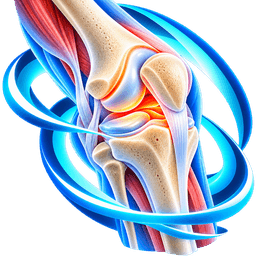
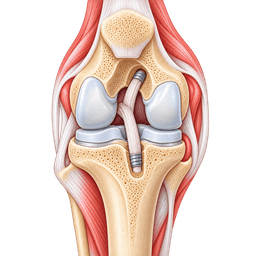
The posterior cruciate ligament, or PCL, joins the back of the shin bone (tibia) to the inner side of the thigh bone (femur). It is about twice as thick as the anterior cruciate ligament and is the main stabiliser against backward movement of the shin. A PCL tear can be a stretch, a partial rupture or a complete break.
Unlike a front cruciate injury, the posterior ligament has a better blood supply and can heal to some degree. That is one reason many isolated injuries are managed without an operation.
Who is affected by a PCL tear?
Most patients are young or middle-aged adults hurt in road accidents, contact sport or falls. Football, rugby and skiing are common sources. In vehicle crashes, the knee strikes the dashboard and the shin is pushed backwards. Many of these injuries do not occur alone, so doctors look carefully for companion damage.
How serious is a PCL tear?
The seriousness depends on grade and on what else is injured. A mild isolated tear may cause little more than stiffness and an ache on kneeling. A severe tear that comes with other ligament damage, or with a knee dislocation, is an emergency because blood vessels and nerves can be hurt. Long-term, a neglected tear may strain the cartilage in the front of the knee.
How this page is organised
We start with anatomy, symptoms and causes, then grading, diagnosis and look-alike injuries. After that come bracing and rehabilitation, self-care, operations and decision points. We finish with treatment abroad, complications, prevention, outlook and common questions. You can also browse the wider knee section.
Anatomy
What happens in the body with PCL tear
The posterior cruciate ligament sits in the centre of the knee and acts as a central pivot that keeps the shin bone aligned under the thigh bone. When a PCL tear occurs, the shin can sag backwards, which alters how forces pass through the joint. A short tour of the anatomy shows why combined injuries are so frequent.
What is the normal structure of the posterior cruciate ligament?
The ligament is built from two main bundles. The larger anterolateral bundle is tight when the knee is bent, and the smaller posteromedial bundle is tight when the knee is straight. It runs from the back of the upper shin, upwards and forwards, to the inner wall of the thigh bone notch. It lies outside the joint lining, behind the knee, which helps its healing capacity.
Around it are the meniscofemoral ligaments, small bands that add support from the menisci. At the back-outer corner of the knee sits a group of structures called the posterolateral corner, which works with the PCL to resist rotation and backward drift.
What changes after a PCL tear?
When the ligament is torn, the shin bone settles backwards, particularly when the knee is bent to 90 degrees. This posterior sag changes where the kneecap contacts the thigh bone and raises pressure behind the kneecap. Over years, a loose or healed-in-lengthened ligament may contribute to cartilage wear in the inner and front compartments.
Nearby, the popliteal artery and the nerves of the leg run directly behind the knee. In severe injuries they can be stretched or torn. For that reason doctors always check the pulses and sensation in the foot after a major knee injury.
Symptoms & causes
PCL tear symptoms and causes
Common symptoms
- Pain deep at the back of the knee, usually worse on kneeling, squatting or walking down hills and stairs.
- Mild to moderate swelling that is often less dramatic than after a front cruciate injury, which helps explain why the tear is missed.
- Stiffness and a tight feeling in the knee, especially in the first days, which limits bending fully.
- A feeling that the shin bone is sagging backwards, noticed when sitting with the knee bent or going down steps.
- Instability when walking on uneven ground or slowing down, usually less obvious than the buckling that follows an ACL tear.
- Pain at the front of the knee behind the kneecap, caused by altered loading in the patellofemoral joint.
- Bruising behind the knee or over the front of the shin, which marks the point where the force was applied.
- Numbness, coldness or weakness of the foot, which may mean damage to a nerve or artery and needs immediate attention.
- Difficulty trusting the knee when pushing off or jumping, particularly with a combined ligament injury.
Causes and risk factors
- Dashboard injury in a road accident, where the bent knee strikes the dashboard and drives the shin backwards, the classic cause of a PCL tear.
- A fall onto the front of a bent knee, for example from a bicycle, a motorbike or a stumble onto a hard floor.
- Direct blows in contact sport, such as a rugby tackle or a football collision that hits the front of the upper shin.
- Overextension of the knee, where the joint is forced beyond its straight position and damages the back ligaments.
- Twisting injuries combined with a fall, which can tear the PCL together with the ACL or collateral ligaments.
- Knee dislocation, in which the joint briefly comes out of place and several ligaments tear, a limb-threatening emergency.
- Skiing or snowboarding falls that load the knee in an awkward bent position.
- Previous injuries or surgery to the knee, which may weaken the supporting structures and change the pattern of damage.
Types
Types and stages of PCL tear
Doctors classify a PCL tear by how far the shin bone slides backwards and by whether other structures are injured. The classification is practical, because it guides whether you start with a brace or move towards an operation.
How is a PCL tear graded?
The grade is judged by the posterior drawer test and compared with the other knee. Grading depends on the step-off between the front of the shin and the thigh bone at 90 degrees of knee bend.
| Grade | Backward slide of the shin | What it means | Usual first approach |
|---|---|---|---|
| Grade 1 | 0 to 5 mm | Mild stretch or small partial tear | Rehabilitation, early movement |
| Grade 2 | 5 to 10 mm | Larger partial tear, step-off still present | Bracing and structured rehabilitation |
| Grade 3 | More than 10 mm | Complete tear, often with other injuries | Surgery considered, especially if combined |
What is the difference between isolated and combined injuries?
An isolated PCL tear involves the ligament alone and often occurs in sport. A combined injury also involves the posterolateral corner, the ACL, the MCL or the menisci. Combined tears are more unstable and are frequently seen after road accidents or knee dislocations. They have a much stronger case for early surgical planning.
What is a PCL avulsion?
A posterior cruciate ligament injury can also take this form. In some people the ligament pulls a small piece of bone off the back of the tibia instead of tearing in the middle. This avulsion fracture may be fixed with screws, and the repaired bone heals reliably when treated early. A scan with CT or MRI shows the fragment. It is a good example of why imaging is needed.
Why do acute and chronic tears differ?
An acute tear is seen within a few weeks of injury, when the ligament may still heal in a braced position. A chronic tear has been present for months or years, and the ligament usually lies lengthened and scarred. Chronic injuries often come to light because of persistent pain behind the kneecap or in the inner knee.
Diagnosis
How is PCL tear diagnosed?
A PCL tear is diagnosed from the way the knee was injured, a focused examination for backward sag and an MRI scan. Because the signs are subtle, the diagnosis is easily missed, and a careful comparison with the healthy knee is essential. The team also checks for blood vessel, nerve and bone injuries.
What does the doctor look for on examination?
The clinician asks about the mechanism, such as a dashboard impact or a fall on the bent knee. With the patient lying and the hips and knees bent to 90 degrees, a visible sagging of the shin on the injured side is called the posterior sag sign. The step-off at the front of the knee is usually felt with the thumbs.
The posterior drawer test, where the shin is pushed backwards, is the key manoeuvre. The quadriceps active test, in which the thigh muscle is tightened and the shin snaps forward, adds information. Tests for the posterolateral corner, such as the dial test, are also performed.
Which scans are used?
X-rays rule out fractures and the avulsion of bone from the back of the shin. Stress X-rays, taken while a controlled backwards force is applied, measure the sag in millimetres and help grade the tear. MRI shows the ligament, the menisci, cartilage, bone bruising and any other injured ligaments, and is the standard confirmatory study.
When a knee dislocation is suspected, the vascular team may arrange a Doppler ultrasound or CT angiogram to check the artery behind the knee. This step cannot be skipped in high-energy injuries.
How is a chronic tear assessed?
For an older injury, standing long-leg X-rays check alignment, and stress views compare the two sides. The surgeon also checks the cartilage on MRI, because long-standing posterior laxity can wear the kneecap joint and the inner compartment. Gait analysis may be used in complex cases.
What should you prepare for a remote review?
Gather the MRI as image files, any stress X-rays, the report, the date and exact circumstances of injury, and notes about vascular checks if the injury was high-energy. List your medicines and operations. A brief video of you walking and descending steps allows the team to judge sag and posture.
Tests you may have
- Posterior drawer test: the examiner pushes the shin backwards with the knee at 90 degrees, and the amount of movement and the quality of the end-point grade the tear.
- Posterior sag sign: with both knees bent, a visible drop of the injured shin shows the ligament is not holding the bone forward.
- Quadriceps active test: contracting the thigh muscle pulls a sagging shin forward, which supports a complete PCL tear.
- Dial test: rotation of the foot at 30 and 90 degrees of bend helps to find a back-outer corner injury alongside the PCL.
- Plain X-ray: excludes fractures, avulsion fragments, and shows joint alignment and any early arthritis.
- Stress radiograph: a controlled backward force while the knee is imaged gives an objective millimetre measure of sag.
- MRI scan: shows the ligament fibres, partial or complete tears, the menisci, cartilage and associated ligament injuries.
- Vascular assessment: pulse check, ankle-brachial index and imaging when a dislocation is suspected, to protect the limb.
Look-alikes
Conditions that can feel like PCL tear
Several knee problems cause pain at the back of the knee or a feeling of looseness. Because a PCL tear can be subtle, it is often confused with a muscle strain or with kneecap pain. The table lists the common look-alikes and the clues doctors use to separate them.
| Look-alike condition | How it differs | How doctors tell |
|---|---|---|
| ACL tear | Forward sliding of the shin, pop and rapid swelling after a twist | Lachman and pivot shift tests, MRI |
| Posterolateral corner injury | Outer-back knee pain, rotational looseness, foot drop risk | Dial test, varus stress, MRI |
| Hamstring or calf strain | Pain on resisted bending of the knee, bruising in the muscle | Examination, ultrasound or MRI |
| Patellofemoral pain | Front-of-knee ache on stairs without any backward sag | Normal posterior drawer, clinical pattern |
| Meniscus tear | Joint-line pain, clicking or locking | McMurray test, MRI |
| Tibial plateau fracture | Inability to bear weight, bony tenderness | X-ray or CT |
How is a PCL tear told apart from an ACL tear?
The two cruciate ligaments work in opposite directions. An ACL injury usually follows a twist and causes obvious giving way, while a PCL injury follows a blow to the shin and produces a sag. Our page on the ACL tear explains the front ligament. They can be torn together after a high-energy injury, which makes imaging essential.
Could it be a back-outer corner injury?
Yes, and this matters a great deal. Missing a posterolateral corner injury is a common reason why a PCL reconstruction fails, because the graft is loaded too heavily. Tests for rotation and for outward opening of the knee are part of the examination whenever a PCL tear is suspected.
What about other ligament and cartilage problems?
Side-to-side ligament injuries are covered under MCL and LCL injury. Cartilage damage may coexist, which is explained on the page about knee cartilage damage. Bony injuries are discussed in knee fractures.
Non-surgical
Non-surgical treatment for PCL tear
For many people with an isolated PCL tear, treatment without surgery works well, and it is where care usually begins. The goal is to protect the ligament while it heals, then rebuild the quadriceps so the thigh muscle can hold the shin forward. A PCL tear without surgery needs patience, because the programme runs for months.
What is done in the first weeks?
The first aim is to calm the knee and protect the healing ligament from backward forces. A hinged brace may be locked at or near straight for the first 2 to 4 weeks, with crutches for comfort. Gravity and the hamstring muscles pull the shin backwards, so hamstring exercises and sitting with the knee bent are avoided early.
Ice, elevation and simple pain relief help. Early gentle movement, often prone (lying on the stomach), allows bending without letting the shin sag. A physiotherapist supervises this stage.
How does the rehabilitation programme progress?
Quadriceps strength is the centre of the plan, because a strong thigh muscle pulls the shin forward and shares the load. Over the next 6 to 12 weeks, patients progress from isometric contractions to closed-chain work such as leg presses and mini squats, plus balance training. Hamstring work is added late and carefully.
- Weeks 0 to 4: brace protection, quadriceps activation, prone bending.
- Weeks 4 to 8: weight-bearing as tolerated, stationary cycling, closed-chain strengthening.
- Weeks 8 to 16: stronger squats and lunges, balance and proprioception drills.
- Weeks 16 to 24: jogging, agility, return-to-sport testing for those aiming at sport.
Are special braces useful?
A dynamic PCL brace that pushes the shin forward gradually has been used in some studies to reduce sag during healing, and many teams use it for 3 to 4 months in grade 2 and early grade 3 tears. The evidence is still modest, so the choice depends on your surgeon and your tolerance of the device.
What does the evidence suggest about results?
Studies of isolated grade 1 and 2 tears suggest that most people regain good function with rehabilitation, even if some looseness remains on testing. The residual sag does not always match how the knee feels. Grade 3 tears and combined injuries do less well without surgery, and persistent instability is reported more often.
Which medicines and injections play a role?
Painkillers such as paracetamol, and short courses of anti-inflammatory tablets where safe, help in the first weeks. Injections are not a treatment for the ligament itself. A doctor may drain a very tense swelling or inject a joint if cartilage pain develops later, although injections do not repair a torn ligament.
When should the plan change?
If the shin sag does not improve, if pain behind the kneecap grows, or if the knee feels unreliable on stairs after 3 to 6 months of good rehabilitation, a surgical opinion is sensible. People who also have rotational instability or a back-outer corner injury should have that reviewed early.
Self-care
Exercises and self-care for PCL tear
Between physiotherapy visits, steady self-care protects the knee and builds the thigh muscle your ligament relies on. Please check with your doctor or physiotherapist before starting any routine, because the safe choice depends on your grade, your brace and the timing of surgery. The suggestions here are general, not a prescription.
Which exercises are usually safe?
Quadriceps exercises are the core. Tighten the front thigh with the leg straight and hold for 5 seconds. Add straight-leg raises, then short-arc extensions over a rolled towel. When your therapist allows, progress to leg press, step-ups and wall squats. Stationary cycling with the seat set high keeps the knee moving without a heavy backward pull.
- Quadriceps holds: 10 repetitions of 5 seconds, 3 times a day.
- Straight-leg raises: 3 sets of 10 with the knee locked straight.
- Prone knee bends: gentle, lying on the stomach, to the range your therapist advises.
- Calf raises: 3 sets of 15 once standing is comfortable.
- Single-leg balance: 30 seconds per leg, progressing to a foam pad.
What movements are best avoided early on?
Early on, avoid isolated hamstring curls, resisted heel pulls and deep kneeling, because these push the shin backwards. Do not sit with the legs tucked underneath you. Avoid downhill running and jumping until strength returns. Resting with a pillow beneath the calf, so the shin is supported, can protect against sag during the day and at night.
How should you manage daily life?
Take stairs one at a time, leading with the stronger leg upward. Wear your brace as prescribed, and avoid sudden stops on slippery surfaces. A cushion in the car helps limit dashboard-style positioning. Sitting for a long time with the knee bent may be uncomfortable, so stand and stretch every 30 minutes.
What can you do to protect the rest of the leg?
Keep the hip and core muscles active, because they help control the knee. Swimming with a flutter kick, upper-body training and cycling hold fitness steady while the knee heals. Keep your weight in a healthy range, since extra load increases the pressure behind the kneecap.
When should you stop and call someone?
Stop an exercise if it causes sharp pain, a sudden increase in swelling or a feeling that the shin is sagging. Call your doctor if the calf becomes swollen or hot, the foot becomes cold or numb, or a fever appears after surgery.
Check with your doctor or physiotherapist before starting new exercises, and stop any movement that causes sharp pain.
Treatment
PCL tear treatment options
Surgery for a PCL tear is reserved for specific situations, and it usually rebuilds the ligament with a tendon graft rather than stitching it. The choice depends on the grade, whether other ligaments are damaged, and how much instability affects your life. Several techniques exist, and the plan should be explained to you in plain terms.
What is PCL reconstruction?
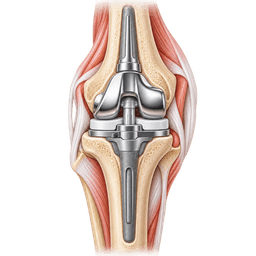
In PCL reconstruction, the surgeon replaces the torn ligament with a tendon graft. Tunnels are made in the shin and thigh bones, the graft is passed through and fixed, and it slowly becomes a new ligament. The operation commonly takes 90 minutes to 2 hours. A single-bundle or double-bundle design may be chosen. More on the local route is given under PCL reconstruction in turkey.
Which graft and technique choices are made?
Grafts may be taken from your hamstring, quadriceps or patellar tendon, or from donor tissue. Donor tendons are widely used for PCL work because the operation often needs a larger graft. In the tibial-inlay technique, the graft is fixed to a trough in the back of the shin, which may avoid a tight "killer turn" angle. Surgeons differ on which method works best.
| Option | When it is used | Trade-offs |
|---|---|---|
| Single-bundle reconstruction | Isolated grade 3 or failed rehabilitation | Shorter surgery, simpler recovery |
| Double-bundle reconstruction | Selected complex or revision cases | More tunnels, longer surgery, limited evidence of better results |
| Tibial inlay | Back-of-shin graft fixation | May need a position change during surgery |
| Avulsion fixation | Bone fragment pulled off the shin | Strong healing if done early |
| Combined ligament surgery | PCL with ACL or corner injuries | Larger operation, often staged |
What is the role of knee arthroscopy?
Knee arthroscopy uses a small camera and instruments to inspect and treat the joint. In PCL surgery it helps the team check the cartilage and menisci and to guide the tunnels accurately. Used alone, it cannot restore a torn PCL. The local pathway is described under knee arthroscopy in turkey.
How is a combined injury handled?
When the posterolateral corner, ACL or MCL are also torn, the surgeon usually addresses them in the same plan, because leaving a corner injury untreated can overload the new PCL graft. Some surgeons stage the work: repair the outer-back structures early and rebuild the cruciates later. A knee with a dislocation may also need a vascular repair first.
What does recovery after surgery look like?
You usually leave hospital after 1 to 2 nights, wearing a brace in the straight position. Crutches are used for about 4 to 6 weeks. Bending is allowed gradually, and prone exercises protect the graft. Running often begins at about 6 months, and contact sport waits for 9 to 12 months or longer. Costs are explained in the guides on PCL reconstruction cost and knee arthroscopy cost.
When surgery is considered
Surgery for a PCL tear should be considered when the knee remains unstable after a good rehabilitation trial, when the tear is grade 3 with other ligament damage, or when a bone fragment has been pulled away. Isolated mild tears seldom need an operation. A specialist opinion is worth seeking in nearly every confirmed complete tear.
Which findings point toward surgery?
Doctors lean toward surgery when there is more than 10 mm of posterior sag on stress imaging, when the posterolateral corner is also torn, when a multi-ligament injury follows a knee dislocation, and when a displaced bony avulsion is present. Persistent pain behind the kneecap with sag after 3 to 6 months of rehabilitation is another trigger.
Which findings favour continued rehabilitation?
Isolated grade 1 and 2 tears with a good quadriceps response, minimal sag and few symptoms usually keep doing well. Older adults with low demands often manage comfortably. If the knee is stable in daily life, repeated reviews and a maintenance strength plan are reasonable, and surgery can be revisited if things change.
Does timing matter?
For combined injuries, surgery within the first 2 to 3 weeks is often preferred for repair of the back-outer structures, before scar tissue forms. For isolated chronic tears, there is no rush, and the team can take time to optimise strength and alignment. Operating on a stiff, swollen knee without preparation raises the stiffness risk.
Which questions should you ask your surgeon?
- How much posterior sag does my knee have, and how was it measured?
- Are the back-outer corner structures and the ACL intact?
- Which graft and fixation method do you use, and why?
- How many PCL reconstructions do you carry out in a year?
- What brace and rehabilitation plan follows surgery?
- How would you manage a failed graft?
Does alignment matter?
Yes. A bowed leg can overload the inner knee and strain a graft. If there is significant bow-leg alignment, an osteotomy may be considered before or with ligament work. The surgeon will check long-leg X-rays to decide.
Procedures
Procedures that may treat PCL tear
Costs
PCL tear treatment cost in Turkey
| Procedure | Turkey package | US self-pay | Saving |
|---|---|---|---|
| Knee Arthroscopy | $2,500 – $4,500 | $13,850 | ~75% |
| PCL Reconstruction | $5,500 – $8,500 | $42,575 | ~84% |
Packages are contracted partner prices with validity dates; benchmarks are source-backed estimates. Open a cost guide for the full country comparison.
In Turkey
Treating PCL tear in Turkey
Treatment for a PCL tear in turkey can suit people who have a confirmed, non-emergency injury and want a planned operation with a surgeon who handles complex knee ligaments. The pathway is straightforward when records are shared early and expectations are clear. The sections below describe how it works and where it stops.
When does treatment in turkey make sense?
PCL tear treatment in turkey is a planned pathway, not an emergency one. It is most reasonable for a stable patient with a chronic or well-defined PCL tear, with or without an associated ligament problem, who has already tried structured rehabilitation. Complex multi-ligament cases need more planning. Patients should not travel until the acute phase is over.
Urgent local care comes first. A knee injury after a crash or a dislocation needs immediate hospital assessment for the artery, nerve and bone. Travel for planned treatment is considered only when you are medically stable and your treating team agrees.
How does the pathway work?
You send your scans and notes, a surgeon reviews them, and a written plan is returned. If you agree, dates are arranged. On arrival, the knee is examined again, stress views may be repeated and anaesthesia is reviewed. After the operation, you stay for observation and begin gentle exercises under a physiotherapist.
- Remote review of MRI, stress X-rays and clinic letters.
- Written plan covering graft, technique, brace and timeline.
- Examination and fitness checks on arrival.
- Surgery and 1 to 2 nights of in-hospital care.
- Brace fitting, crutch training and a written rehabilitation protocol.
Background reading is available in why turkey, medical record review and what happens on surgery day.
What do you need to send?
Provide MRI images (as files, not just a report), stress X-rays if you have them, notes about the injury and any vascular or nerve checks, your medicines and allergies, and details of earlier knee surgery. Add your job, sport and the activities you want to return to. Photographs of the knee and a walking video help the team judge sag.
How do you check quality?
Ask whether the hospital is licensed and internationally accredited, and whether the surgeon is a board-certified orthopedic specialist with sports or knee-ligament training. PCL reconstruction is performed less often than ACL surgery, so the surgeon's yearly volume and experience with combined injuries matter. A good team explains alternatives, including non-surgical care. Questions to ask before surgery abroad gives a list.
What about travel and aftercare?
A stay of about 7 to 10 days is typical, depending on your surgeon's advice. Read about flying after surgery, since a brace, crutches and clot prevention need planning. A companion makes the trip easier, and the follow-up after returning home guide explains how to stay in touch with the team.
When should you not travel?
Do not travel with an acute knee injury, signs of poor circulation, numbness in the foot, a suspected fracture or active infection. Delay if your general health is unstable. Plan physiotherapy near home before leaving, because most of the recovery happens afterwards, over months.
To start, request a free case review on the quote page, explore orthopedic care in turkey and read the PCL reconstruction cost guide for planning.
Complications
Complications of PCL tear
Complications of a PCL tear arise either from the injury itself or from its treatment, and the most important is damage to the artery or nerve behind the knee. Chronic looseness may also affect cartilage. Treatment risks are real but, in experienced hands, uncommon. The figures here are approximate.
What can happen if a PCL tear is untreated?
Many isolated tears cause few long-term problems. Others leave a persistent sag, which loads the kneecap joint and the inner compartment. Over 10 to 20 years this may contribute to cartilage wear and arthritis in some patients, though the link is less clear than with front cruciate injuries. Ongoing ache behind the kneecap and difficulty with stairs are typical.
What injuries can accompany a PCL tear?
High-energy injuries can cause popliteal artery damage, nerve injury (especially to the nerve that lifts the foot), fractures and compartment syndrome, a dangerous rise in pressure inside the leg muscles. These are rare but are the reason urgent assessment follows any severe knee injury.
What are the risks of reconstruction?
Possible problems include stiffness, a persistent posterior sag, graft stretching, infection, blood clots, numbness around the scar and, rarely, injury to the vessels behind the knee. Surgery in this area demands care because the artery lies close behind the joint. Persistent looseness after reconstruction is reported in a notable minority of patients.
How often do outcomes disappoint?
Studies show that PCL reconstruction improves function and stability for most patients, but results are less predictable than after ACL surgery, and some residual sag is common. Outcomes tend to be better when a back-outer corner injury has been treated and when rehabilitation is strict. Revision surgery is possible but more demanding.
Can arthritis follow?
The risk of later arthritis is raised after any significant knee ligament injury, particularly with cartilage damage. Muscle strength, weight control and sensible activity help. If arthritis develops, post-traumatic knee arthritis describes the options.
Urgent care
When to seek urgent care for PCL tear
- A cold, pale or blue foot, or a missing pulse after a knee injury: go to an emergency department at once, because the artery behind the knee may be damaged.
- Numbness, tingling or inability to lift the foot after a knee injury: seek urgent medical review, as a nerve may be stretched or torn.
- A very swollen, tense and extremely painful calf after trauma: call emergency services, as it may be compartment syndrome.
- A knee that looks out of place or deformed after an accident: do not move it, and call emergency services.
- Fever, heat and spreading redness around a surgical wound: contact your surgical team the same day.
- Sudden breathlessness or chest pain after surgery or a long flight: call emergency services, as it may be a blood clot in the lung.
Prevention
How to lower your risk of PCL tear
A PCL tear is hard to prevent entirely because many cases follow accidents, but safer habits and conditioning lower the chance. Seat belts, protective equipment and good conditioning make a real difference. Prevention also covers protecting a healing ligament from re-injury.
How can road and sport injuries be reduced?
Wearing a seat belt and keeping the seat positioned so that your knees are not jammed against the dashboard reduces dashboard injuries. Motorcyclists should use protective gear designed for the knees. In contact sport, padding where appropriate, rules that limit dangerous tackles and good fitness all help. Skiers should have bindings checked each season.
Which training habits help?
Balanced strength in the quadriceps, hamstrings, hips and core gives the knee better control. Landing and deceleration drills, which teach players to absorb force with bent hips and knees, are useful. Warming up for 10 to 15 minutes before sport and avoiding play when exhausted are simple safeguards.
- Strengthen the thigh and hip muscles at least twice a week.
- Practise controlled landings from low boxes.
- Train balance on one leg, then on soft surfaces.
- Rest between hard sessions to avoid fatigue-related falls.
How do you prevent re-injury while healing?
Follow your brace schedule, avoid early hamstring loading and do not return to sport until your strength is close to the other leg. Use return-to-sport testing as a guide, rather than the calendar alone. Many re-injuries come from rushing back after the knee feels good but the muscles are not ready.
What cannot be prevented?
Violent impacts in crashes, falls and collisions cannot always be avoided. Natural joint anatomy and past injuries also play a part. The aim is to lower risk and prepare the knee, not to promise immunity. Look at MCL and LCL injury and meniscus tear for related preventive steps.
Outlook
Living with PCL tear: outlook and recovery
The outlook after a PCL tear is usually favourable for isolated injuries, and many people return to their usual activities with rehabilitation alone. Results after combined injuries vary more, and recovery takes longer. A steady, patient approach pays off, because the ligament and muscles respond over months.
What is the natural course?
Isolated grade 1 and 2 tears often heal enough for good function within 3 to 6 months. The ligament may heal in a slightly lengthened state, leaving a small sag that many knees tolerate. Grade 3 injuries are less predictable, and persistent pain behind the kneecap is a common complaint that guides the need for surgery.
What is the typical PCL tear recovery time?
The PCL tear recovery time depends on grade and on treatment. Isolated mild tears often return to normal daily life within 6 to 12 weeks and to sport at 3 to 4 months. After reconstruction, walking without crutches takes about 6 weeks, running about 6 months and contact sport 9 to 12 months or more.
| Situation | Typical timeline | Main goal |
|---|---|---|
| Grade 1 or 2, isolated | 6 to 16 weeks to sport | Quadriceps strength, bracing as advised |
| Grade 3, rehabilitation first | 4 to 6 months, reviewed | Judge stability, decide on surgery |
| After reconstruction, early phase | 0 to 12 weeks | Brace, protected bending, quadriceps |
| After reconstruction, return phase | 6 to 12 months | Running, agility, sport testing |
How do people return to work and sport?
Desk work is often possible within 2 to 3 weeks of surgery, and physically demanding jobs may need 4 to 6 months. Many recreational athletes return to non-contact sport, while contact sport depends on strength and stability. Professional athletes often manage isolated tears without surgery, which shows how well some knees adapt.
What about the long term?
Most patients with treated PCL injuries lead active lives for many years. A raised chance of arthritis persists, especially with combined injuries or cartilage damage. Maintaining muscle, avoiding excess weight and choosing low-impact fitness protect the joint. Regular reviews are wise if you notice growing pain or sag.
FAQ
PCL tear: frequently asked questions
What is a PCL tear and how does it happen?
What are the symptoms of a PCL tear?
Can a PCL tear heal without surgery?
How long does a PCL tear take to heal?
Is a PCL tear worse than an ACL tear?
Can I walk with a torn PCL?
When is surgery needed for a PCL tear?
What is the success rate of PCL reconstruction?
Does a PCL tear lead to arthritis?
Is PCL tear surgery in turkey safe?
Can I travel to turkey right after a knee injury?
What should I send for a PCL reconstruction in turkey review?
Sources
Sources for this PCL tear guide
Peer-reviewed guidance and institutional sources used to write and review this page.
- 01Posterior Cruciate Ligament Injuries
American Academy of Orthopaedic Surgeons (OrthoInfo), 2022
https://orthoinfo.aaos.org/en/diseases--conditions/posterior-cruciate-ligament-injuries/
- 02Posterior cruciate ligament injury
Mayo Clinic, 2023
https://www.mayoclinic.org/diseases-conditions/pcl-injury/symptoms-causes/syc-20353221
- 03
- 04Sports Injuries
National Institute of Arthritis and Musculoskeletal and Skin Diseases, 2023
https://www.niams.nih.gov/health-topics/sports-injuries
- 05
- 06