








Knee Pain at Night: Why It Happens and When It Signals Arthritis
Knee pain at night can disrupt sleep and signal underlying issues like arthritis. This guide explains causes, symptoms, relief methods, and when to seek treatment.
Key takeaways
- 1Knee pain at night is usually linked to arthritis, injury, or joint inflammation.
- 2Night pain that wakes you or persists may signal advanced arthritis needing medical review.
- 3Simple steps like changing sleep position, using ice or heat, and gentle stretching can help mild night pain.
- 4Sudden, severe, or red, hot, swollen knee pain at night needs urgent medical attention.
- 5Knee replacement surgery is considered when night pain from arthritis disrupts sleep and daily life despite other treatments.
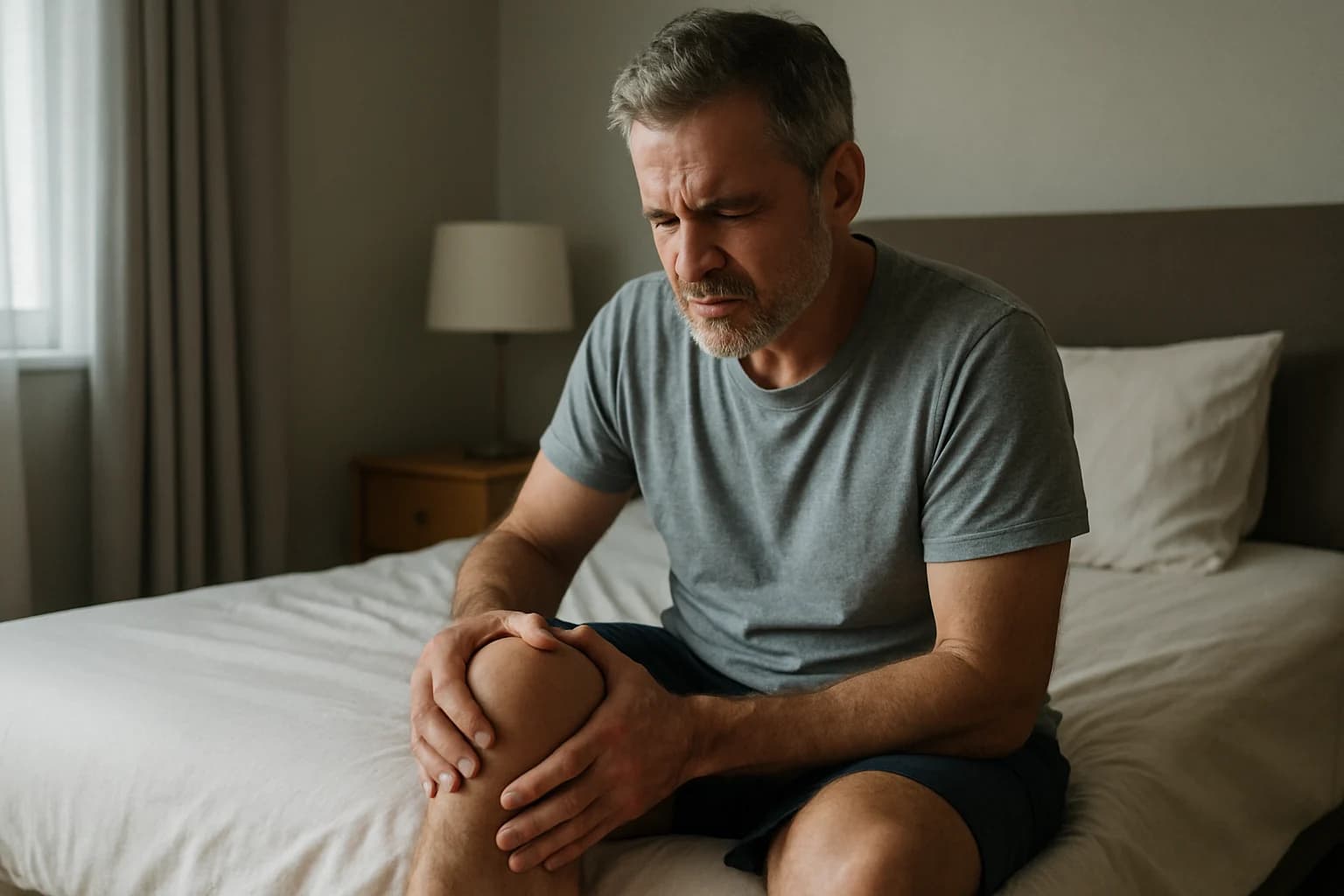
What causes knee pain at night?
Knee pain at night is a common problem for adults, especially as we get older. Many people find that knee joint pain at night feels worse than during the day. Pain can be sharp, throbbing, burning, or even sudden and intense. Understanding what causes knee pain at night can help you know when to seek help and how to manage your symptoms.
Night-time knee pain often comes from conditions that affect the joint and surrounding tissues. These include arthritis (joint inflammation), injury, and problems with the structures in and around the knee. For some, knee pain is worse at night because the body is at rest, and there are fewer distractions from the pain. Inflammation can also build up after activity during the day, making the pain more noticeable when you lie down.
Common causes of knee pain at night
- Osteoarthritis: The most common cause, especially in people over 50. Osteoarthritis is wear and tear of the joint cartilage. It causes pain, stiffness, and swelling. Pain often worsens at night or after periods of rest.
- Rheumatoid arthritis: An autoimmune disease where the body attacks its own joints. It can cause swelling, warmth, and pain that may be worse at night.
- Bursitis: Inflammation of the fluid-filled sacs (bursae) that cushion the knee. Bursitis pain is usually on the front or inner side of the knee and can be worse when lying on the affected side.
- Meniscus injury: The meniscus is a rubbery cartilage that cushions the knee joint. Tears can cause aching or catching pain, which may get worse with certain sleeping positions.
- Tendinitis: Inflammation of the tendons around the knee, often from overuse. Pain may be worse at night after activity.
- Gout: A type of arthritis caused by uric acid crystals in the joint. Gout attacks often start suddenly at night and cause severe pain, swelling, and redness.
- Infection: Rare, but a knee joint infection can cause severe pain, swelling, redness, and fever. This is an emergency.
How night-time knee pain feels
Knee pain at night can feel different from daytime pain. At night, pain can seem more intense because you are not moving and your mind is less distracted. Some people notice their knee pain is worse at night or only happens when they are lying down. This is called rest pain, and it can be a sign of more advanced joint problems.
| Cause | Typical Age | Symptoms | Pain Pattern |
|---|---|---|---|
| Osteoarthritis | Over 50 | Aching, stiffness, swelling | Worse at night, after rest or activity |
| Rheumatoid arthritis | Any adult | Swelling, warmth, morning stiffness | Worse at night and in the morning |
| Bursitis | Any age | Localised swelling, tenderness | Worse when lying on affected side |
| Meniscus injury | Any age, often active adults | Catching, locking, swelling | Aching at night, sharp pain with movement |
| Tendinitis | Any age, often athletes | Pain with activity, tenderness | Worse after activity, sometimes worse at night |
| Gout | Often over 40 | Sudden severe pain, redness, swelling | Often starts at night, very intense |
| Infection | Any age | Severe pain, redness, fever | Constant, severe, urgent medical attention needed |
Why does knee pain get worse at night?
- Inflammation builds up after activity and can peak when you rest.
- Gravity causes fluid to pool in the joint when lying down, increasing swelling and pain.
- Less distraction at night makes pain feel stronger.
- Some structures, like bursae or tendons, may be pressed on when you lie in certain positions.
If your knee pain is worse at night, it may be a sign of underlying joint damage or inflammation. While mild pain can often be managed at home, severe or persistent pain—especially if it keeps you from sleeping—should be checked by a doctor. If you have redness, fever, or cannot bear weight, seek urgent care.
Why do I have pain in one knee at night?
Pain in one knee at night often points to a problem in that specific joint. Unlike general aches, pain on just one side means something may be wrong with that knee itself. This is known as unilateral knee pain. It can be caused by several conditions that affect only one knee, even if you use both knees equally during the day.
The most common cause is osteoarthritis. Osteoarthritis is a type of joint wear and tear that happens as we age. It can affect just one knee, especially if you injured it in the past or if your legs are not quite the same length. At night, when you are resting, the inflammation in the joint can become more noticeable. The pain may feel dull, throbbing, or sharp. You may notice it gets worse if you lie on your side or move your leg in bed.
Another possible cause is a previous injury. This might be an old ligament sprain, cartilage tear (such as a meniscus injury), or a bone bruise that never fully healed. Scar tissue, weakness, or uneven surfaces in the joint can cause pain to flare up when you are off your feet. Even injuries that happened years ago can cause night pain if the knee has not recovered fully.
Bursitis is another culprit. Bursae are small, fluid-filled sacs that cushion your knee. If one gets inflamed, it can cause pain, especially when pressure is on that side during sleep. This pain often feels sharp or aching, and you may notice swelling or warmth over the kneecap or on the inner or outer side of the joint.
Tendonitis can also cause pain in one knee at night. Tendons are strong cords that attach muscles to bones. If a tendon is overused or strained, it can become inflamed. This is common if you play sports, walk a lot, or have recently increased your activity. The pain may be worse when you bend or straighten your knee in bed.
Less often, infections can cause one-sided knee pain. If you notice redness, swelling, severe pain, and fever, seek medical help urgently. Joint infections need quick treatment to prevent lasting damage.
Very rarely, pain in one knee at night could be from a tumour or a bone disease. These are uncommon, but if your pain is severe, does not improve, or wakes you every night, see a doctor for a full check-up.
Here is a table comparing some common causes of pain in one knee at night:
| Condition | Typical Signs | When to See a Doctor |
|---|---|---|
| Osteoarthritis | Dull ache, worse at night, stiffness in the morning | If pain limits sleep or daily activity |
| Old injury | History of trauma, swelling, clicking or locking | If pain is new or worsening |
| Bursitis | Swelling, warmth, pain with pressure | If swelling is severe or spreading |
| Tendonitis | Pain with movement, tenderness over tendon | If pain lasts over 2 weeks |
| Infection | Redness, severe pain, fever | Immediately (urgent) |
If your knee pain at night is only on one side and does not improve within a week, or if it is severe, see a doctor. They may order an X-ray or MRI to check for arthritis, injury, or infection. Early treatment helps prevent long-term problems. Remember, this article does not replace a medical consultation. If you have fever, cannot move your knee, or the pain is sudden and severe, seek urgent care.
What does sudden intense knee pain while sleeping mean?
Sudden intense knee pain while sleeping is alarming and can wake you out of a deep sleep. This type of pain is often sharp, severe, and may come without warning. It is different from a dull ache or mild discomfort that builds up slowly. When knee pain comes on suddenly at night, it usually means something acute has happened inside the joint or nearby tissues.
One possible cause is a ligament injury or tear. Even if you did not notice an injury during the day, a small tear in a ligament can suddenly become painful if your knee twists or stretches as you turn over in bed. The pain may be sharp and may make it hard to move your knee. Swelling may follow within a few hours.
Another cause is a gout flare-up. Gout is a type of arthritis caused by crystals forming in the joint. These crystals can trigger sudden, severe pain, often at night. The joint may look red, feel hot, and be extremely tender to touch. Gout attacks are more common in people with a history of high uric acid, kidney problems, or certain foods or drinks that trigger attacks.
Pseudogout is a similar condition, but with different crystals. It can also cause sudden, intense pain, swelling, and warmth in the knee, often at night or after dehydration.
Another possible cause is the rupture of a Baker’s cyst. A Baker’s cyst is a fluid-filled swelling at the back of the knee. It can burst during the night, releasing fluid into the calf, causing sudden pain, swelling, and sometimes bruising. The pain is often sharp and may be followed by a feeling of tightness in the calf.
Infection (septic arthritis) is rare, but very serious. It can cause sudden, severe pain, redness, and swelling. You may also have a fever or feel generally unwell. This needs urgent medical attention.
Sometimes, nerve pain or a pinched nerve in the lower back can cause sudden shooting pain in the knee during sleep. This type of pain is often electric or burning in character and may come with tingling or numbness.
Here is a table showing causes of sudden knee pain at night and their warning signs:
| Cause | Key Features | When to Seek Urgent Care |
|---|---|---|
| Ligament tear | Sharp pain, swelling, unable to move knee | If unable to walk or severe swelling |
| Gout/Pseudogout | Red, hot, swollen joint, severe pain | If pain is unbearable or you have a fever |
| Baker’s cyst rupture | Sudden pain, swelling in calf, bruising | If swelling is severe or calf is red/hard |
| Infection | Redness, heat, fever, severe pain | Immediately (medical emergency) |
| Nerve pain | Burning, shooting pain, tingling | If pain is severe or you have weakness |
If you experience sudden intense knee pain while sleeping and cannot move your knee, cannot bear weight, or have fever, redness, or swelling, seek urgent medical care. These are red flags that need assessment straight away. For milder pain that does not improve, see your doctor within a few days. Night-time knee pain that is severe or comes on suddenly should never be ignored.
How does throbbing knee pain at night differ from other pain?
Throbbing knee pain at night is a common experience for people with knee conditions, especially arthritis. Throbbing pain feels like a pulsing or rhythmic ache that rises and falls in intensity, almost like a heartbeat in your knee. This is different from other types of pain, such as sharp, stabbing, or burning sensations, which have distinct causes and qualities.
Throbbing pain is most often linked to inflammation. Inflammation is your body’s natural response to injury or irritation. When tissues in or around the knee become inflamed, they swell and release chemicals that trigger pain. At night, when you are at rest and not distracted by daily activities, you may notice this throbbing more. Lying down can also increase blood flow to the area and make swelling or inflammation feel worse. This is why people with osteoarthritis (wear-and-tear arthritis) or rheumatoid arthritis (an immune-related joint disease) often notice throbbing knee pain at night. Recent injuries, such as a ligament sprain or meniscus tear, can also cause throbbing pain if swelling is present.
Other types of night knee pain have different features and causes:
- Burning pain usually signals nerve irritation or damage. This pain feels hot, tingling, or like pins and needles. It can be caused by nerve compression from swelling, advanced arthritis, or conditions like peripheral neuropathy (nerve damage outside the brain and spinal cord).
- Sharp or stabbing pain is sudden and intense, often triggered by a specific movement. It may be linked to meniscus tears (cartilage injuries), ligament injuries, or gout (a type of joint inflammation caused by uric acid crystals).
- Aching or dull pain is more constant and less intense, often related to chronic overuse or mild inflammation.
Here is a table comparing the main types of knee pain at night:
| Type of Night Knee Pain | What It Feels Like | Common Causes |
|---|---|---|
| Throbbing | Pulsing, rhythmic ache | Inflammation, arthritis, injury |
| Burning | Hot, tingling, pins and needles | Nerve irritation, neuropathy, severe arthritis |
| Sharp/Stabbing | Sudden, intense, localised | Meniscus tear, ligament injury, gout |
| Aching/Dull | Constant, less intense, sore | Chronic overuse, mild inflammation |
Throbbing knee pain at night is often worse after a busy day or standing for long periods. You may also notice swelling, warmth, or stiffness. The pain can make it difficult to fall asleep or may wake you up during the night. Some people find relief by elevating the leg, applying cold packs, or gently moving the knee to reduce stiffness.
It is important to pay attention to changes in your pain. If you develop severe or sudden pain, fever, redness, warmth, or cannot move your knee, seek urgent medical care. These are red flags for infection, a blood clot, or a serious injury. For most people, understanding the type of pain can help guide treatment and help your doctor diagnose the underlying problem.
In summary, throbbing pain at night usually means inflammation is present. It is different from burning or stabbing pain, which often involve nerves or sudden injuries. Knowing the difference helps you and your doctor choose the best next steps for relief and recovery.
Why do I experience burning knee pain at night?
Burning knee pain at night is usually a sign that nerves in or around your knee are irritated or damaged. This pain feels hot, tingly, or prickly, and may be more noticeable when you are lying still in bed. Unlike throbbing pain, which is tied to inflammation, burning pain often points to nerve involvement.
Several mechanisms can cause burning knee pain at night:
- Nerve irritation or compression: Swelling from arthritis, injury, or even a cyst can press on nerves near the knee, sending abnormal signals that feel like burning. This is common in advanced osteoarthritis or after knee injuries.
- Peripheral neuropathy: This is a condition where nerves outside the brain and spinal cord are damaged. Diabetes is the most common cause, but it can also be due to vitamin deficiencies, infections, or some medications. Neuropathy often causes burning pain that gets worse at rest, especially at night.
- Post-surgical or traumatic nerve injury: Previous knee surgery or trauma can sometimes damage nerves, leading to chronic burning pain that flares up at night.
- Bursitis: Inflammation of the bursae—small fluid-filled sacs in the knee—can irritate surrounding nerves and cause a burning sensation.
- Referred pain: Sometimes, nerve problems in the lower back (such as a herniated disc) or hip can send burning pain signals to your knee, even though the knee itself is not the source.
Burning pain may also be accompanied by numbness, tingling, or weakness in your leg. You might notice that the pain worsens when you are still, and improves with gentle movement or changing position. For some people, even the touch of bed sheets can trigger discomfort—a phenomenon known as allodynia (pain from something that isn’t normally painful).
It is important to watch for warning signs that mean you should seek urgent care:
- Sudden, severe burning pain with swelling, redness, or warmth around the knee
- Loss of feeling, numbness, or muscle weakness in your leg
- Fever or chills
- Difficulty moving your knee or walking
These symptoms could be signs of infection, a blood clot, or serious nerve damage, and need prompt medical attention. Most burning knee pain at night, however, is not an emergency but should be evaluated if it does not improve or disrupts your sleep and daily activities.
Managing burning knee pain at night depends on the underlying cause. Your doctor may recommend:
- Lifestyle changes to reduce pressure on the knee, such as weight management or activity modification
- Pain-relief medications, including non-steroidal anti-inflammatory drugs (NSAIDs) or medications for nerve pain
- Physical therapy to improve joint function and reduce nerve irritation
- Treating underlying conditions, like diabetes or vitamin deficiencies
- Addressing nerve compression, which may involve injections or, rarely, surgery
If you have burning pain that does not improve, keeps you awake, or is associated with other symptoms, see your doctor. Early diagnosis and treatment can help prevent further nerve damage and improve your quality of life. In summary, burning knee pain at night usually points to nerve involvement, often due to arthritis, neuropathy, or injury. Recognising this can help you and your doctor find the best way to manage your symptoms and restore restful sleep.
Why does knee pain get worse when lying down or sleeping?
Knee pain often gets worse when lying down or sleeping because of how your body and joints change at night. Many people notice that their knee pain when lying down or knee pain when sleeping is more intense or harder to ignore than during the day. There are several reasons for this, ranging from joint position to blood flow and the way swelling behaves at rest.
How joint position affects knee pain at night
When you lie down, your knee is usually held in one position for a long time. If the joint is slightly bent or twisted, it may put extra pressure on damaged cartilage, inflamed tissues, or sensitive nerves. During the day, you move about and change positions often. This movement prevents one area of the joint from being under constant stress. But at night, holding the same position can make knee pain worse at night.
- If you sleep with your knees pressed together, it can increase pressure on the inside of the knee joint.
- Sleeping with the knee straight, especially if it is swollen, can stretch painful tissues.
- People with arthritis or previous injuries may find some positions much more painful than others.
Reduced movement leads to stiffness and swelling
During the day, walking and moving your knee helps pump fluid out of the joint and keeps it from getting stiff. At night, when you are not moving, fluid can build up and cause more swelling. This can stretch the lining of the knee joint, which is rich in nerve endings. The result is more pain or a feeling of tightness, especially if you already have arthritis or an injury.
- Stiffness is common in the morning or after resting for a long time. It can make the first movements after waking up painful.
- Swelling often increases when you are not moving, making the knee feel tight or full.
Changes in blood flow and inflammation
When you lie down, blood flow to your legs changes. Gravity no longer helps blood drain away from your knee as it does when you sit or stand. This can make swelling worse, especially if you have fluid in the joint or poor circulation. Inflammation—your body’s response to injury or arthritis—also tends to peak at night. This can make knee pain while sleeping more noticeable and harder to ignore.
- Inflamed tissues release chemicals that cause pain and swelling, especially at rest.
- Some people find their knees feel hot or appear more swollen at night.
Why pain feels worse at night
At night, there are fewer distractions. During the day, you might not notice mild or moderate pain because you are busy. When you try to sleep, your brain pays more attention to the pain signals coming from your knee. This can make even mild pain feel much worse. This is a common reason why knee pain worse at night is a frequent complaint.
Common conditions that cause knee pain when lying down or sleeping
- Osteoarthritis (wear and tear of the joint) often causes pain and stiffness at night, especially after an active day.
- Rheumatoid arthritis and other inflammatory conditions can make the knee swell and ache at night.
- Past injuries like meniscus tears or ligament damage may hurt more when the joint is not moving.
- Bursitis (inflammation of small fluid sacs) can cause sharp pain when pressure is applied or the knee is at rest.
- Tendonitis (inflamed tendons) can ache or throb at night, especially after activity.
Table: Why knee pain worsens at night
| Reason | How it affects your knee |
|---|---|
| Joint position | Pressure on damaged areas or nerves |
| Lack of movement | Stiffness, swelling, and fluid build-up |
| Blood flow changes | More swelling, less drainage from the knee |
| Inflammation | Pain chemicals increase at night |
| Fewer distractions | Pain feels more intense in quiet settings |
What you can do about knee pain when sleeping
- Change your sleeping position: Try a pillow between your knees or under your calf to reduce pressure.
- Apply ice or heat before bed, if recommended by your doctor.
- Elevate your leg to help reduce swelling.
- Gentle stretching before bed may help prevent stiffness.
- If knee pain at night keeps you awake often, see a doctor to find out the cause.
In summary: Knee pain gets worse at night because of joint position, lack of movement, increased swelling, and your body’s natural inflammation cycle. If pain is severe, wakes you up often, or is getting worse, a medical evaluation is important to rule out arthritis or other serious joint problems.
How to relieve knee pain at night?
To relieve knee pain at night, you can try several self-care methods and lifestyle changes. These include adjusting your sleep position, using ice or heat, taking over-the-counter pain relief, and performing gentle stretches before bed. If you have persistent or severe knee pain at night, you should see a doctor to find the underlying cause. Night pain can be a sign of arthritis or other joint problems that need medical attention.
Change your sleeping position
Your sleeping position can affect knee pain at night. Try these tips:
- Lie on your back with a pillow under your knees to reduce pressure on the joint.
- If you sleep on your side, place a pillow between your knees to keep them aligned.
- Avoid sleeping with your knees touching or in a twisted position.
- Use a firm mattress to support your body evenly.
Changing positions during the night can also help relieve stiffness and pain.
Use ice or heat therapy
Applying ice or heat can help manage knee pain at night. Ice is best for swelling or after activity. Use a cold pack wrapped in a towel for 10–20 minutes. Heat can relax stiff or aching muscles. Try a warm towel, heating pad, or warm water bottle for 15–20 minutes. Do not apply ice or heat directly to the skin. Alternate ice and heat if you are not sure which helps more.
Take over-the-counter pain relief
Non-prescription pain medications such as paracetamol or non-steroidal anti-inflammatory drugs (NSAIDs) can help relieve knee pain at night. Always follow the instructions on the package and do not exceed the recommended dose. If you have other medical conditions or take other medicines, ask your pharmacist or doctor before starting new pain relief.
Try gentle stretching and exercise
Gentle stretching before bed can ease stiffness and reduce pain. Simple exercises like leg lifts, knee bends, or calf stretches help keep your knee joint flexible. Avoid high-impact activities late in the day, as these can make pain worse at night. Regular low-impact exercise such as walking, swimming, or cycling can support knee health over time.
Elevate your knee
Raising your leg on pillows while you rest can reduce swelling and discomfort. Try to keep your knee above the level of your heart for 15–30 minutes before sleeping. This helps fluid drain away from the joint and may relieve pressure.
Maintain a healthy weight
Carrying extra weight puts more strain on your knee joint, especially at night when you are less active. Losing even a small amount of weight can reduce knee pain and help prevent further joint damage. Talk to your doctor or a dietitian if you need help with weight management.
Manage your daily activities
Plan your day to avoid overusing your knee. Take breaks, use supportive shoes, and avoid long periods of standing or walking on hard surfaces. Try not to kneel or squat for long periods. Using a walking aid or brace may help if your knee feels unstable.
When to use a knee support
Some people find relief from a soft knee sleeve or brace at night. A support can give gentle compression and warmth, but not everyone benefits. Do not use a tight or rigid brace for long periods without medical advice.
Do's and don'ts for knee pain at night
| Do | Don't |
|---|---|
| Use pillows to support your knees | Sleep with your knees twisted or unsupported |
| Apply ice or heat safely | Apply ice or heat directly to bare skin |
| Take pain relief as directed | Exceed the recommended dose of painkillers |
| Stretch gently before bed | Do strenuous exercise late at night |
| Elevate your knee if swollen | Ignore severe or worsening pain |
| Seek medical advice for persistent pain | Delay seeing a doctor if night pain keeps you awake |
When to seek medical help
See a doctor if:
- Your knee pain at night is severe or wakes you up regularly
- You have swelling, redness, or warmth in the joint
- You have difficulty moving or bearing weight on your knee
- You notice fever, sudden deformity, or the pain started after an injury
- Your pain does not improve with self-care after 1–2 weeks
These could be signs of an underlying problem such as arthritis, infection, or injury. Early diagnosis and treatment can prevent further damage and improve your quality of sleep.
When does knee pain at night signal arthritis?
Knee pain at night can be an early sign of arthritis, especially if it is persistent, severe, or disrupts your sleep. Arthritis is when the protective cartilage in your knee wears down, causing inflammation, swelling, and pain. Many people with arthritis notice knee joint pain at night is more pronounced, even if daytime pain is mild.
Night pain from arthritis often happens because inflammation and joint damage become more noticeable at rest. When you are lying still, you are less distracted by activity, so pain signals are easier to notice. Increased blood flow to the joint at night can also make inflammation worse, causing the knee to feel warmer, stiffer, and more painful. People often describe this pain as throbbing, aching, or sometimes sharp. It may be worse after a busy day or if the knee is already swollen before bed.
A classic sign of advancing arthritis is severe knee pain at night that wakes you up or prevents you from falling asleep. Doctors call this "rest pain." Rest pain is a warning that the joint is becoming more damaged and inflamed. It is seen most often in moderate to severe osteoarthritis (the most common arthritis in the knee), but also in rheumatoid arthritis and post-traumatic arthritis.
Key symptoms of knee arthritis include:
- Stiffness in the knee, especially in the morning or after sitting
- Swelling around the joint, often worsening after activity
- Grinding, creaking, or crunching sounds when moving the knee (crepitus)
- Reduced range of motion or difficulty straightening the knee
- Pain that starts after heavy use, then becomes more constant over time
- Pain that is present even at rest or at night (advanced stages)
The pattern of pain can help distinguish arthritis from other causes. Early arthritis pain usually follows activity and improves with rest. As arthritis progresses, pain may occur at rest and at night, disrupting sleep. Some studies show that up to 80% of people with advanced knee osteoarthritis experience sleep disturbance due to pain.
It is important to know that not all night-time knee pain is caused by arthritis. Other conditions—such as bursitis (inflammation of a fluid-filled sac), tendonitis (inflamed tendons), or injuries—can also cause pain at night. However, if you have:
- Ongoing pain for more than 2–3 weeks
- Swelling or warmth in the joint
- Difficulty moving or straightening the knee
- Night pain that interrupts your sleep regularly
- Morning stiffness lasting longer than 30 minutes
you should see a doctor for assessment. Your doctor may recommend X-rays to look for loss of joint space, bone spurs, or other changes typical of arthritis. Early diagnosis can help you manage symptoms and slow the progression of joint damage.
| Symptom | Possible Cause | When to see a doctor |
|---|---|---|
| Pain only after activity | Early arthritis, overuse | If it lasts more than 2–3 weeks |
| Pain at night or rest | Moderate/advanced arthritis | If it interrupts sleep or daily life |
| Sudden severe pain with swelling, redness, fever | Infection, gout, injury | Seek urgent care |
| Burning or tingling pain | Nerve involvement | If persistent or worsening |
Always seek urgent medical attention if you have sudden, severe knee pain with swelling, redness, fever, or cannot move the joint. This could mean infection or another serious problem. Remember, this article provides general information and does not replace a consultation with a healthcare professional.
When surgery makes sense
Surgery is considered when knee pain at night from arthritis becomes severe and does not improve with medications, physical therapy, or lifestyle changes. If pain keeps you awake most nights, makes daily activities difficult, or you struggle to walk or climb stairs, surgery may be recommended. Guidelines suggest surgery when pain and reduced function persist despite 3–6 months of non-surgical treatment and significantly affect quality of life.
The most common surgery for advanced knee arthritis is total knee replacement. In this procedure, the damaged cartilage and bone are removed and replaced with artificial parts. Most people spend 3–5 days in hospital and need crutches or a walker for 2–6 weeks. Full recovery typically takes 3–6 months, with many people noticing improved sleep and less night pain within weeks of surgery. About 80–90% of people report much less pain and better movement after recovery, according to large studies.
Turkey is a popular destination for knee replacement due to high-quality care, experienced surgeons, and shorter waiting times than many countries. Hospitals often provide clear cost guides so you can plan your treatment. If you are considering this step, you can learn more about knee replacement in Turkey.
48h
Free X-ray or MRI review by an orthopedic surgeon within 48 hours
Upload your scans and reports. A partner surgeon in the right subspecialty tells you whether surgery is justified, which procedure fits, and what a fixed-price package in Turkey would cost.
Sources
Peer-reviewed guidance and institutional sources used to write and review this page.
- 01
- 02
- 03Management of Knee Osteoarthritis
Cochrane Library, 2021
https://www.cochranelibrary.com/cdsr/doi/10.1002/14651858.CD010606.pub2/full
- 04Total Knee Replacement
Mayo Clinic, 2023
https://www.mayoclinic.org/tests-procedures/knee-replacement/about/pac-20385276
Frequently asked questions
Can knee pain at night be a sign of something serious?
What home treatments help reduce knee pain at night?
Is knee pain worse at night always arthritis?
When should I see a doctor about knee pain at night?
Can physical therapy help with knee pain at night?
What are the risks of delaying treatment for night-time knee pain?
Related articles
Keep reading: the next step in the same body area.

Signs You Need a Knee Replacement (and When It’s Too Early)
This article explains the signs you need knee replacement, helping you understand when surgery is necessary and when it might be too early.
Medically reviewed by Op. Dr. Can Yildiz · Updated 8 Oct 2026 · 26 min read
Medical information on this page is educational and does not replace a consultation with a qualified clinician. .