


Key takeaways
- 1Degenerative disc disease describes normal ageing changes in the spinal discs that, in some people, become a source of neck or low back pain.
- 2Imaging changes are extremely common in people with no pain at all, so a scan must always be matched against your symptoms and examination.
- 3Most flare-ups settle within 6 to 12 weeks, and staying gently active usually works better than prolonged rest.
- 4Structured physiotherapy, core and hip strengthening, walking and sensible pain relief are the foundation of treatment.
- 5Surgery is considered only when disabling pain or nerve symptoms persist after a proper non-surgical programme, usually 3 to 6 months or longer.
- 6Surgical options include spinal fusion, TLIF or PLIF, ALIF and, in the neck, cervical disc replacement, each suiting a different pattern.
- 7Planned, non-urgent spinal surgery in turkey can be considered after a records review, but weakness, bladder or bowel change needs urgent local care first.
Overview
What is degenerative disc disease?
Degenerative disc disease is the gradual loss of height, water content and strength in the discs that cushion the bones of your spine. It is a description of ageing changes more than a true illness, and it can affect the lower back, the neck or both. This page covers causes, tests, treatment and what to expect if surgery is discussed, including planned care in turkey.
What is degenerative disc disease?
Each disc is a tough, springy pad that sits between two vertebrae (the stacked bones of the spine). From our twenties onward, discs slowly lose water, flatten and develop small tears. This is a normal process, a bit like greying hair.
The label "disease" is misleading. It is applied only when those changes seem to be producing pain, stiffness or nerve irritation. Doctors sometimes use the gentler terms "disc degeneration" or "spondylosis" for the same underlying changes.
Who is affected by degenerative disc disease?
Almost everyone develops some disc wear with age, so worn spinal discs on a scan are rarely a cause for alarm on their own. Studies of people without back pain show that a large share of those in their 50s and the majority of those over 60 have degenerated discs on MRI. Pain affects only a minority of them.
Risk rises with age, smoking, heavy manual work, a family history of back problems, previous spinal injury and long periods of sitting. Lumbar degenerative disc disease is most common at the two lowest levels, L4-L5 and L5-S1, while cervical degenerative disc disease most often involves C5-C6 and C6-C7.
How serious is degenerative disc disease?
For most people it is a nuisance rather than a danger. Pain tends to come in episodes, with quiet spells in between, and it often becomes less troublesome as the affected segment stiffens naturally over years.
It becomes more serious when worn discs squeeze a nerve or the spinal cord, causing weakness, numbness or loss of bladder or bowel control. Those problems need prompt assessment. The rest of this page is organised to help you tell the difference.
Anatomy
What happens in the body with degenerative disc disease
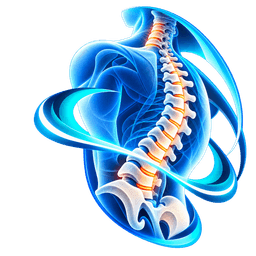
Your spine is a column of 24 movable vertebrae, with a disc between almost every pair, and the discs act as shock absorbers and hinges. Understanding their structure explains why they wear and why wear can hurt.
What is the normal structure of a spinal disc?
A healthy disc has two parts. The outer ring (annulus fibrosus) is made of tough, criss-crossed fibres arranged like the layers of an onion. The soft, gel-like centre (nucleus pulposus) is rich in water and spreads load evenly in every direction.
Thin plates of cartilage, called endplates, separate the disc from the bone above and below. Because the adult disc has almost no blood supply, nutrients seep in through these endplates, which is one reason discs heal slowly.
Behind each disc lie the small facet joints, the spinal canal holding the cord or nerve roots, and the openings (foramina) where each nerve leaves. Strong ligaments and muscles tie the whole unit together.
What changes in degenerative disc disease?
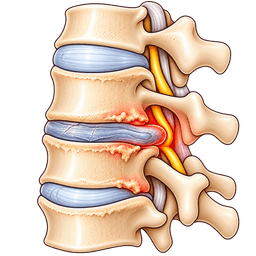
As the nucleus loses water, the disc height falls. The fibres of the outer ring crack, and the inner gel may bulge or push through. The endplates thicken, and in some people small nerve fibres grow into the damaged outer ring, which may explain why a worn disc can become sensitive.
With less height, the facet joints behind the disc take more load and develop their own arthritis. The body responds by growing bony spurs (osteophytes) at the vertebral edges, trying to stabilise the segment.
These changes can narrow the openings for nerves and the central canal. The result may be pain from the disc itself, from the facet joints, from irritated nerves, or from a combination of all three.
Why do the lower back and neck get affected most?
The lumbar spine carries most of your body weight, and the cervical spine supports the head while allowing a lot of movement. These two regions are both heavily loaded and highly mobile, so they show wear earliest. The mid-back (thoracic spine) is stiffened by the rib cage and is far less often a source of pain.
Symptoms & causes
Degenerative disc disease symptoms and causes
Common symptoms
- Deep, aching pain in the lower back that is worse after sitting for long periods, bending forward or lifting, and eases when you change position or walk.
- Pain that comes in episodes lasting days to weeks, with symptom-free gaps in between, rather than a constant unchanging ache.
- Neck pain and stiffness, sometimes spreading into the shoulder blade or upper trapezius muscle, often worse with looking down at a phone or computer screen.
- Pain that spreads into the buttock or upper thigh, usually dull and non-specific, which can mimic a hip problem.
- Sharp, shooting pain down the leg or arm if a nerve root is irritated, often with pins and needles in a defined area.
- Stiffness on waking that loosens within about 30 minutes of moving, or after a short warm-up walk.
- A feeling that the back is "giving way" or being unstable, particularly when getting out of a chair or after bending.
- Muscle spasm around the painful segment, which can make the back feel locked and limit twisting.
- Numbness, tingling or mild weakness in a hand, foot or limb, suggesting nerve involvement that deserves review.
- Pain that is worse in the evening after a long day on your feet, and relieved by lying with the knees bent.
Causes and risk factors
- Normal ageing: discs lose water and height gradually from the third decade, so some degree of degeneration is expected in everyone.
- Smoking: it reduces blood flow to the endplates that feed the disc, and is linked in studies to faster degeneration and poorer surgical results.
- Genetics: twin studies suggest inherited factors explain a large share of disc degeneration, so a strong family history raises your risk.
- Repetitive heavy loading: manual work involving lifting, twisting or vibration, such as driving heavy vehicles, can speed wear over many years.
- Previous injury: a fall, car accident or sports impact can damage a disc or endplate, which then degenerates earlier than its neighbours.
- Excess body weight: more load passes through the lumbar discs with each step, and weight is also linked to inflammatory changes.
- Sedentary lifestyle: weak trunk and hip muscles leave the discs to absorb more strain, and lack of movement reduces disc nutrition.
- Adjacent disc problems: after a fusion or a previous disc herniation, neighbouring levels may take extra stress and wear sooner.
Types
Types and stages of degenerative disc disease
Degenerative disc disease is classified by where it occurs and by how advanced the changes look on imaging, and this classification helps explain why one person needs reassurance and another needs a specialist.
Which regions can degenerative disc disease affect?
Lumbar degenerative disc disease affects the lower back and is the most common pattern. Pain is often central, and may spread into the buttocks or legs.
Cervical degenerative disc disease affects the neck. Because the cervical canal is narrow and houses the spinal cord, neck changes can sometimes cause arm symptoms (radiculopathy) or, rarely, cord compression (myelopathy).
Thoracic degeneration is uncommon as a pain source, although the changes are often seen on scans done for other reasons.
How are the stages of disc degeneration graded?
Radiologists often use the Pfirrmann grading system on MRI, which scores the signal and height of the disc from grade 1 (healthy) to grade 5 (collapsed). A simpler way to describe progression is shown below.
| Stage | What happens in the disc | What patients often notice |
|---|---|---|
| Early dysfunction | Small tears in the outer ring, slight loss of water | Occasional back or neck aches, often after strain |
| Instability phase | Disc height falls, facet joints loosen, small bulges appear | Recurring flare-ups, a sense of the spine catching or giving way |
| Stabilisation phase | Spurs form, the segment stiffens, the disc may collapse | Less sudden pain but more stiffness; nerve narrowing possible |
Why does the type or stage matter?
Treatment is rarely decided by the grade alone. A grade 4 disc on a scan can be silent, while a grade 2 disc can cause real pain. Doctors weigh the pattern of symptoms, the level involved, the presence of nerve compression and how you respond to treatment.
The pain generator is the key question: disc, facet joint, nerve root or muscle. Different treatments suit each, which is why careful examination matters more than the scan.
Diagnosis
How is degenerative disc disease diagnosed?
Diagnosis of degenerative disc disease rests mainly on your story and a physical examination, with imaging used to confirm the picture and plan treatment rather than to make the diagnosis alone.
What will the doctor ask and examine?
Expect questions about where the pain sits, what makes it better or worse, how long it has lasted, and whether you have leg or arm symptoms. A pain that worsens on sitting and bending suggests the disc; pain on leaning back suggests the facet joints.
The examination looks at posture, range of movement, tender spots, and nerve function. Your doctor will test muscle power, reflexes and skin sensation in the limbs, and may perform a straight-leg raise or a neck compression test.
Which imaging is used and why?
Most people with a first episode of back pain do not need a scan, because it rarely changes initial treatment. Imaging is chosen when symptoms persist beyond about 6 weeks, when nerve signs are present, or when surgery is under discussion.
An MRI shows discs, nerves and the spinal cord clearly and uses no radiation. X-rays show disc height and alignment, and flexion-extension films can reveal movement between vertebrae. CT shows bone detail and is useful before fusion.
How do you interpret the scan report?
Reports often list "desiccation", "bulge", "annular fissure", "osteophytes" and "Modic changes". These words describe findings that are common in people without pain. A good clinician will connect a finding to a specific symptom pattern before treating it.
What should you bring to a remote review?
If you want an overseas surgeon to review your case, prepare the following:
- MRI images on a disc or download link, not only the written report.
- Standing X-rays, including flexion and extension views if you have them.
- A short timeline of symptoms and every treatment tried, with dates.
- Your current medicines, allergies and previous operations.
- Any nerve conduction test or injection records.
Our team can arrange this through a free case review, and the medical record review guide explains the steps.
Tests you may have
- MRI of the lumbar or cervical spine: shows disc hydration, height, bulges, nerve compression and Modic endplate changes without radiation.
- Standing X-ray: shows disc space narrowing, spurs and alignment, and is the first-line bony test.
- Flexion-extension X-rays: reveal abnormal movement between two vertebrae, which can point towards instability and influence the choice of surgery.
- CT scan: gives fine bone detail, useful for planning fusion, assessing spurs and when MRI cannot be performed.
- Nerve conduction and EMG studies: separate true nerve root damage from other causes of numbness or weakness in a limb.
- Diagnostic injection or medial branch block: temporary numbing of a joint or nerve to test whether it is the true pain source.
- Discography: an invasive test sometimes used to provoke pain from a single disc, now used selectively because of debate about its reliability.
Look-alikes
Conditions that can feel like degenerative disc disease
Many conditions cause back or neck pain, so a careful comparison is needed before attributing pain to worn discs. The table below shows the most common look-alikes and how doctors separate them.
| Condition | How it differs | How doctors tell |
|---|---|---|
| Herniated disc | Disc material pushes out and irritates a nerve, causing sharper leg or arm pain | MRI shows a focal protrusion matching the nerve symptoms |
| Spinal stenosis | Canal narrowing; leg pain and heaviness on walking, eased by sitting or leaning forward | MRI or CT shows a narrow canal; symptoms follow standing posture |
| Spondylolisthesis | One vertebra slips forward over the next | Side X-ray shows the step in alignment |
| Sciatica | A symptom of nerve irritation, not a diagnosis, with pain below the knee | Straight-leg raise and MRI find the cause |
| Facet joint arthritis | Pain worse on leaning back and twisting, often one-sided | Relief from a facet or medial branch block |
| Sacroiliac joint pain | Pain low on one side of the buttock, worse on stairs or turning in bed | Cluster of provocation tests and a targeted injection |
| Hip osteoarthritis | Groin pain, stiffness with socks and shoes, limited hip rotation | Hip examination and hip X-ray |
| Inflammatory back pain | Starts before age 40, worse with rest, improves with movement, stiffness over 30 minutes | Blood markers and MRI of the sacroiliac joints |
When is something other than the disc the problem?
Pain that is constant, wakes you every night, comes with fever or unexplained weight loss, or follows a cancer diagnosis needs investigation for infection or tumour. These are uncommon, but they are the reason you should not self-diagnose a long-lasting back problem.
Similarly, kidney, aortic and pelvic problems can refer pain to the back. A doctor takes these into account by asking about urine, abdominal symptoms and general health.
Can degenerative disc disease overlap with other conditions?
Very often. A worn disc may sit alongside facet arthritis, mild stenosis or a small slip. This is why pain relief from one treatment may be partial, and why a clear map of the pain source helps you avoid unnecessary surgery.
Related spinal problems such as lumbar radiculopathy and cervical radiculopathy describe nerve root irritation that can arise from degenerated discs.
Non-surgical
Non-surgical treatment for degenerative disc disease
Non-surgical care is the first and often only treatment needed for degenerative disc disease, and most people improve with it over weeks to months. Doctors usually follow a stepwise order.
Stay active and modify the load
Bed rest beyond a day or two tends to prolong pain. The usual advice is to keep moving within comfort, avoid the movements that provoke sharp pain for a short while, and return to normal tasks progressively. Short walks of 10 to 20 minutes, several times a day, are often better tolerated than long sitting spells.
Physiotherapy and exercise
Guided exercise is the best-supported treatment for chronic back pain from disc wear. A physiotherapist builds control of the deep trunk muscles, strengthens the hips and glutes, and improves flexibility. Programmes usually run for 6 to 12 weeks, with a home routine to continue afterwards.
Several styles can work, including core stabilisation, McKenzie-type directional exercise, yoga and Pilates. Studies suggest no single method is clearly superior, so the best programme is the one you will keep doing.
Medicines
Medicines treat symptoms and do not reverse disc wear. Common classes include:
- Simple analgesics such as paracetamol for mild pain.
- Non-steroidal anti-inflammatory drugs (NSAIDs), taken at the lowest effective dose for the shortest time, with caution if you have kidney, stomach or heart disease.
- Short courses of muscle relaxants for severe spasm.
- Neuropathic pain medicines, for nerve-type pain, prescribed under supervision.
Opioids are generally discouraged for long-term back pain because the risks often outweigh the benefit.
Injections and other procedures
Epidural steroid injections can calm nerve root irritation for weeks to months, mainly when leg or arm pain dominates. Facet joint injections and medial branch blocks are used when the facet joints seem to drive the pain, and radiofrequency ablation can extend relief for some people.
These treatments are best seen as a window of opportunity that lets you exercise more comfortably, not a cure. Pain management specialists describe them in more detail on our pain management page.
Psychological and lifestyle support
Long-lasting pain is shaped by sleep, stress, mood and fear of movement. Cognitive behavioural approaches, pacing and graded activity can lower disability even when scans stay the same. Stopping smoking and losing excess weight further reduce load and inflammation.
What timelines are realistic?
Most acute flares improve markedly within 6 weeks. A structured programme should be given at least 3 months before judging whether it has failed. Many people carry on with a lighter maintenance routine indefinitely.
Self-care
Exercises and self-care for degenerative disc disease
Good self-care for degenerative disc disease means moving often, building trunk strength and protecting the spine in daily tasks. Check with your doctor or physiotherapist before starting any exercise, especially if you have leg weakness, numbness or recent injury.
Which exercises are commonly used?
These degenerative disc disease exercises are typical starting points. Move within comfort, and stop if you feel sharp pain or new tingling.
- Walking: begin with 10 minutes and build towards 30 minutes most days.
- Pelvic tilts: lie on your back with knees bent and gently flatten your lower back for 5 seconds, 10 times.
- Bird-dog: on hands and knees, extend the opposite arm and leg and hold for 5 seconds, 8 times each side.
- Glute bridge: lift your hips off the floor, hold for 3 seconds, repeat 10 times.
- Cat-camel: slowly arch and round your spine through a comfortable range for 1 minute.
- Chin tucks for the neck: draw the chin straight back, hold for 5 seconds, 10 repetitions.
How should you progress?
Progress by adding time or repetitions before adding difficulty. A reasonable plan is to increase by about 10% a week. A flare for a day or two after a new exercise is common, but pain that lasts longer than 24 hours means you should drop back a step.
What daily habits help?
Break up sitting with a stand or short walk every 30 to 45 minutes. Set your screen at eye level to reduce neck load, and keep your feet flat with the lower back supported. When lifting, hold the load close, bend at hips and knees and avoid twisting while carrying.
Sleep on your side with a pillow between the knees, or on your back with a pillow under the knees. A medium-firm mattress seems to suit most people, though evidence is limited.
How do you pace a bad day?
On a rough day, shrink your plan instead of cancelling it. Swap a 30-minute walk for three 5-minute strolls, and do half your usual exercises. Keeping a thin thread of movement going prevents stiffness from setting in and makes the next good day come sooner.
Many people find a simple diary useful. Note the activity, the pain score out of 10 and the sleep you had. After 2 to 3 weeks, patterns emerge, such as long car journeys or poor sleep triggering flares, and you can adjust accordingly.
Share the diary with your physiotherapist or surgeon. It gives them far more useful information than a single score on the day of the appointment, and it helps them decide whether the plan is working.
What should you avoid?
Avoid prolonged bed rest, repeated heavy lifting during a flare, and high-impact activity that provokes sharp pain. Smoking slows disc nutrition and should be stopped. Be cautious with forceful spinal manipulation of the neck, and do not use inversion tables without medical advice.
Heat packs, gentle massage and a warm bath can ease muscle spasm. They are comfort measures, and they work best when combined with movement.
Check with your doctor or physiotherapist before starting new exercises, and stop any movement that causes sharp pain.
Treatment
Degenerative disc disease treatment options
Surgery for degenerative disc disease is an option only for selected patients, and the right operation depends on the level, the symptoms and whether a nerve is compressed. The main procedures are listed below with their trade-offs.
Spinal fusion
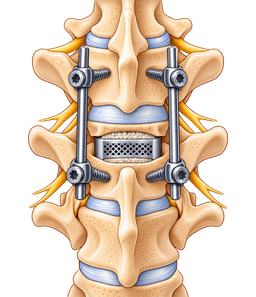
In spinal fusion, the painful disc is removed and the two vertebrae are joined so that they grow into one bone, held by screws and rods while healing. It removes motion at the painful level. It suits severe, localised pain with disc collapse that has not responded to care. Fusion takes 3 to 12 months to solidify, and neighbouring levels carry more load afterwards. See spinal fusion in turkey and the spinal fusion cost guide.
TLIF and PLIF
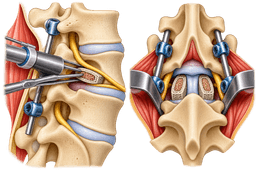
TLIF and PLIF are fusion techniques approached from the back. A cage is placed into the disc space through a small corridor, along with bone graft, and screws stabilise the level. They also let the surgeon free a pinched nerve at the same time. See TLIF and PLIF in turkey and the TLIF and PLIF cost guide.
ALIF
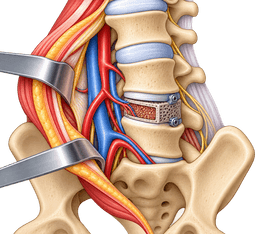
ALIF reaches the disc through the abdomen, avoiding the back muscles and nerves. A large cage restores disc height and indirectly opens the nerve space. It is used mainly at L4-L5 and L5-S1, where the surgeon wants strong height restoration. A vascular or access surgeon often assists. See ALIF in turkey and the ALIF cost guide.
Cervical disc replacement
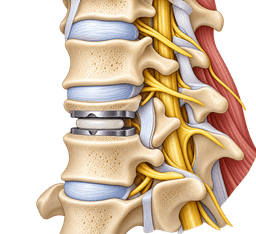
For single-level or two-level cervical degenerative disc disease with arm symptoms, cervical disc replacement swaps the worn disc for a moving implant. The aim is to relieve nerve pressure while preserving motion. It suits people with a mobile spine and no major spurs or instability. See cervical disc replacement in turkey and the cost guide.
How do the options compare?
| Option | Region | Main aim | Key trade-off |
|---|---|---|---|
| Spinal fusion | Lumbar or cervical | Remove motion at a painful level | Longer healing; adjacent levels take more load |
| TLIF / PLIF | Lumbar | Fuse and free the nerve from behind | Muscle disruption; nerve risk |
| ALIF | Lower lumbar | Restore height through the abdomen | Abdominal approach; vascular risk |
| Cervical disc replacement | Neck | Relieve nerve pressure, keep motion | Needs good bone quality; not for unstable necks |
What about lumbar disc replacement and newer options?
Lumbar artificial discs exist but are used in a narrow group of patients, and results are less consistent than in the neck. Be cautious about clinics that promote one operation for everyone. A balanced surgeon will explain why a particular technique matches your anatomy, and what the non-surgical alternative would look like.
When surgery is considered
Surgery for degenerative disc disease becomes reasonable when pain or nerve symptoms stay disabling after a full non-surgical programme, and when scans match your symptoms. It is rarely urgent.
What criteria do spine surgeons use?
- At least 3 to 6 months of structured physiotherapy, medicines and activity changes without enough benefit.
- Pain or arm and leg symptoms that limit work, sleep or daily life.
- Imaging that shows a specific level of disc collapse, instability or nerve compression matching the symptoms.
- Reasonable general health, and ideally non-smoking status for at least 4 to 6 weeks beforehand.
- Realistic expectations about pain relief, which is usually partial.
When is it more urgent?
Progressive weakness, a dropping foot, loss of hand dexterity, or any bladder or bowel change warrant fast assessment. Surgical timing is then driven by safety, not by convenience.
What should you ask before deciding?
- Which level is causing my pain, and how sure are you?
- What are my realistic chances of meaningful improvement?
- What would happen if I waited another 6 months?
- What are the risks at adjacent levels in 10 years?
- What rehabilitation will I need, and who supervises it after I go home?
Timing matters too. Surgery is not an emergency in this setting, so you can take a few weeks to gather scans, seek a second opinion and stop smoking. Patients who prepare well tend to recover more smoothly, and a short delay rarely harms the outcome.
A second opinion is sensible for any fusion. Our questions to ask before surgery abroad guide is a good checklist, and the spine surgery page describes how specialist teams work.
Procedures
Procedures that may treat degenerative disc disease
Costs
Degenerative disc disease treatment cost in Turkey
| Procedure | Turkey package | US self-pay | Saving |
|---|---|---|---|
| Spinal Fusion | $10,000 – $18,000 | $77,942 | ~82% |
| TLIF / PLIF | $11,000 – $18,000 | $96,975 | ~85% |
| ALIF Surgery | $12,000 – $19,000 | $99,025 | ~84% |
| Cervical Disc Replacement | $9,000 – $14,000 | $57,800 | ~80% |
Packages are contracted partner prices with validity dates; benchmarks are source-backed estimates. Open a cost guide for the full country comparison.
In Turkey
Treating degenerative disc disease in Turkey
Degenerative disc disease treatment in turkey can suit people who need planned, non-urgent spinal surgery and are medically stable. Many international patients travel for this reason, and a good pathway is organised, documented and unhurried.
When does degenerative disc disease surgery in turkey make sense?
It can make sense when you have already completed non-surgical care, have clear imaging, and want access to modern implants, short waiting times or a surgical team used to treating international patients. It is not a shortcut around conservative treatment. Read why patients choose the country on our why turkey page.
What does the pathway look like?
- Records review: you send MRI images, X-rays, reports and a symptom timeline for a remote assessment.
- Surgical plan: the team proposes an operation, or advises against surgery, and explains the reasoning.
- Pre-travel checks: blood tests, anaesthetic review and medicine adjustments are arranged.
- Admission and surgery: you arrive a day or two beforehand for a final consultation and tests.
- Recovery abroad: hospital stay and early walking, usually 2 to 4 days for fusion surgery.
- Follow-up: a written discharge summary and a plan for physiotherapy at home.
Our treatment planning guide and hospital admission guide describe each stage.
What should you check about the hospital and surgeon?
- International accreditation of the hospital, and a dedicated spine team.
- How many operations of your specific type the surgeon performs each year.
- Availability of intraoperative neuromonitoring, imaging and a high-dependency unit.
- Written policies on complications, readmission and the handling of implants.
- Clear information on what is and is not included in the quoted package.
How long should you plan to stay?
Fusion generally needs 7 to 14 days in the country, including the hospital stay and a wound check. Cervical disc replacement may need fewer. Flying too early raises clot risk, so the guide on flying after surgery is worth reading. A companion makes the trip easier, as described in the companion guide.
When should you not travel?
If you have new weakness, loss of bladder or bowel control, severe saddle numbness, fever with back pain or a suspected spinal infection, you need urgent local care first. Travel is only considered once you are medically stable and your treating team agrees. Uncontrolled diabetes, heart or lung disease, and active smoking can also make surgery unsafe until addressed.
How do cost and quote information work?
Costs depend on the operation, the number of levels and the implants. Please see the spinal fusion cost guide, ALIF cost guide and cervical disc replacement cost guide, or request a personal estimate with a free case review. You can explore the wider offer on our orthopedics in turkey page, or compare cities such as Istanbul and Ankara.
Complications
Complications of degenerative disc disease
The main risks of degenerative disc disease come from nerve compression and chronic pain, while surgery adds its own risks that should be stated honestly. Most people never develop serious complications.
What happens if degenerative disc disease is left untreated?
Many people stay stable for years. In others the disc space collapses further, the facet joints enlarge and the canal narrows, leading to spinal stenosis or a vertebral slip such as spondylolisthesis. A worn disc can also bulge or tear, causing a herniated disc.
Persistent pain from worn spinal discs can reduce activity, strength and mood, creating a cycle of deconditioning. This is a real complication and one that rehabilitation can address.
Can the nerves or spinal cord be damaged?
Occasionally. In the neck, long-standing narrowing can compress the spinal cord, causing clumsy hands, unsteady walking and sometimes bladder changes. In the lower back, severe central compression can cause cauda equina syndrome, a surgical emergency. Both are uncommon, but the warning signs should be known.
What are the risks of surgery?
Any spine operation carries general risks such as bleeding, infection, blood clots and anaesthetic problems. Specific risks include:
- Nerve irritation or injury, usually temporary, occurring in a small percentage of cases.
- Failure of the bones to fuse (pseudarthrosis), seen more often in smokers.
- Persisting pain, because the disc may not have been the only pain source.
- Adjacent segment degeneration, where neighbouring levels wear faster over the years.
- Implant problems, such as screw loosening or cage subsidence.
- Dural tear with fluid leak, usually repaired at the time of surgery.
Rates vary with age, number of levels and your health, and your surgeon should give figures for your specific case.
How are complications managed?
Early detection matters: new weakness, wound redness, fever or leg swelling should be reported without delay. Ask your overseas team how to contact them, and agree with a local doctor who will see you after you return. The follow-up after returning home guide explains how to organise this.
Urgent care
When to seek urgent care for degenerative disc disease
- New weakness in a leg, foot, hand or arm: seek urgent medical assessment the same day, because a nerve may be under pressure.
- Loss of bladder or bowel control, or difficulty passing urine: go to an emergency department immediately, as this may be cauda equina syndrome.
- Numbness around the genitals, buttocks or inner thighs (saddle area): treat as an emergency and attend hospital at once.
- Back pain with fever, chills or recent infection or injection: get urgent review, since spinal infection must be excluded quickly.
- Severe unrelenting pain at night, unexplained weight loss or a past cancer: see a doctor promptly to rule out a tumour.
- Clumsy hands, trouble with buttons or handwriting, or unsteady walking with neck pain: seek specialist review soon for possible cord compression.
- Pain after a significant fall or accident: attend urgent care for imaging before any exercise or travel.
Prevention
How to lower your risk of degenerative disc disease
You cannot stop discs from ageing, but you can slow the wear and reduce how often it causes pain. The most effective steps are regular exercise, not smoking and a healthy weight.
What can reduce your risk?
- Keep moving: aim for 150 minutes of moderate activity each week, such as brisk walking or swimming.
- Stop smoking: nicotine impairs disc nutrition and healing, and quitting helps both pain and surgical results.
- Maintain a healthy weight: less load passes through the lumbar discs with each step.
- Train the trunk and hips: strong muscles share the load that would otherwise fall on the discs.
- Use good lifting technique: keep loads close and avoid twisting while lifting.
How can work and daily habits help?
Alternate sitting and standing, set up your workstation so your screen is at eye level, and take breaks from driving every 60 to 90 minutes. If your job involves heavy lifting, ask about mechanical aids and training. Even small habit changes, repeated daily, matter over decades.
Does sleep or stress matter?
Yes, more than most people expect. Poor sleep lowers your pain threshold, and stress tightens the muscles around the spine. Regular sleep times, a wind-down routine and relaxation methods such as slow breathing for 5 minutes can all make a flare feel less intense.
Mood is part of the picture too. If low mood or worry is taking over, talk to your doctor, because treating it often improves pain and activity together.
What cannot be prevented?
Genetics and age are the biggest drivers, and neither can be altered. Some people with perfect habits still develop disc wear, so it is not a personal failure. The aim is to keep the spine strong and the symptoms manageable.
Can you protect adjacent levels after surgery?
After a fusion, staying fit, keeping a healthy weight and following the physiotherapy plan may reduce stress on neighbouring levels. Regular check-ups let doctors detect new problems early. For related advice on posture and curvature, see our pages on scoliosis and kyphosis.
The wider spine section lists other conditions and procedures that may be relevant to your long-term care.
Outlook
Living with degenerative disc disease: outlook and recovery
The outlook for degenerative disc disease is generally good: most people have manageable symptoms, and many improve without surgery. Pain often follows a pattern of flares and calm spells that become less severe over time.
What is the natural history?
As discs lose height, the segment becomes stiffer, and some of the instability that causes early pain settles. Studies following people with back pain suggest that most improve substantially within 3 months, although recurrences are frequent. Persistent daily pain is the minority pattern.
What recovery can you expect after surgery?
After fusion, most people walk the day after surgery and go home within a few days. A rough timeline is shown below.
| Time after surgery | Typical milestones |
|---|---|
| Days 1 to 3 | Walking with support, wound care, pain control |
| Weeks 2 to 6 | Gradual increase in walking, desk work possible for some |
| Weeks 6 to 12 | Physiotherapy begins in earnest, light daily tasks |
| 3 to 6 months | Return to most work; heavier activity as cleared |
| 6 to 12 months | Bone fusion matures; final results are assessed |
How about return to work and sport?
Desk-based workers may return in 4 to 8 weeks, while heavy manual workers often need 3 to 6 months or more. Low-impact sport, such as swimming and cycling, is usually allowed first. Contact and high-impact sport after fusion is a conversation to have with your surgeon.
What are the long-term results?
Studies suggest that many patients having surgery for carefully selected disc problems report meaningful pain and function gains, though complete freedom from pain is not typical. Results are best when the pain source is clear, the patient is a non-smoker and rehabilitation is completed.
Cervical disc replacement has reported good medium-term results in selected patients, with preserved motion. Long-term follow-up continues to build.
How do you stay well afterwards?
Keep exercising, maintain a healthy weight and attend follow-up. If you are considering treatment, you can send us your records through the free case review, and our team will explain your options honestly, including the option of continuing non-surgical care.
Surgeons
Specialists who treat degenerative disc disease
FAQ
Degenerative disc disease: frequently asked questions
Can degenerative disc disease be reversed?
What are the first symptoms of degenerative disc disease?
Is walking good for degenerative disc disease?
How long does a flare of degenerative disc disease last?
Does degenerative disc disease get worse with age?
When is surgery needed for degenerative disc disease?
What is the success rate of spinal fusion for degenerative disc disease?
Is cervical degenerative disc disease serious?
Can I exercise with degenerative disc disease?
Is degenerative disc disease surgery in turkey safe?
How long do I need to stay in turkey after spinal fusion?
Can I get a disc replacement for degenerative disc disease in turkey?
Does smoking affect degenerative disc disease?
Sources
Sources for this degenerative disc disease guide
Peer-reviewed guidance and institutional sources used to write and review this page.
- 01Low back pain and sciatica in over 16s: assessment and management
NICE, 2016
https://www.nice.org.uk/guidance/ng59
- 02
- 03Degenerative disc disease
Cleveland Clinic, 2022
https://my.clevelandclinic.org/health/diseases/16912-degenerative-disc-disease
- 04
- 05
- 06Neck pain
Mayo Clinic, 2023
https://www.mayoclinic.org/diseases-conditions/neck-pain/symptoms-causes/syc-20375581
- 07