

Key takeaways
- 1A proximal humerus fracture is a break in the upper end of the arm bone, and it is one of the commonest fractures in older adults after a simple fall.
- 2Sudden pain, swelling, bruising that spreads down the arm and an inability to lift the arm are the usual signs, and anyone with these should be seen urgently at a local emergency department.
- 3Most breaks have little displacement, and most of those heal well in a sling followed by early guided movement and physiotherapy.
- 4Surgery is considered when the broken pieces have moved a long way, when the head of the bone has separated from its blood supply, or when a person needs good function from the arm.
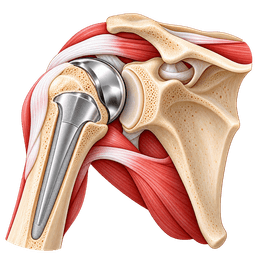
- 5Options include plate fixation, nailing and, for selected complex fractures in older people, reverse shoulder replacement.
- 6Recovery takes months, with a sling for about 3 to 6 weeks, and the final result can keep improving for 12 months or more.
- 7Treatment in turkey is only suitable after urgent local care, once you are medically stable and your treating team agrees you can travel.
Overview
What is proximal humerus fracture?
A proximal humerus fracture is a break in the top end of the humerus, the long bone of the upper arm, close to where it forms the shoulder joint. People often call it a broken shoulder, although the socket is usually unharmed. This page explains the types, tests, treatment choices and recovery, and when treatment in turkey is appropriate.
What is a proximal humerus fracture?
The word proximal means nearest the body. The fracture sits in the rounded head, the neck just below it, or one of two bony bumps called the tuberosities, where rotator cuff tendons attach. A break can be a single crack or can leave 2, 3 or 4 separate pieces.
Because the tendons pull on those pieces, a break that starts as a crack can drift out of place. That is why doctors look at the position of each fragment, not just at whether a fracture exists.
Who gets a proximal humerus fracture?
It is most frequent in people over 60, particularly women with thinning bones (osteoporosis), who fall from standing height onto an outstretched arm or the side. In younger adults it usually follows a high-energy event such as a road crash, a cycling fall or a sports collision, and the damage can be more complex.
How serious is it?
It can be painful and disabling for some weeks, yet most people regain a comfortable, useful arm. The break itself is rarely dangerous to life, but it can come with other injuries and, in older people, it may signal fragile bones that need treatment. Quick assessment protects nerves, blood vessels and the joint.
How this page is organised
We cover anatomy, fracture patterns and diagnosis before looking at sling care, surgery and recovery. A short section explains when travel for treatment in turkey is reasonable. Our shoulder hub gathers related pages, and the free case review offers a specialist opinion on your scans once the emergency has passed.
Safety first: a suspected fracture needs urgent local care. Go to an emergency department, or call your local emergency number, before thinking about travel. Overseas treatment becomes an option only when you are stable and your treating team agrees.
Anatomy
What happens in the body with proximal humerus fracture
The upper humerus is a short stretch of bone with an unusually complicated set of attachments. Knowing which parts exist helps you follow what a surgeon means when describing "two-part" or "four-part" breaks on your scan.
What does the normal upper arm bone look like?
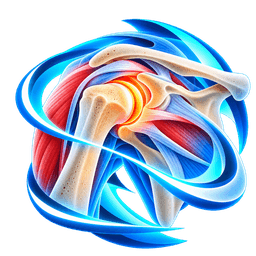
Think of the top of the humerus as a ball on a stalk. The ball (humeral head) fits into the shoulder blade socket. Just below it lies the anatomical neck, and further down the surgical neck, a narrower area where breaks are common. Two bumps, the greater and lesser tuberosities, sit at the front and side.
The rotator cuff tendons attach to those bumps and pull in different directions. The long head of the biceps tendon runs between them in a groove. Arteries wrap around the neck and enter the head, and the axillary nerve winds around the surgical neck, close to the bone.
Why does blood supply matter?
The humeral head receives most of its blood through vessels that run along the neck and up the inner side. A break that cuts through the neck, or shifts the head away from its attachments, can interrupt this flow. When that happens, the head may lose its blood supply, which can lead to avascular necrosis of the shoulder weeks or months later.
What changes when the bone breaks?
Muscle pull moves the pieces. The head can tilt backwards or sideways, the tuberosities can slide away, and the shaft is drawn inwards by the chest muscle. Bleeding fills the tissues, producing the dramatic bruising that tracks down the arm and chest over 2 to 4 days.
The axillary nerve and the artery can be stretched or bruised, so doctors always check sensation over the outer shoulder and the pulse at the wrist. Most nerve problems after this injury are temporary, though a few take months to recover.
Symptoms & causes
Proximal humerus fracture symptoms and causes
Common symptoms
- Sudden, severe pain in the upper arm or shoulder straight after a fall or blow, usually worse with any movement and eased only by holding the arm still.
- Swelling over the shoulder and upper arm that develops within hours and can make the area look rounded and tense.
- Bruising that appears a day or two later and spreads down the arm, towards the elbow and sometimes onto the chest wall.
- Inability to lift the arm, or to rotate it, because pain and the loss of a stable bone attachment block the muscles.
- Tenderness when pressing over the top of the upper arm, with a feeling of grating or a click when the arm moves (crepitus).
- A visible change in shape, such as a flattened shoulder contour or a drooping arm, particularly when the head has shifted out of the socket.
- Pins and needles or numbness in the hand or outer shoulder, which suggests nerve stretching and needs urgent assessment.
- Pain that wakes you at night during the first weeks, since lying flat pulls on the fracture and the swollen tissues.
- Supporting the injured arm with the other hand, a classic protective posture that often tells a clinician what happened before any words are spoken.
Causes and risk factors
- Falls from standing height onto an outstretched hand or the point of the shoulder, which cause most breaks in older adults.
- Osteoporosis, in which bone loses density and breaks under forces that a healthy bone would withstand.
- High-energy trauma such as road traffic collisions, cycling or motorbike falls and sports collisions, which affect younger people and often cause complex patterns.
- Direct blows, for example from a fall onto the shoulder on ice, which can crack the greater tuberosity or the neck.
- Seizures or electric shock, where violent muscle contraction can break the bone or dislocate the joint, sometimes both.
- Previous falls, poor balance, low vision and medicines that cause dizziness, which raise the chance of a fall that leads to a fracture.
- Low vitamin D, low body weight, smoking and long-term steroid use, which weaken bone and raise the risk of breaking it.
- Bone-weakening disease, such as a tumour that has spread to the bone, which can cause a break after very little force (a pathological fracture).
Types
Types and stages of proximal humerus fracture
Doctors describe each proximal humerus fracture by counting the number of displaced parts and by judging how far they have moved, since both facts steer treatment. Our guide cannot replace your own scan review, but it explains the language you will hear.
What is the Neer classification?
The Neer system divides the upper humerus into four segments: the head, the greater tuberosity, the lesser tuberosity and the shaft. A segment counts as "displaced" when it has moved by more than 1 cm, or tilted by more than 45 degrees. The number of displaced segments gives the fracture its name.
| Pattern | What it means | Usual approach |
|---|---|---|
| One-part (minimally displaced) | Cracks present, but no segment has moved beyond the limits | Sling and early guided movement |
| Two-part | One segment displaced, often the surgical neck or the greater tuberosity | Sling or fixation, depending on position |
| Three-part | Two segments displaced; the cuff pulls the pieces apart | Plate, nail or sometimes replacement |
| Four-part | All segments displaced; the head may lose its blood supply | Often fixation in the young, replacement in selected older patients |
| Fracture-dislocation | Break with the head out of the socket | Urgent reduction and surgery in many cases |
How is displacement judged?
Surgeons measure movement of the fragments on X-ray and CT, and look at the angle between the head and the shaft. A head that sits in a varus position (tipped inwards) or a valgus-impacted position (tipped outwards and pushed into the shaft) has different outcomes and different fixation challenges.
What other features change the plan?
Three further details matter: whether the medial hinge (the bone on the inner side) is intact, how long the attached piece of the neck is, and the quality of the bone. A short inner piece suggests a lower blood supply, and soft osteoporotic bone holds screws less firmly.
Which fractures are the most worrying?
Four-part patterns and fracture-dislocations carry the highest risk of poor blood supply, stiffness and nerve injury. A humeral neck fracture that is impacted and stable behaves very differently. Your surgeon will explain which group yours falls into and what that means for expected recovery.
Diagnosis
How is proximal humerus fracture diagnosed?
A proximal humerus fracture is diagnosed by examination and X-ray at an emergency department, and the first aim is to confirm the break and exclude injury to nerves and blood vessels. Further imaging then maps the fragments so the surgeon can choose between a sling and an operation.
What happens in the emergency department?
Staff will ask how you fell, check for head, neck, chest and wrist injuries, and look for other fractures. They examine the pulse at the wrist, skin colour, and feeling over the outer shoulder and fingers. Your arm will be supported in a sling, and you will receive pain relief.
Which imaging is used and why?
A trauma series of X-rays shows the fracture from three directions: the front, the side of the shoulder blade and the axillary view. Together they show how many pieces exist, how far they have moved and whether the head is still in the socket.
A CT scan, often with 3D images, adds detail when the break is complex or when the surgeon is considering replacement. MRI is rarely needed early, although it may help later if a rotator cuff tear is suspected or if blood supply to the head is in doubt.
What does the specialist assess?
The specialist weighs the fracture pattern against your age, bone quality, hand dominance, health problems, work and goals. A fit 55-year-old who works with their hands and a frail 82-year-old who lives alone may need very different advice, even with an identical X-ray.
Is an osteoporosis check included?
It should be. A fracture from a simple fall suggests fragile bone, and guidelines recommend assessing bone density and vitamin D. Treating osteoporosis lowers the risk of a hip fracture or another break, which can matter more for long-term health than the shoulder itself.
What should you bring to a remote review?
Once you are stable, gather the original images from every X-ray and CT scan (not only the reports), the emergency and discharge letters, an operation note if you had surgery, your medicines and any allergies. See medical record review for how a specialist uses them.
Tests you may have
- Trauma series X-rays from the front, the side of the shoulder blade and the armpit, to show the fracture pattern, displacement and whether the head sits in the socket.
- CT scan with 3D reconstruction to count fragments, show impaction and joint-surface damage, and plan fixation or replacement.
- Neurovascular examination, including the pulse, skin colour and the sensation over the outer shoulder, to look for axillary nerve or artery injury.
- MRI or ultrasound, mostly later, to look at the rotator cuff tendons or doubts about blood supply to the humeral head.
- Bone density scan (DEXA) and vitamin D blood test to assess osteoporosis after a low-energy fracture.
- Follow-up X-rays at about 1, 2 and 6 weeks to check that the fragments have not moved and that healing is progressing.
- Blood tests and heart checks before surgery, to confirm that you are fit for anaesthesia.
Look-alikes
Conditions that can feel like proximal humerus fracture
Not every painful shoulder after a fall is a fracture, so doctors compare the signs with other injuries. X-rays settle most questions, and the table below shows how look-alike problems differ.
Which injuries look similar?
| Look-alike condition | How it differs | How doctors tell them apart |
|---|---|---|
| Shoulder dislocation | Ball out of the socket, often with a squared shoulder contour | X-ray shows the head outside the socket without a major break, although both can occur together |
| Rotator cuff tear | Weakness lifting the arm after a fall, with less bruising | X-ray normal or shows a small chip; MRI or ultrasound shows the torn tendon |
| Collarbone (clavicle) fracture | Pain and a bump over the collarbone, not the upper arm | X-ray shows the break in the clavicle |
| Shoulder blade fracture | Pain at the back of the shoulder after a heavy blow | CT scan shows the scapula fracture |
| Acromioclavicular joint injury | Tenderness at the top of the shoulder, a step deformity | Weighted or standing X-rays show the gap between the collarbone and acromion |
| Bone bruise or occult fracture | Pain after a fall with a normal first X-ray | Repeat X-ray at 7 to 10 days, or MRI, shows a fine fracture line |
| Pathological fracture | Break after minimal force, often with pain beforehand | Imaging shows a lesion in the bone; biopsy and blood tests may follow |
Why do the details matter?
A dislocation needs the joint put back in place promptly, while a stable impacted fracture needs gentle protection. A missed occult fracture can lead to weeks of unprotected movement, so a persistently sore shoulder with a normal first X-ray deserves a repeat image.
Can a fracture hide a cuff tear?
Yes. Many people over 60 already have a degenerated rotator cuff, and a fall can tear it further. A surgeon may not know the cuff status until later imaging, which is one reason older patients may be steered towards reverse replacement when surgery is needed.
Could other problems be present?
People who fall may also injure the wrist, hip, ribs or head. Doctors check all of these. If you fell because you felt faint, or because of dizziness, a medical review of the cause is part of good care.
Non-surgical
Non-surgical treatment for proximal humerus fracture
Most proximal humerus fractures heal without surgery, and a sling plus early supervised movement is the standard first treatment for breaks that are stable or only slightly displaced. The principle is to protect the bone while it knits, then restore movement before stiffness sets in.
How does sling treatment work?
You wear a sling for about 2 to 6 weeks, depending on stability. During this time you can bend and straighten the elbow, move the wrist and fingers, and let the arm hang gently. Sleeping propped on pillows, or in a recliner, reduces pain at night.
When does movement start?
Stable fractures usually begin gentle pendulum movement within about 1 to 2 weeks, since early motion has been shown in studies to give good results without harming healing. Active lifting normally waits until X-rays show the bone has begun to unite, often after 6 weeks. Your surgeon sets the timing.
Which medicines help?
Paracetamol (acetaminophen) is the basis of pain relief. Anti-inflammatory tablets may be added if they are safe for you, though some surgeons prefer limiting them during early bone healing. Stronger painkillers may be needed for short periods. Ask about constipation and drowsiness, which are common with opioids.
What does physiotherapy involve?
Therapy usually follows three phases. First, protected passive movement with the therapist or the other hand. Second, active movement without weights from about 6 weeks. Third, strengthening from about 10 to 12 weeks. Many people attend for 3 to 6 months, and the home programme matters as much as the sessions.
Who does well without surgery?
Older and less active adults, and people whose fragments are well aligned, often do as well with a sling as with surgery, according to several randomised trials. Operating on every displaced fracture has not been shown to give better function on average, which is why a sling remains a respectable option.
What are the downsides?
The fracture can slip, so X-rays at 1 to 2 weeks are essential. Stiffness is common and may need extra physiotherapy. A bone that heals in a poor position (malunion) or fails to heal (non-union) may need later surgery. Early review makes these problems easier to spot.
Self-care
Exercises and self-care for proximal humerus fracture
Good home care during the first weeks supports healing, and the proximal humerus fracture recovery time shortens when you sleep, move and eat sensibly. Follow your surgeon's rules first, and check with your physiotherapist before starting any exercise not on your sheet.
How should you manage the first weeks?
Keep the sling snug, with the wrist supported and the elbow bent at about 90 degrees. Remove it only as instructed, for washing and elbow exercises. Lean forward to let the arm hang for a shower, and wash the armpit without lifting the arm. Wear loose clothing that opens at the front, dressing the injured arm first.
Which exercises are usually safe?
- Hand squeezes: squeeze a soft ball for 5 seconds, 10 times, every hour you are awake, to limit swelling.
- Elbow bends: straighten and bend the elbow gently, 10 repetitions, several times a day.
- Pendulum swings: only once your surgeon allows, lean forward and let the arm swing in small circles for 1 minute.
- Posture resets: draw the shoulder blade gently back and down, without moving the upper arm.
What helps pain and sleep?
Ice for 15 minutes at a time, wrapped in a cloth, can ease swelling in the first week. Take painkillers on a schedule rather than waiting for severe pain. Sleep semi-upright, with a pillow behind the elbow, since lying flat pulls the fragments. Expect disturbed nights for 2 to 3 weeks.
How can you protect your bones?
Eat enough protein, calcium and vitamin D, and take supplements if your doctor advises it. Stop smoking, because it slows bone healing. Limit alcohol, and ask whether a bone-strengthening medicine is appropriate. Walking is encouraged, if the sling is secure and your balance is steady.
What should you avoid?
Do not lift, push or pull with the injured arm, and do not lean on it to stand up. Avoid driving until your surgeon approves, which is often at 6 to 8 weeks. Do not skip scheduled X-rays, and report new numbness, worsening pain or a sudden change in shape promptly.
Check with your doctor or physiotherapist before starting new exercises, and stop any movement that causes sharp pain.
Treatment
Proximal humerus fracture treatment options
Surgery for a proximal humerus fracture is chosen for displaced, unstable or complex breaks, and the main choices are fixing the bone with a plate, a nail or wires, or replacing the joint. The best option depends on the fracture pattern, bone quality, age and the health of the rotator cuff.
What is plate fixation?
In open reduction and internal fixation (ORIF), the surgeon realigns the fragments through an incision and holds them with a locking plate and screws, sometimes with stitches through the tendons. It keeps the patient's own head and works best in good bone and in younger people with a preserved blood supply.
What is intramedullary nailing?
A nail is a metal rod inserted down the inside of the humerus, locked with screws near the top. It suits some two-part and three-part fractures of the neck and uses smaller incisions. Surgeons choose between nails and plates based on pattern, and both have stiffness and screw problems as known risks.
What is hemiarthroplasty?
A partial shoulder replacement (hemiarthroplasty) swaps the broken head for a metal ball and leaves the socket. It was once the standard for complex four-part fractures, but results depend on tuberosity healing, and many surgeons now prefer a reverse design in older patients. See the turkey page for partial replacement.
What is reverse shoulder replacement?
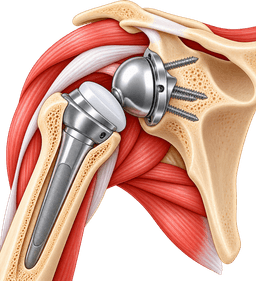
A reverse shoulder replacement switches the ball and socket so the deltoid muscle lifts the arm and does not need a healthy rotator cuff or healed tuberosities. Surgeons often choose it for complex fractures in people over about 65 to 70. Read about care on the reverse replacement turkey page.
How do the options compare?
| Option | Best suited to | Main trade-off |
|---|---|---|
| Sling and physiotherapy | Stable or minimally displaced breaks; frail or less active people | Possible slip, stiffness or malunion |
| Plate fixation | Displaced two-, three- and some four-part breaks in good bone | Screw cut-out, stiffness, possible avascular necrosis |
| Nail fixation | Neck fractures and some three-part patterns | Cuff irritation; less control of tuberosities |
| Partial replacement | Selected younger or active patients when fixation is not possible | Relies on tuberosity healing |
| Reverse replacement | Complex breaks in older people, poor bone or cuff | Limits on some rotation; implant lifespan |
For planning, the reverse shoulder replacement cost guide and the partial shoulder replacement cost guide explain what drives costs.
When surgery is considered
Surgery for a proximal humerus fracture is worth considering when fragments are widely displaced, the joint is dislocated, the head has lost its blood supply, or an earlier break has healed badly. For many stable fractures, a sling remains the right answer.
What are the usual reasons for surgery?
- Large displacement or angulation of the head, particularly with 3 or 4 fragments.
- A fracture-dislocation, or a head that will not stay in the socket.
- An open fracture, injury to blood vessels or nerves, or fractures in more than one bone of the same arm.
- Displacement that progresses on follow-up X-rays in a patient who wishes to use the arm actively.
- Painful non-union or malunion that has not improved after 3 to 6 months.
How do age and activity affect the choice?
People with strong bone and high demands, such as manual workers, often benefit from fixation. Older people with soft bone and a pre-existing cuff problem may gain more reliable results from a reverse replacement. A frail person with moderate displacement may do just as well with a sling.
Is there a time limit?
Fixation is usually best within the first 1 to 2 weeks, before the fragments start to heal in a poor position. Replacement can be done a little later, for example within 4 weeks, and revision for a poor healing result can come at any stage. Do not rush, but do not wait without reviews.
Which questions should you ask your surgeon?
- Is my fracture likely to heal in a sling, and what are the chances of poor movement?
- If you recommend surgery, which method and why, and what is the backup plan?
- How many proximal humerus fractures do you treat each year?
- What is the expected proximal humerus fracture recovery time for my age?
- When can I drive, work and travel?
Procedures
Procedures that may treat proximal humerus fracture
Costs
Proximal humerus fracture treatment cost in Turkey
| Procedure | Turkey package | US self-pay | Saving |
|---|---|---|---|
| Reverse Shoulder Replacement | $10,000 – $15,500 | $50,475 | ~75% |
| Partial Shoulder Replacement | $8,000 – $12,500 | $36,050 | ~72% |
Packages are contracted partner prices with validity dates; benchmarks are source-backed estimates. Open a cost guide for the full country comparison.
In Turkey
Treating proximal humerus fracture in Turkey
Proximal humerus fracture treatment in turkey is a possibility only after urgent local care, once you are medically stable and your treating team agrees that you may travel. A fresh fracture needs emergency assessment where you are, so travel for surgery is usually planned for subacute or complex cases.
When can travel make sense?
Travel may suit people whose fracture was stabilised locally in a sling and who want a second opinion on fixation or replacement, people with a malunion or non-union who need reconstruction, and those facing long waits for planned surgery. It does not suit people with a new break, an open wound, severe pain or other injuries.
What does the pathway look like?
- Urgent local care: you receive emergency treatment, imaging and a sling near home.
- Records review: you send images and letters through the free case review.
- Surgical opinion: a specialist suggests fixation, nailing or replacement, with the timing.
- Medical clearance: your doctor confirms you can fly, and the team checks heart, bone and blood tests.
- Surgery: a hospital stay of about 2 to 4 nights.
- Early recovery: about 10 to 14 days in turkey for wound checks and the first physiotherapy.
- Follow-up: physiotherapy at home with remote reviews and scheduled X-rays.
What should you send for review?
Send emergency letters, original X-ray and CT images, any operation note, and a list of medicines. For reverse shoulder replacement for proximal humerus fracture in turkey, the surgeon will also ask about bone quality and previous rotator cuff problems. See treatment planning for the full process.
How do you check quality and safety?
Look for international accreditation, a surgeon who treats shoulder trauma often, and clear information about implants and fixation hardware. Ask who handles problems after you fly home. Proximal humerus fracture surgery in turkey should include written records you can show your own team. Our orthopedics in turkey page explains how services are organised.
What are the practical points?
Fly only when your doctor clears you, and plan a companion because one arm is in a sling. Read flying after surgery, companion guide and rehabilitation. Review the why turkey overview and the cost guide.
When should you not travel?
Do not travel within the first days after the injury, with a suspected nerve or blood vessel injury, an open wound, unstable health, a head injury, or a surgeon who advises against flying. A fracture is not a reason to hurry across borders. Stabilise first, then decide calmly.
Complications
Complications of proximal humerus fracture
A proximal humerus fracture can leave lasting stiffness or pain, and surgery adds its own risks. Most people recover a useful arm, though complete return to the previous range of movement is not typical for complex breaks.
What can happen after the fracture itself?
Stiffness is the commonest problem and can follow either a sling or an operation. Others include malunion, in which the bone heals crooked, and non-union, in which it fails to join, which is more likely with smokers, poor bone and large gaps between fragments.
Bone death of the head (avascular necrosis) affects some three-part and four-part fractures, usually within 1 to 2 years. Nerve injury, particularly to the axillary nerve, can reduce deltoid power and usually improves over several months, although it may be permanent in a few people.
What are the surgical risks?
- Infection: uncommon but serious, and it may need antibiotics or more surgery.
- Screw cut-out or loss of fixation: more likely in soft bone, sometimes needing revision.
- Stiffness and adhesions: reduced by early guided movement.
- Implant problems after replacement: loosening, instability or tuberosity failure over time.
- Blood clots and anaesthesia risks: higher in older patients with other illnesses.
Is there a risk to general health?
For older adults, a fall that breaks the shoulder can mark a broader decline in balance, bone strength or strength. Addressing falls, osteoporosis and home safety is part of treatment. A hip fracture later is a bigger danger to life than the shoulder break.
How are risks reduced?
Stop smoking, control diabetes and other conditions, follow weight-bearing and movement instructions, and attend every X-ray appointment. Tell your team early about fever, wound leakage, new numbness or sudden worsening of pain. Clear communication after surgery is one of the strongest protections against late surprises.
Urgent care
When to seek urgent care for proximal humerus fracture
- Pale, cold, blue or numb fingers or hand after the injury: go to an emergency department at once, since an artery or nerve may be injured.
- A bone that pierces the skin, or any open wound over the fracture: seek emergency care immediately because of infection and bleeding risk.
- Severe pain, rapidly growing swelling or tight skin around the shoulder and arm: attend urgent care to exclude bleeding into the tissues.
- Head injury, confusion, chest pain, breathlessness or a collapse linked to the fall: call emergency services before worrying about the shoulder.
- Fever, spreading redness or discharge from a surgical wound: contact your surgical team the same day.
- Calf swelling or sudden shortness of breath after surgery or a flight: call emergency services for a possible blood clot.
Prevention
How to lower your risk of proximal humerus fracture
Most proximal humerus fractures follow a fall, so prevention is mainly about protecting bone strength and avoiding trips and slips. These measures matter most for people over 60, who have the highest rates of this injury.
How can you reduce the risk of falls?
- Remove loose rugs, secure cables and improve lighting, especially on stairs and between the bed and bathroom.
- Wear well-fitting shoes with a firm sole and use handrails.
- Have vision and hearing checked each year, and review dizzy-making medicines with your doctor.
- Join a balance or strength class, such as tai chi, which studies suggest can lower falls.
- Use a walking aid if recommended, and take extra care on ice and wet surfaces.
How can you strengthen your bones?
Weight-bearing exercise 3 or more times a week, enough calcium and vitamin D, adequate protein, no smoking and moderate alcohol all support bone. People over 50 with a prior fragility fracture should ask about bone density testing and, if needed, medicines that reduce the risk of further breaks.
What about sport and work?
Wear protective equipment for cycling, skiing and contact sport, and learn to fall with a roll rather than an outstretched arm. Workers on ladders or scaffolds should use harnesses and training. Strong shoulder and core muscles help you recover balance quickly when you trip.
What cannot be prevented?
High-energy accidents and sudden collapses cannot always be avoided, and even healthy bone can break. If you have already had a break, the aim is to prevent a second one, especially at the hip, and to protect the shoulder from further injury while you recover.
Outlook
Living with proximal humerus fracture: outlook and recovery
The outlook after a proximal humerus fracture is good for most people, who regain a comfortable arm that lets them manage daily life. Recovery is slow, though, and full strength and movement may take a year or longer, especially after a complex break.
What is the proximal humerus fracture recovery time?
Healing of the bone takes about 6 to 12 weeks, but the shoulder takes longer to recover its function. The table below gives a rough guide for a fracture treated in a sling or after fixation, and your surgeon will adjust it for your own case.
| Time after injury or surgery | What to expect |
|---|---|
| Weeks 0 to 2 | Sling, swelling and bruising; hand and elbow exercises; first X-ray check |
| Weeks 2 to 6 | Gentle assisted movement; sling use reducing; pain easing |
| Weeks 6 to 12 | Active movement; bone uniting on X-ray; driving may resume |
| 3 to 6 months | Strengthening; return to light work and daily tasks |
| 6 to 12 months | Slow gains in strength and reach; final result emerges |
What about return to work and sport?
Desk workers often return after 6 to 8 weeks. Manual workers may need 4 to 6 months, and some need lighter duties. Swimming and golf are often possible at 4 to 6 months. Heavy overhead lifting and contact sport may take longer or may not suit a replaced shoulder.
How does the type of treatment affect results?
Studies suggest that stable and minimally displaced fractures do well with sling care, and that results after fixation depend on bone quality and how accurately the fragments are placed. After reverse replacement for a fracture, most older patients report good pain relief, with elevation often reaching shoulder height or above.
What are the long-term concerns?
Some people keep a little stiffness or aching with weather or heavy use. Avascular necrosis, arthritis, such as shoulder osteoarthritis, and stiffness like frozen shoulder are possible later. Regular reviews and a steady home programme give the best long-term chance of a comfortable shoulder.
Surgeons
Specialists who treat proximal humerus fracture
FAQ
Proximal humerus fracture: frequently asked questions
What is a proximal humerus fracture?
What are the main proximal humerus fracture symptoms?
Is a proximal humerus fracture the same as a broken shoulder?
Does a proximal humerus fracture always need surgery?
What is the proximal humerus fracture recovery time?
How long do I wear a sling for a proximal humerus fracture?
What is a humeral neck fracture?
When is reverse shoulder replacement used for a fracture?
Is proximal humerus fracture treatment in turkey safe?
Can I travel to turkey right after breaking my shoulder?
How long should I stay in turkey after surgery for this fracture?
Can a proximal humerus fracture cause long-term problems?
Sources
Sources for this proximal humerus fracture guide
Peer-reviewed guidance and institutional sources used to write and review this page.
- 01Shoulder Joint Replacement
American Academy of Orthopaedic Surgeons (OrthoInfo), 2023
https://orthoinfo.aaos.org/en/treatment/shoulder-joint-replacement/
- 02Shoulder Injuries and Disorders
MedlinePlus, 2023
https://medlineplus.gov/shoulderinjuriesanddisorders.html
- 03
- 04Osteoporosis
National Institute of Arthritis and Musculoskeletal and Skin Diseases, 2023
https://www.niams.nih.gov/health-topics/osteoporosis
- 05
- 06