


Key takeaways
- 1Hip bursitis is inflammation or irritation of a bursa, a thin fluid-filled sac that lets tendons and muscles glide over bone near the hip.
- 2The usual site is the bursa over the greater trochanter, the bony point on the outer hip, where it is often called trochanteric bursitis.
- 3Many people with outer hip pain actually have a gluteal tendon problem as well, so doctors now often use the broader label greater trochanteric pain syndrome.
- 4The typical picture is tenderness over the outer hip, pain on stairs and a sharp ache when lying on that side at night.
- 5Rest from the aggravating habit, gluteal strengthening and a graded loading plan resolve the majority of cases over several weeks to months.
- 6A corticosteroid injection can give short-term relief, but it does not replace exercise and is not repeated many times.
- 7Surgery, usually keyhole bursectomy or tendon work, is reserved for the small group whose pain persists for 6 to 12 months despite good non-surgical care.
Overview
What is hip bursitis?
Hip bursitis is a painful irritation of one of the bursae around the hip, most commonly the one that sits over the bony point on the outer thigh. It is one of the more frequent reasons for outer hip pain, especially in women over 40. This page covers what it is, how it is separated from joint problems, and how it is treated, including options in turkey.
What is hip bursitis?
A bursa is a flat, slippery pocket that contains a few drops of fluid. Its job is to reduce friction where tendons, muscles or skin move across bone. In hip bursitis, one of these pockets becomes inflamed or thickened, so each movement that rubs over it hurts.
The word "itis" suggests simple inflammation, but research shows a more mixed picture. In many people the bursa is irritated mainly because the tendons next to it, the gluteus medius and minimus, are overloaded or degenerated. That is the reason many clinicians prefer to talk about outer hip pain as a tendon-and-bursa problem together.
Who gets hip bursitis?
Hip bursitis is most often seen in people aged 40 to 70, and it affects women several times more often than men. A wider pelvis, changes after the menopause and the way the hip abducts under load may all contribute. Runners, people who stand for long hours, those with a leg-length difference and people with a stiff lower back are also commonly affected.
How serious is hip bursitis?
Hip bursitis is not dangerous, and it does not damage the joint itself. It can, however, be stubborn. Pain can last for months when the underlying habit is not changed, and night pain can wear you down. The good news is that most people improve with a plan that focuses on strength, load and sleeping position.
The sections below follow the order of a visit to the clinic: anatomy, types, diagnosis, look-alikes, non-surgical treatment, surgery and what to expect.
Anatomy
What happens in the body with hip bursitis
The outer hip is a crowded neighbourhood of bone, tendon, fat and fluid pockets. A short tour explains why that region is so easily irritated.
What lies on the outer side of the hip?
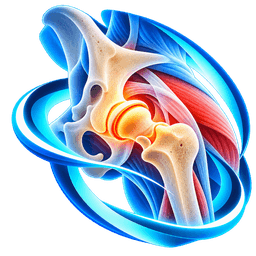
The greater trochanter is the bony prominence you can feel on the outer upper thigh when you press at the side of your hip. Several tendons attach to it. The gluteus medius and gluteus minimus, which stabilise the pelvis when you walk, anchor on its sides and top. Over them runs the iliotibial band (ITB), a broad strip of fibrous tissue stretching down the outer thigh to the knee.
Between these structures and the bone lie the bursae. The main one, the trochanteric bursa, cushions the ITB and gluteus maximus as they pass over the bony point. Other bursae include the gluteus medius bursa and the iliopsoas bursa at the front of the hip.
- Trochanteric bursa: outer hip, the most common site of irritation.
- Iliopsoas bursa: front of the hip, associated with groin pain and snapping.
- Ischial bursa: under the sitting bone, linked with pain on hard seats.
What changes when a bursa is irritated?
The lining of the bursa thickens and produces extra fluid, and the bursa becomes tender and sensitive to pressure. Compression from the ITB, a tight hip stabiliser or the weight of lying on that side adds to the irritation.
At the same time, the nearby tendons may show small tears or degeneration. Imaging studies suggest that many patients with outer hip pain have some tendon change, which is why strengthening is more useful than rest alone. The bursa is the part that hurts, but the tendon is often the part that needs training.
Symptoms & causes
Hip bursitis symptoms and causes
Common symptoms
- Aching or burning pain on the outer side of the hip, usually centred over the bony point you can press with your fingers.
- Tenderness to touch over the greater trochanter, so that even light pressure from a belt, bag or the mattress is uncomfortable.
- Hip bursitis pain at night when lying on the affected side, which can wake you repeatedly between 2 and 4 hours after falling asleep.
- Pain when climbing stairs or walking uphill, because the hip abductors work hard to steady the pelvis.
- A sharp pang when getting up from a chair or car seat after sitting for 30 minutes or more.
- Pain that spreads down the outer thigh, sometimes as far as the knee, though it does not usually travel below it.
- Stiffness or discomfort after prolonged standing, for instance during a long shift, which may ease once you start moving.
- A feeling of weakness or a slight limp in the affected leg, as the painful hip muscles guard against load.
- Pain when sitting with the legs crossed, or when standing with the weight shifted onto one leg.
- Occasional swelling or warmth over the outer hip, although visible swelling is less common in deeper bursae.
Causes and risk factors
- Overuse and repetitive friction: running, hill walking, cycling and stair climbing rub the ITB over the bursa, particularly with a sudden rise in training.
- Gluteal tendon overload or degeneration: weak or irritated gluteus medius and minimus tendons let the pelvis drop and compress the bursa.
- Direct injury: a fall onto the side of the hip, or a heavy knock, can bruise the bursa and trigger inflammation.
- Prolonged side lying or hard surfaces: sleeping on one side, or sitting on a hard seat, can irritate the bursa in a vulnerable hip.
- Leg-length difference or a tilted pelvis: uneven mechanics increase the load on one outer hip.
- Lower back problems: spine arthritis and stiffness change how the pelvis moves and can overload the outer hip.
- Previous hip surgery or a hip replacement: scar tissue and altered mechanics can make the bursa more reactive.
- Inflammatory conditions such as rheumatoid arthritis, gout, or a thyroid disorder, which can make bursae more likely to flare.
- Weight gain or an abrupt change in activity level, which increases the demands placed on the stabilising muscles.
Types
Types and stages of hip bursitis
Bursitis around the hip is classified mainly by which bursa is involved and by how long it has lasted. Knowing the type helps your doctor choose between exercise, injection and procedures.
Which bursae can be involved?
Trochanteric bursitis, on the outer hip, is by far the most common. Iliopsoas bursitis causes pain deep in the groin that may mimic a joint problem. Ischial bursitis causes buttock pain after sitting on hard seats, sometimes called weaver's bottom. The three feel different and need different handling.
Is it acute or chronic?
Acute bursitis begins quickly, often after a bruise or a burst of unusual activity, and tends to settle in 2 to 6 weeks with simple measures. Chronic bursitis lasts beyond 3 months, usually reflects tendon overload and is more likely to need a structured loading programme. A rare septic bursitis, caused by infection, brings fever, redness and heat, and it needs urgent medical care.
| Type | Main location | Typical clue | Usual approach |
|---|---|---|---|
| Trochanteric (greater trochanteric pain syndrome) | Outer hip | Tender bony point; pain lying on that side | Strengthening, load management, injection if needed |
| Iliopsoas | Front or groin | Pain on resisted hip flexion; snapping | Stretching and activity change, guided injection |
| Ischial | Buttock | Pain when sitting on hard seats | Cushioning, hamstring care |
| Septic | Any bursa | Fever, redness, heat, marked tenderness | Urgent assessment and antibiotics |
Why does the classification matter?
Many people are told they have "bursitis" and given an injection into the wrong area. A clear map of where it hurts and which tissue is involved improves treatment and prevents repeated, ineffective steps. It also separates a tendon problem that needs loading from an infection that needs urgent care.
Diagnosis
How is hip bursitis diagnosed?
Hip bursitis is mainly a clinical diagnosis, meaning the story and the examination do most of the work. Scans are used to rule out other causes and to look at the tendons, not usually to confirm the bursa itself.
What will the doctor ask?
Expect questions about exactly where the pain sits, whether lying on that side wakes you and which activities provoke it. The clinician will ask about recent changes in training or work, falls, back pain, other joint problems and any steroid use. Pointing to the bony point with one finger is a good sign, whereas pain deep in the groin suggests a joint cause.
What does the examination show?
The examiner presses over the greater trochanter, and pain here is the classic finding. A single-leg stance held for 30 seconds is a useful test, since pain within that time suggests tendon involvement. Resisted hip abduction and external rotation can reproduce discomfort. The hip joint itself usually moves normally and without groin pain, which helps separate it from intra-articular disease.
When are scans needed?
Many patients do not need any imaging. X-rays can show arthritis or calcium deposits near the trochanter. Ultrasound can show fluid in the bursa and tendon changes, and has the advantage of allowing a guided injection at the same visit. MRI is used when the diagnosis is unclear, when a tendon tear is suspected or when surgery is under consideration.
What can you prepare for a remote review?
Prepare a short pain map, a timeline of symptoms, a list of medicines and injections already tried, and any ultrasound or MRI image files and reports. A note on how well you sleep and what you do for work also helps. You can submit them through the free case review, and the medical record review guide describes what the team looks for.
Tests you may have
- Palpation of the greater trochanter: reproducible tenderness over the bony point is the most useful bedside sign for trochanteric involvement.
- Single-leg stance test: standing on the painful leg for 30 seconds; pain or pelvic drop points to gluteal tendon trouble.
- Resisted abduction and external rotation tests: show whether the gluteal tendons, not just the bursa, are provoking symptoms.
- Ultrasound: shows fluid in the bursa, tendon thickening or tears and can guide an injection precisely.
- MRI of the hip: shows tendon tears, bursal fluid and other causes such as stress injury, labral tears or early joint disease.
- Plain X-rays of the pelvis and hip: exclude arthritis, bony abnormalities and calcification around the trochanter.
- Blood tests: considered if infection or an inflammatory condition is suspected, for example raised inflammatory markers or uric acid.
Look-alikes
Conditions that can feel like hip bursitis
Outer hip pain has several causes, and mistakes are common. The table sets out the main look-alikes and the clues doctors use to separate them from hip bursitis.
| Condition | How it differs | How doctors tell |
|---|---|---|
| Gluteal tendinopathy or tear | Tendon pain with weakness; often coexists with the bursa | Single-leg stance pain, resisted abduction; ultrasound or MRI |
| Hip osteoarthritis | Groin pain and stiffness, reduced internal rotation | X-ray joint-space narrowing; pain with hip rotation |
| Hip labral tear | Deep groin pain with clicking or catching | MR arthrogram and impingement tests |
| Femoroacetabular impingement | Pain on deep flexion and pivoting, located in the groin | Cam or pincer shape on X-ray |
| Avascular necrosis of the hip | Progressive deep hip pain, often at rest or at night, with a risk factor | MRI shows bone death in the femoral head |
| Lumbar radiculopathy | Pain with back movement, may travel below the knee, tingling | Spine examination, nerve tests, lumbar MRI |
| Stress fracture of the femoral neck | Groin pain with weight bearing in runners or after training spikes | MRI shows bone marrow swelling; urgent care needed |
Why does the outer hip fool so many people?
Pain from the lower back, the sacroiliac joint and the hip joint can all be felt on the outer side of the hip. Because of this overlap, it is not unusual for someone to be treated for bursitis for months when the true source lies elsewhere. A careful check of the spine and the joint avoids this delay.
Is there ever more than one cause?
Yes. Hip bursitis frequently coexists with gluteal tendon problems, a stiff lower back or early joint arthritis. Your clinician will usually list the likely contributors and address each of them, because treating only the bursa often leads to a recurrence.
Non-surgical
Non-surgical treatment for hip bursitis
Non-surgical care resolves hip bursitis in most people, and it is always the first step. The plan combines load management, progressive strengthening, short-term pain relief and, if needed, an injection.
Step 1: Unload the irritated tissue
Begin by identifying the habits that compress the bursa. These include lying on the painful side, crossing the legs, standing with one hip pushed out and sitting on very low seats. Avoiding them for a few weeks gives the tissue room to settle. A pillow between the knees at night, or sleeping on the other side with the top leg supported, often makes a large difference.
You do not have to stop moving. Gentle walking on level ground is usually fine, while hills, stairs and long runs may need to be reduced for 2 to 4 weeks.
Step 2: Strengthen the hip stabilisers
The most effective long-term treatment is a progressive loading programme for the gluteus medius and minimus. A physiotherapist will start with low-load isometric holds, then add bridges, side-lying work and standing exercises. Trials of exercise and education for greater trochanteric pain suggest better results at 8 to 12 weeks than a wait-and-see approach, and often comparable or better long-term outcomes than injection alone.
Step 3: Medicines
Paracetamol and, where it is safe, a short course of oral anti-inflammatory tablets may ease flares. Anti-inflammatory gels applied to the skin are another option for some people. Discuss them with your doctor, especially if you have stomach, kidney or heart problems. Medicines help you exercise, but they do not train the muscle.
Step 4: Hip bursitis injection
A hip bursitis injection usually combines a corticosteroid with local anaesthetic and is placed near the trochanter, ideally guided by ultrasound. It can give relief for several weeks to a few months, which creates a window to build strength. Steroid injections are usually limited to 1 or 2 per year, since repeated doses may weaken tendon tissue. Other injections, such as platelet-rich plasma, show promise in small studies, but evidence is still developing.
Step 5: Extra options
Shockwave therapy has been studied for chronic trochanteric pain, and some trials suggest benefit when exercise alone has not worked. Footwear checks, shoe inserts for leg-length difference and weight management can all help. Treatment of the lower back may be needed if it contributes.
| Stage | Typical timeframe | Aim |
|---|---|---|
| Settle | Weeks 0 to 3 | Remove provoking habits, protect sleep |
| Load | Weeks 3 to 12 | Progressive gluteal strengthening |
| Return | Months 3 to 6 | Back to running, hills and sport |
| Reassess | 6 to 12 months | Consider further tests or surgery if still limited |
Self-care
Exercises and self-care for hip bursitis
Self-care for hip bursitis focuses on gentle, sustained strengthening and on changing the positions that squeeze the bursa. Please check with your doctor or physiotherapist before beginning, especially if pain is severe or you have had a recent fall.
Which hip bursitis exercises are commonly prescribed?
The best hip bursitis exercises build the side hip muscles without pinching the tendon against the bone. Examples include:
- Isometric abduction against a wall: stand sideways to a wall and press the outer knee gently into it for 30 to 45 seconds, 3 to 5 times.
- Bridge: lift the pelvis from a lying position and hold for 3 seconds, 10 to 12 repetitions.
- Side-lying leg lift: lift the top leg to about 30 degrees, keeping the toes pointing forward; use a pillow to avoid pressure on the sore hip, or do the exercise on the other side if lying on it hurts.
- Standing hip hitch: stand on a step on the affected leg and lower the other pelvis side slowly.
- Mini-squat with a band around the knees: keeps the knees from collapsing inward.
How should you build up?
Begin with 2 sets, every second day. After 2 weeks, add repetitions, then resistance. A mild ache of 3 out of 10 during exercise is normally acceptable if it settles within 24 hours. A sharp increase in pain, or a worse night after exercise, means the load was too high and should be reduced by a third.
How can you protect your sleep?
Sleep on your back, or on the unaffected side with a firm pillow between the knees and ankles. A thick foam topper or an egg-crate pad softens the pressure over the bony point. If you wake with pain, change position slowly rather than twisting.
Which everyday habits matter?
- Stand with weight shared evenly on both feet, not hanging on one hip.
- Avoid crossing your legs when seated.
- Choose a seat with firm support and not too low.
- Take the stairs one step at a time while the hip is sore.
- Use a walking stick in the opposite hand for a short period if the limp is marked.
What should you avoid?
Avoid aggressive stretching of the ITB over the painful bony point, deep massage directly on the sore spot and foam rolling on the trochanter, since these can increase compression and irritation. Do not ignore a fever or a hot, swollen hip. Heat before exercise and short rest breaks are reasonable.
Check with your doctor or physiotherapist before starting new exercises, and stop any movement that causes sharp pain.
Treatment
Hip bursitis treatment options
A small group of people with hip bursitis do not improve despite months of good non-surgical care. For them, options range from further injections and shockwave to keyhole surgery, which is generally the last step.
What can be done short of surgery?
Before surgery is discussed, doctors typically confirm that the diagnosis is right, the exercise programme was done properly for at least 3 months, and other sources of pain have been excluded. Other options include an ultrasound-guided injection for the bursa, a trial of shockwave therapy and lower back treatment when the spine contributes.
What is endoscopic bursectomy?
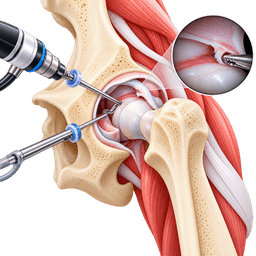
In endoscopic trochanteric bursectomy, the surgeon uses a camera and small instruments through 2 or 3 cuts of about 1 cm each to remove the inflamed bursa. During the same procedure, they can release a tight ITB and, if needed, repair a torn gluteal tendon. This sits within the wider field of hip arthroscopy, which also allows the joint itself to be checked and treated at the same visit.
See how this operation is arranged on the hip arthroscopy in turkey page, and the hip arthroscopy cost guide for what affects the quote.
What about gluteal tendon repair?
When an MRI shows a partial or full tear of the gluteus medius tendon with persistent weakness, surgeons may stitch the tendon back to the bone, either with keyhole or small open surgery. Recovery is longer, with crutches for about 6 weeks and gradual strengthening over 6 months.
How do the options compare?
| Option | Best suited to | Trade-offs |
|---|---|---|
| Exercise and load management | Nearly everyone as a first step | Needs patience of 8 to 12 weeks or more |
| Corticosteroid injection | Flares that block rehabilitation | Short-term relief; limited repeat use |
| Shockwave therapy | Chronic pain with tendon change | Several sessions; variable availability |
| Endoscopic bursectomy and ITB release | Persistent pain after 6 to 12 months of care | Small risk of wound problems; rehabilitation still needed |
| Gluteal tendon repair | Documented tendon tear with weakness | Longer protection and recovery |
What does recovery look like?
After endoscopic bursectomy, most people walk the same day with or without crutches, return to desk work in 1 to 2 weeks and begin strengthening early. Full return to sport can take 3 to 4 months. If a tendon repair is added, expect a longer timeline, with progressive loading from about 6 weeks.
When surgery is considered
Consider a specialist or surgical opinion for hip bursitis when pain remains disabling after 6 to 12 months of well-delivered non-surgical care, or when scans show a tendon tear that explains weakness. Surgery is uncommon, and getting the diagnosis right comes first.
Which situations point towards referral?
- Pain that is not improving after at least 3 months of a supervised loading programme.
- Two or more injections with only brief benefit.
- Persistent night pain that disturbs sleep and affects mood or work.
- A marked limp or a positive single-leg stance test with a pelvic drop.
- An MRI showing a gluteal tendon tear, calcification or other structural problem.
- Uncertainty about whether the pain comes from the hip joint, the spine or the bursa.
What should be confirmed before surgery?
A surgeon will want to confirm that the hip joint is healthy and that the spine is not driving the pain. They will check that you have genuinely tried the exercise programme and that you understand the rehabilitation needed afterwards. A diagnostic injection into the bursa that gives clear temporary relief supports the decision.
Which questions are worth asking?
- How sure are you that the bursa and tendon, not the spine, are the source?
- Will you remove the bursa only, or release the ITB or repair a tendon as well?
- What proportion of your patients improve, and how long does it take?
- What happens if I choose to continue with exercise instead?
The treatment planning guide and the list of questions to ask before surgery abroad can help you prepare for the conversation. If another hip problem is the real culprit, our page on hip osteoarthritis may be more relevant.
Procedures
Procedures that may treat hip bursitis
Costs
Hip bursitis treatment cost in Turkey
| Procedure | Turkey package | US self-pay | Saving |
|---|---|---|---|
| Hip Arthroscopy | $4,500 – $7,500 | $27,500 | ~78% |
Packages are contracted partner prices with validity dates; benchmarks are source-backed estimates. Open a cost guide for the full country comparison.
In Turkey
Treating hip bursitis in Turkey
Hip bursitis treatment in turkey is only worth considering when non-surgical care at home has not worked and a specialist believes keyhole surgery would help. Most people with this problem do not need to travel at all, and a good local physiotherapist is the first resource.
When does travelling make sense?
For the minority who need surgery, treatment abroad can be reasonable when waiting lists are long or when the surgeon has a large hip arthroscopy practice. Hip bursitis surgery in turkey is usually planned as an elective, day-case or one-night procedure. The country has private orthopedic centres in Istanbul, Ankara, Izmir and Antalya, described in our turkey orthopedics overview.
What does the pathway look like?
- Records review: send your history, previous injections, ultrasound or MRI files and exercise record through the free case review.
- Surgical opinion: the team confirms the diagnosis, checks whether the joint and spine are involved and advises whether surgery is likely to help.
- Arrival and tests: a few days before surgery, you have an anaesthetic review and any needed tests.
- Procedure: keyhole bursectomy, with ITB release or tendon work if indicated.
- Early rehabilitation: physiotherapy starts immediately, and you learn the home programme.
- Remote follow-up: video reviews and your local therapist continue the plan.
Is hip arthroscopy for hip bursitis in turkey the same operation?
Hip arthroscopy for hip bursitis in turkey normally refers to the endoscopic work outside the joint, together with a check of the joint inside when the scan or symptoms suggest it. Clarify with the surgeon exactly which compartments will be treated, since the central joint and the outer space are different areas.
How should you check the centre and the surgeon?
Ask about hospital accreditation, how often the surgeon performs endoscopic hip procedures and how infection and clot risks are managed. Request a written plan that explains the operation and the rehabilitation. Read the hospital admission guide and surgery day guide so that nothing about the day is a surprise.
How long should the trip be?
Plan roughly 5 to 8 days away, which gives time for a wound check and several physiotherapy sessions. Look at the flying after surgery guide, the travel and accommodation guide and the companion guide for logistics.
When is it better to stay home?
If you have not yet completed a proper exercise programme, if the diagnosis is uncertain or if you have infection signs, an active blood clot or unstable heart or lung disease, do not travel for surgery. Make sure physiotherapy is arranged at home before you leave, using the rehabilitation guide and the follow-up guide as a checklist.
Complications
Complications of hip bursitis
Hip bursitis is rarely dangerous, but unresolved pain and treatment side effects deserve a clear explanation. Understanding them lets you weigh each step sensibly.
What happens if it is not treated?
Chronic irritation can lead to longstanding tendon degeneration and weakness, with a small tear of the gluteal tendons in some people. Pain may cause you to move less, which weakens the muscles further and delays recovery. Sleep loss and a limp can affect the back and knee on the same side.
What are the risks of injection?
- A short flare of pain after the injection, usually lasting a day or two.
- Skin thinning or lightening at the injection site, more often with repeated doses.
- Temporary rise in blood sugar in people with diabetes.
- A very small chance of infection.
- Possible weakening of nearby tendon tissue when steroid is used repeatedly.
What are the risks of surgery?
Endoscopic surgery for hip bursitis is generally safe, but no operation is free of risk. Possible issues include:
- Wound problems such as fluid collection (seroma), bruising or delayed healing.
- Persistent pain or incomplete relief, particularly when the true source was the spine or the joint.
- Numbness of a small patch of skin near the cuts from irritated skin nerves.
- Infection or blood clots, both uncommon and reduced by careful technique and clot prevention.
- Weakness or a limp if a tendon is damaged or does not heal after repair.
How can the risks be lowered?
Confirm the diagnosis before any procedure, choose an experienced surgeon and follow the rehabilitation plan closely. Stop smoking before surgery to help wound healing. Report fever, spreading redness or calf pain quickly.
Urgent care
When to seek urgent care for hip bursitis
- Fever, chills and a hot, red, swollen, very tender outer hip: seek same-day medical care, since septic bursitis needs prompt antibiotics.
- Sudden severe hip pain after a fall with inability to bear weight: go to an emergency department for a possible fracture, and delay any travel until treated locally.
- Groin pain on weight bearing in a runner or someone on steroids, especially with a limp: get urgent imaging to exclude a stress fracture or bone death.
- Numbness in the groin or saddle area, or loss of bladder or bowel control: seek emergency care for possible nerve compression.
- A calf that is swollen, red and tender, or sudden breathlessness after surgery: call emergency services for possible blood clot.
- Severe night pain that is unrelenting, with weight loss or a history of cancer: see a doctor promptly so that other causes are excluded.
- A surgical wound that opens, bleeds or leaks pus: contact the surgical team the same day.
Prevention
How to lower your risk of hip bursitis
Hip bursitis cannot always be prevented, but you can lower the chance of it appearing or returning by keeping the hip stabilisers strong and avoiding repeated compression of the outer hip.
Which habits lower the risk?
- Strengthen the side hip muscles: a regular routine of 2 or 3 short sessions each week keeps the pelvis steady during walking.
- Increase training gradually: raise running or walking distance by no more than about 10% each week.
- Vary surfaces and routes: a constantly cambered road forces one hip to work harder, so change sides when you can.
- Treat leg-length differences: a heel lift or insole, where advised, evens out the load.
- Keep body weight healthy: every kilogram lost reduces the force through the outer hip when you walk.
How can you avoid recurrence?
Keep doing the strength programme after the pain has gone, even if only once a week. Return to hills and sport gradually. Review your standing, sitting and sleeping habits periodically, since old positions tend to creep back. Lower back stiffness should be addressed, because it often drives repeat flares.
What cannot be prevented?
Female sex, a wider pelvis, age-related tendon change and conditions such as rheumatoid arthritis are beyond your control. Even so, tailored exercise often reduces the impact of these factors.
Does the workplace matter?
Yes. Long standing shifts, hard seats and repeated climbing can all irritate the bursa. A cushioned mat, a sit-stand arrangement and short walking breaks every 30 to 45 minutes are practical changes. Speak to your employer about adjustments if symptoms keep returning.
Outlook
Living with hip bursitis: outlook and recovery
The outlook for hip bursitis is usually good, though recovery can be slower than people expect. Most people feel clearly better within 3 to 6 months when they follow a sensible plan.
What happens with non-surgical care?
Acute cases often settle in 2 to 6 weeks. Chronic cases linked to tendon overload take longer, commonly 3 to 6 months, and some patients carry on with a strength plan for a year. Trials of structured exercise for greater trochanteric pain syndrome suggest that a clear majority improve, though some have lingering ache or occasional flares.
What happens after surgery?
For the few who have endoscopic surgery, reports suggest that most improve in pain and function, particularly with night pain and tenderness. Results are less predictable when a large tendon tear is present or when other causes, such as spine disease, were involved. Rehabilitation after surgery remains essential.
What are typical timelines?
| Goal | Typical timing |
|---|---|
| Less night pain | 2 to 6 weeks after changing sleeping position and starting exercise |
| Comfortable stairs | 6 to 12 weeks |
| Return to running | 3 to 4 months, built up gradually |
| Return to work after endoscopic surgery | 1 to 2 weeks for desk work, 6 to 8 weeks for heavy work |
| Full recovery after tendon repair | About 6 to 9 months |
What about the long term?
Hip bursitis does not lead to arthritis by itself. Some people have recurring episodes, mostly when they stop exercising or when a back or joint problem remains unaddressed. Staying active, keeping the side hip muscles strong and acting early on new pain give the best long-term results. For more about how the joint is managed overall, visit our hip care hub.
Surgeons
Specialists who treat hip bursitis
FAQ
Hip bursitis: frequently asked questions
What is hip bursitis?
What are the usual hip bursitis symptoms?
Why is hip bursitis pain at night so bad?
How long does hip bursitis take to heal?
Which hip bursitis exercises are best?
Does a hip bursitis injection work?
Is hip bursitis the same as trochanteric bursitis?
Will I need surgery for hip bursitis?
Is hip bursitis treatment in turkey safe?
How long should I stay in turkey for hip bursitis surgery?
What should I send for a hip bursitis review?
Can I walk or run with hip bursitis?
Sources
Sources for this hip bursitis guide
Peer-reviewed guidance and institutional sources used to write and review this page.
- 01Bursitis of the Hip
American Academy of Orthopaedic Surgeons (OrthoInfo), 2022
https://orthoinfo.aaos.org/en/diseases--conditions/bursitis-of-the-hip/
- 02
- 03Bursitis
Mayo Clinic, 2023
https://www.mayoclinic.org/diseases-conditions/bursitis/symptoms-causes/syc-20353242
- 04
- 05Osteoarthritis
National Institute of Arthritis and Musculoskeletal and Skin Diseases, 2023
https://www.niams.nih.gov/health-topics/osteoarthritis
- 06Hip Arthroscopy
American Academy of Orthopaedic Surgeons (OrthoInfo), 2022
https://orthoinfo.aaos.org/en/treatment/hip-arthroscopy/
- 07