


Olimpos Hospital
Private surgical hospital in Konyaaltı, Antalya, with an orthopedics and traumatology unit
- Beds
- 67
- Theatres
- 3
Key takeaways
- 1Olimpos Hospital is a private surgical hospital in the Konyaaltı district of Antalya; its website says the owning company was founded in 2006 by 15 specialist physicians and that the unit became a hospital in 2011, now in a new building.
- 2The hospital's website states a capacity of 67 beds, 3 operating rooms and about 5,000 m² of indoor space (about page).
- 3The orthopedics and traumatology unit lists sports injuries, knee arthroscopy, spine, pediatric orthopedics, foot and ankle, hip, knee and shoulder arthroplasty, trauma, hand surgery and microsurgical replantation.
- 4The site names no international accreditation such as JCI, so ask the coordinator for current certificates and licences before you decide.
- 5Imaging on site includes 1.5 Tesla MRI and 64-slice CT according to the radiology page, and there is a physical therapy and rehabilitation department.
- 6Emergencies and acute trauma must be treated locally first; treatment in Antalya suits stable or planned patients who have had their records reviewed.
About Olimpos Hospital
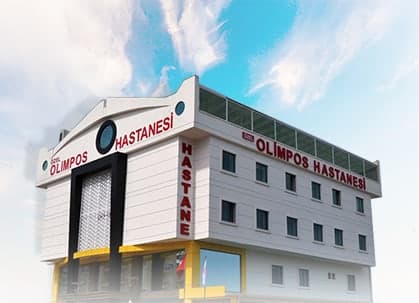
Olimpos Hospital is a private hospital in the Konyaaltı district of Antalya, on turkey's Mediterranean coast. Its website says it grew out of a union of 15 specialist physicians formed in 2006. It states that it became a hospital in 2011 and now serves from a new, large building. For an orthopedic patient comparing each orthopedic hospital Antalya offers, Olimpos Hospital is a compact, surgery-focused option rather than a giant campus.
Where it is and what it is
The hospital stands on Çamlık Caddesi in the Öğretmenevleri neighbourhood of Konyaaltı, a residential part of Antalya very close to the beaches. The hospital describes natural forest behind the building that stretches towards the sea, and notes that there is no public hospital around it. For a patient, the stay can feel closer to a coastal holiday town than to a big-city medical district.
The website gives the capacity of Olimpos Hospital as 67 beds with suite rooms, standard patient beds and observation beds. It lists about 5,000 m² of indoor premises and 3 operating rooms, which it describes as suitable for all types of surgical operations. Two ambulances are listed, with a direct line to the national 112 emergency centre. These are the hospital's own figures, and they are modest compared with the large university campuses of Istanbul or Ankara. Modest does not mean weak, but it does mean that you should ask early whether your case fits.
The orthopedics and traumatology unit
The Olimpos Hospital orthopedics and traumatology page lists sports injuries and knee arthroscopy, spinal surgery, pediatric orthopedics, foot and tarsus surgery, surgical treatment of hip, knee and shoulder arthritis with joint replacement, trauma care, hand and upper-limb surgery and nerve compression syndromes such as carpal tunnel, and its methods include microsurgical replantation of severed limbs. The page also gives outpatient polyclinic hours of 09:00 to 17:00 on weekdays and 09:00 to 12:00 on Saturdays. It says patients who need urgent treatment are seen on weekdays at any hour.
The unit is presented as a general orthopedic service with a wide scope, not as a single-procedure centre. If you are researching orthopedics in turkey as a whole, this is the kind of hospital where the breadth of the department is the main point. The detail of each technique, implant choice and surgeon experience is not published on the page, so those answers come from a case review.
Other departments around orthopedics
The site lists 29 medical units, including anaesthesia and reanimation, radiology, physical therapy and rehabilitation, an emergency department, general intensive care, neurosurgery, internal medicine, cardiology and plastic and reconstructive surgery. Orthopedic patients usually touch four of these: radiology for scans, anaesthesia for the operation, intensive care if needed and rehabilitation afterwards. Each is covered further down this page.
Why an international patient might consider it
There are several practical reasons. The hospital website runs in English, Turkish, Russian and German. It has a dedicated health tourism page and an online price-request button, and it lists insurance providers that include foreign assistance companies. Antalya itself is a major tourist city in turkey, with an international airport, many hotels and a mild climate for much of the year. Together, these make planning easier than in a hospital with no international desk.
There are also limits. The site does not publish international accreditation, does not state implant brands, does not describe robotic or navigation systems and does not publish outcome data. Those gaps are normal on hospital websites. Treat Olimpos Hospital as a candidate to be checked, not as a decision made. Orthopedics Abroad can pass your records to the hospital through our network and ask the missing questions on your behalf; see all hospitals in our network and the Antalya city page to compare context.
How to read this profile
Everything here about Olimpos Hospital comes from the hospital's own pages, listed in the references. Where the site is silent, this page says so instead of guessing. We are a coordination platform and not the hospital. Olimpos Hospital is available through Orthopedics Abroad's network. Decisions about your treatment are made by the treating surgeon after reviewing your scans and history. If your case is urgent, call local emergency services first and do not travel.
History and ownership context
According to its about page, the company that owns Olimpos Hospital was founded in 2006, when 15 specialist physicians formed a union to establish a private hospital. The page says the group went through a transformation from 2010 and converted into a hospital in 2011, now serving from a new building.
The hospital also states that the group founded the biggest private surgical medical centre in Antalya and that it is the biggest hospital in its area. Those are the hospital's own statements. We cannot verify them independently, so read them as its positioning. The website does not say that Olimpos Hospital belongs to a larger hospital group or a university.
The origin as a physicians' union is a useful clue. It suggests a hospital built around practising specialists rather than around a corporate chain, though the site does not say how the clinical staff are employed today. If it matters to you, ask who your operating surgeon will be. Ask whether that surgeon works at Olimpos Hospital full time and who covers you after surgery.
Campus and location character
The hospital sits in Konyaaltı, a district on the western side of Antalya known for its long beach and residential streets. The hospital's own text places it in the centre of the Konyaaltı residential area, very close to the beaches, with natural forest behind the building. The building has about 5,000 m² of indoor space, which is a compact footprint. A smaller building can mean shorter walks between your room, imaging and the operating theatre, but it also means fewer sub-specialty departments than a large university campus.
Beds and rooms
The website gives the hospital 67 beds, with suite rooms, normal patient beds and intensive care units, plus patient observation beds. It does not say how many of the beds are single rooms or how many are used for orthopedics. For a companion who wants to stay, ask the coordinator whether a companion bed is available in your room category.
Operating rooms and anaesthesia
The hospital reports 3 operating rooms that it describes as suitable for all types of surgical operations. Its anaesthesia and reanimation page lists four approaches: general anaesthesia, spinal and epidural anaesthesia, nerve block anaesthesia for limb surgery and local anaesthesia for small areas. The department states that it covers all surgical operations around the clock and supports critical care, including trauma patients and post-operative monitoring.
Nerve blocks are relevant to orthopedics because they are widely used in limb surgery to reduce pain after the operation. The site mentions the technique but does not describe how the hospital uses it for each procedure. Raise it with the anaesthetist during your pre-operative assessment.
Intensive care
Olimpos Hospital's about page lists intensive care units for newborns, general adult patients and coronary patients, and the anaesthesia and reanimation page says its specialists provide a 24-hour service. Different pages of the site give different bed counts for the units, so we do not quote an ICU figure. If you may need close monitoring after surgery, for example with heart disease, diabetes or a lung condition, ask in writing how many adult ICU beds are available and which specialist covers them.
Radiology and laboratory
The radiology page lists a 1.5 Tesla MRI scanner, a CT system described as 2 x 64 multislice, ultrasound and Doppler, bone densitometry, mammography, conventional radiological applications and an interventional radiology angiography (DSA) unit. A biochemistry laboratory is also listed among the units. For an orthopedic patient, MRI and CT matter for planning joint, spine and fracture surgery, and bone densitometry matters when bone quality affects the choice of implant.
Rehabilitation
The physical therapy and rehabilitation department lists methods such as heat, cold, electrical currents and exercise, along with extracorporeal shock wave therapy and a continuous passive motion device that the site links to knee replacement recovery. Rehabilitation is where results are consolidated, and you can read more in our rehabilitation guide.
Quality and safety systems
The pages we reviewed do not name an international accreditation, a quality certificate or an award. They do show that the hospital presents itself as a private hospital, lists insurance providers and links its emergency centre to the national 112 centre. The site menu also lists a Quality Management Unit page that we have not relied on, so ask for the current licence and any certificates in writing.
Insurance arrangements
The insurance page of Olimpos Hospital lists Turkish private health insurers, complementary insurers and a separate group of foreign assistance providers. This does not mean your policy will pay for orthopedic surgery abroad. Policies differ, and pre-authorisation is normally needed, so check your cover before you travel.
Photos of Olimpos Hospital
Orthopedics and traumatology at Olimpos Hospital
The orthopedics and traumatology unit at Olimpos Hospital covers the general adult and paediatric orthopedic spectrum, according to the unit's own page. Its treatment areas are described below in plain words together with what you should ask about each.
Sports injuries and knee arthroscopy
The unit names sports injuries and knee surgery by arthroscopy first, and lists all kinds of arthroscopic intervention among its methods. For knee arthroscopy Antalya patients should know how it works. A small camera and fine instruments go through small incisions to look inside the joint and treat problems such as meniscus damage. You can read how it works on our knee arthroscopy page. The site does not list ligament reconstruction or cartilage techniques by name. If you have a torn ligament, ask whether the surgeon performs that operation routinely.
Joint replacement in Antalya
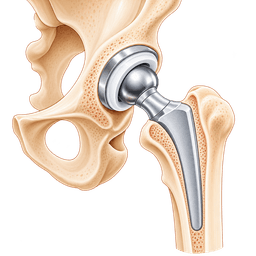
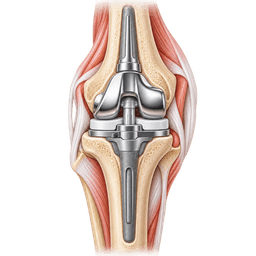
The page lists surgical treatment of hip, knee and shoulder arthritis, naming total hip, knee and shoulder arthroplasty. These are the replacement operations covered on our pages for total hip replacement, total knee replacement and total shoulder replacement.
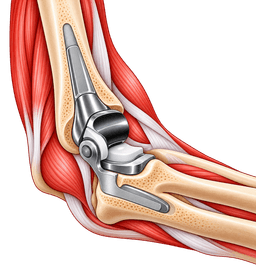
The page also lists fixation of joint prostheses at the hip, elbow, finger and shoulder, which is why total elbow replacement appears in our list. The unit does not state which implant brands, fixation methods or approaches it uses, nor whether robotic assistance is available. Those are fair questions to put to the surgeon.
If you want an idea of the cost structure, read our total knee replacement cost guide and total hip replacement cost guide.
Spine surgery
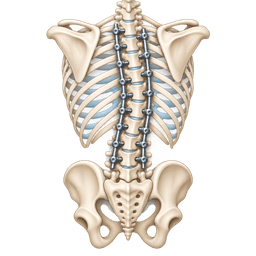
Spinal surgery is listed under kyphosis, scoliosis, spinal fractures and spinal infections. Complex deformity surgery needs spinal monitoring, experienced anaesthesia and good intensive care back-up. For background, read about scoliosis and scoliosis surgery, and see the spine area page. The site does not give details of the spinal techniques used. Ask which operations the team performs each year before sending records for a complex case.
Pediatric orthopedics
The unit lists developmental hip dysplasia, congenital clubfoot, cerebral palsy and paediatric fractures under paediatric care. Our page on hip dysplasia explains the condition in adults and children. Because children need paediatric anaesthesia and a family-friendly stay, ask specifically about the age range the hospital treats before travelling. The hospital also has paediatric and newborn units listed among its departments.
Foot and ankle
Foot and tarsus surgery is listed as a treatment area, without specific operations. Common problems in this area include bunions and heel pain; see foot and ankle for an overview. The rehabilitation department's shock wave therapy is described for conditions such as heel spurs and plantar fasciitis, which is relevant to non-surgical care of the heel.
Trauma and fractures
Trauma care is listed, covering surgical and non-surgical treatment of fractures and contusions, and the hospital has an emergency department. For hand fractures that need planned surgery, the relevant page is hand and wrist fracture surgery. The site does not describe which other fractures are treated surgically or conservatively, so this is a topic for the case review.
Hand and upper-limb surgery
The unit lists hand and upper-extremity surgery (including fractures and muscle, tendon, vein and nerve injuries), microsurgical replantation of severed limbs and the treatment of peripheral nerve compression, with carpal tunnel, ulnar tunnel and posterior interosseous syndromes named. Our pages on carpal tunnel syndrome and carpal tunnel release describe the usual path. See also hand and wrist.
Orthopedic services at a glance
| Area listed by the unit | What the site says | What to ask |
|---|---|---|
| Sports and knee arthroscopy | Listed as a core area | Which ligament and meniscus operations are routine |
| Hip, knee, shoulder replacement | Total hip, knee and shoulder arthroplasty named | Implant brand, approach, revision experience |
| Spine | Kyphosis, scoliosis, fractures, infections | Annual volume, monitoring, ICU support |
| Pediatric orthopedics | Hip dysplasia, clubfoot, cerebral palsy, fractures | Age range, paediatric anaesthesia |
| Foot and tarsus | Listed generally | Which operations are performed |
| Trauma and fractures | Fracture and contusion care listed; emergency department | Planned versus acute cases |
| Hand and microsurgery | Hand and upper-limb surgery, replantation, nerve compression | Microsurgical team availability |
What the unit page does not tell you
The page does not publish surgeon numbers, annual case volumes, infection rates, implant brands or patient outcomes. It also does not list a robotic system or surgical navigation. We do not assume any of these exist. A reputable hospital will answer these questions directly, and you can use our questions to ask before surgery abroad as a checklist.
From request to plan
The first step is a records review. You send scans, reports and a short history. The Olimpos Hospital orthopedics team then decides whether surgery is appropriate, what type is needed and whether the hospital suits your case. Our medical record review guide explains what to prepare. Many patients are advised to keep treating a problem conservatively, and an honest review will say so.
Olimpos Hospital: accreditations, technology and facilities
Accreditations
- The hospital pages we reviewed do not name an international accreditation such as JCI, and this page does not assume one.
- The site presents Olimpos Hospital as a private hospital in Antalya; ask the coordinator for the current licence document.
- The site lists insurance providers, including foreign assistance companies, which is a commercial arrangement and not a quality certificate.
- Ask for any quality certificates in writing before booking, and check them with the issuing body.
Technology
- 1.5 Tesla MRI scanner, according to the radiology page.
- CT system described as 2 x 64 multislice.
- Ultrasound and Doppler ultrasound.
- Interventional radiology angiography (DSA) unit, mammography and bone densitometry.
- Extracorporeal shock wave therapy for tendon and heel problems.
- Continuous passive motion device for knee replacement recovery.
- Online appointment system and an online laboratory results portal.
Facilities
- 67 beds with suite rooms, normal patient beds, intensive care units and observation beds, according to the about page.
- About 5,000 m² of indoor premises.
- 3 operating rooms described as suitable for all types of surgical operations.
- Intensive care units for adults, coronary patients and newborns; bed counts differ between site pages.
- 2 ambulances with a direct link to the national 112 emergency centre.
- Emergency department and a physical therapy and rehabilitation department.
- Biochemistry laboratory and a radiology department.
- Location in the centre of the residential Konyaaltı area of Antalya, very close to the beaches.
International patient services
- Dedicated health tourism page on the hospital website.
- Website in English, Turkish, Russian and German.
- Patient transfer and tourist accommodation facilities appear as health tourism menu items; we did not find details.
- Insurance list that includes foreign assistance providers.
- Phone and WhatsApp contact lines, online appointment, doctor consultancy and an ask-price button.
Orthopedic procedures available at Olimpos Hospital
8 procedures listed from the hospital's own pages. Hover to pause, select one to read about it.
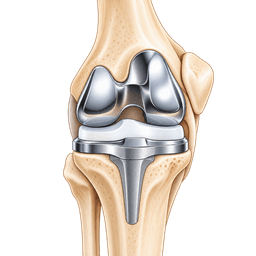
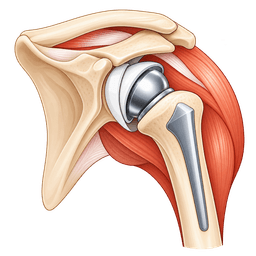
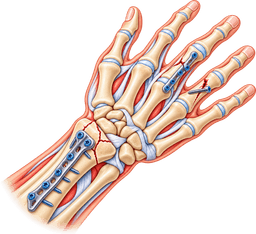
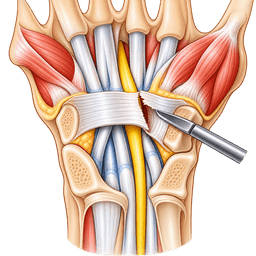
International patients at Olimpos Hospital
An international orthopedic patient is looked after by Olimpos Hospital through its health tourism service and by Orthopedics Abroad as a coordination layer. The hospital's own site has a health tourism section with patient transfer and accommodation facilities pages, a WhatsApp line and an ask-price button. It does not publish the number of interpreters, the languages spoken by clinical staff or the details of its international desk, so confirm those directly.
Step 1: send your records
Prepare recent MRI or X-ray images in digital form, the reports, a list of medications and allergies, previous operations and a short description of your symptoms. Send them through our quote request. We forward them to Olimpos Hospital, and the orthopedic team replies with an opinion on whether surgery is advisable. This can often be done remotely, although a remote opinion is not a diagnosis and may change after an in-person examination.
Step 2: agree the plan
You should receive the proposed procedure, the expected length of stay, what is included and what is not. Our treatment planning guide explains the typical content. Ask about the implant, the anaesthesia type and who will see you after the operation.
Step 3: travel and admission
Antalya has an international airport, and the hospital's transport page lists public bus and tram options and HAVAŞ airport shuttles. Plan to arrive a day or two before surgery for examinations and anaesthesia assessment. See travel and accommodation and hospital admission.
Step 4: stay and recovery
Length of stay depends on the operation. Joint replacement and spine surgery usually need a longer stay in Antalya than arthroscopy or hand surgery. Your surgeon decides when it is safe to fly. Read flying after surgery before booking a return flight.
Step 5: follow-up at home
Arrange follow-up with a surgeon or physiotherapist at home before you leave, and carry the operation report and implant details. See follow-up after returning home.
What to organise before travel
| Item | Why it matters |
|---|---|
| Digital scans and reports | Allow a remote opinion before you travel |
| Medication and allergy list | Needed for the anaesthesia assessment |
| Insurance details | Check cover and pre-authorisation for surgery abroad |
| Written plan | Records the procedure, implant and stay length |
| Home follow-up | Physiotherapy and a local surgeon for check-ups |
| Companion plan | Someone to help with transfers and early recovery |
Honest limits
Olimpos Hospital is a compact hospital in Antalya with 3 operating rooms, and the Olimpos Hospital traumatology service works within that capacity. For joint replacement Antalya has several options, and here it is available only as far as the unit confirms for your case. Very complex revisions, rare tumours or patients who need extensive multi-specialty back-up may be better served elsewhere. Orthopedics Abroad does not own the hospital, does not promise outcomes and cannot treat emergencies. If you have a fresh injury, severe infection or sudden loss of function, seek care locally first.
Is Olimpos Hospital right for your orthopedic surgery?
Olimpos Hospital may suit adults and families who want planned orthopedic care in a quiet coastal district of Antalya, in a compact hospital. It is not a ranking claim, and it does not replace a proper assessment of your case.
Patients it may suit
The unit's listed scope fits planned procedures such as knee arthroscopy, hip or knee replacement, hand surgery for nerve compression and the care of fractures that are stable enough to travel with. Patients who want to combine recovery with a stay in a resort city may also find the location attractive. A family travelling with a child who has a paediatric orthopedic problem should ask whether the unit sees that age group.
What to check before choosing it
Use the following questions in writing, and compare the answers with those of other hospitals in our hospital list.
- Case complexity. Has the team handled your exact operation recently? Complex deformity, revision or tumour surgery needs special experience.
- Surgeon fit. Who will operate, and are they present for follow-up? Ask for the surgeon's training and annual volume for your procedure.
- Implants. Which brand and model, and will you receive an implant card?
- ICU and medical back-up. If you have heart, lung or kidney disease, ask how many adult ICU beds exist and which specialists are available.
- Language. The website exists in four languages, but clinical communication needs confirmation.
- Follow-up. What happens if there is a wound problem after you fly home?
- Certificates. No international accreditation is named on the pages we reviewed, so ask what quality systems apply.
When another option may be better
If you need robotic joint replacement, a large academic multi-disciplinary team, or a hospital with a published international accreditation, the pages reviewed do not confirm those at Olimpos Hospital. Browse the Antalya hospitals and the turkey orthopedics overview to compare. If your condition is mild or has not been tried with physiotherapy, a conservative plan at home may serve you better than surgery abroad.
Conditions often discussed
Typical enquiries involve knee osteoarthritis, hip osteoarthritis and carpal tunnel syndrome. See also the knee and hip pages for background.
A safe decision process
Get a second opinion if possible, collect all answers in writing, check your insurance, and agree a follow-up plan before you buy tickets. Treatment abroad is for stable or planned patients. In an emergency or after a fresh severe injury, go to the nearest local hospital first.
Getting to Olimpos Hospital in Antalya
Olimpos Hospital Konyaaltı sits in the western coastal district of Antalya, and can be reached from Antalya Airport by taxi, shuttle or public transport. The hospital's own transport page describes public routes, and the simplest way to plan is to ask the coordinator about a transfer.
The district
Konyaaltı is a mostly residential area with a long beach, parks and a mix of hotels and apartments. The hospital's address is Öğretmenevleri Mah. Çamlık Cad. No: 48. It is a residential district rather than the old town of Kaleiçi, which some visitors may find easier for recovery. The hospital describes natural forest behind the building, stretching towards the sea.
From the airport
The hospital's transport page (last updated in 2023, so confirm current routes) lists, from the airport, bus 600 with a bus transfer at the MarkAntalya shopping mall or at 100. Yıl, the T1A tram with a bus transfer on the MarkAntalya route, and HAVAŞ airport shuttles. From the intercity bus station it names lines TK36 and TCS46, with stops from which the hospital is a 5-minute walk. We do not quote travel times or distances because they depend on traffic and the route. A taxi or arranged transfer is usually the easier choice after surgery or when you walk with crutches.
Where to stay
The site has an accommodation facilities page under health tourism, which we did not rely on for details. Antalya has many hotels and apartments, and Konyaaltı has choices near the beach and near the hospital. Choose a place with a lift, a bathroom with a walk-in shower and easy access to a pharmacy if you have a joint replacement. Our travel and accommodation guide and companion guide list practical points.
Climate and recovery season
For orthopedic surgery in Antalya, season matters: Antalya has hot summers and mild winters. Very hot weather can make walking with crutches or wearing a brace tiring. Swelling after surgery can increase in heat, so many patients prefer spring or autumn. Ask your surgeon whether sea or pool use is allowed and when, since wounds must be fully healed first.
Contact and visiting hours
The hospital publishes a main number, +90 242 228 09 09, a WhatsApp line and an online appointment system. The orthopedics polyclinic is listed on the unit page as open on weekdays from 09:00 to 17:00 and on Saturdays from 09:00 to 12:00. Always confirm the date and time of your consultation in writing.
Before you set off
Check passport and visa rules, carry your records and medication, and read hospital admission. For a wider view of the city, see the Antalya page.
Sources for this Olimpos Hospital guide
Peer-reviewed guidance and institutional sources used to write and review this page.
- 01Orthopedics and Traumatology
Olimpos Hospital, 2026
https://www.olimposhastanesi.com.tr/ortopedi-ve-travmatoloji-10
- 02
- 03
- 04
- 05
- 06
- 07
- 08Physical Therapy and Rehabilitation
Olimpos Hospital, 2026
https://www.olimposhastanesi.com.tr/physical-therapy-and-rehabilitation
- 09
- 10
Olimpos Hospital: frequently asked questions
Does Olimpos Hospital treat international patients?
Which orthopedic treatments does Olimpos Hospital offer?
Is Olimpos Hospital accredited?
How many beds and operating rooms does Olimpos Hospital have?
How do I send my records to Olimpos Hospital?
Can I have a remote consultation before travelling?
Does Olimpos Hospital use robotic surgery?
Are there imaging and rehabilitation services on site?
Which insurance does Olimpos Hospital accept?
Where is Olimpos Hospital located?
How long should I stay in Antalya after surgery?
What if I have an emergency or a fresh injury?
Where can I read about the cost of a procedure there?
Other partner hospitals
Antalya Yaşam Hospital
Private hospital in Muratpaşa, Antalya, with an orthopedics and traumatology department

BHT Clinic Istanbul Tema Hospital
Large private hospital in Atakent, Küçükçekmece, with an orthopedics and traumatology unit

Biruni University Hospital
University hospital in Küçükçekmece, Istanbul, with a published orthopedics and traumatology department