

Hip Arthroscopy in Turkey
Hip arthroscopy in Turkey is keyhole surgery that treats the inside of the hip joint through small cuts, using a camera and fine instruments. It reshapes impingement bone, repairs the labrum and smooths damaged cartilage, and most patients plan a 5-day day-case trip.
Partner package
v2 · valid to 30 janv. 2027$4,500 – $7,500
Hip Arthroscopy - All-inclusive package
- In Turkey
- 5 days
- Hospital
- Day case
- Follow-up
- 12 months
Key takeaways
- 1Hip arthroscopy treats problems inside the hip joint through two to four small cuts, using a camera and thin instruments instead of one large incision.
- 2The operation takes about 90 minutes under general anaesthesia, and you return to your hotel the same day, so you have no hospital night.
- 3Most patients who plan hip arthroscopy in Turkey stay about 5 days, which covers assessment, surgery, a first physiotherapy session and a check before flying.
- 4You use crutches for about 2 to 4 weeks, and main recovery lasts roughly 16 weeks, with return to hard sport often taking 4 to 6 months.
- 5Surgery suits active adults with impingement, a labral tear or similar damage who still have pain after physiotherapy, and it is poor value for advanced arthritis.
- 6Hip arthroscopy does not treat severe hip dysplasia well, and your surgeon may advise a different operation if your socket is very shallow.
- 7Risks are uncommon but real, including numbness around the groin, stiffness, heterotopic bone, infection, blood clots and symptoms that do not improve.
Hip arthroscopy in Turkey: an overview
Hip arthroscopy is keyhole surgery that treats problems inside the hip joint through small cuts, using a camera and thin instruments. This page explains hip arthroscopy in Turkey: what the surgery does, who needs it and how a 5-day day-case trip works. It is general information, not personal medical advice, and your own surgeon's instructions always come first.
What does hip arthroscopy fix?
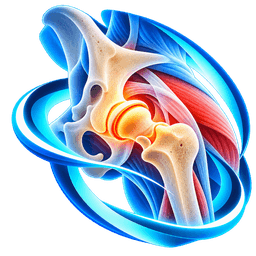
Your hip is a ball and socket joint. The ball is the top of the thigh bone. The socket is a cup in the pelvis. A rim of tough cartilage, called the labrum, runs around the edge of the socket. It seals the joint and helps it glide. In some people, extra bone on the ball or the socket rubs against the labrum when the hip bends. Doctors call this femoroacetabular impingement. Over time, the rim tears and nearby cartilage frays. You feel a deep groin ache, a catch, or pain when you sit, squat or twist.
Your surgeon pulls the hip joint apart a few millimetres with a traction table. They pass a camera and small tools through small cuts, called portals. They then trim the extra bone, repair or tidy the labrum and smooth rough cartilage. The operation treats femoroacetabular impingement, a hip labral tear, some cases of hip bursitis and selected cases of hip dysplasia. It does not cure advanced arthritis.
What are the alternatives?
Surgery is rarely the first step. Most people start with activity changes, a physiotherapy plan that builds hip and core strength, simple pain relief and sometimes an injection. If you have worn cartilage across the joint, a joint replacement may fit better, such as anterior hip replacement. If a labral tear is the main issue, hip labral repair may describe your operation more closely.
What does the Turkey pathway look like?
Most people spend 5 days in Turkey. You arrive on day 1, see the surgeon on day 2, have surgery on day 3 and go back to your hotel the same evening, so you have 0 hospital nights. You then attend physiotherapy and a wound check and fly home around day 5. Main recovery lasts about 16 weeks. We coordinate your records, hotel, transfers and 12 months of remote follow-up. The hip arthroscopy procedure guide covers the surgical details.
Why patients choose hip arthroscopy in Turkey
Patients choose hip arthroscopy in Turkey because they can reach a keyhole hip surgeon quickly, have the operation as a day case and follow one organised pathway from MRI review to final check. The surgeon's skill matters more than the country, so the sections below explain what we offer and where the limits lie.
Why do patients pick a hip surgeon in Turkey?
Hip arthroscopy is a technical operation with a long learning curve. Good results depend on correct bone reshaping and careful repair. Surgeons who do many hip arthroscopies each year tend to see fewer incomplete corrections and revisions. Volume does not prove quality, so ask how many hip arthroscopies the surgeon performs yearly and what they do when the socket is shallow. Our surgeons page explains how we select teams.
Which techniques and equipment do teams use?
The surgeon places the patient on a traction table and uses live X-ray images to check the bone. Cuts are about 1 centimetre long. The team uses a camera, shavers, burrs, suture anchors and, in some cases, a small cut or portal to reach the outer joint space. Anchors are tiny screws that hold the labrum to the socket rim. Some surgeons also close the joint capsule with stitches to keep the hip stable. Your surgeon picks the method for your hip shape. If you search for hip impingement surgery in Turkey, ask which parts of the bone the surgeon plans to reshape and why.
Is hip arthroscopy right for every sore hip?
No. Results are best in active adults with a clear pattern of impingement or a labral tear and little arthritis. People with advanced arthritis often get poor relief and may need a joint replacement later. A very shallow socket, called dysplasia, can make arthroscopy unwise unless the surgeon also addresses stability. An honest surgeon will say no when surgery is unlikely to help. See also hip labral repair in Turkey for a closely related operation.
Why does one coordinated pathway help?
- One coordinator gathers your MRI, X-rays and physiotherapy notes.
- An interpreter joins you for consent and discharge talks.
- A written package states what the price includes.
- Direct flights from many European and Gulf cities take 3 to 5 hours.
- Remote follow-up continues for 12 months, with video reviews of your movement.
People who search for the best hospitals for hip arthroscopy in Turkey should check the surgeon first and the building second. Hip arthroscopy abroad is not always the best plan, and staying home may be simpler if a trusted local hip surgeon can see you soon, because rehabilitation after this operation needs steady local physiotherapy for months.
Accredited hospitals
JCI or equivalent accreditation with dedicated international patient departments.
High-volume surgeons
Fellowship-trained subspecialists who perform this operation weekly.
Fixed-price packages
Surgeon, implants, hospital stay, transfers and follow-up in one price.
Direct flights
Istanbul connects to 300+ destinations; Antalya and Izmir add coastal recovery.
What the hip arthroscopy package in Turkey includes
Inclusions are contractually fixed with the partner hospital. Compare like with like when you evaluate other quotes.
Included
- Surgeon and anaesthetist fees
- Surgical consumables
- Day-case admission
- Pre-operative tests
- In-hospital physiotherapy
- Airport and hospital transfers
- Coordinator and translation
- 12-month remote follow-up
Not included
- Flights
- Hotel
- Companion costs
- Travel insurance
Other packages
- Hip Arthroscopy - Premium package$5,200 – $8,650
Hip arthroscopy cost in Turkey compared with other countries
Hip arthroscopy cost in Turkey depends on how much work your surgeon does inside the joint, the implants and anchors they use, the facility and the length of your stay, and it is usually well below home prices. For live numbers, use the price comparison chart on this page and read our hip arthroscopy cost guide.
What drives the cost of this operation?
Several choices change the total. Reshaping the bone takes less time than repairing a torn labrum with several anchors. Each anchor, a capsule closure or a cartilage procedure adds consumables and theatre time. General anaesthesia, the anaesthetist, the theatre and the surgeon fee all count. A traction table, a camera system and live X-ray equipment are fixed costs for the hospital. If you also need an MRI, the cost rises. Because you leave hospital the same evening, the hotel and rehabilitation often add more than the operation does.
How is a Turkey package built?
A package usually bundles the surgeon, day-case theatre, anaesthesia, anchors and consumables, a first physiotherapy session, a check visit, transfers, hotel nights, a coordinator and an interpreter. Ours also includes 12 months of remote follow-up. We give you a written, fixed-price package with validity dates, so you can compare it line by line with a quote at home.
Why is Turkey lower without lower safety standards?
Staff wages, property costs and many supplies cost less in Turkey than in the UK, Germany or the US. A favourable exchange rate also helps visitors who earn in pounds, euros, dollars or Gulf currencies. Private hospitals treat many international patients, which spreads fixed costs. A lower price does not mean lower safety by itself, but standards differ between hospitals. Licensing and surgeon checks matter more than the quote. Read our Turkey orthopedics overview for context.
What should you compare between quotes?
- Whether the quote names the planned steps, such as bone reshaping, labral repair or capsule closure.
- How many anchors it assumes, and whether extra anchors cost more.
- Whether a hip surgeon with arthroscopy training will operate.
- Whether physiotherapy, crutches and a check visit are included.
- What the quote says about a second operation if symptoms continue.
Which hidden costs should you ask about?
Ask about extra anchors, cartilage treatments, a repeat MRI, crutches, a cold therapy device, a hip brace, medicines after discharge and extra hotel nights. Ask whether a deposit comes back if the surgeon decides surgery is unsuitable. A good quote has no surprises.
Typical self-pay range by country
Hip arthroscopy in Turkey vs the UK, US and Germany
Hip arthroscopy in Turkey differs from surgery in the UK, US or Germany mainly in waiting time, cost structure, surgeon choice and how follow-up works. The keyhole technique is similar everywhere. The table gives a fair, qualitative comparison, and the notes below explain when staying home is the better choice.
| Factor | Turkey | UK | US | Germany |
|---|---|---|---|---|
| Waiting time | Usually weeks, based on MRI and travel | Public waits can last many months | Short with insurance | Usually short |
| Cost structure | Single package, paid by you | Free in the NHS, or private fees | Insurance plus out-of-pocket costs | Insurance or private fees |
| Surgeon choice | Named hip surgeon in private care | Limited, often through specialist centres | Wide, many hip arthroscopy specialists | Wide |
| Technology | Traction table, live X-ray, anchors | Similar in specialist units | Widely used, high volume | Similar in specialist units |
| Aftercare | Early review, then remote follow-up | Local physiotherapy and reviews | Local physiotherapy and reviews | Local physiotherapy and reviews |
| Legal position | Turkish law applies, and insurance may differ | Home legal system | Home legal system | Home legal system |
How does the wait compare?
Hip arthroscopy is often a lower priority than joint replacement in public systems, so waits can run long. Meanwhile, you may lose fitness and confidence in the hip. In Turkey, your date depends on records, tests and travel plans, so many people operate within weeks. A quick date should still follow a careful diagnosis and a fair trial of physiotherapy.
How do surgeon skill and technology compare?
Hip arthroscopy specialists work in all four countries. The US has the largest volume. Some UK and German units focus on hip preservation, which combines arthroscopy with other bone surgery. In Turkey, the best technique is the one your surgeon performs often and does well. Ask for the number of cases each year and the plan if the socket is shallow.
How do aftercare and travel logistics compare?
Recovery from hip arthroscopy relies on months of physiotherapy. At home, your therapist is close and your surgeon can see you easily. Abroad, you rely on a local therapist and remote reviews. Plan this before you book, and send your therapist the written protocol early.
What are the legal and insurance differences?
If something goes wrong, you deal with a hospital in another country. Turkish law and complaint routes apply, and your home insurer may not cover complications abroad. Check your travel cover and ask what happens if you need a second operation.
When is staying home the better choice?
Staying home is often better if a local specialist can operate within weeks, if you have significant arthritis, if your socket may be dysplastic or if you cannot arrange regular local physiotherapy. Our guide to questions to ask before surgery abroad helps you decide.
Is hip arthroscopy in Turkey right for you?
Hip arthroscopy in Turkey suits active adults with a confirmed impingement or labral problem, pain that persists after a proper physiotherapy trial and a hip with little arthritis. It is not right for every sore hip. A surgeon must confirm that the joint, not the spine, the pubic area or a tendon, causes your pain.
Who is a good candidate?
- Deep groin pain, catching or clicking that limits sport, sitting or squatting.
- An MRI or MR arthrogram that shows a labral tear or impingement bone shape.
- Pain that lasts longer than 3 to 6 months despite physiotherapy and activity changes.
- Little or no arthritis on a standing X-ray.
- Realistic goals and a plan for several months of rehabilitation.
Who should not travel for surgery?
Check with your own doctor first if you have uncontrolled diabetes, a heart condition, a clotting problem or an active infection, or you take strong blood thinners. Advanced hip arthritis, a very shallow socket and severe stiffness can make arthroscopy a poor choice. People over about 50 with early arthritis have mixed results, so surgeons look closely at the joint space. If you cannot manage crutches or physiotherapy for weeks, delay surgery. If your pain comes from arthritis, read about total hip replacement in Turkey.
What should you try first?
Most guidelines suggest a structured physiotherapy programme for at least 3 months, avoiding deep flexion and twisting, sensible training loads, simple pain relief and sometimes an image-guided injection. Surgery makes sense when these steps fail and your scans match your symptoms.
What questions should you ask your surgeon?
- Do my scans show impingement, a tear or arthritis that changes my odds?
- Which parts of the hip will you reshape or repair?
- How many hip arthroscopies do you perform each year?
- Do you close the capsule, and how do you protect hip stability?
- How will you handle a complication after I fly home?
Our medical record review guide explains how we check suitability.
Best cities in Turkey for hip arthroscopy
Our current partner hospitals for this procedure are in Istanbul, Izmir and Antalya. Ankara is available on request. The best city depends on your flight, your preferred pace and your surgeon. After surgery you use crutches for 2 to 4 weeks, so a short transfer and a flat, quiet hotel matter more than sightseeing.
| City | Best known for | Recovery setting | Transfers |
|---|---|---|---|
| Istanbul | Most flights, widest choice of surgeons | City hotel near the hospital | Road transfer from IST or SAW |
| Izmir | Aegean coast, mild climate | Quiet seaside hotel | Transfer from Adnan Menderes Airport |
| Antalya | Mediterranean resort setting | Resort-style hotel | Transfer from Antalya Airport |
| Ankara | Major university hospitals, on request | Calm city stay | Transfer from Esenboga Airport |
Why choose hip arthroscopy in Istanbul?
Hip arthroscopy in Istanbul gives you the most flight options and the largest choice of surgeons. Istanbul Airport (IST) and Sabiha Gokcen (SAW) both serve the city. The streets are hilly and busy, so use a driver for anything beyond a short, flat walk on crutches. See our Istanbul page.
When does Izmir make sense?
Izmir suits people who want a calm recovery by the sea. The coastal promenade is flat, which helps early gentle walking with crutches. Hotels often have lifts and step-free access. Ask your coordinator about the hospital and surgeon, and read the Izmir page.
What about Antalya and Ankara?
Antalya offers a warm Mediterranean setting, which suits stiff muscles, but summer heat can tire you on crutches. Ankara has large university hospitals and a quieter pace, and winters can be icy. Availability for hip arthroscopy in Ankara depends on the surgeon, so ask us first. Read the Antalya page and the Ankara page.
In every city, we arrange transfers and your hotel, so you only need to bring one bag and your crutches.
Hospitals offering hip arthroscopy in Turkey
Antalya Yaşam Hospital
Private hospital in Muratpaşa, Antalya, with an orthopedics and traumatology department
BHT Clinic Istanbul Tema Hospital
Large private hospital in Atakent, Küçükçekmece, with an orthopedics and traumatology unit
Biruni University Hospital
University hospital in Küçükçekmece, Istanbul, with a published orthopedics and traumatology department
Surgeons for hip arthroscopy in Turkey
Independent profiles with training, memberships, volumes and hospital affiliations.
Preparing for hip arthroscopy in Turkey
Good preparation for hip arthroscopy in Turkey starts about four weeks before you fly and focuses on the right scans, a strong core and a plan for crutches. Your fitness before surgery shapes your recovery afterwards. Always follow your surgeon's instructions over general advice.
Which records and imaging should you send?
- Your MRI or MR arthrogram, as image files and the report.
- Standing X-rays of the pelvis and a side view of the hip, with any CT scan if you have one.
- Notes on physiotherapy, injections and medicines you have tried, with dates.
- A list of all medicines, allergies and earlier operations.
- Your height, weight and any history of blood clots or hypermobility.
Our medical record review checks your file before you book, and we answer within 48 hours.
What health checks come first?
Expect blood tests, an ECG if needed and a short health review for general anaesthesia. Treat any skin problem near the hip or groin before travel. Good diabetes control reduces infection risk. If you smoke, stopping at least 4 weeks before surgery helps healing, and ask your surgeon about nicotine products, which can also affect tissue repair.
What about medicines and blood thinners?
Never stop or change a medicine on your own. Ask your surgeon about blood thinners, aspirin, anti-inflammatory tablets and herbal products. If you take birth control or hormone therapy, ask about clot risk. Your surgeon and your own doctor must agree on a plan.
How can you prepare your body?
Prehabilitation means exercise before surgery. Practise glute bridges, side-lying leg lifts, core holds and gentle hip mobility without forcing painful positions. Learn to walk with crutches on flat ground and on stairs, so you do not learn under pain. Aim to stay as fit as your hip allows, because strong muscles speed your return.
What should you pack and set up at home?
Pack loose trousers, slip-on shoes, a small bag you can carry across your body, your medicine list and your crutches if you own them. At home, move items to waist height, remove loose rugs, set up a seat for the shower and book a local physiotherapist before you travel. Arrange help with shopping and cooking for 2 weeks.
What is the 4-week countdown?
- Four weeks before: send your MRI, X-rays and notes, and begin your strengthening routine.
- Three weeks before: finish blood tests, confirm medicine advice and check visa rules.
- Two weeks before: book flights and insurance, plan an aisle seat and arrange your local physiotherapist.
- One week before: pack, prepare your home, practise with crutches and review your treatment plan.
Your hip arthroscopy journey in Turkey: 5 days, step by step.
A typical timeline. Your coordinator adapts it to your flights, your surgeon's schedule and your recovery.
- Before you travel1Before you travel
Medical record review
Our team and a hip surgeon review your MRI, X-rays and physiotherapy history. They confirm that arthroscopy suits you and tell you which steps they expect to take.
- Before you travel2Before you travel
Planning and booking
You receive a written plan with dates, hospital, hotel and package details. You check visa rules, arrange insurance and book a local physiotherapist for your return.
- Day 13Day 1
Arrival in Istanbul
A driver meets you at the airport and takes you to your hotel. You rest, meet your coordinator and confirm the timetable for your hospital visits.
- Day 24Day 2
Surgeon assessment
You meet the surgeon, who examines your hip and reviews your scans. You sign consent, have blood tests and meet the anaesthetist and physiotherapist.
- Day 35Day 3
Surgery day
You arrive fasting and the team prepares your general anaesthetic. The operation takes about 90 minutes, and you return to your hotel the same evening on crutches.
- Day 46Day 4
First physiotherapy
The physiotherapist teaches your first exercises and checks your crutch walking. Nurses review the wounds, swelling and pain, and you rest with ice and leg raised.
- Day 57Day 5
Wound check and flight
The surgeon checks the wounds and gives written instructions. If they agree, you fly home with an aisle seat, compression stockings and your records.
- After you fly8After you fly
Early physiotherapy
Your local therapist starts within days and follows the written protocol. You send wound photos at about 2 weeks and the team replies with advice.
- After you fly9After you fly
Follow-up
Video reviews follow at about 6 weeks, 3 months and 6 months, with a 12 month check. The surgeon adjusts your exercise plan and return to sport timeline.
Your hospital stay for hip arthroscopy in Turkey
Hip arthroscopy in Turkey is a day-case operation, so you arrive, have surgery and return to your hotel the same evening with no hospital night. The operation itself takes around 90 minutes, and the whole visit usually lasts 5 to 7 hours. Details vary by hospital and surgeon.
What happens when you arrive?
You check in at the day-surgery unit on the morning of surgery. Nurses confirm your identity, allergies and medicines. The surgeon marks the correct hip, and the anaesthetist explains your options. An interpreter stays with you through these steps. You remove jewellery, change into a gown and wear compression stockings.
What anaesthesia will you have?
You have general anaesthesia, which means you sleep through the operation. The anaesthetist often adds a nerve block or local anaesthetic around the hip to ease pain afterwards. Muscle relaxation helps the surgeon open the joint space with traction. The anaesthetist chooses the plan based on your health.
What does the surgeon do, step by step?
- The team places your foot in a padded boot on a traction table and pulls the hip apart by a few millimetres.
- The surgeon makes two to four small cuts around the hip, each about 1 centimetre long.
- They insert the camera and check the cartilage, labrum and joint lining.
- They repair or tidy any torn labrum, often with small suture anchors.
- They trim extra bone from the ball, the socket rim or both until the hip moves freely.
- They smooth damaged cartilage and sometimes close the joint capsule with stitches.
- They release traction, close the skin and apply a dressing.
The operation usually takes around 90 minutes, and bigger repairs take longer.
What happens in the first hours?
You wake in recovery, where nurses check your breathing, blood pressure and wounds. Your groin may feel numb for a few hours from traction and the nerve block. A physiotherapist teaches you to stand and use crutches. Most people eat, drink and walk to the toilet before they leave.
How do teams control pain?
Pain after hip arthroscopy is usually moderate for the first days. Teams combine paracetamol, anti-inflammatory tablets if safe for you, and a short course of stronger tablets, plus ice, often with a cold therapy device. Take tablets on a schedule rather than waiting for pain to build. Tell your team early if pain rises.
When can you leave hospital?
You leave when you stand, walk with crutches, pass urine and feel comfortable. The wounds must be dry and your pain controlled. You receive written instructions, a blood clot plan and an emergency number. Read our surgery day guide and hospital admission guide.
Recovery after hip arthroscopy in Turkey
Hip arthroscopy recovery in Turkey is slower than most patients expect, with the main recovery lasting about 16 weeks. You leave hospital the same day, use crutches for about 2 to 4 weeks and fly home around day 5 once your surgeon agrees. Return to hard sport often takes 4 to 6 months.
| Phase | What you can do | What to avoid |
|---|---|---|
| Days 1 to 5 (Turkey) | Walk with crutches, gentle hip movement, ice, ankle pumps | Standing long, twisting, putting full weight on the leg if told not to |
| Weeks 1 to 2 | Exercise bike with no resistance, short walks, gentle exercises | Deep bending, crossing legs, lifting |
| Weeks 2 to 6 | Drop crutches when safe, build range, glute and core work | Forcing end range, impact, sitting low |
| Weeks 6 to 12 | Walk freely, swim, cycle, gym strengthening | Running, jumping, sudden twisting |
| Weeks 12 to 16 | Start jogging, sport drills and control work if cleared | Full contact and fast cutting sport |
| 4 to 12 months | Return to sport in steps, keep strength training | Ignoring pain, loss of motion or a limp |
How long does recovery take?
Most people need about 16 weeks for the main recovery. You can walk the same day, but your groin and hip flexor muscles stay sore for weeks. Swelling, a tight hip and a limp are common early on. The final gains in strength and sport performance often continue for 6 to 12 months.
What walking aids and precautions do you need?
You use crutches for about 2 to 4 weeks, and longer after a labral repair or a large bone correction. Your surgeon may limit weight on the leg, set a range of motion limit and advise a brace. They may also limit how far you extend or rotate the hip. Rules differ by surgeon, so follow your written plan.
How do you care for the wounds?
Keep the dressings clean and dry until your surgeon says you can shower. Stitches usually come out after 10 to 14 days, though some teams use dissolving stitches. Look at the wounds daily for redness, heat or fluid. Do not soak in a bath or pool until they close.
What physiotherapy do you need?
Exercise starts on day 1 with gentle movement and ankle pumps. A local physiotherapist should begin within the first week. They build range of motion, then glute, core and thigh strength, and finally sport-specific drills. Skipping physiotherapy is a common cause of poor results. Our rehabilitation guide explains the stages.
When can you return to work and driving?
Desk work is often possible within 1 to 2 weeks for light tasks, and at 3 to 5 weeks with a full day. Manual work may take 3 to 4 months. You can usually drive an automatic car after about 1 to 2 weeks if you have stopped strong pain tablets, and after the right leg moves freely. Check your insurer's rules.
When can you fly home safely?
Many surgeons clear patients to fly about 2 days after hip arthroscopy, once the wounds look healthy and pain is under control. Clots are uncommon but form more easily after hip surgery and long flights, so you may wear compression stockings, take a short course of blood thinner, walk every hour and drink water. Read the flying after surgery guide.
What about sport and hobbies?
Swimming and cycling often return at 6 to 10 weeks. Jogging usually starts after 3 to 4 months, and pivoting sport such as football or tennis after 4 to 6 months, if your strength is back. Your surgeon sets the timeline based on what they repaired.
Aftercare at home after hip arthroscopy in Turkey
Aftercare for hip arthroscopy in Turkey continues at home with a local physiotherapist, wound checks and reviews from your surgical team. Most people need 3 to 4 months of guided exercise, so you should book your physiotherapist before you travel. Follow the plan that your surgeon gives you.
What is the follow-up schedule?
Expect remote reviews at about 2 weeks, 6 weeks, 3 months, 6 months and 12 months, though your surgeon sets the timing. You send wound photos, short movement videos and a note on pain, catching and walking. Our follow-up guide lists what to prepare.
Do you need local physiotherapy?
Yes. A local physiotherapist should start within the first week and see you once or twice weekly for the first 6 to 12 weeks. They check range of motion, gait, glute strength and core control. Share the written protocol from Turkey on day one, because early rules differ from a standard knee or hip plan.
What about medicines, stitches and imaging?
You take pain relief for 1 to 2 weeks, tapering as you recover. Some surgeons advise an anti-inflammatory course or aspirin to reduce the risk of extra bone growth and clots. Ask your surgeon before you take anything. A nurse removes non-dissolving stitches at about 10 to 14 days. Follow-up X-rays or MRI are not routine, but your surgeon may order them if symptoms return.
Which warning signs need urgent care?
- Fever above 38 degrees Celsius or shaking chills.
- Redness, heat, pus or a wound that opens.
- Calf pain, swelling or warmth in one leg.
- Sudden chest pain, breathlessness or coughing blood.
- Numbness or pain in the groin that gets worse after the first days.
- Severe pain after a fall or twist.
Chest pain or breathlessness needs an emergency department at once.
How do teams handle complications?
Contact your coordinator and a local doctor on the same day. Your surgeon reviews photos, scans and records, and a local team treats infection or clots nearby. We help share records and operation details quickly.
How do you hand over records?
Bring the operation note with the steps performed, the number and type of anchors, the anaesthetic record and your medicine list. Share them with your family doctor and physiotherapist, and keep a copy for any future surgeon.
Hip arthroscopy in Turkey: results and success rates
Success after hip arthroscopy in Turkey usually means less pain with sport and daily movement, fewer catching episodes and a return to the activities you chose surgery for. Most carefully selected patients improve, but results depend on your hip shape, your cartilage and your rehabilitation. Realistic expectations help you judge your own progress.
How do doctors measure success?
Surgeons ask about pain, catching, sport level and daily function. They examine range of movement and strength, and compare early and late questionnaires such as the Hip Outcome Score. Imaging is not routine, but an X-ray helps if your hip changes. Results at 6 and 12 months show the trend.
What results can you expect?
Most people notice less pinching and groin pain within 3 to 6 months. Many return to sport, and some reach their pre-injury level. Results are often good when impingement and labral tears are the main problems and arthritis is mild. Stiffness, weak muscles or lingering pain can last longer. Results are weaker when cartilage is already worn. Some patients need more surgery.
How long does the result last?
Most people keep their relief for many years, but hip arthroscopy does not stop arthritis in everyone. A hip with early wear can still wear further, and some patients later need a joint replacement. Longer-term outcomes depend on cartilage health at surgery, correct bone reshaping and your activity level. Your surgeon explains how to spot a return of symptoms.
What affects your result?
- Cartilage quality and the amount of arthritis before surgery.
- How completely the surgeon corrected the bone shape.
- Hip stability, including the depth of your socket.
- How closely you follow your physiotherapy plan.
- Your age, body weight and sport demands.
When can you return to activity?
Most people walk freely by 6 weeks, drive within 1 to 2 weeks and return to desk work within 3 to 5 weeks. Swimming and cycling return after 6 to 10 weeks, and pivoting sport after 4 to 6 months. If you suspect arthritis, see our page on hip resurfacing in Turkey, which suits a small group of younger, active patients.
Is hip arthroscopy in Turkey safe?
Hip arthroscopy in Turkey can be safe when you choose a licensed hospital and an experienced hip arthroscopy surgeon, but every operation carries some risk. Serious problems are uncommon. Careful technique and a clear aftercare plan reduce risk without removing it.
How are hospitals licensed and accredited?
The Turkish Ministry of Health licenses hospitals, and some also hold Joint Commission International (JCI) accreditation. Ask for the licence number and any accreditation certificate, and check them with the issuer. Accreditation is helpful but optional, and it does not replace surgeon checks. See our hospital directory.
How do you check a surgeon?
Ask for the surgeon's training, specialist registration and whether they focus on hip preservation or sports surgery. Ask how many hip arthroscopies they perform each year, how often they repair rather than remove the labrum and how they manage complications. A good surgeon answers with numbers and does not rush you.
How do teams prevent infection, clots and other problems?
Teams use clean-air theatres, sterile instruments, skin preparation and a short course of antibiotics around surgery. For clots, they combine early walking, compression stockings, ankle exercises and sometimes a blood thinner. Surgeons use padding and limit traction time, often to under 2 hours, to protect the nerves around the hip.
What are the real risks of this operation?
- Numbness around the groin, outer thigh or foot from traction, which usually settles.
- Stiffness or scar tissue inside the joint.
- Extra bone growth around the hip, called heterotopic ossification.
- Infection, which is uncommon but serious.
- Blood clots in the leg or lung, which teams try to prevent.
- Fluid leakage into the thigh or belly, which is rare.
- Damage to cartilage or nerves from instruments, which is rare.
- Symptoms that do not improve, or a need for further surgery.
Your surgeon explains how often each occurs for your case.
What are the red flags of a poor provider?
- No named surgeon or no hip arthroscopy training.
- No MRI review or no clear diagnosis before surgery.
- A promise that sport will return fully and quickly.
- Pressure to book fast or pay a large deposit.
- No plan for follow-up or physiotherapy after you fly home.
If you want a personal review, request a free quote and case review.
Travel and accommodation for hip arthroscopy in Turkey
Hip arthroscopy in Turkey is a day-case operation, so your trip is short: five days, no hospital nights and a flight home soon after surgery. The challenge is moving on crutches through terminals with a sore hip, not a long stay. Most people arrive a day before the clinic visit and fly home about two days after the operation.
Which entry rules should you check?
Entry depends on nationality. Some passports need nothing, others need an online e-Visa. Look at evisa.gov.tr and ask your embassy before you pay for flights. Make sure your passport is valid for the whole stay.
How do you cope with a flight on crutches?
Allow about four hours from London, three from Frankfurt, four to five from the Gulf and roughly ten from New York. Istanbul has IST and SAW, while Izmir, Antalya and Ankara have their own airports. Turkey keeps GMT+3 year-round. Ask for wheelchair help through security and boarding, since crutches and cabin bags do not mix. Take an aisle seat, wear compression stockings and walk the cabin every hour. Many surgeons ask you to avoid flying for a short time after surgery; follow yours.
What kind of hotel works best?
Choose a hotel with a lift and a walk-in shower near the hospital, because you cannot put much weight on the leg. A companion makes luggage and stairs easier but is not essential for everyone. We book transfers and suggest suitable rooms. Read our travel and accommodation guide and the companion guide.
What about cover, cash and speaking Turkish?
A travel policy should cover surgery complications. Read what it excludes. Cards work nearly everywhere, and a small amount of cash helps in cabs and cafes. Pharmacies carry the sign eczane. Your interpreter handles hospital conversations, and plenty of staff speak English.
Which season suits crutches?
Spring and autumn give mild weather for slow walks. Hot summer days make crutches tiring and swell the joint, while winter rain can leave paths slippery.
Ready to plan? Send your records for a quote.
Hip arthroscopy in Turkey: your questions
Is hip arthroscopy in Turkey safe?
How long do you stay in Turkey for hip arthroscopy?
When can you fly home after hip arthroscopy in Turkey?
Is there an age or fitness limit for hip arthroscopy in Turkey?
How do you choose the best hospital for hip arthroscopy in Turkey?
What if a complication happens after I fly home?
Is there a warranty on hip arthroscopy?
Will language be a problem during my stay?
Can a companion come with me for hip arthroscopy in Turkey?
Do you need a visa for hip arthroscopy in Turkey?
How painful is hip arthroscopy?
When can you return to work and sport after hip arthroscopy?
How does hip arthroscopy in Turkey compare with surgery at home?
Sources for hip arthroscopy in Turkey
Peer-reviewed guidance and institutional sources used to write and review this page.
- 01
- 02
- 03Femoroacetabular Impingement
AAOS OrthoInfo, 2025
https://orthoinfo.aaos.org/en/diseases--conditions/femoroacetabular-impingement/
- 04Hip labral tears
AAOS OrthoInfo, 2025
https://orthoinfo.aaos.org/en/diseases--conditions/hip-labral-tears/
- 05Turkey travel advice
UK Foreign Commonwealth and Development Office, 2025
https://www.gov.uk/foreign-travel-advice/turkey
- 06
- 07
- 08
Your hip arthroscopy in Turkey plan, reviewed by a surgeon.
- 01Upload imaging after you submit; we send a secure link.
- 02A subspecialist reviews and confirms the plan within 48 hours.
- 03You receive a written opinion and a fixed package price with validity dates.
- 04No fee, no obligation.
Prefer to talk? Open the full contact page.
Benchmark prices are estimates from approved records and are not quotes. Turkey partner prices are contracted with validity dates and may change between versions. Medical information on this page is educational and does not replace a consultation with a qualified clinician. .