

Key takeaways
- 1A shoulder dislocation is a complete separation of the ball of the humerus from the socket of the shoulder blade, and it is the most common major joint dislocation.
- 2Urgent local care comes first: a dislocated shoulder should be put back in place by trained professionals, ideally within hours, and never forced back by a bystander.
- 3Most first-time dislocations are treated with a short period in a sling followed by structured physiotherapy, usually over 6 to 12 weeks.
- 4Younger, active people, especially those under about 25 years old who play contact sport, have a high chance of dislocating again.
- 5Recurrent shoulder dislocation is often linked to a torn labrum, a bone defect on the ball or socket, or both, and imaging decides which operation fits.
- 6Options include arthroscopic labral repair for soft-tissue damage and the Latarjet procedure when bone has been lost from the socket.
- 7Treatment of shoulder dislocation in turkey can suit planned, non-urgent surgery for recurrent cases, once the shoulder is stable, records are reviewed and your local team agrees.
Overview
What is shoulder dislocation?
A shoulder dislocation is an injury in which the rounded top of the upper arm bone slips fully out of the shallow socket it normally sits in. The arm suddenly cannot move, the pain is intense, and the shoulder often looks squared off. This page explains what happens, what to do first, how doctors decide on treatment and when surgery, including in turkey, is worth considering.
What is a shoulder dislocation?
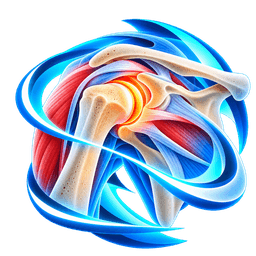
The shoulder is a ball-and-socket joint. The ball (humeral head) is much larger than the socket (glenoid), a little like a golf ball resting on a tee. That design gives the shoulder the widest range of movement of any joint, but it also leaves it with little built-in bony protection.
In a dislocation (also called luxation) the ball leaves the socket completely. When it only slips partly and returns by itself, doctors call it a subluxation. Both can stretch or tear the structures that hold the joint together.
Who is affected by a shoulder dislocation?
The shoulder is the joint that dislocates most often in the body. First-time events are most common in young men who play contact or collision sport, such as rugby, judo and football, and in people of all ages who fall onto an outstretched arm. A second peak appears in older adults, where a fall on ice or a slippery floor is the usual trigger.
Age matters for the future as well. The younger a person is at the first dislocation, the more likely the shoulder is to come out again.
How serious is a shoulder dislocation?
A shoulder dislocation is painful but treatable, and most people regain good use of the arm. The reasons to take it seriously are the possible damage to nerves, blood vessels, the rotator cuff and the bone, and the chance of repeat episodes. Anyone who suspects a dislocated shoulder should go to an emergency department rather than wait.
Many readers search for shoulder dislocation treatment in turkey after a second or third episode, so the page also explains when travel is sensible. Later sections cover first aid, the anatomy, classification, tests, rehabilitation, surgery and a realistic outlook.
Anatomy
What happens in the body with shoulder dislocation
The shoulder is held together mainly by soft tissue rather than by bone shape, which is why it can dislocate so easily. Understanding these parts makes it clear why treatment choices differ from person to person.
What is the normal structure of the shoulder joint?
Three bones meet at the shoulder: the humerus (upper arm bone), the scapula (shoulder blade) and the clavicle (collarbone). The glenohumeral joint, the true ball-and-socket, is formed by the humeral head and the glenoid, which is only about 2.5 cm wide in most adults.
Around the rim of the glenoid sits the labrum, a ring of tough fibrous cartilage that deepens the socket and gives the ligaments an anchor. Thickened bands of the joint capsule, the glenohumeral ligaments, tighten at the extremes of movement. The most important one for front dislocations is the inferior glenohumeral ligament.
The four rotator cuff muscles (supraspinatus, infraspinatus, teres minor and subscapularis) wrap the joint and pull the ball into the socket as the arm moves. Strong cuff and shoulder blade muscles are the basis of dynamic stability.
Which nerves and vessels lie close by?
The axillary nerve curls around the neck of the humerus just below the joint, and the brachial plexus and main artery of the arm pass in front of it. A dislocation can stretch these structures, which is why doctors test sensation over the outer upper arm and check the pulse at the wrist before and after relocation.
What changes when the shoulder dislocates?
Most dislocations (more than 90%) are anterior, meaning the ball moves forward and down. As it leaves, it commonly tears the labrum off the front-lower rim of the socket, an injury called a Bankart lesion. The ligament and capsule are stretched, and the back of the ball can be dented as it hits the socket edge, a defect called a Hill-Sachs lesion.
In some people a fragment of the socket rim breaks off as well (a bony Bankart). Repeated dislocations can wear down more of the rim until the socket is shaped like a pear instead of a circle. These hidden bone changes are the main reason some shoulders keep coming out.
Symptoms & causes
Shoulder dislocation symptoms and causes
Common symptoms
- Sudden, severe pain in the shoulder at the moment of injury, often described as sharp or tearing and quickly spreading to the upper arm and neck.
- A visible change in contour, with a squared-off shoulder and a hollow under the bony point at the top, or a bulge in front of the joint.
- Inability to move the arm, which is usually held away from the body and supported by the other hand because any movement hurts.
- Swelling and bruising over the shoulder and upper arm that can spread down towards the elbow over 24 to 48 hours.
- Muscle spasm around the shoulder and upper back, which makes the pain worse and can feel like a tight cramp.
- Numbness or tingling in the outer upper arm (the "regimental badge" area), which may signal stretching of the axillary nerve.
- Pins and needles or weakness in the forearm or fingers, which can mean the nerves of the arm have also been stretched.
- A feeling of the shoulder "popping" or "clunking" back in, followed by a sore, apprehensive, unstable shoulder after a partial dislocation.
- A fear that the arm will slip out again when it is raised and turned outward, known as apprehension, which is typical of repeat episodes.
- Ongoing weakness, aching or loss of confidence in lifting, throwing or reaching overhead in the weeks after the event.
Causes and risk factors
- Contact and collision sport, because a tackle or a hard fall with the arm out to the side forces the ball forward out of the socket.
- A fall onto an outstretched hand or the side of the arm, the usual cause in older adults and in cycling or skiing accidents.
- Road traffic and high-energy trauma, which can produce dislocations combined with fractures of the humerus, socket or collarbone.
- Young age at first dislocation, because the risk of repeat episodes is highest in teenagers and people in their early twenties.
- Generalised ligament laxity, where naturally flexible joints (for example in Ehlers-Danlos conditions) allow the ball to slide more than usual.
- Bone loss from the socket rim or a large Hill-Sachs dent, which reduces the bony contact that keeps the ball centred.
- Seizures and electric shocks, which are a classic cause of posterior (backward) dislocation because of violent muscle contraction.
- Incomplete rehabilitation after a first episode, where weak rotator cuff and shoulder blade muscles leave the joint poorly controlled.
Types
Types and stages of shoulder dislocation
Doctors describe a shoulder dislocation by the direction of the ball, how often it has happened and what caused it. These labels guide the choice between rehabilitation and surgery.
Which direction can a shoulder dislocation take?
| Direction | How common | Typical cause | Key feature |
|---|---|---|---|
| Anterior (forward) | More than 90% of cases | Arm forced up and back, fall on outstretched hand | Squared-off shoulder, arm held away from the body |
| Posterior (backward) | Roughly 2% to 4% | Seizure, electric shock, fall onto a bent arm | Arm held across the chest and cannot turn outward |
| Inferior (downward, luxatio erecta) | Rare | Arm forced overhead | Arm locked pointing up beside the head |
A posterior dislocation is easy to miss on a quick look at an X-ray, so a clear history of a seizure or shock should be shared with the emergency team.
What is the difference between first-time and recurrent shoulder dislocation?
A first-time (primary) episode is treated as an injury that needs relocation and a plan. A recurrent shoulder dislocation means the joint has come out more than once, often with less and less force. Some people reach the point where it slips during sleep or while reaching for a shelf.
Traumatic or atraumatic?
A traumatic dislocation follows a clear injury and usually tears the labrum and capsule. An atraumatic one occurs with little force in people with loose joints or poor muscle control, and it often responds well to specialised rehabilitation rather than surgery. A third group has voluntary or habitual dislocation, which needs careful assessment before any operation.
Why does the type change treatment?
A young contact-sport player with a torn labrum and a bone defect may be offered a stabilising operation after the first or second episode. An older adult with a rotator cuff injury needs a different approach, and a person with generalised laxity usually starts with months of targeted strengthening. Classification therefore decides the plan.
Diagnosis
How is shoulder dislocation diagnosed?
A shoulder dislocation is diagnosed from the story of the injury, a careful examination and imaging. The aim is to confirm the direction, rule out fractures and nerve injury, and later to find the damage that explains any repeat episodes.
What does the doctor ask and examine at the emergency department?
The team asks how the injury happened, which arm is dominant, whether it has happened before and whether you have had a seizure. They check the pulse, skin colour and sensation, and test the deltoid muscle and the skin over the outer upper arm to look for axillary nerve injury. Tests are repeated after the joint is put back.
Which imaging is used?
An X-ray, usually from more than one angle, confirms the dislocation, its direction and any fracture of the humerus or socket. It is repeated after relocation to show that the ball is centred. Gentle attempts without imaging are a poor idea because a hidden fracture can be made worse.
Once the shoulder has settled, an MRI or an MR arthrogram (MRI with dye injected into the joint) shows the labrum, ligaments and rotator cuff. A CT scan with 3D reconstruction measures bone loss on the socket and the Hill-Sachs defect, which is essential before choosing between soft-tissue and bone-block surgery.
How is recurrent instability assessed in clinic?
After the acute phase, the specialist tests range of movement, strength and joint looseness. The apprehension and relocation tests reproduce the feeling of the ball about to slip. The sulcus sign and the Beighton score assess general laxity. Findings are compared with the other shoulder.
What should you bring to a remote review?
A good remote opinion starts with the emergency summary and discharge letter, the X-ray reports and images before and after relocation, any MRI or CT in digital format, and a short timeline of every episode. Note the position of the arm when it slipped, the sport you play and the work you do. Our medical record review guide explains how files are checked.
Tests you may have
- Shoulder X-ray series (anteroposterior, scapular Y and axillary views): confirms the dislocation, shows its direction and finds fractures before and after relocation.
- Clinical nerve and pulse check: tests the axillary nerve, the rest of the brachial plexus and circulation to the hand before and after the joint is reduced.
- MRI or MR arthrogram: shows labral tears, ligament injury, cartilage damage and rotator cuff tears that X-rays cannot see.
- CT scan with 3D reconstruction: measures glenoid bone loss and the size and position of the Hill-Sachs lesion, which guide the operation chosen.
- Ultrasound: can show rotator cuff tears in older patients and can be used to assess the shoulder when MRI is not available.
- Apprehension, relocation and load-and-shift tests: reproduce the feeling of instability and grade how far the ball can move in the socket.
- Beighton score and sulcus sign: screen for generalised joint laxity, which changes the odds of surgery succeeding.
Look-alikes
Conditions that can feel like shoulder dislocation
Not every painful, deformed shoulder is a dislocation, and a dislocated shoulder can be accompanied by other injuries. Doctors separate the possibilities with the history, the examination and imaging.
Which conditions look like a shoulder dislocation?
| Condition | How it differs | How doctors tell |
|---|---|---|
| Proximal humerus fracture | Break in the upper arm bone near the ball, with bruising and pain on any movement | X-ray shows the break; the ball is still in the socket unless there is a fracture-dislocation |
| Acromioclavicular (AC) joint separation | Step or bump at the top of the shoulder after a fall onto the point of the shoulder | Tenderness over the AC joint, X-ray shows the collarbone displaced; ball sits normally |
| Shoulder subluxation or instability | Ball slips partly and returns by itself, with a sense of apprehension | History of episodes, positive apprehension test, MRI of the labrum |
| Rotator cuff tear | Weakness lifting or turning the arm, often with night pain and no deformity | Strength testing, ultrasound or MRI of the tendons |
| SLAP tear | Deep ache, catching and pain overhead; no full dislocation | Provocative tests and MR arthrogram of the top of the labrum |
| Frozen shoulder | Gradual stiffness in all directions, not a sudden injury | Both active and passive movement are limited; the X-ray is normal |
How are fractures and nerve injuries ruled in or out?
Fracture-dislocations of the humerus, with or without a socket-rim fracture, change treatment and are identified by X-ray and CT. Nerve injury is a clinical diagnosis based on sensation and muscle testing, and an electrical test (electromyography) may be used if function has not returned after 3 to 6 weeks.
Read more about related problems on our pages for shoulder instability, SLAP tear, proximal humerus fracture and rotator cuff tear.
Non-surgical
Non-surgical treatment for shoulder dislocation
Most first-time dislocations are treated without surgery, starting with relocation and followed by protection, movement and strengthening. The order matters, and the details depend on age, activity and what the scans show.
What happens at the first visit?
Urgent local care comes first. The joint is put back in place (a closed reduction) in the emergency department, usually with pain relief or sedation so that the muscles relax. Gentle techniques such as traction with counter-traction are used, and the shoulder is X-rayed again afterwards. Do not let anyone without training try to pop it back.
How long should the arm stay in a sling?
A sling is worn for comfort for about 1 to 3 weeks, and then gradually discarded. Long periods of immobilisation have not been shown to reduce the chance of repeat episodes, so early gentle movement is usually encouraged. Some centres use an external-rotation brace, but evidence on this is mixed.
What does physiotherapy involve?
Rehabilitation usually runs in phases over 6 to 12 weeks, and often longer for sport:
- Settle pain and swelling with ice, posture advice and simple pendulum movements in the first week.
- Restore range of movement from week 2 to 4, avoiding the combined position of arm out to the side and rotated backward.
- Build rotator cuff and shoulder blade strength from week 4 onward with bands and light weights.
- Train control and proprioception (joint position sense), then sport-specific drills from week 8 to 12.
Which medicines help?
Simple analgesics such as paracetamol and anti-inflammatory medicines (NSAIDs) can ease pain in the first days if your doctor agrees. A short course of stronger pain relief may be given after reduction. These medicines treat symptoms only and do not repair the labrum, so they should be paired with exercise.
What does the evidence suggest about non-surgical care?
Studies suggest that rehabilitation works well for many older adults and for people with loose joints. In young, active patients with a torn labrum, the chance of another dislocation after non-surgical care is high, and trials show that early arthroscopic stabilisation lowers the repeat rate. That is why a conversation about surgery is reasonable after a first dislocation in a young contact athlete.
Self-care
Exercises and self-care for shoulder dislocation
Safe self-care after a shoulder dislocation centres on protecting the joint early, restoring movement steadily and strengthening the muscles that centre the ball. Always check with your doctor or physiotherapist before starting any exercise, because the right programme depends on your scans and your age.
What can you do in the first two weeks?
Rest the arm in the sling when it hurts, but take it out several times a day to bend and straighten the elbow, open and close the hand, and move the wrist so the arm does not stiffen. Use cold packs for 15 minutes at a time, wrapped in a cloth. Sleep semi-upright with a pillow behind the elbow.
Which shoulder dislocation exercises are commonly prescribed?
Typical shoulder dislocation exercises progress from gentle to demanding:
- Pendulum swings: lean forward, let the arm hang and make small circles for 1 minute.
- Table slides: rest the forearm on a table and slide it forward to stretch the shoulder gently.
- Isometric rotation: press the back of the hand against a wall without moving, holding 5 seconds, 10 times.
- Band external rotation with a towel under the arm: 3 sets of 10 repetitions.
- Scapular retraction and wall push-ups: wake up the muscles of the shoulder blade.
- Prone T and Y raises and closed-chain exercises on hands and knees, later in rehabilitation.
What should you avoid?
Avoid the position that caused the injury, with the arm raised out to the side and turned back, until your physiotherapist clears it. Do not lift heavy objects overhead, lean on the arm to push up from a chair or restart contact sport early. Pain that sharpens or a feeling of slipping is a signal to stop and get advice.
How can daily habits help?
Put the things you use often at waist height, carry bags on the other side and dress the injured arm first. Keep your posture upright, because a rounded back changes the shoulder blade position and overloads the cuff. Sleep and general fitness also affect healing, so keep walking and avoid smoking, which slows tissue repair.
Check with your doctor or physiotherapist before starting new exercises, and stop any movement that causes sharp pain.
Treatment
Shoulder dislocation treatment options
Surgery for a shoulder dislocation is aimed at restoring the stabilising structures that failed. The two operations most often used are labral repair for soft-tissue injury and the Latarjet procedure when bone is deficient.
What is arthroscopic labral repair?
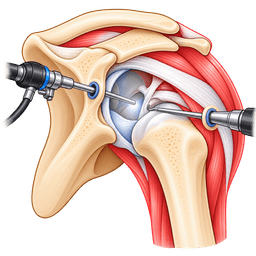
In shoulder labral repair, the surgeon uses a camera and small instruments through 3 or 4 keyhole incisions. Small anchors are placed in the socket rim, and the torn labrum and capsule are stitched and tightened back to the bone. It suits people with good bone, a clean Bankart tear and lower-demand sport.
Recovery is typically a sling for about 4 weeks, rehabilitation for 4 to 6 months, and a return to contact sport at around 6 months. Repair on its own has a higher failure rate in young contact athletes with bone loss, which is why scans matter. See the shoulder labral repair in turkey page and the shoulder labral repair cost guide.
What is the Latarjet procedure?
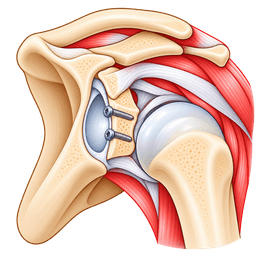
The Latarjet procedure moves a piece of bone called the coracoid process, with its attached tendons, to the front of the socket and fixes it with screws. This adds bone to the rim and creates a sling effect from the transferred tendon, which stops the ball sliding forward. It is a more robust option for significant glenoid bone loss, large Hill-Sachs lesions, previous failed repair and collision sport.
It is a bigger operation with its own risks, discussed below, but it has a low rate of repeat dislocation in the long term. More detail is on the Latarjet procedure in turkey page and in the Latarjet procedure cost guide.
Are there other options?
Other techniques include remplissage (filling the dent on the ball with tendon), bone graft to the socket from the hip bone or a donor, and open capsular shift for loose-jointed patients. Posterior dislocations may need a posterior bone block or capsule repair. The surgeon chooses based on CT and MRI findings rather than a single preferred method.
How do the main options compare?
| Option | Best suited to | Main trade-off |
|---|---|---|
| Rehabilitation only | Older adults, loose joints, first-time low-demand patients | Higher repeat rate in young athletes |
| Arthroscopic labral repair | Torn labrum with little bone loss | Less secure with major bone loss or collision sport |
| Latarjet procedure | Bone loss, failed repair, contact athletes | Larger operation, small risk to nearby nerves and screws |
When surgery is considered
Surgery is worth discussing when a shoulder keeps dislocating, when scans show structural damage that rehabilitation cannot fix or when a young athlete wants the lowest chance of a repeat. The decision is shared between you and your surgeon.
What are the usual criteria for surgery?
- Two or more dislocations, or one dislocation in a young contact athlete aged under about 25.
- Persistent apprehension or slipping despite 3 to 6 months of well-supervised rehabilitation.
- A bony Bankart, glenoid bone loss or a large engaging Hill-Sachs lesion on CT.
- Associated injuries such as a displaced rotator cuff tear or a fracture that needs fixing.
- Dislocations during daily activities or sleep, which show that the joint cannot protect itself.
When should you see a shoulder specialist?
Ask for a specialist opinion after a first dislocation if you are young and active, if you are over 40 and weak when lifting the arm (a possible cuff tear) or if numbness lasts more than a few days. A review within 1 to 2 weeks gives time to plan before the shoulder tightens up.
What questions should you ask the surgeon?
Ask which structures are damaged on your scans, how much bone is missing, why this operation fits you better than the alternative and what the surgeon's repeat-dislocation rate is. Ask about the sling period, when you can drive and when you can return to your sport or job. Our questions to ask before surgery abroad guide has a ready checklist.
What if surgery is not right for you?
Some people have low demands, medical conditions that raise anaesthetic risk or a strong preference to avoid an operation. A structured programme with activity changes, a stabilising brace for sport and honest limits can still give good function. Surgery stays open as a later option.
Procedures
Procedures that may treat shoulder dislocation
Costs
Shoulder dislocation treatment cost in Turkey
| Procedure | Turkey package | US self-pay | Saving |
|---|---|---|---|
| Shoulder Labral Repair | $4,500 – $7,000 | $25,025 | ~77% |
| Latarjet Procedure | $5,500 – $8,500 | $30,875 | ~77% |
Packages are contracted partner prices with validity dates; benchmarks are source-backed estimates. Open a cost guide for the full country comparison.
In Turkey
Treating shoulder dislocation in Turkey
Treatment of shoulder dislocation in turkey makes sense for planned surgery in people whose shoulder has already been stabilised locally and who have been advised that repeat dislocation needs an operation. It is not for the acute emergency.
Urgent care comes first
A freshly dislocated shoulder must be relocated and assessed at your nearest emergency department. Travel is considered only once the joint is back in place, you are medically stable and the treating team agrees that the timing is safe. Flying with an unreduced shoulder, a fracture-dislocation or an unassessed nerve injury is not appropriate.
What does the pathway look like?
- Free review: send your reports and images through our free case review form.
- Remote opinion: a specialist reviews the MRI and CT, suggests whether repair or bone block fits and outlines the plan.
- Travel and surgery: usually 5 to 7 days in the country, including pre-operative checks and the operation, with advice on travel and accommodation.
- Rehabilitation and follow-up: physiotherapy begins at home, and our guide to follow-up after returning home explains the handover to your local team.
How to check a hospital and surgeon?
Look for international accreditation, a dedicated shoulder or sports surgery team, arthroscopy and bone-block experience and clear written information about implants, anaesthesia and aftercare. Ask how many stabilisation operations the surgeon performs each year and how complications are handled once you are home. Our orthopedics in turkey overview explains how we vet providers.
What should you send?
Send the discharge notes, all X-rays, the MRI or MR arthrogram and a CT scan if available, with the dates of every dislocation. Medication lists, allergies and any past anaesthetic problems are also needed. Compare options through the shoulder labral repair cost guide and the Latarjet procedure cost guide, which link to current figures.
Practical limits and timing
You will usually need a companion, because you cannot use the arm for the first days. Flying is possible once your surgeon agrees, normally within about a week, and our flying after surgery guide covers the details. Travel is not advised if you have an active infection, an uncontrolled medical condition or a shoulder that is still dislocating on its own.
Dislocated shoulder surgery in turkey is usually arranged as a planned operation, with the date set once your scans are reviewed. This option can suit a person who has waited a long time for a local operation date or who wants a specialised bone-block surgeon. It should never replace a conversation with your own doctor, who knows your history.
Complications
Complications of shoulder dislocation
A shoulder dislocation can lead to problems if it is not treated well, and the surgery that treats it carries its own risks. Understanding both helps you weigh the decision.
What can happen if a dislocation is not treated?
Repeat dislocations can erode more bone from the socket and the ball, making each episode easier and each operation harder. Cartilage damage builds up and increases the long-term risk of arthritis, sometimes called dislocation arthropathy. A missed or delayed reduction can leave the ball fixed in the wrong place, and the shoulder may stiffen.
Which injuries can occur with the dislocation itself?
- Axillary nerve injury, which is common but usually recovers over weeks to months.
- Rotator cuff tears, especially in people over 40 years of age.
- Fractures of the greater tuberosity, socket rim or humeral neck.
- Blood vessel injury, which is rare but urgent.
- Stiffness and frozen shoulder after a long period in a sling.
What are the risks of labral repair?
Risks include recurrent instability, stiffness, nerve irritation, infection and anchor problems. Some people notice an ache that lasts several months. Overall, labral repair is safe when it is done for the right patient, and the biggest issue is failure to control the shoulder when bone loss was underestimated.
What are the risks of the Latarjet procedure?
The Latarjet carries a higher complication rate than arthroscopic repair, although serious problems remain uncommon. These include screw irritation, graft that does not unite, nerve injury (especially musculocutaneous or axillary), infection, stiffness and, over decades, early arthritis. Choosing an experienced surgeon is the most important way to lower these risks.
How can you reduce your risk?
Follow the rehabilitation plan, attend every review, report fevers, redness or increasing numbness at once and avoid contact sport until you are formally cleared.
Urgent care
When to seek urgent care for shoulder dislocation
- A shoulder that is visibly deformed after a fall or tackle: go to an emergency department and do not try to put it back yourself.
- Numbness, a cold or pale hand or no pulse at the wrist: call emergency services immediately, because a blood vessel or nerve may be injured.
- Fever, spreading redness or drainage from a wound after surgery: contact your surgeon or local emergency service the same day.
- Calf pain or swelling, or sudden breathlessness after surgery or a long flight: seek emergency care, as these can signal a blood clot.
- New weakness in the arm or hand that is getting worse rather than better: arrange an urgent specialist review.
- A shoulder that dislocates during sleep or with minimal effort: book a specialist review soon, because this suggests major structural damage.
- Severe pain out of proportion that is not relieved by the prescribed medicines: contact your treating team promptly.
Prevention
How to lower your risk of shoulder dislocation
Not every shoulder dislocation can be prevented, because many follow a sudden accident. You can still reduce the risk of a first episode and the chance of repeat events with sensible habits and good rehabilitation.
How can you lower the risk of a first dislocation?
Strengthen the rotator cuff and the muscles around the shoulder blade, including the serratus anterior and lower trapezius, and keep a good range of movement. Athletes should learn safe falling and tackling techniques, with the arm tucked in rather than outstretched. Protective equipment and well-fitted straps can help in some sports.
How can you prevent a repeat dislocation?
Complete the full rehabilitation programme rather than stopping when pain eases. Most plans last at least 3 months and include a graded return to sport. A stabilising brace or taping may help for a season of contact sport while a decision about surgery is made. Do not return to full contact before strength and control are close to the other shoulder.
What cannot be prevented?
Accidents, seizures and inherited ligament looseness cannot be fully controlled. If you have epilepsy, good seizure control and medication review lower the risk of posterior dislocation. People with generalised laxity benefit from lifelong core and shoulder conditioning.
Which habits protect the shoulder in daily life?
Avoid reaching and pulling with a fully raised, turned-out arm when carrying heavy items. Keep stairs and floors free of slip hazards, especially for older adults, and use handrails. Check your home for objects that cause trips, and keep vision and footwear up to date.
Outlook
Living with shoulder dislocation: outlook and recovery
Most people with a shoulder dislocation recover good function, and the outlook depends strongly on age, the damage found and the treatment chosen. Honest expectations help with planning work and sport.
What is the typical shoulder dislocation recovery time?
The shoulder dislocation recovery time after a first, uncomplicated episode is about 6 to 12 weeks for daily use and 3 to 4 months for sport. After labral repair, expect around 4 weeks in a sling, light desk work in 2 to 4 weeks, rehabilitation for 4 to 6 months and contact sport at roughly 6 months. After a Latarjet, the timetable is similar, with some centres allowing earlier movement and a return to contact sport between 4 and 6 months.
What is the long-term outlook?
Without surgery, a large share of young athletes dislocate again, whereas in older adults the repeat risk falls steeply with age. After a well-selected stabilisation operation, most people return to their previous level of sport and report stable shoulders. A small group still has pain, stiffness or occasional apprehension.
When can you drive, work and travel?
Many people return to desk work in 1 to 2 weeks and driving in 4 to 6 weeks, depending on the procedure, the arm involved and local rules. Manual work with overhead loads can take 3 to 6 months. Ask your surgeon before flying and before lifting luggage.
What about arthritis later in life?
People who dislocate repeatedly or who have lost bone have a higher chance of shoulder arthritis over decades. Stabilising the joint and keeping the muscles strong appear to lower that risk, although no operation removes it entirely. See our page on shoulder osteoarthritis for what that looks like and the shoulder hub for other problems.
How should you plan your recovery?
Set goals with your physiotherapist, track strength against the other arm and expect good and bad days. A staged return to sport, rather than a calendar date, is the safest guide. Our rehabilitation guide describes what to expect.
Surgeons
Specialists who treat shoulder dislocation
FAQ
Shoulder dislocation: frequently asked questions
What should I do if I think I have a shoulder dislocation?
How long does a shoulder dislocation take to heal?
Can a dislocated shoulder heal without surgery?
Why does my shoulder keep dislocating?
What is the Latarjet procedure and who needs it?
Can I exercise with a dislocated shoulder?
Is a shoulder dislocation an emergency?
Is treatment for shoulder dislocation in turkey safe?
When can I fly after a shoulder stabilisation operation?
What do I need to send for an overseas review of my shoulder?
Will I get arthritis after a dislocated shoulder?
Can I play contact sport again after a shoulder dislocation?
Sources
Sources for this shoulder dislocation guide
Peer-reviewed guidance and institutional sources used to write and review this page.
- 01Shoulder Dislocation
American Academy of Orthopaedic Surgeons (OrthoInfo), 2023
https://orthoinfo.aaos.org/en/diseases--conditions/shoulder-dislocation/
- 02
- 03Shoulder dislocation
Mayo Clinic, 2023
https://www.mayoclinic.org/diseases-conditions/dislocated-shoulder/
- 04Shoulder Instability
American Academy of Orthopaedic Surgeons (OrthoInfo), 2022
https://orthoinfo.aaos.org/en/diseases--conditions/shoulder-instability/
- 05Shoulder Injuries and Disorders
MedlinePlus, 2023
https://medlineplus.gov/shoulderinjuriesanddisorders.html
- 06