



Key takeaways
- 1A meniscus tear is a split in the wedge-shaped cartilage cushions of the knee, and it can arise from a sudden twist in younger people or from gradual wear in older adults.
- 2Typical clues are pain along the joint line, swelling that builds over a day or two, clicking or catching, and sometimes a knee that locks and will not fully straighten.
- 3Where the tear sits matters: the outer third has a blood supply and can heal after repair, while the inner two thirds usually cannot.
- 4Many degenerative tears in people over 40 improve with a structured exercise programme, and trials show surgery is often no better in the long run.
- 5A knee that is truly locked, or a large displaced bucket-handle tear, is a reason for prompt orthopedic review, because the fragment can block movement and damage cartilage.
- 6Surgery is either a repair, which keeps the meniscus, or a partial meniscectomy, which trims the damaged part, and both are done by keyhole surgery.
- 7Planned treatment of a meniscus tear in turkey can suit stable patients once the records have been reviewed and the knee is not in an acute, locked state.
Overview
What is meniscus tear?
A meniscus tear is a split in the meniscus, the tough rubbery cushion that spreads load across the knee and helps it stay steady. It is one of the commonest knee injuries seen by orthopedic teams. This page explains what the meniscus does, why it tears, how to decide between exercise and surgery, and how treatment in turkey is organised.
What is a meniscus tear?
Each knee has two menisci, an inner (medial) and an outer (lateral) one. They are made of fibrocartilage, a firmer and more elastic tissue than the smooth cartilage that coats the bone ends. A tear can run across, along or in a flap through the tissue, and it can be tiny or large.
Think of the menisci as shock absorbers. When one splits, it can no longer share force evenly, and the loose edge may catch inside the joint. That is why a small tear can feel disproportionately annoying.
Who gets a meniscus tear?
Two groups are affected. Young and active people tear a meniscus in a twisting injury, often together with a ligament injury. Adults over about 40 develop tears with little or no injury, because the tissue weakens with age and may be part of early arthritis. Even bending to pick something up can start symptoms in this second group.
How serious is a meniscus tear?
Most tears are not dangerous and many settle over weeks to months. The concern is function: pain, swelling and mechanical symptoms can limit sport, work and sleep. A displaced fragment that locks the knee deserves prompt attention. Over years, losing meniscus tissue increases stress on the cartilage, so protecting the meniscus is a goal when it is practical.
How this page is organised
We start with anatomy, symptoms and causes, then look at tear patterns, diagnosis and look-alike conditions. Next come exercise-led care, self-care, surgery and decision-making. The later sections cover treatment abroad, complications, prevention, outlook and answers to frequent questions. For context, see our knee overview.
Anatomy
What happens in the body with meniscus tear
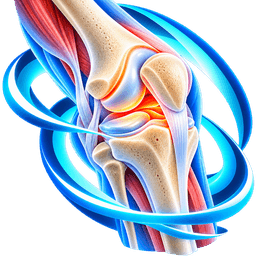
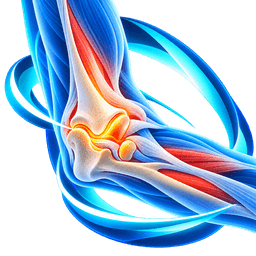
The menisci are two crescent-shaped pads that deepen the shallow top of the shin bone so the thigh bone sits in a stable cup. A meniscus tear changes how the knee shares load and how smoothly it glides. Knowing the layout explains why some tears heal and others do not.
What is the normal structure of the menisci?
The medial meniscus is C-shaped and attached firmly to the inner ligament, so it moves little. The lateral meniscus is more circular and more mobile. Both are thick at the outer rim and taper to a thin inner edge. Roots at the front and back anchor them to the shin bone, and their circular fibres resist the forces that try to push them outwards.
The menisci take roughly half to most of the load passing through the knee, depending on the bend angle. They also help lubricate the joint and give the brain information about knee position.
Why does blood supply matter?
Only the outer 10 to 30% of the meniscus, called the red zone, has a blood supply. The middle band is the red-white zone, with some supply, and the inner part is the white zone, which has none. Healing needs blood, so tears at the rim can be repaired and may heal, while tears in the white zone usually need to be trimmed.
What changes after a tear?
A torn meniscus loses part of its shock-absorbing job. The torn edge may flip into the joint and catch, which causes clicking, locking and sudden sharp pain. Removing a large part of the meniscus increases contact pressure on the cartilage, which is linked to earlier arthritis. That is the reason surgeons try to keep as much meniscus as they can.
Symptoms & causes
Meniscus tear symptoms and causes
Common symptoms
- Pain along the inner or outer joint line, often sharp on twisting, squatting or getting up from a chair, and usually easing at rest.
- Swelling that develops gradually over 24 to 48 hours after the injury, unlike the immediate swelling that follows a ligament tear.
- Clicking, popping or catching inside the knee as a torn flap moves against the joint surfaces.
- Locking, in which the knee gets stuck and cannot fully straighten, usually from a displaced piece of meniscus blocking the joint.
- A feeling that the knee gives way or lets you down, often because pain makes the thigh muscle switch off rather than because a ligament has failed.
- Stiffness after sitting or in the morning, with difficulty reaching full bend or full straightening.
- Pain on deep bending, kneeling or crouching, which pinches the back horn of the meniscus.
- Night pain or an ache when turning in bed, more common in older adults with degenerative tears and wear.
- Reduced confidence in sport or on uneven ground, with a sense that the knee may catch at an awkward moment.
Causes and risk factors
- A twisting injury on a bent knee with the foot planted, as in football, basketball, tennis or skiing, which pinches the meniscus between the bones.
- Deep squatting with a twist, such as lifting or gardening, which can split a meniscus that has already weakened.
- Age-related change, in which the tissue loses water and fibres, becoming brittle enough to tear with minimal force.
- Associated ACL tear, in which the same twist or collapse tears the ligament and one or both menisci together.
- Osteoarthritis, which often goes hand in hand with degenerative meniscus damage and shared symptoms.
- Repeated kneeling and squatting at work, linked with a higher rate of degenerative tears in several occupational studies.
- Leg alignment, such as bow legs, which loads the inner compartment and its meniscus more heavily.
- Carrying extra body weight, which increases the load on the menisci with every step.
Types
Types and stages of meniscus tear
Doctors describe a meniscus tear by shape, location, stability and cause. These features guide the decision between exercise, repair and trimming, and they explain why two people with the same MRI report may receive different advice.
Which tear patterns are seen?
Surgeons use pattern names that describe how the tissue splits. Each has its own typical behaviour.
| Tear pattern | What it looks like | Typical behaviour |
|---|---|---|
| Longitudinal (vertical) | Split running along the length of the meniscus | Often repairable in the outer zone, common after sport injury |
| Bucket-handle | Large longitudinal tear whose centre flips into the joint | Causes locking, often needs early repair |
| Radial | Split running from the inner edge towards the rim | Disrupts the ring that resists load, harder to heal |
| Horizontal (cleavage) | Layers separate like a sandwich | Common in degenerative knees, often trimmed or managed with exercise |
| Flap or parrot-beak | Loose tongue of tissue | Catches in the joint, may need trimming |
| Root tear | Tear at the bony anchor of the meniscus | Behaves like a lost meniscus, repair considered in selected patients |
What is the difference between traumatic and degenerative tears?
A traumatic tear follows a clear injury, typically in a younger person, and may be fresh and repairable. A degenerative tear develops with age and often sits within a knee that already has some wear. Treatment trials show a clear divide: degenerative tears do well with exercise first, while traumatic tears with mechanical symptoms often need surgery sooner.
Stable or unstable?
A stable tear stays in place and may heal or settle without surgery. An unstable tear moves, flips or catches, and is more likely to cause locking and damage cartilage. MRI and arthroscopy show the difference, and so does the way the knee behaves. A knee that locks is considered unstable until proven otherwise.
Why does classification change the plan?
The location in the red or white zone, the tear pattern, how fresh it is and the age and activity of the patient all shape the choice. A 22-year-old footballer with a vertical rim tear is a classic candidate for repair, whereas a 58-year-old with a horizontal tear and early wear usually starts with physiotherapy.
Diagnosis
How is meniscus tear diagnosed?
A meniscus tear is diagnosed from the story of the knee, a focused examination and, when needed, an MRI scan. The aim is to decide whether the problem is a true tear, whether it is causing the symptoms and whether other injuries, such as a torn ACL, are present. The scan alone should never decide treatment.
What does the doctor ask and examine?
The clinician asks about the injury, the timing of swelling, clicking, locking and giving way, and which movements hurt. They check for fluid, tenderness along the joint line and the range of movement. A knee that cannot fully straighten is an important finding, because it may mean a displaced fragment.
Special manoeuvres load the meniscus. In the McMurray test, the knee is bent and rotated to catch a torn edge. The Thessaly test asks you to twist on one slightly bent leg. Pain or a click along the joint line supports the diagnosis, although these tests are not perfect.
When is an MRI scan needed?
MRI shows the meniscus, ligaments and cartilage without radiation and takes about 20 to 40 minutes. It is advised when a locked knee or a ligament injury is suspected, when symptoms persist, or when surgery is under consideration. It is less useful as a first test in older adults, because many people over 50 have meniscus changes on MRI without any knee pain.
Why do X-rays still matter?
Standing X-rays do not show the meniscus, but they reveal joint space narrowing, bone spurs and alignment. They help distinguish a tear within a healthy knee from a tear within an arthritic one, and that distinction strongly affects treatment. Long-leg views check whether bow legs are overloading one side.
What should you bring to a remote review?
Send the MRI as image files with the report, standing X-rays, a note of when and how symptoms started and whether the knee has ever locked. Add the treatments you have tried, such as physiotherapy or injections, your medicines and allergies, and a description of your job and sport. A short video of squatting and walking can be very informative.
Tests you may have
- McMurray test: the examiner bends and rotates the knee while feeling for a painful click on the joint line, which suggests a torn meniscus.
- Thessaly test: standing on one leg with the knee bent about 20 degrees and twisting, which reproduces joint-line pain or catching in many tears.
- Joint-line palpation: pressing along the inner and outer joint line finds the tender spot, and tenderness over the meniscus raises suspicion.
- Range-of-movement check: a knee that will not reach full straightening may have a locked, displaced fragment.
- Standing X-ray: shows joint space, bone spurs and alignment, and rules out fractures or advanced arthritis that would change the plan.
- MRI scan: displays the tear pattern, location, associated ligament injury and cartilage state, and is the most informative test for surgical planning.
- Ultrasound: occasionally used to look at the outer part of the meniscus or a cyst, though it cannot see deep tears.
- Diagnostic arthroscopy: keyhole inspection, now mostly part of treatment, that confirms the tear and allows repair or trimming at the same time.
Look-alikes
Conditions that can feel like meniscus tear
Knee pain on the joint line has many sources, and a meniscus tear is only one. Matching the symptoms to the right structure prevents unnecessary surgery. The table lists the most common look-alikes and how doctors separate them from a meniscus tear.
| Look-alike condition | How it differs | How doctors tell |
|---|---|---|
| Knee osteoarthritis | Gradual stiffness and pain over months, bony changes, morning stiffness | Standing X-ray, history and exam |
| ACL tear | Pop, rapid swelling and giving way on pivoting | Lachman test, MRI |
| MCL sprain | Tenderness over the ligament, pain on side stress | Valgus stress test, MRI |
| Cartilage defect | Deep ache, swelling after activity, catching without a clear tear | MRI, sometimes arthroscopy |
| Plica syndrome | Snapping on the inner front knee, pain on repeated bending | Palpation, MRI, response to rest |
| Loose body | Sudden locking that clears by itself, intermittent catching | X-ray or MRI showing the fragment |
| Baker's cyst | Swelling at the back of the knee, tightness on full bend | Ultrasound |
Is it a tear or arthritis?
In people over 50, joint-line pain frequently comes from early arthritis rather than from a fresh tear, even when MRI shows a split. The two overlap. The page on knee osteoarthritis explains how doctors weigh them up. If the knee is arthritic, an exercise-led plan usually comes first.
Could a ligament be involved too?
Often. A twisting injury that tears a meniscus can also damage the front cruciate ligament, and many ACL operations include meniscus work. The ACL tear page explains that overlap. Side injuries are covered under MCL and LCL injury.
What about cartilage injuries?
Locking or catching can also arise from a loose cartilage fragment. Surfaces damaged by a fall or twist may need different treatment, which is described on our page about knee cartilage damage. MRI usually separates these problems, although arthroscopy gives the final answer in some cases.
Non-surgical
Non-surgical treatment for meniscus tear
Many people with a meniscus tear do not need an operation, and a meniscus tear without surgery is a well-supported choice for most degenerative tears and some stable traumatic ones. Exercise therapy is the first step, and it often relieves pain and restores function. Surgery is kept for those who stay limited or have a locked knee.
What happens in the first days?
Settling the knee comes first. Rest from the activity that provoked pain, use cold packs for 10 to 20 minutes, and take simple pain relief such as paracetamol. Anti-inflammatory tablets or gels may help short-term if they are suitable for you. A walking stick or crutches can ease the load for a few days. Gentle movement should resume early, because stiffness makes recovery slower.
What does an exercise programme involve?
A physiotherapist designs a programme that usually runs for 8 to 12 weeks. It builds the quadriceps, hamstrings, hip and calf muscles, trains balance and teaches good squat and step mechanics. Doing it consistently, 2 to 3 times a week with home work between visits, matters more than any single exercise.
- Weeks 1 to 2: calm the knee, regain movement, walk normally.
- Weeks 2 to 6: stationary cycling, bridges, step-ups, mini squats.
- Weeks 6 to 12: lunges, single-leg work, jogging or sport-specific drills as tolerated.
What does the evidence say?
Several randomised trials of middle-aged and older adults with degenerative tears, with or without mild arthritis, found that physiotherapy gave similar pain relief and function at 1 to 2 years compared with arthroscopic partial meniscectomy. Many in the exercise group avoided surgery, though a minority later chose it. Guidelines therefore recommend exercise before keyhole trimming in these patients.
Can injections help?
A corticosteroid injection can calm a flare of pain and swelling for several weeks and allows exercise to proceed. It does not repair the tear. Other injections, such as hyaluronic acid or platelet-rich plasma, have less consistent evidence for meniscus tears. Discuss risks and benefits with your clinician, and avoid repeated injections.
When can a tear heal without surgery?
Small stable tears in the red zone, especially those found alongside an ACL injury, can heal on their own when the knee is protected. Tears in the white zone rarely heal, but they may become quiet and comfortable as the edge smooths. A knee can be free of pain despite a persistent tear on MRI.
When should the plan change?
If the knee locks, if swelling and catching continue after 3 months of good rehabilitation, or if an unstable fragment is clearly seen, surgery becomes sensible. A knee that locks suddenly and cannot be straightened is an indication for prompt assessment rather than waiting.
Self-care
Exercises and self-care for meniscus tear
Good self-care keeps the knee moving and the thigh strong while the tear settles or while you wait for surgery. Check with your doctor or physiotherapist before starting any exercise, because the safest routine depends on the tear type, your swelling and whether you have had surgery. The advice below is general.
Which exercises are commonly used?
Start with movement and thigh activation, then add load. Stationary cycling, short walks and swimming keep the joint moving with low stress. Strength work follows, with attention to knee alignment: the kneecap should track over the second toe, not collapse inwards.
- Quadriceps holds: tighten the thigh for 5 seconds, 10 repetitions, 3 times a day.
- Straight-leg raises: 3 sets of 10, lying on your back.
- Glute bridges: 3 sets of 12 with a 2-second hold.
- Sit-to-stand from a chair: 3 sets of 8 to 10, slow and controlled.
- Heel raises: 3 sets of 15 to strengthen the calf.
How do you progress safely?
Raise the load only when the knee stays calm the next day. A rule of thumb is no more than mild discomfort during an exercise and no new swelling afterwards. Move from chair work to partial squats, then to step-downs and lunges. Reserve deep squatting, pivoting and kneeling until your clinician agrees.
Which daily habits help?
Avoid deep crouching and twisting on a planted foot for the first weeks. Use a cushion when kneeling for essential tasks. Keep a healthy weight, since every kilogram lost reduces the load across the knee considerably. Wear supportive footwear, and sit on a higher seat if rising from a low chair provokes pain.
What should you avoid?
Do not push through sharp pain or ignore locking. Avoid running on hard ground and cutting sport until the knee is calm and strong. Avoid long periods with the knee fully bent, such as sitting cross-legged. Do not try to "unlock" a stuck knee by forcing it, because that can drag the fragment deeper.
Preparing for keyhole surgery
If surgery is planned, arrive with a calm knee, full straightening and decent thigh strength. Practise crutch walking, stop smoking, and arrange help at home. Good preparation shortens the recovery after both repair and trimming.
Check with your doctor or physiotherapist before starting new exercises, and stop any movement that causes sharp pain.
Treatment
Meniscus tear treatment options
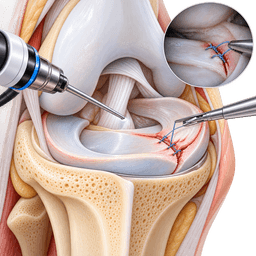
Surgery for a meniscus tear either repairs the torn edge so it can heal, or trims away the unstable part. Both are performed by arthroscopy, which uses a small camera and instruments through 2 or 3 cuts about 1 cm long. The right choice depends on the tear pattern, blood supply, your age and what else is wrong in the knee.
What is meniscus repair?
Meniscus repair stitches the torn edges together with sutures or small anchors so that they heal in place, preserving the cushion. It suits tears in the red or red-white zone, bucket-handle tears and root tears in selected patients, especially younger people. Recovery is slower because the tissue must heal. Details of the local pathway appear under meniscus repair in turkey.
What is a partial meniscectomy?
In a partial meniscectomy, the surgeon trims away the torn, unstable part and keeps the stable rim. It is used for tears in the white zone and for degenerative flaps that catch. Relief of locking and catching is often rapid, and walking resumes within days. The downside is that less meniscus remains, which may increase long-term load on the cartilage.
| Option | Best suited to | Trade-offs |
|---|---|---|
| Exercise-led care | Most degenerative tears and stable tears without locking | Needs weeks of effort, surgery remains possible |
| Meniscus repair | Rim tears, bucket-handle tears, some root tears | Protects the cartilage, slower recovery, small re-tear risk |
| Partial meniscectomy | Unstable flaps and white-zone tears with mechanical symptoms | Fast relief, less meniscus left |
| Repair with ACL surgery | Meniscus tear with a torn ACL | Higher healing rate in a stable knee |
| Meniscus transplant | Selected younger patients after total meniscus loss | Specialist procedure, limited availability |
What is the role of knee arthroscopy?
Knee arthroscopy is the keyhole technique used for both repair and trimming. It also lets the surgeon inspect cartilage, remove loose fragments and treat associated problems. You can read about knee arthroscopy in turkey, and the typical outlay is explained in the guides on meniscus repair cost and knee arthroscopy cost.
How are repairs fixed?
Inside-out repair passes sutures through the meniscus and ties them outside the knee. Outside-in and all-inside techniques use anchors or devices that sit within the joint. The surgeon chooses according to the tear location. Techniques that add a blood clot, or a small roughening of the rim, can improve healing in selected cases.
What is recovery like?
After a trim, many people walk without crutches in 1 to 3 days, return to desk work in about 1 week and jog by 4 to 6 weeks. After a repair, you may use crutches and a brace for about 4 to 6 weeks with limited bending, begin running at 3 to 4 months, and return to cutting sport at about 4 to 6 months. These ranges vary with the tear and the surgeon's protocol.
When surgery is considered
Consider surgery for a meniscus tear when the knee is locked, when mechanical symptoms continue despite 3 months of good rehabilitation, or when a young person has a repairable tear. Most degenerative tears should start with exercise. A specialist opinion helps you choose between keeping, trimming or leaving the meniscus.
Which situations favour surgery?
True locking with a displaced bucket-handle fragment, a repairable rim tear in a young active person, a tear that accompanies an ACL injury needing reconstruction and persistent catching that stops you doing daily tasks all point towards surgery. Radial and root tears that disrupt the meniscus ring may be repaired to protect the joint.
Which situations favour waiting?
An older adult with an unlocked knee, pain that improves with exercise, a horizontal degenerative tear on MRI and mild arthritis on X-ray is a typical candidate for continued exercise-led care. People in this group often do well without surgery, and an early operation does not clearly improve the outcome.
Is there a time limit for repair?
Fresh tears heal more reliably, and repair is generally best attempted within the first weeks to months. An old tear with scarred, degenerated edges is less likely to heal. A locked knee should not be left for long, because a trapped fragment can scuff the cartilage with every step. Prompt review is the safest course.
Which questions should you ask a surgeon?
- Which zone is my tear in, and can it be repaired?
- How much meniscus would be saved with repair versus trimming?
- Do I have arthritis that makes surgery less likely to help?
- What is the chance that a repair will need redoing?
- What brace, crutches and physiotherapy will I need?
- When can I drive, work and return to sport?
Does body weight or alignment matter?
Yes. A higher body weight and a bow-legged alignment overload the inner meniscus and reduce the benefit of surgery. Your team may suggest weight loss, strengthening or, for selected younger patients, corrective surgery alongside the repair.
Procedures
Procedures that may treat meniscus tear
Costs
Meniscus tear treatment cost in Turkey
| Procedure | Turkey package | US self-pay | Saving |
|---|---|---|---|
| Knee Arthroscopy | $2,500 – $4,500 | $13,850 | ~75% |
| Meniscus Repair | $3,000 – $5,500 | — | — |
Packages are contracted partner prices with validity dates; benchmarks are source-backed estimates. Open a cost guide for the full country comparison.
In Turkey
Treating meniscus tear in Turkey
Treatment of a meniscus tear in turkey is a reasonable option for planned, non-urgent surgery, such as a repair or trimming after a trial of rehabilitation. Turkey has many orthopedic centres used to treating international patients, and meniscus arthroscopy is a routine procedure there. The sections below describe the pathway and the limits.
When does treatment in turkey make sense?
It suits patients with a confirmed tear on MRI, a clear surgical reason such as mechanical symptoms or a repairable rim tear, and good general health. It can also help those who wish to combine meniscus repair with ACL surgery in one trip. Meniscus tear surgery in turkey is generally day-case or one night.
Safety comes first. A knee that has just locked, swollen sharply or become very painful needs urgent local care. Travel is considered only once you are medically stable and your treating team agrees. Locked knees should be reviewed promptly where you live, not after a flight.
How does the pathway work?
You share your records for a remote review, and a surgeon proposes a plan. If you proceed, dates are agreed. On arrival you are examined, the MRI is checked again and your anaesthesia assessment is done. After surgery you rest, learn crutch and brace use and start the first exercises before going home.
- Remote review of MRI images, X-rays and clinic notes.
- Written plan saying whether repair or trimming is expected.
- Examination, blood tests and anaesthesia review on arrival.
- Keyhole surgery, usually with same-day or next-day discharge.
- Written rehabilitation plan and follow-up contact schedule.
Read our guides on why turkey, medical record review and surgery day for more detail.
What should you send?
Send MRI image files and the report, standing X-rays, the history of locking or giving way, treatments tried, medicines and allergies, and your sport and job. Say whether you have had earlier surgery on the same knee. A brief video of walking and squatting helps the team judge swelling and movement.
How do you check quality and safety?
Ask whether the hospital is licensed and preferably internationally accredited, and whether the surgeon is a board-certified orthopedic specialist with arthroscopy and sports training. Ask how often they repair menisci instead of trimming, how they protect repairs and what rehabilitation they advise. A good team explains why they favour repair or trimming. See our questions to ask before surgery abroad.
What about travel and recovery?
For trimming, a stay of about 3 to 5 days may be enough. For repair, 5 to 7 days is more typical, since the brace and crutches need practice. Read about flying after surgery and follow-up after returning home. A companion helps with luggage and stairs.
When should you not travel?
Do not travel with a locked or acutely injured knee, a suspected fracture, fever, an infected wound or poor circulation. Delay if your health is unstable. Arrange physiotherapy at home before you leave, because the quality of rehabilitation shapes the final result as much as the operation.
To start, request a free case review on the quote page, look at orthopedic care in turkey and read the meniscus repair cost guide for planning.
Complications
Complications of meniscus tear
Most meniscus tears cause no serious harm, but a displaced tear can damage cartilage, and surgery has small risks. The balance depends on the tear and the person. The figures below are approximate and vary between surgeons and patients.
What can happen if a tear is left alone?
Many stable tears become quiet and cause little trouble. An unstable tear that keeps catching can scuff the cartilage and bring on swelling and pain with every flare. A locked bucket-handle tear left for a long time may become harder to repair. Over years, a poorly functioning meniscus can contribute to arthritis.
What is the link with arthritis?
Meniscus damage and arthritis often travel together, and it can be difficult to say which began first. Losing meniscus tissue raises the load on the cartilage, so people who have had a large meniscectomy have a higher chance of arthritis in later years. Repair aims to lower that risk, but evidence of long-term benefit is still being gathered. See post-traumatic knee arthritis for later changes.
What are the risks of surgery?
Possible problems include swelling, stiffness, infection, blood clots, numbness near the cuts and persistent pain. Serious complications are uncommon, generally affecting fewer than 1 in 100 patients. Repairs carry a risk of not healing, often quoted at roughly 10 to 25% depending on the tear and whether the ACL is also treated.
Can the tear come back?
A repaired meniscus can re-tear, particularly with early return to pivoting sport or a persistent unstable knee. A new tear can also develop in a different part of the meniscus. Following the rehabilitation schedule and treating an unstable ACL reduce that risk. Re-operation is possible but may involve trimming instead of a second repair.
What about nerve and vessel injury?
Nerves and vessels run close to the back of the knee. Careful technique makes injury rare, but a small patch of numbness beside a scar is relatively common and often fades. Persistent foot weakness or circulation problems are extremely uncommon and need immediate attention.
Urgent care
When to seek urgent care for meniscus tear
- A knee that is stuck and cannot straighten, especially with sharp pain: arrange orthopedic assessment promptly, as a displaced fragment may need early surgery.
- A hot, red, very swollen knee with fever: seek same-day medical care, because infection must be ruled out.
- Inability to bear any weight after a twist or fall: have an urgent X-ray to look for a fracture.
- A cold, pale foot, numbness or sudden weakness lifting the foot after injury: go to an emergency department immediately.
- Calf pain, swelling and warmth, or sudden breathlessness after surgery or a flight: call emergency services, as these may be signs of a clot.
- Increasing redness, discharge or pain at a keyhole wound: contact your surgical team the same day.
Prevention
How to lower your risk of meniscus tear
You cannot prevent every meniscus tear, because some arise from sudden twists and some from ageing tissue, but you can lower the chance. Strong muscles, sensible loading and a healthy weight protect the knee. After a tear or repair, prevention focuses on avoiding a repeat injury.
Which training habits help?
Strengthen the quadriceps, hamstrings, glutes and calves, and practise landing and cutting technique with bent hips and knees. Neuromuscular warm-up programmes used in team sport, performed 2 or 3 times a week, are linked with fewer knee injuries overall. Build training load slowly rather than in sudden jumps.
- Warm up for 10 to 15 minutes before sport.
- Practise single-leg balance and controlled landings.
- Keep the kneecap tracking over the toes in squats and lunges.
- Rest between hard sessions to avoid tired, sloppy movement.
How can work habits be adjusted?
People who kneel or squat for much of the day, such as tilers, plumbers and gardeners, benefit from knee pads, regular standing breaks and raised work surfaces. Lifting with a straight back and bent hips, rather than deep twisting squats, reduces stress. Where possible, alternate tasks through the day.
Does weight matter?
Yes. Each step loads the knee with a multiple of body weight, so even a modest loss lowers the stress on the menisci and cartilage. A steady programme of food changes and low-impact exercise, such as cycling and swimming, is sustainable and kind to the joint.
What cannot be prevented?
Age-related change in the tissue and a sudden injury in sport cannot always be avoided. Some people have natural leg alignment that overloads one side. The aim is to lower the odds and to treat problems early, not to promise protection. Related issues such as patellofemoral pain syndrome also respond to the same strength principles.
Outlook
Living with meniscus tear: outlook and recovery
The outlook after a meniscus tear is generally good: most people return to normal activity, either with exercise-led care or after keyhole surgery. Results depend on the tear type, the knee's overall condition and rehabilitation. Realistic expectations help you plan work, sport and family life.
What is the typical torn meniscus recovery time?
Torn meniscus recovery time varies a great deal. With exercise-led care, symptoms often settle over 6 to 12 weeks. After a trim, most people walk comfortably within days and return to sport in about 4 to 6 weeks. After a repair, running usually begins around 3 to 4 months and pivoting sport at 4 to 6 months or later.
| Treatment | Walking normally | Return to running | Return to pivoting sport |
|---|---|---|---|
| Exercise-led care | Days to weeks | 6 to 12 weeks | 8 to 12 weeks if symptoms settle |
| Partial meniscectomy | 1 to 3 days | 3 to 6 weeks | 4 to 8 weeks |
| Meniscus repair | 4 to 6 weeks with brace | 3 to 4 months | 4 to 6 months |
| Repair with ACL reconstruction | 4 to 6 weeks | 3 to 4 months | 9 to 12 months |
How do people return to work?
Desk work is often possible within 1 week of a trim, and 1 to 2 weeks after a repair, though standing jobs take longer. Heavy manual work, with kneeling and squatting, may need 6 to 12 weeks after a trim and 3 to 4 months after a repair. Your surgeon will tailor the advice to your job.
What about the long term?
Many people stay active for years after treatment. Those who keep the meniscus through repair, or who manage a stable tear with exercise, appear to have a better outlook for the cartilage than those who lose a large part of it, although studies continue. Strong muscles and a healthy weight help in all cases.
When should you ask for review?
Seek advice if locking returns, if swelling persists beyond a few weeks, if pain on the joint line gets worse or if you notice giving way. An early review, with a new scan if needed, allows a change of plan before the cartilage is harmed.
FAQ
Meniscus tear: frequently asked questions
What are the symptoms of a meniscus tear?
Can a meniscus tear heal on its own?
Do I need surgery for a meniscus tear?
What is the torn meniscus recovery time?
Can I walk with a torn meniscus?
What should I do when my knee locks after a meniscus injury?
Is meniscus repair better than removing the torn part?
How long does meniscus surgery take?
Will a meniscus tear lead to arthritis?
Is meniscus repair in turkey safe?
When can I travel to turkey for a meniscus operation?
What should I send for a meniscus tear treatment in turkey review?
Sources
Sources for this meniscus tear guide
Peer-reviewed guidance and institutional sources used to write and review this page.
- 01Meniscus Tears
American Academy of Orthopaedic Surgeons (OrthoInfo), 2022
https://orthoinfo.aaos.org/en/diseases--conditions/meniscus-tears/
- 02Torn meniscus
Mayo Clinic, 2023
https://www.mayoclinic.org/diseases-conditions/torn-meniscus/symptoms-causes/syc-20354818
- 03
- 04
- 05
- 06Sports Injuries
National Institute of Arthritis and Musculoskeletal and Skin Diseases, 2023
https://www.niams.nih.gov/health-topics/sports-injuries