
Key takeaways
- 1Total shoulder replacement replaces the damaged ball and socket of the shoulder with artificial components and is most commonly used when severe glenohumeral arthritis causes persistent pain, stiffness and loss of function despite non-surgical treatment.
- 2A standard anatomical total shoulder replacement usually works best when the rotator cuff is functioning, while reverse total shoulder replacement changes the ball-and-socket orientation so the deltoid can help elevate the arm when the rotator cuff is severely damaged or absent.
- 3Shoulder replacement surgery typically takes about two hours. Selected patients can go home the same day, while many others stay one night before discharge.
- 4A total shoulder replacement rehabilitation protocol usually protects the healing shoulder during the first several weeks, then progresses from passive and assisted movement to active motion and strengthening. Rehabilitation should be individualized rather than based on one rigid timetable.
- 5Modern shoulder replacements are durable. A 2026 systematic review of registry and long-term study data found approximately 91% survival without revision at 15 years for both anatomic and reverse shoulder replacement in pooled registry analyses.
Overview
What is total shoulder replacement?
Total shoulder replacement is an orthopedic operation that removes damaged surfaces from the shoulder's ball-and-socket joint and replaces them with artificial prosthetic components. It is also called total shoulder arthroplasty, or TSA.
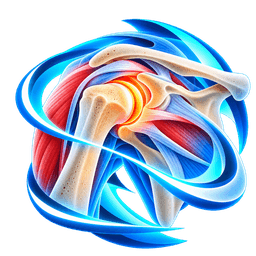
The shoulder's main joint is the glenohumeral joint. It is formed by the head of the humerus—the rounded upper end of the arm bone—and the glenoid, a relatively shallow socket on the shoulder blade.
Healthy joint surfaces are covered with smooth articular cartilage. The cartilage allows the humeral head to glide against the glenoid with very little friction.
When osteoarthritis or another destructive shoulder condition damages this cartilage, movement can become increasingly painful.
The joint may become stiff.
Grinding or clicking can develop.
A patient may find it difficult to reach overhead, wash their hair, put on a coat, reach behind the back or sleep comfortably on the affected side.
AAOS describes shoulder replacement as an increasingly common procedure that is effective at reducing pain and helping patients resume everyday activities.
What exactly is replaced?
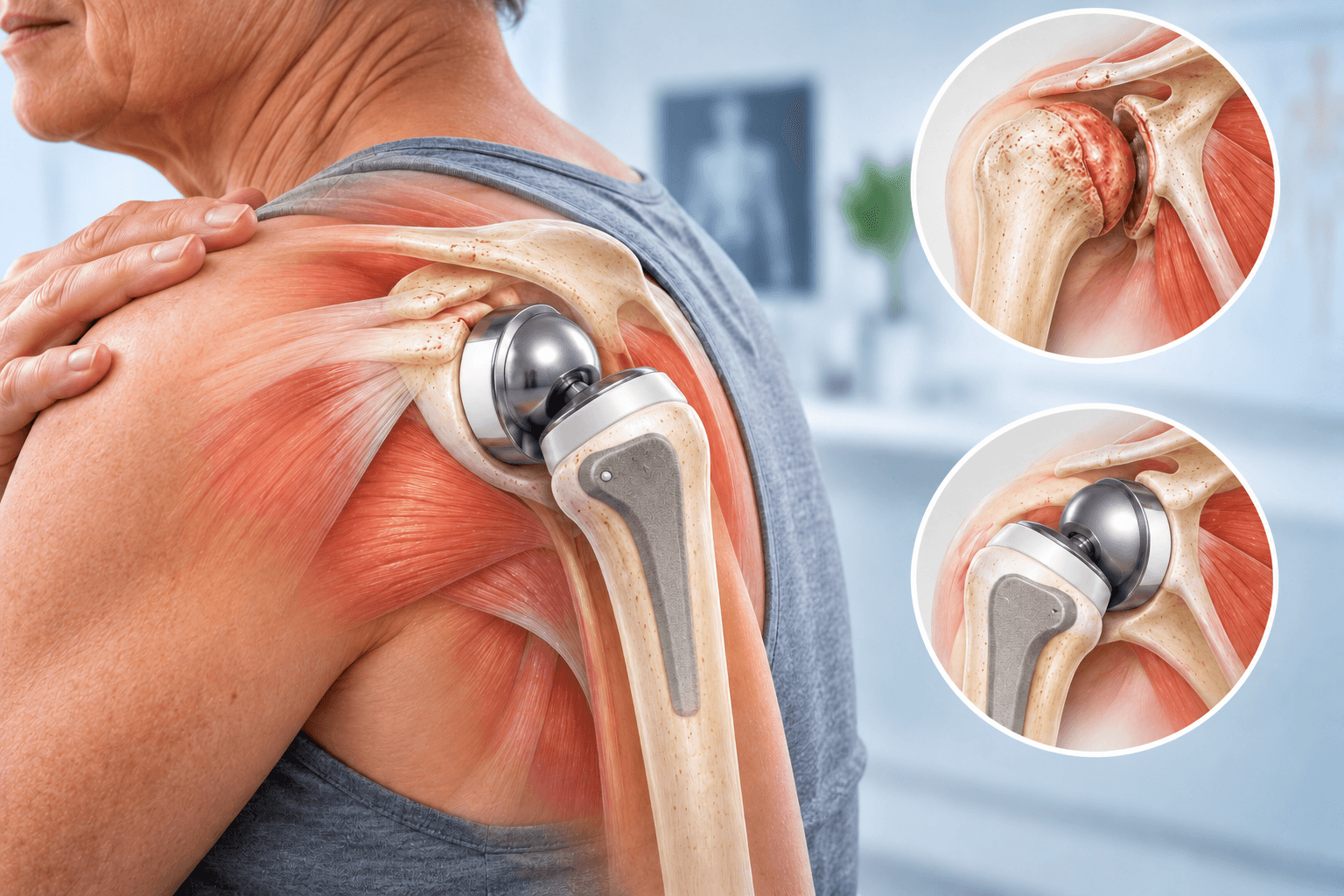
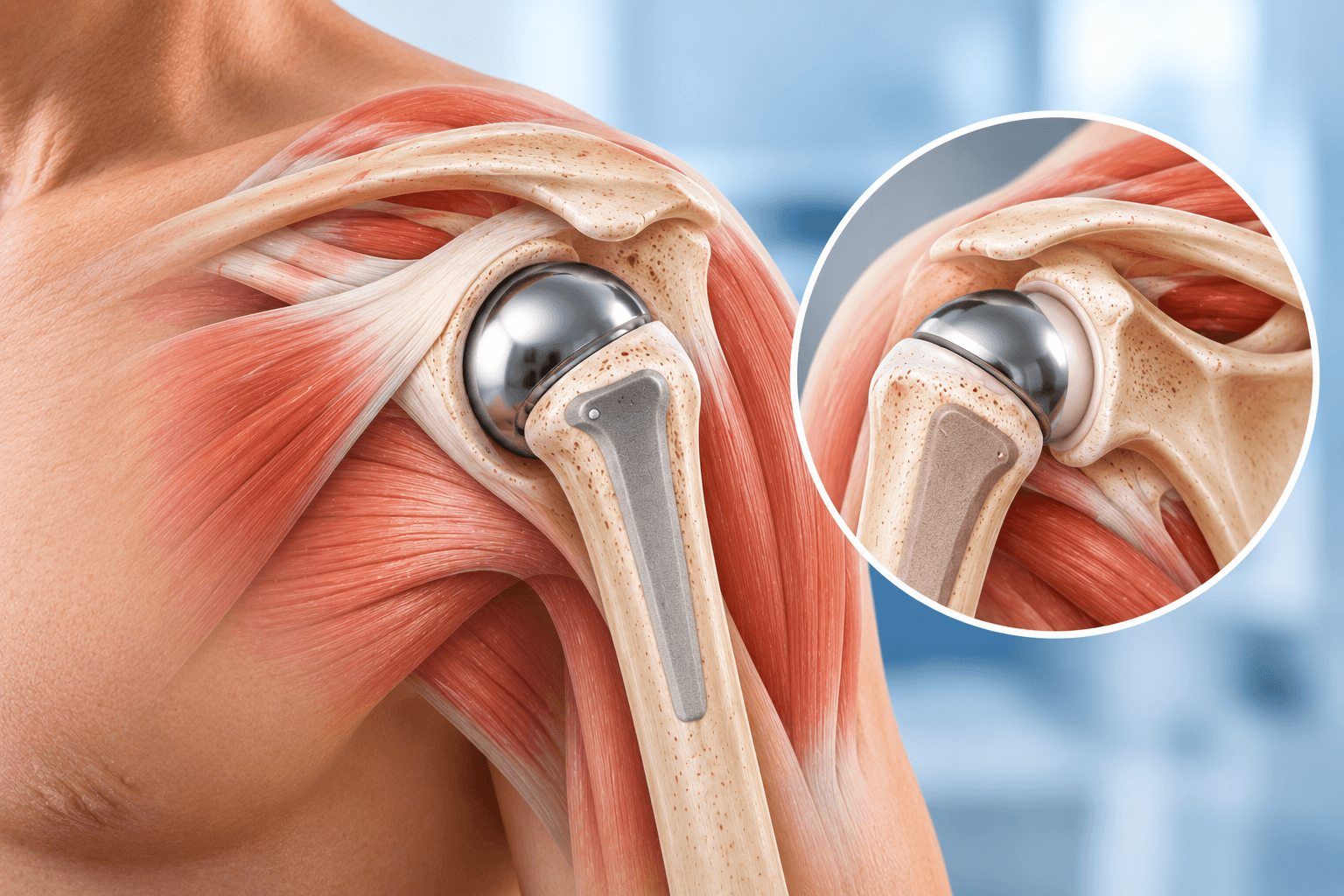
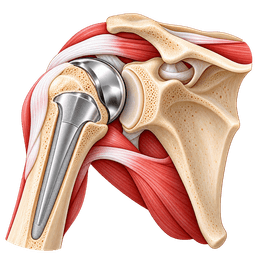
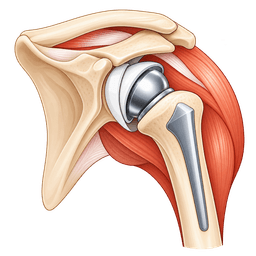
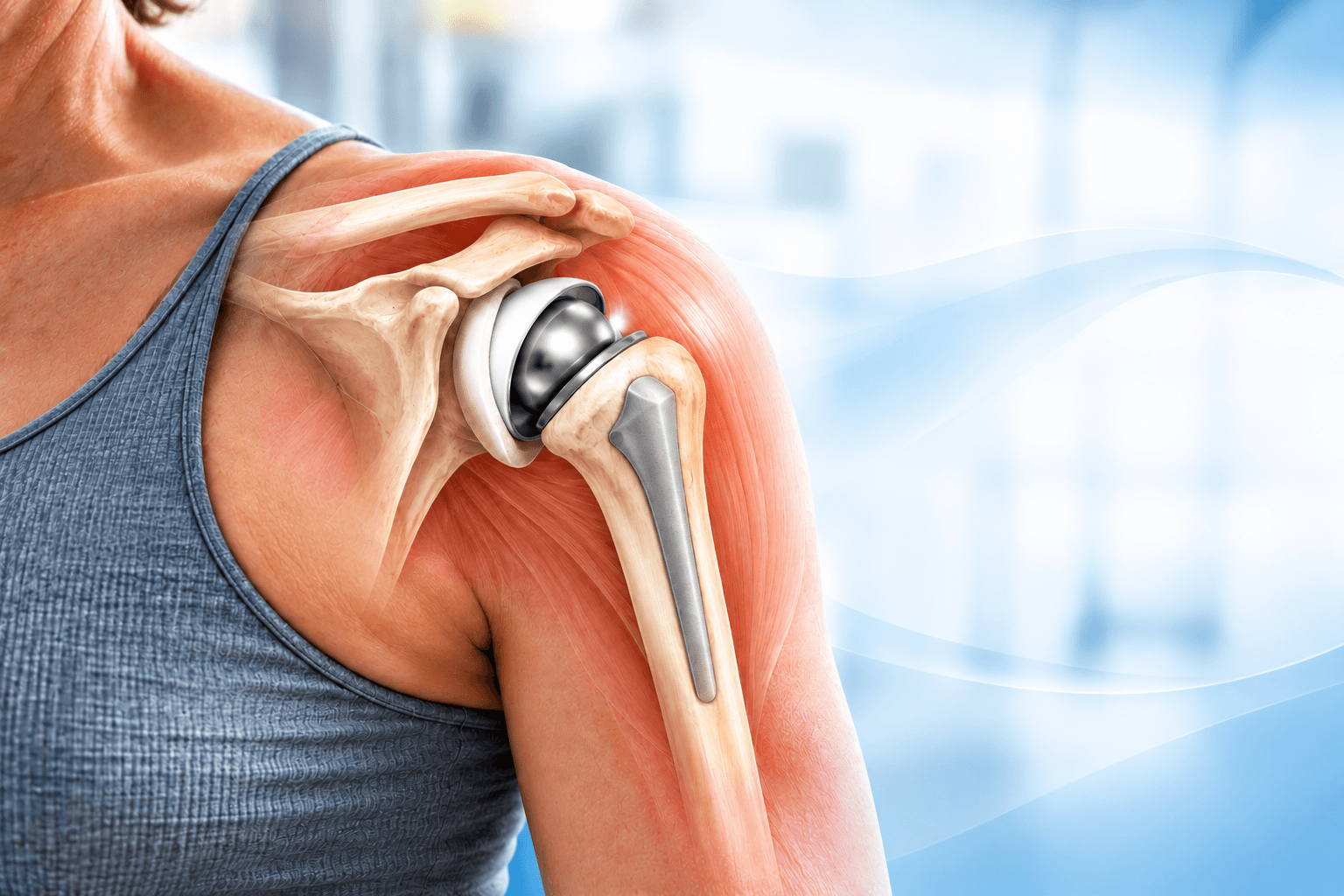
In an anatomical total shoulder replacement, the damaged natural anatomy is reproduced as closely as possible.
The surgeon replaces the humeral head with a smooth prosthetic ball.
A stem or stemless component secures the ball to the humerus.
The arthritic glenoid surface is prepared and resurfaced with a prosthetic socket, most commonly made from polyethylene.
The new metal or ceramic ball moves inside the new socket.
AAOS describes conventional total shoulder replacement as replacement of the arthritic surfaces with a polished metal ball and plastic socket.
This makes the operation different from hemiarthroplasty, where only the humeral head is replaced.
It is also different from reverse total shoulder replacement, where the configuration is intentionally reversed.
Why is shoulder replacement different from hip replacement?
The shoulder and hip are both ball-and-socket joints, but their biomechanics are very different.
The hip has a deep socket and is primarily designed to transmit body weight.
The shoulder socket is shallow because the shoulder prioritizes mobility.
That allows the arm to move through a very large range but makes shoulder stability far more dependent on muscles, tendons and ligaments.
The rotator cuff is especially important.
Four rotator cuff muscles and their tendons help keep the humeral head centred on the glenoid while the arm moves.
This is why rotator cuff integrity strongly influences the choice between anatomical and reverse total shoulder replacement.
Why would someone need total shoulder replacement?
The most common reason is glenohumeral osteoarthritis.
In osteoarthritis, cartilage progressively deteriorates.
As the smooth cartilage disappears, bone surfaces begin rubbing against each other.
The body may produce osteophytes, commonly called bone spurs.
The shoulder becomes painful and stiff.
AAOS notes that symptoms of glenohumeral osteoarthritis can include shoulder pain, clicking and loss of movement, and X-rays commonly show joint-space narrowing and osteophytes.
Other conditions that can eventually require shoulder prosthesis surgery include rheumatoid arthritis, post-traumatic arthritis, osteonecrosis, severe fractures and failed previous shoulder surgery.
What symptoms may improve?
The main objective is pain relief.
Patients may also experience improvement in:
shoulder movement;
sleep;
ability to dress;
personal hygiene;
reaching;
light household tasks;
recreational activity.
AAOS reports that patients undergoing TSA should experience substantial pain reduction and improved mobility, although recovery also depends on general physical condition, anatomy, activity and adherence to postoperative instructions.
Does total shoulder replacement restore a completely normal shoulder?
Not necessarily.
A successful prosthetic shoulder can be dramatically less painful and substantially more functional without reproducing every aspect of a natural shoulder.
Some patients retain limitations in internal rotation, overhead strength or heavy lifting.
Recovery also depends on the condition of muscles and tendons around the joint.
In anatomical TSA, a healthy rotator cuff is particularly important.
In reverse TSA, the implant is designed to rely more heavily on the deltoid.
The goal is therefore comfortable, useful shoulder function, not necessarily unlimited strength or athletic performance.
Conditions treated
Who it's for
- Severe glenohumeral osteoarthritis
- Shoulder pain that continues despite appropriate non-surgical treatment
- Moderate or severe pain at rest or during sleep
- Major loss of shoulder motion
- Rheumatoid or inflammatory arthritis with severe joint destruction
- Post-traumatic shoulder arthritis
- Osteonecrosis of the humeral head
- Selected severe shoulder fractures
- Rotator cuff tear arthropathy
- Failed previous shoulder surgery or shoulder replacement
Good candidates
A good candidate for total shoulder replacement has shoulder-joint disease that significantly limits normal life and is likely to improve when the damaged joint surfaces are replaced.
AAOS lists several common features among patients who benefit from surgery: severe pain interfering with everyday activities, pain while resting, loss of motion or weakness and inadequate improvement after medication, injections or physical therapy.
Symptoms should come from the shoulder joint
Not all shoulder pain is caused by glenohumeral arthritis.
Other conditions can include:
rotator cuff disease;
frozen shoulder;
cervical spine disease;
acromioclavicular arthritis;
nerve compression;
tendon problems.
Replacing an arthritic joint is unlikely to correct symptoms caused predominantly by another problem.
Clinical examination and imaging therefore need to tell a coherent story.
Anatomic total shoulder replacement candidates
A standard anatomical total shoulder replacement is generally most appropriate when:
arthritis affects both the humeral head and glenoid;
the rotator cuff remains functional;
adequate glenoid bone is available;
the deltoid and neurological function are intact.
AAOS specifically describes patients with bone-on-bone osteoarthritis and intact rotator cuff tendons as good candidates for conventional total shoulder replacement.
Reverse total shoulder replacement candidates
A reverse total shoulder replacement uses a different mechanical strategy.
AAOS lists major indications including:
irreparable rotator cuff tear;
cuff tear arthropathy;
severe pain with inability to elevate the arm;
failed previous shoulder replacement;
complex shoulder fracture;
chronic shoulder dislocation;
selected tumors.
Reverse shoulder replacement is increasingly also used in selected older patients with osteoarthritis and an intact rotator cuff, particularly where glenoid anatomy, age or future cuff failure affects implant choice.
Current research shows that the decision is evolving rather than settled.
A 2026 meta-analysis of patients aged 70 or older with intact rotator cuffs found similar patient-reported outcomes between reverse and anatomic TSA. Anatomic TSA provided better rotation, while reverse TSA had lower revision risk in the studies analyzed.
Another 2025 meta-analysis of rotator-cuff-intact osteoarthritis similarly found lower revision risk with reverse TSA but better external rotation after anatomic TSA.
These findings do not mean that reverse replacement is automatically better for every older patient.
Implant choice should consider the patient's rotator cuff, glenoid shape, age, activities, bone quality and goals.
Is there an age limit?
There is no universal age threshold.
Most shoulder replacements are performed in older adults because arthritis becomes more common with age.
However, younger adults can develop severe arthritis through trauma, inflammatory disease, osteonecrosis or previous surgery.
Age matters partly because a younger patient has more years during which the prosthesis may eventually wear or loosen.
A 2026 systematic review of anatomic TSA in patients under 50 found good functional improvement but showed that long-term survivorship becomes less certain as follow-up extends beyond 15 years.
The decision should therefore consider the patient's level of disability and long-term expectations rather than a single age cutoff.
Medical optimization
The AAOS glenohumeral osteoarthritis summary notes that factors such as poorly controlled diabetes, hypertension, tobacco use, opioid use, malnutrition and other medical or psychosocial issues can be associated with worse outcomes or higher complications and may need optimization before elective shoulder replacement.
This does not mean that every patient with a chronic medical condition cannot have surgery.
It means modifiable risk should be addressed whenever possible.
Before surgery
Preparing for total shoulder replacement involves confirming the diagnosis, selecting the appropriate type of prosthesis and optimizing the patient's health and home environment.
Orthopedic evaluation
The surgeon begins with a detailed history.
Important information includes:
where the pain occurs;
how long it has been present;
whether pain occurs at night;
ability to reach overhead;
ability to reach behind the back;
dressing difficulties;
previous shoulder injuries;
previous surgery;
treatments already tried.
The shoulder examination assesses range of motion, strength and stability. AAOS lists medical history, physical examination and imaging as core parts of the evaluation.
X-rays
Standard shoulder radiographs usually provide the foundation for diagnosis and planning.
X-rays can show:
joint-space narrowing;
bone-on-bone arthritis;
osteophytes;
glenoid wear;
humeral head deformity;
previous fracture changes.
The surgeon may obtain several views to understand the glenoid and humeral anatomy from different directions.
CT scan
CT imaging is increasingly important for shoulder replacement planning.
It can demonstrate the three-dimensional anatomy of the glenoid and quantify:
bone loss;
version;
inclination;
deformity.
CT-based planning can be particularly useful when the glenoid has substantial wear.
Some computer-assisted and patient-specific systems also use CT data.
MRI or ultrasound
MRI or ultrasound can be useful when the condition of the rotator cuff needs clarification.
This is particularly relevant when deciding between an anatomical and reverse replacement.
AAOS notes that MRI, CT or ultrasound may occasionally be required to evaluate bone and surrounding soft tissues.
Rotator cuff assessment
A functioning rotator cuff is central to traditional anatomical TSA.
If the cuff is irreparably torn, a conventional prosthesis may not remain properly centred and may not produce good arm elevation.
In that setting, reverse total shoulder replacement can provide a more appropriate biomechanical solution.
Medical evaluation
AAOS advises that patients may undergo a complete medical examination before surgery, with specialist review for chronic conditions such as heart or kidney disease when appropriate.
Preoperative testing may include:
blood count;
kidney function;
electrolytes;
ECG;
other investigations according to age and medical history.
Medication review
The surgeon and anaesthetic team should receive a complete medication list.
Special attention is required for:
anticoagulants;
antiplatelet medicines;
diabetes treatment;
immunosuppressive medication;
corticosteroids;
supplements affecting bleeding.
Patients should not independently stop blood thinners.
AAOS specifically advises coordinating blood-thinner management with the patient's medical team.
Diabetes
Good blood-glucose control helps reduce surgical risk.
Patients with diabetes may require adjustment of medication around fasting and surgery.
Smoking
Tobacco and nicotine can adversely affect wound healing.
Smoking cessation should therefore be encouraged before elective shoulder replacement.
Preparing the home
Shoulder replacement creates a unique recovery challenge because one arm has limited function.
For several weeks, ordinary activities can be difficult, including:
dressing;
bathing;
preparing food;
washing hair;
opening containers;
laundry.
AAOS recommends moving frequently used items from high shelves to more accessible locations before surgery and notes that many patients need assistance with daily tasks during early recovery.
Button-front or loose clothing is particularly useful because pulling a tight shirt over the head can be difficult.
International-patient preparation
Patients travelling for shoulder prosthesis surgery should ideally send:
recent X-rays;
CT or MRI when available;
previous operative reports;
medication list;
medical history;
details of previous injections;
information about rotator cuff tears;
reports from prior shoulder surgery.
The treating surgeon should assess these records before travel whenever possible.
An international patient should understand whether the proposed operation is:
anatomical TSA;
reverse TSA;
hemiarthroplasty;
revision replacement.
These procedures should not be bundled under one vague label simply as “shoulder replacement.”
How the operation is performed
How is total shoulder replacement done?
Total shoulder replacement is performed by exposing the shoulder joint, removing the damaged humeral head, preparing the arm bone and glenoid, and implanting prosthetic components that recreate—or in reverse replacement deliberately alter—the shoulder's ball-and-socket mechanics.
The operation generally takes about two hours.
Anaesthesia
Most patients receive general anaesthesia.
A regional nerve block can also be used.
The block temporarily numbs the nerves supplying the shoulder and arm and can provide effective early postoperative pain relief.
Some patients receive both general and regional anaesthesia.
Positioning
The patient is commonly positioned in a semi-seated position known as the beach-chair position.
The shoulder and arm are prepared with antiseptic solution and sterile drapes.
The surgeon confirms the correct side and surgical plan before incision.
Surgical approach
A common approach is the deltopectoral approach at the front of the shoulder.
The surgeon develops a natural interval between muscles to reach the joint.
Some surgeons use an anterosuperior approach in selected circumstances.
Approach selection depends on prosthesis type, anatomy and surgeon experience.
Managing the subscapularis
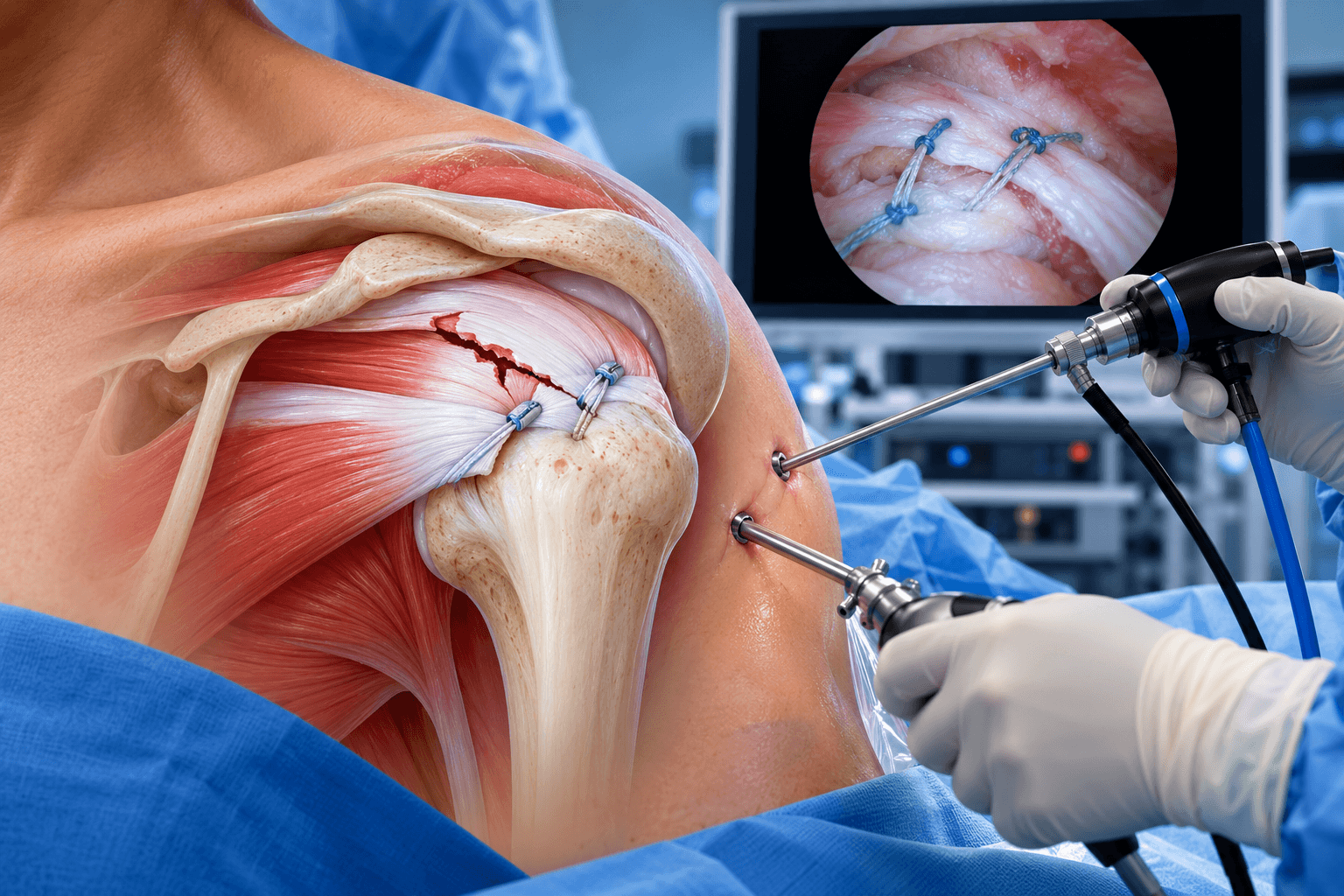
In many anatomical total shoulder replacements performed through a deltopectoral approach, the subscapularis tendon must be moved or detached temporarily to reach the joint.
It is then repaired.
Protecting this repair is one important reason why total shoulder replacement rehabilitation protocols often limit active movement and external rotation during the early postoperative weeks.
The exact restrictions depend on how the subscapularis was managed.
Exposing the humeral head
The joint is carefully exposed.
The surgeon evaluates cartilage loss, osteophytes and bone quality.
The arthritic humeral head is removed according to the planned orientation.
Preparing the humerus
The humeral canal or metaphysis is prepared to accept the prosthetic component.
Implants may be:
stemmed;
short-stemmed;
stemless.
The component can be press-fit or cemented depending on bone quality and implant design.
AAOS notes that a non-cemented humeral component can be used when bone quality is good, while cement can be appropriate when bone is softer.
Preparing the glenoid
The natural glenoid cartilage is removed.
The surgeon creates an appropriate surface for the prosthetic socket.
The amount of bone removed is carefully controlled.
Glenoid orientation matters because excessive malposition can contribute to wear, edge loading or loosening.
Bone loss can make this stage more complex.
Augmented components or bone grafting may sometimes be required.
Glenoid component
In traditional anatomical TSA, the glenoid is usually resurfaced with polyethylene.
AAOS states that the plastic glenoid component is commonly cemented into place.
Modern designs vary.
Some incorporate pegs, keels, porous metal or hybrid fixation.
Humeral component
The humeral component contains a stem or metaphyseal fixation element and a prosthetic head.
The surgeon selects a size and offset intended to reproduce the patient's normal anatomy as closely as possible.
Trial components
Temporary trial components may be inserted first.
The surgeon assesses:
shoulder stability;
range of motion;
soft-tissue tension;
component sizing.
Adjustments are made before final implantation.
Final implantation
The definitive components are inserted.
The shoulder is reduced so the new ball articulates with the prosthetic socket.
The surgeon confirms stability and movement.
Soft-tissue repair
The subscapularis and other tissues are repaired according to the surgical approach.
Careful repair is important for stability and postoperative function.
Closure
The wound is irrigated and closed.
A sterile dressing is applied.
The arm is usually placed in a sling.
How reverse total shoulder replacement differs
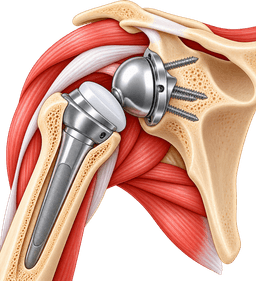
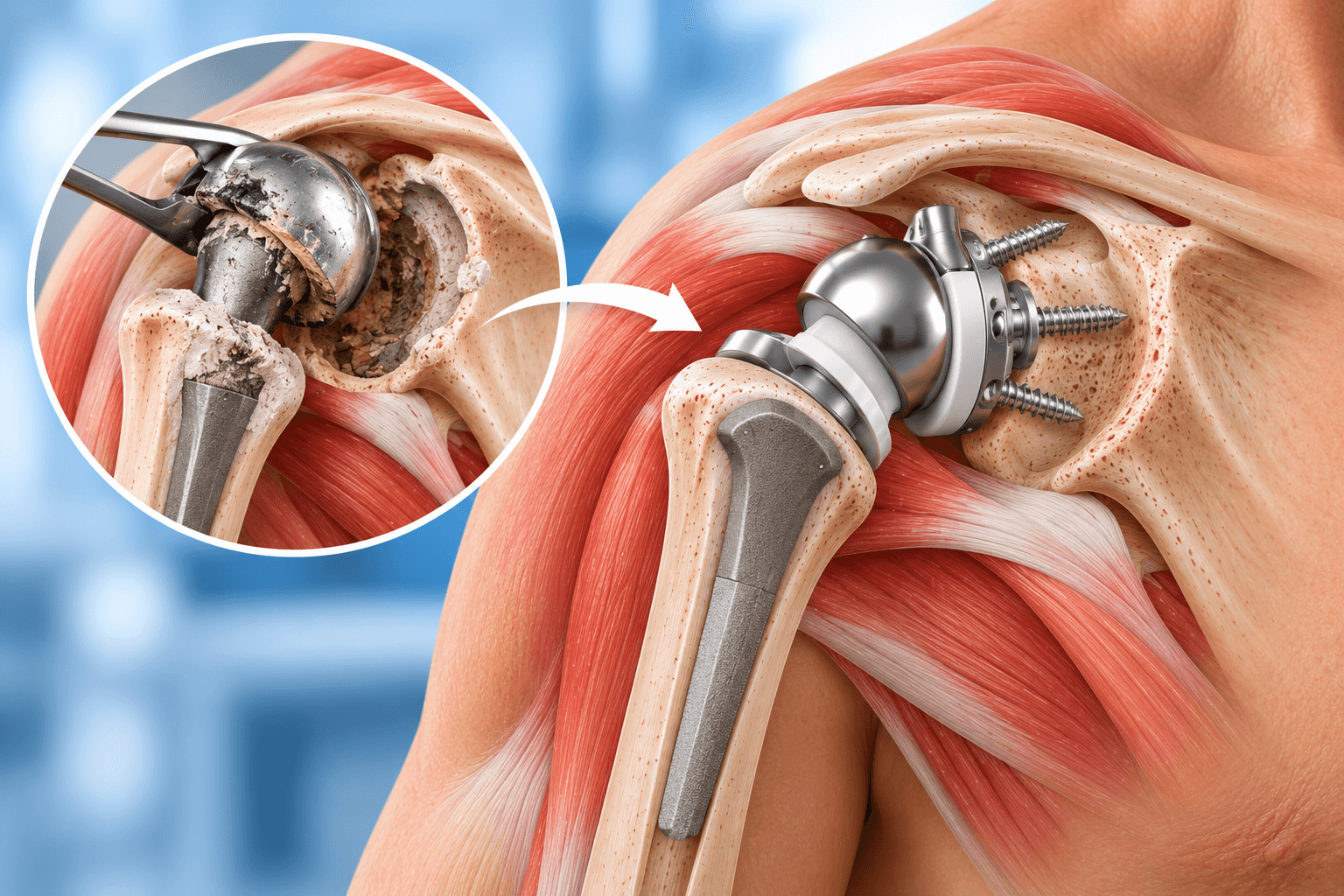
In reverse total shoulder replacement, the anatomy of the prosthetic joint is reversed.
Instead of placing the ball on the humerus and socket on the scapula:
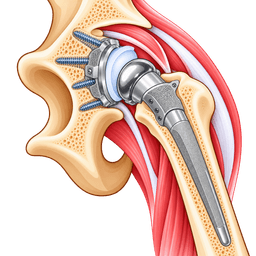
a metal ball, called a glenosphere, is fixed to the glenoid;
a concave polyethylene socket is attached to the humeral side.
AAOS explains that this configuration allows the deltoid muscle to perform more of the work normally carried out by a functioning rotator cuff.
This altered geometry moves the shoulder's centre of rotation and changes the mechanical leverage of the deltoid.
The operation is therefore not simply an anatomical replacement assembled backwards.
It is a different biomechanical reconstruction.
Reverse implant components
A typical reverse implant includes:
glenoid baseplate;
fixation screws;
glenosphere;
humeral stem or stemless component;
polyethylene humeral liner.
Why the deltoid matters
The deltoid is the large muscle covering the outside of the shoulder.
In reverse shoulder replacement, the implant geometry allows the deltoid to elevate the arm even when the rotator cuff cannot adequately centre and move the natural joint.
A functioning deltoid and axillary nerve are therefore particularly important.
Reverse versus anatomic total shoulder replacement
Neither implant is universally superior.
Anatomic TSA historically remains an important choice for osteoarthritis with an intact functional cuff.
Reverse TSA is crucial for cuff-deficient shoulders and is increasingly used in other situations.
Recent meta-analyses show broadly comparable pain and patient-reported outcomes in selected older patients with intact cuffs, but anatomic TSA tends to preserve better rotational movement, while several studies report lower revision rates with reverse TSA in older cohorts.
The choice should therefore be individualized.
Hospital stay
Shoulder replacement is increasingly performed using short-stay pathways.
AAOS states that patients may be discharged the same day or admitted overnight. Most patients who require admission can go home the following day, although people with significant medical conditions or limited home support may stay longer.
Recovery room
Immediately after surgery, the patient is transferred to a monitored recovery area.
Staff monitor:
blood pressure;
heart rate;
breathing;
oxygen;
pain;
nausea;
hand circulation;
neurological function.
If a nerve block was used, the arm may remain numb and weak for several hours.
Patients should understand that this temporary weakness is an expected effect of the block.
Sling
The arm is usually supported in a sling.
The precise duration depends on:
anatomical versus reverse replacement;
subscapularis repair;
bone quality;
additional rotator cuff repair;
fracture surgery;
surgeon preference.
Traditional anatomical TSA protocols often use a sling for approximately 3–4 weeks. The Brigham protocol specifies continuous sling use for roughly that duration during the initial healing phase.
Reverse replacement protocols can differ substantially, and some contemporary evidence supports earlier mobilization in selected patients.
Eating and drinking
Once the anaesthetic has worn off adequately, patients normally begin drinking and eating.
AAOS notes that patients admitted after shoulder replacement are usually able to eat solid food and get out of bed by the following day.
Pain management
Pain is expected after the operation.
Pain management can combine:
regional nerve block;
local anaesthetic;
acetaminophen/paracetamol;
anti-inflammatory medication where medically suitable;
short-term opioid medication when required.
AAOS recommends multimodal treatment and limiting opioid exposure to the lowest amount needed for the shortest practical duration.
Finger, wrist and elbow movement
Even while the shoulder remains protected, movement of the hand, wrist and elbow is commonly encouraged.
This helps maintain mobility and reduces stiffness in the rest of the limb.
Discharge
A patient can usually leave the hospital when:
observations are stable;
pain is manageable;
nausea is controlled;
the patient understands sling use;
wound instructions are understood;
basic daily tasks can be managed safely;
adequate assistance is available at home.
International patients may remain locally longer even after hospital discharge so the surgeon can evaluate the wound and early function before travel.
Recovery
Recovery narrative
Shoulder replacement recovery occurs in stages. Basic independence can return within the first several weeks, active shoulder use expands over approximately 6–12 weeks, and strength and higher-level function can continue improving for six months or longer.
Recovery must also distinguish between anatomical total shoulder replacement and reverse total shoulder replacement.
They use different biomechanics and can have different precautions.
A patient who also had a rotator cuff repair, fracture reconstruction or bone graft may progress more slowly.
For this reason, no generic total shoulder replacement protocol should override the operating surgeon's instructions.
The first few days
The arm is usually supported in a sling.
Pain, swelling and bruising around the shoulder and upper arm are expected.
The patient commonly begins:
hand movement;
wrist movement;
elbow movement;
selected gentle shoulder exercises when approved.
Activities such as eating, dressing and personal hygiene can require adaptation.
Patients often rely heavily on the opposite arm.
Sleeping
Sleeping can be difficult during the first weeks.
Many patients are more comfortable in a reclined position or with pillows supporting the operated arm.
The shoulder should not be allowed to fall into an unsupported position that stresses the healing anterior tissues.
Sling use
Sling duration varies.
A traditional anatomical total shoulder replacement rehabilitation protocol may use continuous sling protection for approximately 3–4 weeks followed by gradual weaning.
The surgeon may alter this timeline.
Fracture reconstruction or tendon repair can require longer protection.
Some reverse replacements can use shorter sling periods under selected protocols.
Passive movement
Early shoulder rehabilitation often begins with passive range of motion.
Passive means that another person, gravity or the opposite arm produces movement rather than the operated shoulder muscles doing the work.
The objective is to prevent unnecessary stiffness while protecting healing tissue.
The Brigham protocol specifically warns that passive movement should not become aggressive stretching.
Active-assisted movement
As healing progresses, the patient begins helping move the arm.
Examples can include using the opposite hand, a stick or pulley according to the therapy plan.
Active movement
The patient eventually begins raising the arm using the operated shoulder's own muscles.
This phase should begin only when the surgeon and physiotherapist consider the repaired tissues ready.
Strengthening
Strengthening starts later than simple mobility.
The early aim is not to lift heavy weights.
Rehabilitation focuses first on safe movement and muscle control.
Progressive resistance is then introduced.
Brigham's traditional TSA protocol does not begin its early strengthening phase before approximately 4–6 weeks and progresses into more advanced strengthening later.
Shoulder replacement recovery expectations
Patients often expect the shoulder to feel normal within a few weeks because the hospital stay is short.
The hospital stay and biological recovery are very different things.
A one-night admission does not mean the joint is healed.
Soft tissues require weeks to repair.
Muscles need time to recover from surgical inhibition and years of reduced use.
Range of motion can continue improving for months.
Driving
Driving is not recommended while the arm remains functionally restricted, while the sling interferes with vehicle control or while the patient is using sedating pain medication.
A traditional Brigham anatomical TSA protocol prohibits driving for the first three weeks, but actual clearance varies significantly according to side of surgery, vehicle, sling use, control and surgeon preference.
A patient should be able to:
control the steering wheel;
perform emergency manoeuvres;
operate controls;
check blind spots;
react without hesitation.
Return to work
Work timing depends heavily on physical demands.
Someone working from a computer may resume some activities much sooner than a construction worker who performs overhead lifting.
A 2025 systematic review and meta-analysis found average return-to-work rates of approximately 76% after anatomic TSA and 46% after reverse TSA, although the populations differed substantially and many reasons for not returning were unrelated to the shoulder itself.
This difference should not be used to tell an individual patient that reverse replacement has a 46% chance of returning to work. Reverse recipients tend to be older and have different underlying conditions.
Return to sports
Return to recreational activity is common.
The same 2025 meta-analysis reported pooled return-to-sport rates of approximately 91% after anatomical TSA and 80% after reverse TSA.
A 2026 systematic review specifically examining reverse shoulder replacement reported return to sport at any level in approximately 85% of included patients.
Low-impact activities are usually easier to resume than repetitive heavy overhead or contact sports.
Long-term lifting
Long-term heavy lifting recommendations differ between surgeons.
Repeated high loads can increase forces across implants and soft tissues.
Patients should discuss activities such as:
heavy weightlifting;
overhead construction work;
heavy manual labour;
contact sport.
The goal is to protect implant longevity without unnecessarily restricting ordinary life.
Recovery timeline
- Protect the repair while maintaining safe mobility1Protect the repair while maintaining safe mobility
Day 0 to Week 4
The shoulder is usually protected in a sling. Hand, wrist and elbow movement begins early. Gentle passive shoulder movement may begin according to the surgical plan. The patient learns safe dressing, sleeping and hygiene strategies. Active shoulder lifting, heavy objects and supporting body weight through the operated arm are generally avoided. A traditional anatomical TSA protocol uses the sling continuously for approximately 3–4 weeks.
- Begin transitioning toward active-assisted and active movement2Begin transitioning toward active-assisted and active movement
Weeks 4–6
The sling is gradually reduced when approved. Passive motion continues and active-assisted movement progresses. Early strengthening may begin only when soft-tissue healing and surgeon instructions allow. Brigham's TSA protocol specifically places the beginning of early strengthening no sooner than approximately 4–6 weeks after surgery.
- Restore active shoulder control3Restore active shoulder control
Weeks 6–10
Rehabilitation increasingly focuses on active range of motion and controlled movement against gravity. The patient works on scapular mechanics and functional use of the arm. Light resistance can be introduced progressively. Heavy lifting, sudden movements and pushing body weight through the operated arm remain inappropriate until sufficient healing has occurred.
- Progressive strengthening and return to broader daily function4Progressive strengthening and return to broader daily function
Weeks 10–16
Strengthening becomes more advanced. Brigham's guideline places its advanced-strengthening stage around weeks 10–16 and emphasizes improving active range of motion, strength and endurance while avoiding sudden heavy loading.
- Return toward recreational activity5Return toward recreational activity
Months 4–6
Strength, endurance and coordination continue improving. Patients may resume selected recreational activities following medical clearance. Range of motion may still improve. Patients with reverse shoulder replacement may have different expectations for rotation than those with an anatomical prosthesis.
- Long-term functional maturation6Long-term functional maturation
Months 6–12
Most biological healing is well advanced, but strength and confidence can continue improving. Patients focus on sustainable daily activity and protecting the prosthesis from repetitive excessive loads. Residual stiffness can continue improving, although the final range of motion depends strongly on preoperative function and implant type.
Outcomes and success rates
Total shoulder replacement is generally effective at reducing pain and improving shoulder function.
AAOS describes shoulder replacement as very effective for pain relief and return to everyday activities.
The degree of improvement depends on:
preoperative stiffness;
diagnosis;
rotator cuff condition;
implant type;
bone quality;
age;
rehabilitation;
complications.
Pain relief
Pain relief is usually the most predictable benefit.
Severe arthritis frequently causes:
night pain;
rest pain;
pain during reaching;
grinding discomfort.
Replacing the damaged surfaces removes much of the arthritic bone-on-bone articulation.
Patients still experience surgical pain during early recovery, but this generally improves with healing.
Range of motion
Motion often improves substantially.
However, final motion is influenced by the movement available before surgery.
A very stiff shoulder before surgery may remain somewhat limited even after technically successful replacement.
Anatomic total shoulder replacement outcomes
Anatomic TSA can provide excellent pain relief and range of motion when the rotator cuff is healthy.
It often provides especially good rotational movement because the implant preserves normal shoulder geometry and uses the rotator cuff.
Reverse total shoulder replacement outcomes
Reverse TSA can restore useful arm elevation even when the rotator cuff is severely deficient.
A systematic review of studies with at least five years of follow-up reported high patient satisfaction and meaningful improvements in pain and function after reverse shoulder arthroplasty.
How long does a shoulder replacement last?
Long-term survivorship has improved substantially.
A 2026 systematic review pooled data from four national joint registries and long-term clinical studies.
Registry data showed:
91.5% anatomic TSA survival at 13 years;
90.8% anatomic TSA survival at 15 years;
93.2% reverse TSA survival at 13 years;
90.7% reverse TSA survival at 15 years.
The authors concluded that approximately 90% of shoulder replacements survive to 15 years without revision. Long-term anatomic TSA case-series data estimated approximately 82% survival at 20 years, although confidence intervals were wider because fewer patients had such long follow-up.
These figures describe freedom from revision, not perfect shoulder function.
Some implants can function longer.
Some require revision earlier.
Younger patients
Implant longevity becomes especially important in younger people.
A patient receiving a prosthesis at 40 may place decades of demand on it.
A 2026 systematic review of anatomical TSA in patients under 50 found survivorship ranging roughly from 71–84% at 11–15 years and approximately 61–64% beyond 15 years in the limited studies available.
These results should not be directly applied to every modern prosthesis because implant designs and populations vary, but they highlight why age matters when discussing lifetime revision risk.
Implants and technology
Anatomical total shoulder prosthesis
A conventional prosthesis typically contains:
humeral stem or stemless component;
humeral head;
glenoid component.
The humeral head can be metal or ceramic depending on system.
The glenoid is commonly polyethylene.
AAOS describes the traditional system as a polished metal ball with a plastic socket.
Stemmed shoulder replacement
A stem extends into the upper humerus.
This is a long-established method.
The stem can be cemented or press-fit.
Short-stem shoulder replacement
Shorter stems preserve additional bone.
They may make later revision easier in certain circumstances and can reduce stress concentration compared with very long stems.
Stemless shoulder replacement
Stemless designs fix primarily within the upper humerus.
They preserve the humeral canal.
Adequate bone quality is required.
They are not appropriate for every anatomy.
Glenoid components
Traditional anatomical TSA frequently uses an all-polyethylene glenoid.
Designs can include:
pegged;
keeled;
augmented.
Augmented glenoids can compensate for selected patterns of glenoid bone loss without requiring excessive reaming.
Reverse shoulder components
Reverse implants include:
glenoid baseplate;
fixation screws;
glenosphere;
humeral cup;
polyethylene liner.
Modern reverse designs vary in how much they medialize or lateralize the centre of rotation.
These geometry decisions can influence stability, range of motion, deltoid tension and scapular notching.
Preoperative 3D planning
CT-based three-dimensional planning has become increasingly common.
It allows the surgeon to study:
glenoid wear;
component version;
inclination;
bone stock.
Software can simulate implant positioning before surgery.
Patient-specific instrumentation
Custom guides can be created using the patient's imaging.
They aim to reproduce the surgical plan accurately.
Computer navigation
Navigation systems can provide real-time feedback during component placement.
Robotics
Robotic shoulder replacement is less widespread than robotic hip and knee arthroplasty.
Technology in shoulder surgery currently focuses heavily on computer planning, navigation and patient-specific instrumentation.
Risks and how they are managed
All surgery carries risk. Partner hospitals follow enhanced-recovery and infection-prevention protocols, and your surgeon will discuss the risks specific to your case before consent.
- Infection
- Implant loosening
- Rotator cuff failure after anatomical TSA
- Dislocation or instability
- Nerve injury
- Periprosthetic fracture
- Acromial or scapular-spine fracture after reverse TSA
- Scapular notching after reverse replacement
- Subscapularis failure
- Stiffness
- Persistent pain
- Wear
- Bleeding and haematoma
- Blood clots and pulmonary embolism
- Anaesthetic complications
Alternatives
- Activity modification : Changing activities that consistently aggravate the shoulder can reduce symptoms and help some patients postpone surgery.
- Physical therapy : Exercise and physiotherapy can improve shoulder function and help preserve movement and strength. Therapy is especially useful in earlier disease when substantial joint function remains.
- .Acetaminophen or anti-inflammatory medication : Pain medicines and NSAIDs can provide short-term symptom relief when medically appropriate. Kidney, stomach, cardiovascular and medication risks should be considered individually. OrthoInfo
- Corticosteroid injection : A corticosteroid injection can provide temporary pain relief in selected patients. It does not rebuild destroyed cartilage, so benefit may diminish as arthritis progresse
- Continued observation : A patient whose symptoms remain manageable does not need surgery simply because X-rays show arthritis. Shoulder replacement is generally elective for osteoarthritis and should be considered when pain and disability justify the recovery and surgical risks.
- Hemiarthroplasty : Hemiarthroplasty replaces only the humeral head. It may be considered when the glenoid cartilage remains relatively preserved or when glenoid bone cannot support a component. For osteoarthritis involving both sides of the joint, total shoulder replacement generally provides better pain relief than hemiarthroplasty.
- Resurfacing hemiarthroplasty : Humeral resurfacing covers the humeral head with a cap-like prosthesis while preserving more bone. Its indications are narrower than those of modern total shoulder replacement
- Reverse total shoulder replacement : For patients with severe cuff deficiency, cuff tear arthropathy, complex fracture or selected glenoid problems, reverse total shoulder replacement may provide more reliable function than an anatomical prosthesis.
What Shoulder Replacement costs
The contracted Turkey partner package next to approved self-pay benchmarks. Benchmarks are 20th–80th percentile ranges of approved records, normalised to USD.
Turkey package
$9,000 – $14,000
United States self-pay
$26,500 – $54,750
United Kingdom self-pay
$12,950 – $29,100
Germany self-pay
$11,900 – $26,350
Typical self-pay range by country
Surgeons who perform Shoulder Replacement
All surgeonsHospitals offering this procedure
Antalya Yaşam Hospital
Private hospital in Muratpaşa, Antalya, with an orthopedics and traumatology department
BHT Clinic Istanbul Tema Hospital
Large private hospital in Atakent, Küçükçekmece, with an orthopedics and traumatology unit
Biruni University Hospital
University hospital in Küçükçekmece, Istanbul, with a published orthopedics and traumatology department
Çankaya Hospital for Orthopedic Care
Çankaya Hospital for Orthopedic Care is an orthopedic hospital in central Ankara with robotic-arm assisted surgery
Sources and references
Peer-reviewed guidance and institutional sources used to write and review this page.
- 01Shoulder Joint Replacement
American Academy of Orthopaedic Surgeons — OrthoInfo, 2026
https://www.orthoinfo.org/treatment/shoulder-joint-replacement/
- 02Reverse Total Shoulder Replacement
American Academy of Orthopaedic Surgeons — OrthoInfo, 2026
https://www.orthoinfo.org/treatment/reverse-total-shoulder-replacement
- 03Management of Glenohumeral Joint Osteoarthritis — Clinical Practice Guideline
American Academy of Orthopaedic Surgeons, 2020
https://www.aaos.org/quality/quality-programs/glenohumeral-joint-osteoarthritis/
- 04Management of Glenohumeral Joint Osteoarthritis — Plain Language Summary
American Academy of Orthopaedic Surgeons, 2024
https://orthoinfo.aaos.org/globalassets/pdfs/plain-language-summary_glenohumeral-arthritis-2024.pdf
- 05Long-term Survival Outcomes Following Total Shoulder Arthroplasty
Shoulder & Elbow / PubMed, 2026
https://pubmed.ncbi.nlm.nih.gov/42488592/
- 06Reverse Versus Anatomic Total Shoulder Arthroplasty in Patients Over 70 With a Competent Rotator Cuff and Glenohumeral Osteoarthritis
Journal of Shoulder and Elbow Surgery / PubMed, 2026
https://pubmed.ncbi.nlm.nih.gov/41276069/
- 07Comparison of Revision Rates and Clinical Outcomes Between Anatomic and Reverse Total Shoulder Arthroplasty for Rotator Cuff-Intact Osteoarthritis
Peer-reviewed systematic review / PubMed, 2025
https://pubmed.ncbi.nlm.nih.gov/41356545/
- 08Why Do Primary Anatomic Total Shoulder Arthroplasties Fail Today? A Systematic Review and Meta-analysis
Peer-reviewed research / PubMed, 2025
https://pubmed.ncbi.nlm.nih.gov/40239916