

Key takeaways
- 1An elbow dislocation is a medical emergency, and urgent local care to put the joint back in place comes before any thought of travel.
- 2Most elbow dislocation injuries follow a fall onto an outstretched hand, a sports collision or a road accident, and the elbow looks visibly out of shape.
- 3Doctors split an elbow dislocation into simple cases with no broken bone and complex cases with a fracture, and the type decides the treatment.
- 4Many simple injuries are treated with a closed reduction, a short period in a splint and early gentle movement to avoid stiffness.
- 5Stiffness is the most common long-term problem after an elbow dislocation, so starting guided movement within about 1 to 2 weeks matters.
- 6Surgery is considered for complex injuries, for a joint that still slips after reduction, and for ligaments that do not heal well.
- 7Treatment of a dislocated elbow in turkey can suit planned reconstruction once the patient is medically stable and the treating team agrees to travel.
Overview
What is elbow dislocation?
An elbow dislocation is an injury in which the bones of the forearm slip out of their normal socket against the upper arm bone. It is the second most commonly dislocated large joint in adults, after the shoulder. This page explains how it happens, how it is treated, how long recovery takes and when treatment in turkey may help.
What is an elbow dislocation?
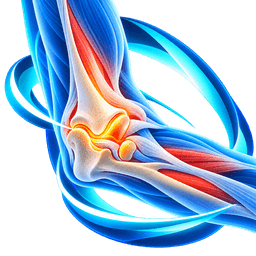
The elbow is a hinge where the upper arm bone (humerus) meets two forearm bones, the ulna and the radius. In an elbow dislocation, the ulna and radius are pushed out of their groove on the humerus. The ligaments that hold the joint together are stretched or torn, and the joint stops working as a hinge.
Most dislocations push the forearm backwards, which doctors call a posterior dislocation. Forward and sideways patterns exist but are far less common. A dislocated elbow often hurts badly, swells fast and cannot be bent in the normal way.
Who is affected by an elbow dislocation?
An elbow dislocation can happen at any age, but it is most frequent in teenagers and young adults who play contact or fall-prone sports. Gymnastics, football, rugby, cycling and skiing are typical settings. Older adults can dislocate the elbow in a simple fall at home, often with a fracture because their bone is more fragile.
Children have a different pattern. Their growth plates and soft bone make a fracture near the elbow more likely than a pure dislocation, so a child with a swollen, deformed elbow needs urgent assessment.
How serious is an elbow dislocation?
An elbow dislocation is serious because the joint, its ligaments, nearby nerves and the main artery of the arm all sit close together. If the joint stays out of place, nerves and blood flow can be compromised. Prompt reduction usually gives a good result, and most people regain a useful, functional elbow.
Urgent local care comes first. Travel for treatment is only considered later, once the patient is medically stable and the treating team agrees that the plan is safe.
How this page is organised
The sections below describe anatomy, symptoms and causes, then the types, diagnosis and look-alike conditions. We then cover non-surgical care, self-care, surgical options and the point at which a specialist opinion is wise. After that come treatment abroad, complications, prevention, outlook and common questions. For wider context, see our elbow overview.
Anatomy
What happens in the body with elbow dislocation
The elbow stays stable because of its bony shape, its ligaments and the muscles that cross it, and an elbow dislocation overcomes all three. Knowing what normally keeps the joint in place explains why some injuries heal easily while others leave the joint loose. Here is a plain-language tour.
What is the normal structure of the elbow?
The elbow is really three joints inside one capsule. The humeroulnar joint is the main hinge and gives bending and straightening. The radiocapitellar joint lets the radius meet the rounded end of the humerus. The proximal radioulnar joint lets the forearm rotate, so the palm can face up or down.
The ulna has a curved notch that wraps around the humerus like a spanner on a nut. At the tip of this notch sits the coronoid process, a small bony beak that stops the ulna sliding backwards. The radial head acts as a second brace on the outer side.
Which ligaments and muscles hold it in place?
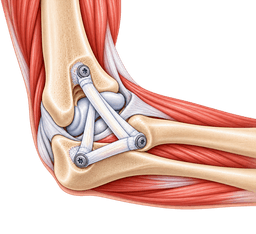
Two strong ligaments run along the sides. The medial collateral ligament runs on the inner side and resists sideways opening toward the body. The lateral collateral ligament complex runs on the outer side and stops the forearm rotating away from the humerus. The joint capsule and the forearm muscles add further support.
Nerves and vessels pass close by. The ulnar nerve runs behind the inner bump of the elbow, the median nerve and the brachial artery cross in front, and the radial nerve lies on the outer side.
What changes in an elbow dislocation?
In most cases the lateral ligament complex tears first, then damage spreads toward the inner side as the force increases. The capsule rips and the muscles that attach near the bumps of the humerus can peel away. If the coronoid or radial head breaks, the bony stops are lost and the joint becomes much less stable.
The cartilage can also be bruised or chipped during the injury. That cartilage damage may cause stiffness or arthritis later, even when the joint is put back correctly.
Symptoms & causes
Elbow dislocation symptoms and causes
Common symptoms
- Severe pain at the elbow immediately after the fall or impact, often sharp and made worse by any attempt to move the arm.
- Visible deformity, where the elbow looks bent, shortened or out of line, and the point of the elbow sits further back than normal.
- Rapid swelling around the joint, often within minutes, followed by bruising that can spread down the forearm over the next 2 to 3 days.
- Inability to bend, straighten or rotate the forearm, because the joint surfaces no longer meet and muscles go into protective spasm.
- The arm is held halfway bent and supported with the other hand, which is a typical guarding posture after a dislocated elbow.
- Numbness or tingling in the ring and little fingers, which suggests the ulnar nerve is stretched or bruised and needs prompt checking.
- Pins and needles or weakness in the thumb and index finger, which may point to the median nerve and should be reported at once.
- A cold, pale or blue hand and a weak or absent wrist pulse, which suggests blood flow is threatened and needs emergency attention.
- A feeling of the elbow "giving way" or clicking in the weeks afterwards, which can mean the ligaments have not healed tightly.
Causes and risk factors
- Fall onto an outstretched hand: the most common cause, because the force travels up the straightened arm and levers the forearm bones out of the joint.
- Sports collisions and falls: contact sports, gymnastics, skateboarding, snowboarding and cycling all create twisting or compressive loads on the elbow.
- Road traffic and workplace accidents: high-energy impacts often cause complex elbow dislocation injuries with fractures and sometimes damage to nerves or vessels.
- Falls in older adults: weaker bone means a stumble can produce a fracture-dislocation instead of a clean ligament injury.
- Previous elbow injury: an earlier dislocation or ligament tear leaves the joint looser, so a smaller force can dislocate it again.
- Generalised ligament laxity: people with very flexible joints may have a lower threshold for dislocation, although this is an uncommon factor.
- Pulling injuries in children: a sudden yank on the arm usually causes a subluxation of the radial head, which is a different and milder problem.
Types
Types and stages of elbow dislocation
Doctors classify an elbow dislocation by direction, by whether bone is broken and by how much soft tissue is damaged. This matters because the classification predicts stability and guides the choice between a splint and surgery. The key distinction is simple vs complex elbow dislocation.
What is a simple vs complex elbow dislocation?
In a simple elbow dislocation, the joint is out of place but there is no significant fracture on the X-ray. The ligaments are torn, yet the bone shape is intact. Roughly half or more of elbow dislocations are simple, and many of these settle with non-surgical care.
In a complex elbow dislocation, the dislocation comes with a fracture of the radial head, coronoid, olecranon or humerus. These injuries are less stable, more likely to need surgery and more prone to stiffness and arthritis.
What is a terrible triad injury?
A terrible triad injury is a specific complex pattern: elbow dislocation plus a fracture of the radial head plus a fracture of the coronoid process. The name reflects its poor reputation in the past, when results were unpredictable. Modern fixation of the bones and ligaments has improved outcomes, although stiffness is still common.
Other named patterns include the posteromedial rotational pattern with a coronoid facet fracture, and the Monteggia-type injury, in which a fracture of the ulna shaft is combined with a radial head dislocation.
How are acute and chronic dislocations different?
An acute dislocation is recent, usually within days. A chronic or neglected dislocation has stayed out of place for weeks or months, which can happen after a missed injury. These need open surgery because scar tissue has formed and the joint cannot simply be put back.
| Type | What is injured | Usual first approach |
|---|---|---|
| Simple dislocation | Ligaments and capsule only, no major fracture | Reduction, short splint, early movement |
| Terrible triad | Radial head and coronoid fractures with ligament tears | Surgery to fix or replace bone and repair ligaments |
| Fracture-dislocation | Olecranon, coronoid or distal humerus fracture | Usually surgery to restore the bony stops |
| Chronic dislocation | Joint out for weeks, scar and contracture | Open release and stabilisation, sometimes a frame |
Diagnosis
How is elbow dislocation diagnosed?
An elbow dislocation is diagnosed by examination and X-rays in an emergency department, and the priority is to check nerves and blood flow before and after the joint is put back. The result decides whether the injury is simple or complex. Treatment starts that same day.
How is an elbow dislocation diagnosed?
The doctor asks how the injury happened, which hand was used to break the fall and whether the elbow has ever dislocated before. The examination looks at skin integrity, swelling, the position of the bony points and the wrist pulse. It also checks sensation and finger movement for each major nerve.
Because the joint is so painful, the elbow cannot be tested for stability at first. That test is done after the reduction, often with the patient sedated or under anaesthesia.
Which imaging is used and why?
Plain X-rays from the front and side confirm the dislocation and show most fractures. They are repeated after reduction to confirm that the joint is centred. A CT scan is added when a fracture is suspected but unclear, because it shows the coronoid and radial head in fine detail and helps plan surgery.
MRI shows the ligaments, cartilage and tendons. It is not needed in the emergency but helps when the elbow stays unstable or painful after the first weeks.
How is stability checked after reduction?
After the elbow is put back, the doctor moves it through bending and straightening and tests whether it stays in place. If it slips at a certain angle, the ligaments are likely badly torn. This "arc of stability" guides whether early movement is safe or whether surgery is needed.
What to bring to a remote review
If you later seek a remote opinion, gather the emergency summary, the reduction note, all X-ray and CT images on disc or link, and the date of injury. Add any nerve findings, your splint and physiotherapy history, and photographs of your range of movement. Our medical record review guide lists exactly what is helpful.
Tests you may have
- Plain X-ray before reduction: confirms the direction of the dislocation and shows obvious fractures of the radial head, coronoid or olecranon.
- Plain X-ray after reduction: confirms the joint is centred and checks for a gap that suggests trapped soft tissue or bone fragments.
- CT scan with 3D reconstruction: maps small coronoid and radial head fractures that plain films can miss and helps plan fixation.
- Examination under anaesthesia: a stability test through the full arc of movement that shows whether the ligaments will hold.
- Pulse and capillary refill check: confirms blood flow to the hand, with Doppler or angiography only if the pulse is lost after reduction.
- Neurological examination: records sensation and muscle power in the ulnar, median and radial nerves before and after the joint is reduced.
- MRI scan: shows ligament tears, cartilage injury and loose bodies when symptoms persist weeks after the initial treatment.
- Stress X-rays or ultrasound: shows how much the joint opens when gently loaded, which helps assess chronic looseness.
Look-alikes
Conditions that can feel like elbow dislocation
Several elbow injuries look similar to a dislocated elbow at first glance, and X-rays separate them. Telling them apart matters because each one is managed differently. The table below compares the main look-alikes.
| Look-alike condition | How it differs | How doctors tell |
|---|---|---|
| Supracondylar fracture | A break of the humerus just above the elbow, mainly in children, with similar swelling and deformity | X-ray shows a bone break and the joint surfaces still aligned |
| Radial head fracture alone | Pain on the outer elbow and limited rotation, with no loss of joint alignment | X-ray or CT shows a fracture and the joint is centred |
| Nursemaid's elbow | A slipped radial head in a toddler after a pull on the arm, with no swelling | History of a pull, the child refuses to use the arm, easy reduction |
| Olecranon fracture | A broken tip of the elbow after a fall on the point, with a gap felt behind the joint | Side X-ray shows the broken olecranon |
| Elbow sprain or ligament tear | Painful and swollen but the joint never left its socket | Normal alignment on X-ray, tenderness over ligaments, MRI if needed |
| Distal biceps rupture | Sudden pain at the front of the elbow with weak forearm turning and a bunched muscle | Hook test and ultrasound or MRI, see distal biceps rupture |
How does a dislocated elbow differ from a fracture?
A fracture is a broken bone, while a dislocation is a lost joint alignment. They often occur together. If the X-ray shows both, the injury is a fracture-dislocation, and the treatment plan is usually closer to that for elbow fractures.
How does it relate to chronic looseness?
Once the elbow has healed, ongoing looseness is described as elbow instability. A dislocation is the event, and instability is a possible consequence. Persistent nerve symptoms at the inner elbow can also be unrelated to the injury and are covered under cubital tunnel syndrome.
Non-surgical
Non-surgical treatment for elbow dislocation
Non-surgical care is the first choice for a simple elbow dislocation that stays stable after the joint is put back. The aim is to protect the healing ligaments for a short time, then restore movement quickly, because long immobilisation causes stiffness. The steps below follow the order most teams use.
What happens first: reduction?
A reduction is the manoeuvre that guides the bones back into position. It is done in the emergency department with pain relief, sedation or a brief anaesthetic so that the muscles relax. The doctor applies traction and gentle pressure, and you may feel a clunk as the joint settles.
The nerves and pulse are checked again, and a new X-ray confirms the result. Do not try to push the elbow back yourself. Doing so can injure nerves and vessels.
How is the elbow immobilised?
After reduction, the arm is placed in a padded back-slab or hinged brace, usually bent to about 90 degrees with the forearm in a position that keeps the joint stable. The splint is worn for about 5 to 7 days in many simple injuries, and longer if the elbow is unstable. Elevation and ice help to control swelling.
When does movement begin?
Evidence suggests that early active movement gives better motion than long immobilisation for stable injuries, and prolonged splinting beyond about 2 to 3 weeks tends to increase stiffness. A physiotherapist teaches gentle bending and straightening, and rotation of the forearm, within the pain limits and the stability range found at the examination.
A hinged brace may block the last degrees of straightening for a few weeks, so the ligaments heal without being stressed.
What medicines are used?
Pain relief often uses paracetamol (acetaminophen) and anti-inflammatory medicines, sometimes with a short course of a stronger painkiller for the first days. Your doctor chooses the class based on your health, kidney function and other medicines. Ask whether you need protection for the stomach or advice about blood-thinning tablets.
What does the typical timeline look like?
Weeks 0 to 1 are for the splint and swelling control. Weeks 1 to 6 focus on regaining movement and gentle muscle activation. Strengthening begins around weeks 6 to 8, and return to heavy work or contact sport is typically considered between 3 and 6 months, depending on how stable the elbow feels.
The elbow dislocation recovery time varies. Many people regain most of their movement within 3 months, while full recovery of strength and confidence can take 6 months or longer.
What does the evidence say?
Studies suggest that for a simple elbow dislocation, early mobilisation within about 2 weeks does at least as well as longer splinting, with less stiffness. The same studies show that small losses of full straightening are common even with good care. Clear instructions and regular follow-up make the difference.
Self-care
Exercises and self-care for elbow dislocation
Self-care after an elbow dislocation focuses on protecting the joint at first, then moving it often and safely. Always check with your doctor or physiotherapist before starting any exercise, because the right programme depends on whether your elbow was stable after reduction. The ideas below are general.
What can I do in the first days?
Keep the arm raised on a pillow above heart level, move the fingers and shoulder every hour and apply a cold pack wrapped in cloth for 15 to 20 minutes several times a day. Wear the splint as instructed. Watch the fingers for colour change, numbness or increasing pain.
Which exercises help in the early phase?
When your team says movement is safe, common early exercises are gentle active bending and straightening, forearm rotation with the elbow tucked at your side, and wrist and finger movements. Aim for a few short sessions per day rather than one long one. Gravity-assisted movements often feel more comfortable than pulling with the other hand.
- Elbow bend and straighten: 10 repetitions, 4 to 5 times a day, within comfort.
- Palm up and palm down: 10 slow repetitions with the elbow supported.
- Shoulder pendulum and shoulder blade squeezes to avoid a stiff shoulder.
- Gentle grip squeezes with a soft ball once your clinician agrees.
How do I build strength later?
From about 6 to 8 weeks, strengthening may start with light resistance bands for the biceps and triceps, then the forearm muscles, followed by closed-chain work such as wall push-ups. Progress when the last session did not leave pain or swelling the next day. Build gradually over several weeks.
What should I avoid?
Avoid forceful stretching or having someone push your elbow into more movement, because this can trigger bone formation in the soft tissue and more stiffness. Avoid heavy lifting, falls on the hand and contact sport until cleared. Do not sleep with the arm in a position that strains the joint, and avoid prolonged resting with the elbow fully bent if your team has told you otherwise.
How do I look after sleep and daily tasks?
Sleep with the arm supported on a pillow. Use the other hand for heavy items, adapt tasks such as dressing and carrying, and ask an occupational therapist for aids if you need them. Small adjustments protect the joint while you stay active.
Check with your doctor or physiotherapist before starting new exercises, and stop any movement that causes sharp pain.
Treatment
Elbow dislocation treatment options
Surgery for an elbow dislocation is used when the joint is unstable after reduction, when fractures prevent a stable joint or when ligaments fail to heal. The choice depends on the injury pattern, your age and your activity level. The options below are listed from simpler to more complex.
Fixation or replacement of the broken bones
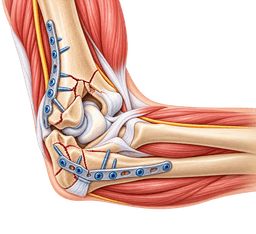
When a radial head or coronoid fracture is part of the injury, the surgeon rebuilds the bony stops with small plates and screws, or removes and replaces a badly broken radial head with a metal implant. This is described under elbow fracture surgery, and you can see how it is delivered on the elbow fracture surgery in turkey page.
Restoring the bone often brings back most of the stability, so the ligaments may then heal with a hinged brace.
Ligament repair and reconstruction
If the lateral ligament complex is torn from the bone, the surgeon can reattach it using anchors or stitches through small bone tunnels. When the ligament is too damaged to repair, or the injury is old, a tendon graft rebuilds it. This is the principle of elbow ligament reconstruction, and the planned pathway abroad is set out on the elbow ligament reconstruction in turkey page.
Hinged external fixator
For severe instability, a hinged external frame can hold the joint centred while still allowing bending and straightening. Pins pass through the skin into the bone and are connected to a frame outside the arm. It is usually removed after about 6 weeks. It adds pin-site care and a risk of infection, so it is reserved for selected cases.
Open release for stiffness
If scar tissue limits movement after healing, an open or arthroscopic release can restore motion. It is usually considered after about 6 months of therapy without improvement, once the bone and ligaments have healed. Therapy begins again right after surgery.
What are the trade-offs?
Surgery can restore stability, but the elbow may still not feel entirely normal. Possible downsides include stiffness, wound problems, nerve irritation and the need for further procedures. Non-surgical care avoids these risks but may leave the elbow loose if the ligaments were badly damaged. Each plan should be discussed in detail with your surgeon.
You can read about expected pricing from our elbow fracture surgery cost guide and the elbow ligament reconstruction cost guide.
When surgery is considered
Surgery or a specialist opinion is the right next step when an elbow dislocation does not behave like a simple, stable injury. The decision is rarely rushed once the joint is back in place, but some findings call for early action. These are the main triggers.
When is a specialist opinion advisable?
Ask for an orthopedic upper-limb opinion if the X-ray shows any fracture, if the elbow slips or clicks in the splint, or if you have persistent numbness, weakness or a dull hand. Also ask if you are an athlete or manual worker, because stability demands are higher and the margin for a poor result is smaller.
When is surgery usually considered?
- The joint cannot be reduced, or it dislocates again once the splint is removed.
- There is a terrible triad injury or another fracture-dislocation that needs bony repair.
- The elbow stays unstable through the arc of movement, so early motion is unsafe.
- Nerve or artery injury needs exploration.
- Months after the injury, the elbow still gives way or loses motion despite good therapy.
How do I decide?
Weigh how much the elbow limits what you do, how stable it feels and what the imaging shows. Ask the surgeon how often similar injuries need further surgery and what the likely range of movement will be. A second opinion is reasonable for any operation that involves implants or ligament grafts.
Which questions should I ask?
- Is my injury simple or complex, and how does that change the plan?
- What happens if I choose to wait and treat with a brace first?
- How many weeks of therapy follow surgery, and who supervises it?
- What range of movement can I realistically expect?
- What are the warning signs that I should call you?
Our team can help you prepare through the free case review, and the questions to ask before surgery abroad guide has a longer checklist.
Procedures
Procedures that may treat elbow dislocation
Costs
Elbow dislocation treatment cost in Turkey
| Procedure | Turkey package | US self-pay | Saving |
|---|---|---|---|
| Elbow Ligament Reconstruction | $5,000 – $8,000 | $29,300 | ~78% |
| Elbow Fracture Surgery | $4,500 – $8,500 | $28,425 | ~77% |
Packages are contracted partner prices with validity dates; benchmarks are source-backed estimates. Open a cost guide for the full country comparison.
In Turkey
Treating elbow dislocation in Turkey
Elbow dislocation treatment in turkey can be a reasonable option for planned, non-emergency care, such as ligament reconstruction or stiffness surgery, after the patient is medically stable. It is not a substitute for emergency treatment. A dislocated elbow must be reduced promptly where the injury happens.
When does treatment in turkey make sense?
Treatment abroad tends to suit people whose joint was reduced at home and who now face a decision about reconstruction, revision or release of a stiff elbow. It also suits those with a long waiting time at home. Elbow dislocation surgery in turkey is typically planned a few weeks after the injury, when swelling has settled and the plan is clear.
What does the pathway look like?
- Records review: you send the emergency summary, imaging and any operation notes for a remote opinion.
- Treatment plan: the surgeon explains the diagnosis, options and what is needed before you travel.
- Travel and admission: tests are repeated on arrival, and the operation is done by the surgical team.
- Early rehabilitation: movement starts quickly in hospital or at a partner clinic.
- Follow-up: reviews continue by video and with your home physiotherapist.
What should I send for review?
Send the date and mechanism of injury, all X-rays and CT or MRI files, the reduction note, a list of medicines and allergies, and a short video of your current elbow movement. This allows the surgeon to judge stability and plan the procedure. Read our medical record review guide for details.
How do I check quality and safety?
Ask whether the hospital holds recognised international accreditation, how many elbow operations the surgeon performs each year, who delivers the physiotherapy and how complications are handled. Ask for the rehabilitation protocol in writing. Our orthopedics in turkey page explains how we describe and compare providers without naming any.
Which procedures are involved?
Planned care may include elbow ligament reconstruction in turkey for lasting looseness, or elbow fracture surgery in turkey when bone repair is needed after a fracture-dislocation. Costs are explained in the ligament reconstruction cost guide.
What are the practical considerations?
Plan a stay of about 7 to 10 days after surgery for wound checks and the start of therapy, with a companion if possible. Check the airline's rules in our flying after surgery guide, and arrange follow-up with a physiotherapist at home.
When should I not travel?
Do not travel while the elbow is still out of place, while swelling is severe, or while nerve or blood flow problems have not been assessed. Also postpone if you have an open wound, infection or a medical problem that needs stabilising. Your local team and the receiving surgeon must both agree.
Complications
Complications of elbow dislocation
The main complication after an elbow dislocation is stiffness, and others include nerve injury, ongoing instability and arthritis. Most can be reduced with quick reduction and early guided movement. The risks below are described honestly, with hedged frequency.
What happens if an elbow dislocation is not treated?
A dislocation left out of place damages cartilage, nerves and blood supply and can cause permanent loss of movement. A neglected elbow becomes stiff and scarred within weeks. This is why urgent local care is essential.
What problems can follow even with good care?
- Stiffness: a loss of the last 10 to 15 degrees of straightening is common and often has little effect on daily life.
- Recurrent instability: some people feel the elbow give way, especially after a complex injury or when ligaments did not heal.
- Heterotopic ossification: extra bone grows in the soft tissue and can block movement, more often after a head injury or major trauma.
- Arthritis: cartilage damage may lead to post-traumatic elbow osteoarthritis years later.
- Nerve problems: the ulnar nerve may be stretched or irritated, sometimes needing a release.
- Compartment syndrome and vascular injury: rare but urgent complications in the first hours.
What are the risks of surgery?
Surgery carries risks of infection, wound problems, stiffness, nerve irritation, implant problems and repeat dislocation. Hardware can sometimes be prominent and need removal. Anaesthesia has its own small risks. Your surgeon should explain how often these occur in their practice and how they are managed.
Can the risk of problems be lowered?
Following the movement plan, attending reviews, stopping smoking and managing diabetes all reduce complications. Report new numbness, a hot swollen wound, fever or a sudden loss of movement promptly.
Urgent care
When to seek urgent care for elbow dislocation
- Elbow looks deformed after a fall or impact: go to the emergency department at once and keep the arm supported, without trying to straighten it.
- Hand is cold, pale, blue or without a wrist pulse: call emergency services immediately, because blood flow to the arm may be blocked.
- Severe, increasing pain with a tight, swollen forearm: seek emergency care, as this can be compartment syndrome, which needs rapid surgery.
- New numbness, tingling or weakness in the fingers: see a doctor urgently, since a nerve may be trapped or stretched.
- Open wound over the elbow or bone visible through the skin: this is an emergency, so cover it with clean dressing and go to hospital.
- Fever, spreading redness or discharge after surgery: contact your surgical team the same day, as this may be infection.
- Elbow suddenly locks, clunks or gives way after healing: arrange an orthopedic review soon, because the joint may be unstable.
Prevention
How to lower your risk of elbow dislocation
Not every elbow dislocation can be prevented, but sensible habits reduce the chance of the falls and impacts that cause it. After a first injury, prevention shifts to protecting the healing joint and avoiding a second dislocation. The points below cover both situations.
How can I reduce the risk of a first injury?
Keep strength and balance up with regular exercise, because stronger forearm, shoulder and core muscles help you control a fall. Learn to fall with a bent arm and rolling motion rather than a stiff outstretched hand. Wear wrist guards and elbow pads in skating, snowboarding and cycling.
What helps older adults?
For older adults, falls prevention is the key. Check vision, review medicines that cause dizziness, remove loose rugs, light stairways and wear shoes with grip. Treat osteoporosis, since stronger bone can turn a fracture-dislocation into a smaller injury.
How do I prevent another dislocation?
Follow the brace and movement programme exactly. Avoid early return to contact sport, throwing or heavy lifting until the surgeon is satisfied with stability. Rebuild strength around the elbow and shoulder, and use taping or a brace for the first season of sport if your team recommends it.
Which risks cannot be prevented?
Accidents and high-energy trauma cannot always be avoided, and some people have naturally loose ligaments. In those cases, quick treatment and good rehabilitation matter more than prevention. Being open about previous injuries helps your doctors set a safe plan.
What about work and training habits?
If your job involves ladders, heavy equipment or frequent falls risk, use safety harnesses and proper footwear. Athletes should follow progressive training and include proprioception and landing drills, which teach the arm to react in time.
Outlook
Living with elbow dislocation: outlook and recovery
Most people recover well from an elbow dislocation, and the usual result is a functional elbow that bends, straightens and rotates enough for everyday tasks. Stiffness is common, but true long-term instability is not. The outlook depends mostly on whether the injury was simple or complex.
What is the natural history?
Without further injury, a simple dislocation usually settles within 6 to 12 weeks, as the ligaments heal into scar tissue that supports the joint. Swelling and aching can linger for several months, and some people notice weather-related stiffness for a year.
What is the expected elbow dislocation recovery time?
The elbow dislocation recovery time for a simple injury is around 3 to 6 months to regain most motion and strength. Complex injuries and surgery often need 6 to 12 months to reach a final result. Progress is usually fastest in the first 3 months.
When can I return to work and sport?
Desk work is often possible within 1 to 3 weeks, with the arm protected. Manual work may need 3 months or more. Contact sport is usually allowed after about 3 to 6 months, once movement, strength and confidence have returned, and your surgeon or physiotherapist agrees.
What are the long-term results?
Studies suggest that most people with a simple dislocation report good function, although a few degrees of lost straightening are common. After a terrible triad injury or a fracture-dislocation, results are more variable, and more people have stiffness or arthritis changes. Recurrent dislocation after a simple injury is uncommon.
What factors affect the outcome?
Quick reduction, a stable joint, early supervised movement and a careful rehabilitation all help. Smoking, diabetes and high-energy trauma lower the odds of a good result. Your own commitment to exercises often decides how close you get to full motion.
If something does not feel right at any stage, ask for a review. A free case review can help you understand your next options.
Surgeons
Specialists who treat elbow dislocation
FAQ
Elbow dislocation: frequently asked questions
Is an elbow dislocation an emergency?
What are the main elbow dislocation symptoms?
How long does an elbow dislocation take to heal?
Does an elbow dislocation need surgery?
Can I pop a dislocated elbow back in myself?
What is a terrible triad injury?
Will my elbow be stiff after a dislocation?
Can a dislocated elbow happen again?
When can I drive and lift after an elbow dislocation?
Is elbow dislocation treatment in turkey safe?
When can I travel to turkey for elbow surgery?
What records do I need for an overseas review?
Sources
Sources for this elbow dislocation guide
Peer-reviewed guidance and institutional sources used to write and review this page.
- 01Elbow Dislocation
American Academy of Orthopaedic Surgeons (OrthoInfo), 2022
https://orthoinfo.aaos.org/en/diseases--conditions/elbow-dislocation/
- 02Dislocated elbow
Mayo Clinic, 2023
https://www.mayoclinic.org/diseases-conditions/dislocated-elbow/symptoms-causes/syc-20350797
- 03Elbow Fractures (Broken Elbow) in Adults
American Academy of Orthopaedic Surgeons (OrthoInfo), 2022
https://orthoinfo.aaos.org/en/diseases--conditions/elbow-fractures-broken-elbow/
- 04
- 05
- 06