







Key takeaways
- 1Thumb base arthritis affects the carpometacarpal (CMC) joint, the saddle-shaped joint between the trapezium bone and the first metacarpal, which carries heavy loads every time you pinch or grip.
- 2It is one of the most common sites of hand arthritis, particularly in women after about 50, and it often runs in families.
- 3Typical symptoms are pain at the base of the thumb when turning keys, opening jars or pinching, along with stiffness, swelling and a squared-off bump at the joint.
- 4Most people improve with a thumb splint, hand therapy, anti-inflammatory medicines, activity pacing and, sometimes, a corticosteroid injection.
- 5Surgery is usually considered after about 3 to 6 months of well-supervised non-surgical care has not controlled pain that limits daily tasks.
- 6Operations range from keyhole joint cleaning and arthroscopic partial trapeziectomy to trapeziectomy with ligament reconstruction, joint replacement and fusion.
- 7Thumb base arthritis treatment in turkey suits planned, non-urgent surgery after your hand surgeon has reviewed your X-rays and confirmed that you are fit to travel.
Overview
What is thumb base arthritis?
Thumb base arthritis is a common wear-related condition of the joint at the root of the thumb, and it is a frequent reason for people to seek help for painful hands. This page describes how it develops, how it is graded, what you can do for it, and which treatments are available, including treatment in turkey.
What is thumb base arthritis?
Doctors call this joint the first carpometacarpal joint, or CMC joint, and the condition is also known as basal joint arthritis or trapeziometacarpal osteoarthritis. The smooth cartilage that cushions the joint thins and roughens, the ligaments loosen, and the bone ends rub and grow small spurs.
The result is an aching, sometimes grinding joint that hurts exactly where you need it: when pinching, turning and gripping. Because the thumb does about half of the work of the hand, even mild thumb base arthritis can feel disabling.
Who is affected?
Thumb base arthritis becomes more frequent with age, and studies of X-rays suggest that signs of it are present in a large share of women over 60. Women are affected more than men, especially after the menopause. It can also follow a past fracture or ligament injury of the thumb.
Jobs and hobbies that involve repeated pinching, such as hairdressing, sewing, knitting, gardening, typing and playing instruments, may contribute, though research on this link is mixed. Family history is a strong clue.
How serious is it?
Thumb base arthritis is not dangerous and does not shorten life, but pain and weak pinch affect independence. It tends to progress slowly, and in many people symptoms plateau or even ease as the joint stiffens. Treatment targets comfort and function, not the X-ray.
Sudden severe pain after a fall, a deformed thumb, or a hot, red joint with fever is different. Urgent local care comes first in those situations, and travel would only be considered once you are stable. The sections below follow a practical order: anatomy, stages, diagnosis, non-surgical care, surgery and outlook.
Anatomy
What happens in the body with thumb base arthritis
The thumb is built for movement, and its base joint trades stability for freedom. That design explains both its usefulness and its tendency to wear.
What is the normal structure of the thumb base?
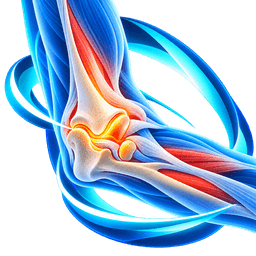
The CMC joint is where the first metacarpal (the long bone of the thumb) meets the trapezium, one of the 8 small wrist bones. Both surfaces are shaped like saddles, which lets the thumb swing across the palm (opposition), sweep out to the side and pivot. Few joints in the body offer such a wide arc.
A capsule and about 16 ligaments hold the joint, and the "beak ligament" (the anterior oblique ligament) is among the most important. Muscles of the thenar eminence, the fleshy pad at the base of the thumb, move the joint and guide the bones as you grip.
The trapezium also forms joints with the scaphoid and the index metacarpal, so wear can spread to neighbouring joints. This is called pan-trapezial or STT arthritis, and it changes the surgical plan.
What changes with arthritis?
Early on, the ligaments stretch and the metacarpal base slips slightly towards the back of the joint, which concentrates load on a small patch of cartilage. The cartilage frays, then the bone beneath is exposed. Bony spurs (osteophytes) form and the joint lining swells and thickens.
As the metacarpal subluxes, the thumb collapses into a "Z" shape: the base moves outwards while the knuckle next to it hyperextends to compensate. That hyperextension at the metacarpophalangeal (MCP) joint is called a swan-neck deformity, and it makes pinching weaker and less accurate.
Symptoms & causes
Thumb base arthritis symptoms and causes
Common symptoms
- Aching or sharp pain at the base of the thumb, where it joins the wrist, that is worse with pinching, gripping and twisting.
- Pain with ordinary tasks such as turning a key, opening a jar, snapping fingers, pouring from a kettle or wringing a cloth.
- Weak pinch and grip, which can lead to dropping cups, bottles and tools without warning.
- Stiffness at the base of the thumb, often worst in the morning or after rest, and easing after several minutes of use.
- A bony bump, or "shoulder sign", at the thumb base as the metacarpal moves out of line, sometimes with visible swelling.
- Grinding, clicking or catching when the thumb moves, known as crepitus and felt with a finger over the joint.
- Reduced thumb span, so the hand cannot open as wide for large jars, steering wheels or musical instruments.
- Night pain that wakes you or makes it hard to find a comfortable position, particularly in more advanced stages.
- Swan-neck deformity, where the thumb's middle joint bends backwards as the base collapses, making precise pinch difficult.
- Numbness or tingling in the thumb and index finger, which can signal that carpal tunnel syndrome has developed alongside.
Causes and risk factors
- Age-related wear: the cartilage of the CMC joint thins over decades, so thumb base arthritis is common in the 50s and beyond.
- Female sex and hormonal change, since women are affected several times more often than men, particularly after the menopause.
- Joint laxity, which allows the base of the thumb to slide and overloads a small area of cartilage.
- Past injury, for example a Bennett fracture or a sprain at the thumb base, which can lead to early arthritis years later.
- Family history: close relatives with hand osteoarthritis raise your chance of thumb base arthritis, suggesting inherited factors.
- Repetitive pinching and heavy gripping in work or hobbies, which may speed wear in a vulnerable joint, though the evidence is not firm.
- Inflammatory arthritis, such as rheumatoid or psoriatic arthritis, which damages the joint lining and ligaments.
- Higher body weight and metabolic factors, which go with hand osteoarthritis in some studies, even though the hand does not bear body weight.
Types
Types and stages of thumb base arthritis
Doctors stage thumb base arthritis mainly by X-ray, and the stage guides treatment. Doctors use the Eaton and Littler classification, now widely taught, along with the pattern of pain and function.
How is thumb base arthritis staged?
| Stage | X-ray findings | Typical symptoms | Usual approach |
|---|---|---|---|
| Stage 1 | Normal joint space, slight widening from ligament laxity | Aching with use, little deformity | Splint, therapy, activity changes; ligament reconstruction in some |
| Stage 2 | Mild narrowing, small spurs under 2 mm | Pain with pinch and gripping, stiffness | Splint, injections, therapy; arthroscopic options in selected cases |
| Stage 3 | Marked narrowing, spurs larger than 2 mm, subluxation | Persistent pain, weak pinch, visible bump | Non-surgical care first; trapeziectomy or replacement if pain persists |
| Stage 4 | Arthritis spreads to neighbouring joints (STT joint) | Pain across the base of the hand, reduced span | Trapeziectomy with or without ligament reconstruction |
Why does staging not tell the whole story?
X-rays and symptoms do not match well. Some people with stage 4 changes have little pain, while others with stage 2 changes cannot use the hand comfortably. For that reason, treatment is based on your symptoms, what you need to do and what you have already tried.
What other patterns are seen?
Secondary thumb base arthritis follows a fracture, ligament injury or inflammatory disease. Isolated CMC arthritis involves only the first joint, while pan-trapezial arthritis includes neighbouring joints. A swan-neck deformity or an MCP joint that hyperextends is classified separately, because it may need an additional procedure.
Surgeons also record whether the thumb is stiff or loose. A loose, unstable joint with little arthritis may suit a ligament operation, while a stiff, worn joint is more likely to need part of the trapezium removed.
Diagnosis
How is thumb base arthritis diagnosed?
Thumb base arthritis is diagnosed from your story, the examination and a set of simple X-rays. The tests are straightforward, and most people do not need an MRI.
Thumb arthritis symptoms and X-ray findings do not always match, which is why the examination carries so much weight.
What does the examination involve?
The doctor asks where it hurts, what activities cause pain, how long it has been present, and which hand you use. They look for swelling, a bump at the thumb base, and the shape of the thumb. Next, they press over the CMC joint and test the range of movement and strength of pinch.
The grind test is a key manoeuvre. The examiner pushes the thumb metacarpal against the trapezium while rotating it, and pain or grating suggests arthritis. The doctor also checks the MCP joint for hyperextension, and tests for carpal tunnel syndrome and tendon problems.
Which X-rays are used?
A standard hand X-ray and a dedicated thumb view are usually enough. The "Robert view" shows the CMC joint in profile, and stress views may reveal subluxation. X-rays show narrowing, spurs, cysts and slippage of the metacarpal, and whether neighbouring joints are involved.
CT or MRI are seldom needed. They can help if the diagnosis is uncertain, or if a fracture or tumour is suspected. Ultrasound can show inflammation of the lining.
What can your doctor learn from an injection?
A small amount of local anaesthetic and steroid in the CMC joint can both treat and diagnose. If pain disappears for some hours or weeks, the joint is confirmed as the source, which helps predict how well a surgical operation might work.
What should you bring to a remote review?
- Hand and thumb X-rays in DICOM format, plus the radiology report
- A summary of treatments tried, including splints, injections and therapy, with dates
- Photographs of the hands from the back, side and while pinching
- Your medicines, allergies and other conditions such as diabetes or rheumatoid arthritis
- Details of your work, hobbies and which hand is dominant
Our medical record review guide explains the process.
Tests you may have
- Hand X-ray (posteroanterior and lateral): shows joint space narrowing, bone spurs, cysts and any slippage of the thumb metacarpal on the trapezium.
- Robert view of the thumb: an angled image that shows the CMC joint surfaces clearly and helps determine the stage of arthritis.
- Stress X-ray: both thumbs pressed together under load to reveal subluxation or laxity that a relaxed image can hide.
- Grind and pinch tests: physical examination manoeuvres that reproduce pain, show grating and measure the strength of the pinch against the opposite hand.
- Ultrasound scan: shows fluid and lining inflammation in the joint and may guide an injection precisely.
- MRI scan: occasionally used when the diagnosis is unclear, or to look at cartilage, ligaments and bone swelling before keyhole surgery.
- Blood tests: rheumatoid factor, anti-CCP antibodies and inflammatory markers if the pattern suggests inflammatory arthritis.
- Diagnostic injection: local anaesthetic into the CMC joint, where temporary relief confirms the joint as the source of pain.
Look-alikes
Conditions that can feel like thumb base arthritis
Pain at the base of the thumb has several possible causes, and arthritis is only one. Distinguishing between them leads to the right treatment. The table below compares thumb base arthritis with its common look-alikes.
Which conditions mimic thumb base arthritis?
| Look-alike condition | How it differs | How doctors tell |
|---|---|---|
| De Quervain's tenosynovitis | Pain over the tendons on the thumb side of the wrist, often after repetitive use or in new parents | Finkelstein test; swelling over the first dorsal compartment; normal CMC X-ray |
| Carpal tunnel syndrome | Tingling and numbness in thumb, index and middle fingers, especially at night | Tinel and Phalen tests; nerve conduction studies |
| Trigger thumb | Thumb catches or locks at the knuckle on the palm side | Tender nodule at the base of the thumb; locking on bending |
| Scaphoid or thumb fracture | Pain after a fall with tenderness at the snuffbox or thumb base | X-ray, repeat imaging or MRI |
| Scaphotrapeziotrapezoid (STT) arthritis | Pain slightly closer to the wrist than the CMC joint | Tenderness over the STT joint; X-ray shows narrowing |
| Flexor carpi radialis tendinitis | Pain on the front of the wrist at the thumb side, worse on resisted flexion | Tenderness along the tendon; ultrasound |
| Rheumatoid or psoriatic arthritis | Swollen, warm joints, often several at once, with morning stiffness over 1 hour | Blood tests and X-ray pattern |
Can several problems exist together?
Yes. Thumb base arthritis frequently coexists with carpal tunnel syndrome and trigger digits, since all three increase with age and are more common in women. If you have night tingling as well as thumb pain, mention both, so each can be assessed and treated.
A fall onto the hand can aggravate an arthritic thumb or break a bone. If the pain started suddenly, and you cannot move the thumb, see our page on hand and wrist fractures and seek urgent assessment.
Non-surgical
Non-surgical treatment for thumb base arthritis
Non-surgical care is the first step for thumb base arthritis, and it works well for most people in the early and middle stages. The best results come from combining several measures rather than relying on one.
How does a thumb arthritis splint help?
A thumb arthritis splint supports the CMC joint, limits painful movement and rests the ligaments. Designs range from soft neoprene sleeves to rigid thermoplastic designs that hold the thumb at the base and leave the tip free for use. Many people wear one at night, and during heavy activity in the day.
Studies suggest splinting reduces pain in the short term, and a custom-made splint from a hand therapist is often more comfortable. Wear it for tasks that hurt, but avoid using it constantly for months, since stiffness and weakness can follow.
What is joint protection?
Joint protection means changing how you do tasks so that less force goes through the thumb. Use larger handles and built-up grips, switch to lever taps and jar openers, carry bags on the forearm or shoulder, and prefer flat-hand pushing to pinching. Spread the load across several joints, and pace heavy tasks with rest.
Which medicines are used?
Topical anti-inflammatory gels are often recommended first for hand osteoarthritis, since they act locally with fewer side effects. Your doctor may add oral anti-inflammatory tablets, paracetamol or short courses of other analgesics, depending on your health, stomach, kidneys and heart. Check with your doctor before long-term use.
Are injections useful?
A corticosteroid injection into the CMC joint may relieve pain for weeks to a few months, most reliably in earlier stages. Doctors limit repeated injections, because steroid can weaken soft tissue. Some clinics offer hyaluronic acid and platelet-rich plasma, but the evidence is mixed, and many guidelines do not routinely recommend them.
What does hand therapy add?
A hand therapist teaches stabilising exercises for the thenar muscles and the first dorsal interosseous, and teaches thumb positioning for common tasks. Studies indicate that strengthening, together with a splint and education, can improve pain and function over 6 to 12 weeks. Heat before exercise and gentle massage may also help.
If pain still limits your life after 3 to 6 months, or the thumb is changing shape, discuss surgery with a hand specialist.
Self-care
Exercises and self-care for thumb base arthritis
Everyday habits and gentle exercises can keep the thumb moving and the pain manageable. Always check with your doctor or hand therapist before starting a programme, and stop any exercise that causes sharp or lasting pain.
Which exercises are commonly taught?
- Thumb abduction: with the palm flat on a table, lift the thumb away from the index finger and hold for 5 seconds; repeat 10 times.
- Opposition touches: touch the thumb tip to each fingertip in turn, forming an "O"; repeat 10 times.
- Thumb extension stretch: gently open the thumb wide along the side of the hand and hold for 10 seconds.
- Isometric pinch: press the thumb against the side of the index finger without moving, holding for 5 seconds.
- Putty or sponge squeezing: soft resistance for 10 to 15 repetitions, once pain allows.
Do these 1 or 2 times a day after a warm soak, in a pain-free range. A therapist may adjust the plan to protect a loose joint.
Which daily habits reduce strain?
Use electric tin and jar openers, add foam to pens and cutlery, choose a larger-handled kettle, and carry shopping with both hands. A phone stand reduces gripping, and voice dictation spares the thumb during typing. Warm water or a heat pack for 10 minutes before activity loosens the joint.
What about cold and heat?
Heat usually soothes stiffness, while cold can ease swelling after a flare. Use either for 10 to 15 minutes at a time, with a cloth between the skin and the pack. Paraffin wax baths are popular in some clinics, and many people find them pleasant.
What should you avoid?
Avoid prolonged hard pinching, repeated heavy gripping, wringing cloths and long sessions on a touchscreen. Do not push through pain in sport or work. Do not rely on supplements marketed as cures. Evidence for glucosamine and similar products in hand arthritis is weak.
Keep a healthy weight, stop smoking and keep active overall. These steps support joint health, mood and surgical safety if an operation is needed later.
Check with your doctor or physiotherapist before starting new exercises, and stop any movement that causes sharp pain.
Treatment
Thumb base arthritis treatment options
Surgery for thumb base arthritis aims to relieve pain and restore a strong, mobile thumb by removing or replacing the worn surface, or by stabilising it. The best choice depends on the stage, your age, your activities and the condition of neighbouring joints.
Which operations are used?
| Operation | What is done | Best suited to | Trade-offs |
|---|---|---|---|
| Arthroscopic debridement or partial trapeziectomy | Keyhole cleaning of the joint, with or without removing the worn part of the trapezium | Early to moderate disease (stages 1 to 3) | Quicker recovery; not suitable for severe collapse |
| Ligament reconstruction | A tendon strip stabilises the base of the thumb | Early stage with laxity and little wear | Needs a good joint surface; longer splinting |
| Trapeziectomy | The trapezium is removed; a tendon sling may fill the space | Stages 3 and 4, standard operation | Reliable pain relief; recovery of pinch strength takes months |
| Joint replacement (arthroplasty) | An implant replaces the CMC joint surfaces | Selected patients wanting early mobility | Risk of loosening or dislocation; long-term data still developing |
| Fusion (arthrodesis) | The joint is fused in a good position | Younger, heavy-use patients | Stable and strong; no motion at the joint and bone healing needed |
What role does wrist arthroscopy play?
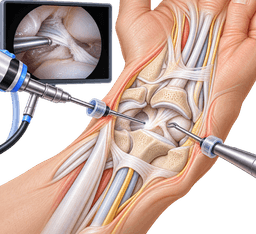
Our catalogue links this condition to wrist arthroscopy, which allows the surgeon to look inside the wrist and neighbouring joints. For thumb base arthritis it is most helpful when pain is not explained by the CMC joint alone, for example in STT arthritis, or when keyhole surgery of the thumb joint is chosen at an early stage. See the wrist arthroscopy in turkey page and the cost guide for details.
What is trapeziectomy?
Trapeziectomy removes the trapezium so that the thumb metacarpal no longer rubs on bone. The surgeon may add a tendon graft or suture to support the space. Many studies, including Cochrane reviews, find that adding a ligament reconstruction or tendon interposition does not clearly improve outcomes over simple trapeziectomy.
Operating time is about 45 to 75 minutes under regional or general anaesthesia. Most people go home on the same day, with a plaster cast or splint for 3 to 6 weeks.
Which choice suits which patient?
People in their 40s with early disease and laxity may prefer ligament reconstruction. Older patients with advanced wear often choose trapeziectomy for dependable pain relief. Joint replacement appeals to those who want to avoid a long recovery, but needs careful selection. Fusion suits younger manual workers who need a strong pinch more than movement.
Does surgery treat the associated problems?
If the MCP joint hyperextends, the surgeon may add a small procedure to correct it. Carpal tunnel release can be done at the same time if indicated. Mention night tingling in advance so that it can be planned.
When surgery is considered
Think about surgery for thumb base arthritis when pain and weak pinch limit essential tasks despite a fair trial of non-surgical care. There is no X-ray threshold, and the decision is yours together with the surgeon.
When is surgery reasonable?
- Pain that persists after 3 to 6 months of splinting, therapy and medicines.
- Repeated steroid injections that give relief for shorter and shorter periods.
- Pain that disturbs sleep or prevents work, caring tasks and hobbies.
- Progressive deformity, with a visible bump or a collapsing thumb.
- Loss of grip strength that leads to dropping objects.
How do you weigh the choice?
Consider how much the thumb limits you, what you are willing to give up, and how long you can accept a recovery of several months. Pain relief after surgery is usually good, but strength and speed of recovery vary. If your pain is mild and manageable, waiting is a legitimate choice.
Realistic expectations matter. Most patients find that pain is greatly reduced by 3 to 6 months, and that function continues to improve for up to a year. Your surgeon should describe the likely range of results rather than promise perfect outcomes.
What questions should you ask?
- Which stage of arthritis do I have, and are other joints involved?
- Which operation do you recommend and why not the alternatives?
- How many of these operations do you perform each year?
- How long will I be in a cast, and when can I use the hand at work?
- What are the chances of needing further surgery?
If you want a second review of your X-rays, request a free case review. See also our hand and wrist hub.
Procedures
Procedures that may treat thumb base arthritis
Costs
Thumb base arthritis treatment cost in Turkey
| Procedure | Turkey package | US self-pay | Saving |
|---|---|---|---|
| Wrist Arthroscopy | $2,500 – $4,500 | $15,175 | ~77% |
Packages are contracted partner prices with validity dates; benchmarks are source-backed estimates. Open a cost guide for the full country comparison.
In Turkey
Treating thumb base arthritis in Turkey
Thumb base arthritis treatment in turkey is a practical option for people who need planned surgery, such as trapeziectomy, and want a specialist hand team and a clear schedule. Because the condition is not an emergency, there is time for careful records review and travel planning.
When does treatment in turkey make sense?
It may suit patients who have tried splints, therapy and injections, whose hand surgeon has proposed surgery or whose waiting time is long, and who are healthy enough to travel. It may also help people who want a second opinion before deciding. Stable medical conditions such as controlled diabetes or blood pressure should be reviewed first.
It does not suit a hot, swollen, feverish joint, a fresh injury, or severe pain after a fall. Those need urgent local care first. Travel is only considered once you are medically stable and your treating team agrees.
What does the pathway look like?
- Records review: you send X-rays, a treatment history and photos to a hand surgeon.
- Plan: the surgeon proposes an operation, expected stay and rehabilitation, and notes which questions remain.
- Arrival: a meeting and examination 1 day before surgery, with anaesthetic assessment.
- Surgery: usually a day case or one-night stay, with the arm in a cast or splint.
- Early review: a wound check at about 10 to 14 days, often before flying home.
- Home rehabilitation: hand therapy starts after the cast, with a protocol shared with your therapist.
Our treatment planning guide and surgery day guide explain what to expect.
How do you check the team?
Ask whether the surgeon focuses on hand and upper limb surgery, how often they perform trapeziectomy or joint replacement, and what their typical results are. Confirm the hospital's accreditation and the availability of hand therapy. If your plan involves wrist arthroscopy for thumb arthritis in turkey, ask how the surgeon decides between keyhole and open approaches.
What about travel and recovery?
A stay of 5 to 7 days usually covers surgery and the first check, and a longer stay may be wise if both thumbs are treated at different times. Travel with a companion, because you will have one hand in a cast. Our flying after surgery guide explains timing.
Explore the orthopedic care in turkey overview, and consider Izmir or Antalya if you would like a calmer setting for recovery.
When should you not travel?
Do not travel with signs of infection, uncontrolled illness or a hand that is acutely inflamed. Complex revision surgery, or a plan that requires frequent early reviews, may be better done close to home. Thumb arthritis surgery in turkey should always be paired with a clear aftercare plan. Start with a free case review, or browse the cost guide.
Complications
Complications of thumb base arthritis
Thumb base arthritis can limit hand function over time, and surgery, like any operation, carries risks. Being aware of both helps you make a balanced choice.
What happens if it is left untreated?
Many people do well without surgery. In others, the thumb base collapses gradually, the web space narrows, the MCP joint hyperextends and pinch weakens. Pain can spread to neighbouring joints, and everyday tasks become frustrating. The disease does not spread to other organs.
What are the risks of non-surgical treatment?
- Medicine side effects: oral anti-inflammatories can affect the stomach, kidneys and blood pressure.
- Injection effects: temporary pain flare, skin lightening or thinning, and rarely infection.
- Splint stiffness: overuse can weaken muscles and tighten tissues.
What are the risks of surgery?
Risks include persistent pain, stiffness, weakness of pinch and grip, scar tenderness, nerve irritation (particularly the superficial radial nerve) and infection. After trapeziectomy, the thumb may shorten slightly as the metacarpal settles. After a joint replacement, an implant may loosen or dislocate and need revision. After fusion, the bone may fail to unite.
Complex regional pain syndrome is a rare condition with out-of-proportion pain, swelling and skin changes. Early movement and therapy reduce the risk. Smoking and diabetes increase the chance of wound and bone healing problems.
How are risks reduced?
Choose an experienced surgeon, follow the post-operative plan, stop smoking before surgery, and attend all reviews. Report fever, increasing redness, drainage or new numbness quickly. Ask your surgeon which complications are most relevant to the operation you are considering.
Urgent care
When to seek urgent care for thumb base arthritis
- A hot, red, swollen thumb joint with fever: seek urgent medical review the same day, because infection or crystal arthritis needs prompt treatment.
- Sudden severe pain after a fall, with a deformed thumb or inability to move it: go to an emergency department for X-rays, since a fracture may be present.
- A white, blue or cold thumb or hand, after injury or after a tight cast: seek emergency care immediately.
- Spreading redness, pus or discharge from a wound after surgery or injection: contact your surgeon or emergency service at once.
- New numbness, constant tingling or weakness of the thumb and fingers: arrange a prompt review, as a nerve may be compressed.
- Several swollen, stiff joints with morning stiffness longer than 1 hour: ask your doctor about inflammatory arthritis within a few days.
Prevention
How to lower your risk of thumb base arthritis
No one can fully prevent thumb base arthritis, because age, sex and genetics play the biggest roles. Even so, a few steps may delay it or reduce symptoms, and they cost very little.
Which habits may help?
Protect your thumb from avoidable strain. Use the strongest joints for a task, such as the palm and larger fingers, instead of a pinching grip. Choose tools with large, soft handles, take breaks during repetitive work, and avoid forcing jars or screw tops. Stretch the hands after long periods of crafts, typing or driving.
What about injuries?
A fracture or ligament injury at the thumb base can lead to early arthritis. Prompt, accurate treatment of thumb injuries, including proper splinting and follow-up, reduces the chance of lasting instability. Do not ignore a sprain that remains painful after 2 to 3 weeks.
Does staying fit help?
- Regular hand and forearm exercise maintains muscle support for the joint.
- Healthy body weight may lower the risk of hand osteoarthritis, according to some studies.
- Not smoking supports tissue health and healing.
- Managing inflammatory disease early protects the joints.
Can you slow progression?
Early splinting for painful activities, joint protection and strengthening may help to keep the joint more stable and comfortable, although evidence that they slow X-ray change is limited. Their main benefit is symptom control, which is what matters in daily life.
What cannot be prevented?
You cannot change your age, sex or family history. Some of the wear is simply part of how the hands age. The practical goal is to keep the hand useful and the pain low, and to seek advice before the thumb has collapsed. Related conditions, such as Dupuytren's contracture and trigger finger, also become more common with age, and each deserves its own review.
Outlook
Living with thumb base arthritis: outlook and recovery
Most people with thumb base arthritis can expect to keep a useful, comfortable hand, with or without surgery. Pain often waxes and wanes, and many people find that flare-ups settle with a splint and rest.
What is the natural course?
The condition usually progresses slowly over years. Studies following patients over time show that symptoms do not always worsen, and some improve as the joint stiffens. X-ray changes may continue even when pain eases. That is why treatment depends on how you feel and function.
What can you expect after non-surgical treatment?
Splinting, joint protection and exercise help many people within 6 to 12 weeks. A steroid injection may bring relief for weeks to months. Some patients find that they need only occasional care for years, while others eventually choose surgery.
What can you expect after surgery?
| Phase | Typical timing | What happens |
|---|---|---|
| Cast or splint | Weeks 0 to 4 or 6 | Thumb protected, fingers move, elbow and shoulder active |
| Early therapy | Weeks 4 to 8 | Gentle thumb movement, scar care, light daily tasks |
| Strengthening | Weeks 8 to 12 | Pinch and grip exercises, light work |
| Return to full use | Months 3 to 6 | Most normal tasks, heavier work as strength returns |
| Final result | 6 to 12 months | Pain relief and function continue to improve |
Most people report good pain relief after trapeziectomy, with pinch strength recovering to a large part of normal. Joint replacement may allow earlier use, but long-term outcomes depend on the implant and patient. Fusion typically gives a strong pinch with limited movement.
When can you return to normal life?
Light desk work may be possible within 2 to 4 weeks, with the cast on. Driving usually waits until the cast is off and you can control the wheel, often at 6 to 8 weeks. Manual work and sport are commonly resumed at 3 to 4 months, depending on strength.
What about the other thumb?
Thumb base arthritis often affects both hands, though one is usually worse. Many people are treated on one side and manage the other with splints and therapy. If you need both sides, surgery is generally staged several months apart.
For related conditions, read about wrist arthritis and TFCC tear, or ask for a free case review.
Surgeons
Specialists who treat thumb base arthritis
FAQ
Thumb base arthritis: frequently asked questions
What are the first signs of thumb base arthritis?
Can thumb arthritis be cured?
Does a thumb arthritis splint really help?
What is a trapeziectomy?
Do steroid injections work for CMC joint arthritis?
How long is recovery after thumb arthritis surgery?
Is thumb base arthritis the same as rheumatoid arthritis?
Can both thumbs be treated at the same time?
Is thumb base arthritis treatment in turkey safe?
Who can have thumb arthritis surgery in turkey?
How do I start a review for treatment in turkey?
Does hand exercise make thumb arthritis worse?
Sources
Sources for this thumb base arthritis guide
Peer-reviewed guidance and institutional sources used to write and review this page.
- 01Arthritis of the Thumb
American Academy of Orthopaedic Surgeons (OrthoInfo), 2021
https://orthoinfo.aaos.org/en/diseases--conditions/arthritis-of-the-thumb/
- 02Thumb Arthritis
American Society for Surgery of the Hand, 2023
https://www.assh.org/handcare/condition/thumb-arthritis
- 03
- 04Hand osteoarthritis
Mayo Clinic, 2023
https://www.mayoclinic.org/diseases-conditions/osteoarthritis/symptoms-causes/syc-20351925
- 05Osteoarthritis
National Institute of Arthritis and Musculoskeletal and Skin Diseases, 2023
https://www.niams.nih.gov/health-topics/osteoarthritis
- 06Osteoarthritis in over 16s: diagnosis and management (NG226)
NICE, 2022
https://www.nice.org.uk/guidance/ng226
- 07