


Key takeaways
- 1A hip labral tear is damage to the labrum, a rubbery gasket of fibrocartilage that rims the hip socket, deepens it and helps keep joint fluid sealed in.
- 2Most tears are linked to an underlying shape problem such as femoroacetabular impingement or hip dysplasia, while a smaller group follow a twisting injury or a dislocation.
- 3Typical signs are groin pain, clicking or catching, a sharp twinge on pivoting and pain after long sitting, although some tears cause no symptoms at all.
- 4Diagnosis relies on the story, an examination and an MR arthrogram, which is more sensitive for labral damage than a standard MRI.
- 5A torn hip labrum does not heal well on its own because the outer rim has a limited blood supply, but symptoms often calm with targeted rehabilitation.
- 6Surgery usually means keyhole repair of the labrum, with correction of the underlying bone shape, and it is considered after non-surgical care has failed.
- 7Planned hip labral tear treatment in turkey can suit people who are medically stable and have had their scans reviewed by the treating team.
Overview
What is hip labral tear?
A hip labral tear is a rip or fraying of the labrum, the soft cartilage ring around the edge of the hip socket. It is a recognised cause of groin pain in young and middle-aged adults. This page explains what a torn hip labrum is, how it is found and treated, and how treatment in turkey is arranged.
What is a hip labral tear?
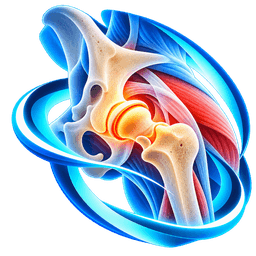
The labrum is a horseshoe-shaped band of tough tissue attached to the rim of the socket (acetabulum). It acts like a rubber seal around a plunger, holding the ball snugly and spreading load across the joint. When the band splits, peels from the bone or frays, we call it a hip labral tear.
Small tears are common on scans of people without any pain, so the finding is only one piece of the puzzle. The question for your doctor is whether the tear explains what you feel.
Who is affected by a hip labral tear?
The injury is most often found in adults aged 20 to 50, and it is frequent among runners, footballers, golfers, dancers and ice hockey players. People who spend years in deep, repeated hip bending can also develop it. Tears become more common with age as the tissue stiffens, and in older adults they often travel alongside early arthritis.
How serious is a hip labral tear?
This kind of injury is not dangerous to health, but it can be disruptive. Pain can stop sport, make long journeys unpleasant and break sleep. The long-term worry is that a tear which keeps being loaded may allow the nearby cartilage to wear. Early assessment helps decide which tears need action.
Because the hip is deep and well covered by muscle, the problem often goes unrecognised for months, and many people are told they have a groin strain first. Getting the right label early saves time, and it helps you avoid exercises that make a flap of tissue worse.
The rest of the page follows a clinic visit: the structure of the hip, tear patterns, diagnosis, look-alikes, non-surgical care, repair options, travel for treatment, risks and the outlook.
Anatomy
What happens in the body with hip labral tear
To understand a torn hip labrum, it helps to picture how the hip is built. The joint must carry body weight, yet allow big arcs of movement, and the labrum is part of how it manages both.
What is the normal structure around the labrum?
The socket is a shallow cup in the pelvis. The labrum extends around its edge like a collar, increasing the depth of the cup by roughly 20% and increasing the contact area with the ball. It is made mostly of collagen fibres, with nerve endings in its outer part, which is one reason a tear can hurt.
The front and upper part of the rim, where the labrum is thinnest and takes the most load, is the area most prone to tearing. The inner (joint-facing) edge is nourished by joint fluid, while the outer attachment gets blood from nearby vessels.
- Labrum: seals the joint and keeps a thin film of fluid under pressure.
- Cartilage: covers both ball and socket, and sits next to the labrum at a transition zone.
- Capsule: holds everything together and provides much of the passive stability.
How does the labrum work with the rest of the hip?
During walking, the hip cycles through about 40 degrees of flexion and extension, and the labrum helps keep the ball centred through that arc. Studies suggest that it also shares load with the cartilage and keeps fluid pressure steady. When the seal is broken, that pressure can leak away, and the cartilage may take more of the force directly.
The labrum also contains tiny sensors that report joint position to the brain. After a tear, those signals can become unreliable, which may explain why some people feel the hip is unsteady even when the ball has not truly moved.
What changes when the labrum tears?
When the labrum tears, the seal is disturbed. The ball may move slightly out of its ideal position, the cartilage next to the tear receives more pressure, and a flap of tissue can catch within the joint. This explains the catching and clicking many patients report.
The torn edge can also irritate the lining of the joint, causing inflammation and fluid. Because the outer rim has only a modest blood supply, a full-thickness tear rarely reknits by itself.
Symptoms & causes
Hip labral tear symptoms and causes
Common symptoms
- Pain deep in the groin that may wrap round the front of the hip, often the first complaint and usually worse with activity.
- Clicking, popping or a catching sensation in the hip when walking, rising from a chair or moving the leg in a circle.
- A sharp stab when twisting on a planted foot, such as turning in tennis, football or dancing, followed by an ache for hours.
- Stiffness and a sense that the hip will not move freely, particularly when bringing the knee towards the chest.
- Pain that is worse after long periods in the same position, such as 45 minutes of driving, desk work or a flight.
- A sense of the hip "giving way" or feeling unstable, especially in people whose tear is related to a shallow socket or loose ligaments.
- Locking, where the hip briefly refuses to move until it is jiggled free, which suggests a flap of tissue is trapped.
- Pain on the outer hip, buttock or inner thigh, because nerve signals from the labrum can be felt away from the joint.
- Night discomfort when lying on the affected side, or after a day of heavy activity.
- Some people have no symptoms at all, and the tear is found by chance on an MRI done for another reason.
Causes and risk factors
- Femoroacetabular impingement: a bump on the ball or an over-deep socket repeatedly pinches the labrum, and this is the most common underlying reason.
- Hip dysplasia: a shallow socket places extra strain on the labrum, which then stretches and tears while trying to stabilise the joint.
- Sudden trauma: a fall, a twisting injury, a car crash or a hip dislocation can rip the labrum from the bone.
- Repetitive twisting sport: golf, hockey, football, ballet and martial arts load the front of the hip repeatedly through end-range positions.
- Degeneration with age: the tissue becomes less elastic over time, so small tears can appear with minor forces.
- Joint hypermobility: very flexible people may overload the labrum when the ball moves further than the socket can control.
- Previous hip conditions: childhood hip disease or a malunited fracture can alter the mechanics and set the stage for a tear.
- Heavy repetitive squatting or lifting at work, which can cause cumulative damage in a vulnerable hip.
Types
Types and stages of hip labral tear
Not all labral tears are the same, and the pattern affects the treatment. Surgeons describe tears by their location, their shape and how the tissue looks.
Where does the tear lie?
Locations are described using a clock face drawn on the socket, with 12 o'clock at the top and 3 o'clock at the front. Most tears are found in the anterosuperior area, roughly between 1 and 3 o'clock. Tears at the back are less common and are more often linked to trauma or hip dislocation.
What shape is the tear?
- Radial flap tears: a split from the free edge towards the bone, sometimes producing a flap that catches.
- Radial fibrillated tears: frayed tissue that looks like a worn rope end.
- Longitudinal peripheral tears: a split running along the length of the labrum.
- Unstable tears: a detached segment that moves freely.
- Chronic degenerated labrum: thin, scarred or calcified tissue that cannot hold a stitch.
Is there a grading system?
Some centres use grading systems based on arthroscopic findings, while others simply describe the tear. The more important distinction for planning is whether the tissue is healthy enough to repair. The table below summarises the usual options.
| Tear pattern | Tissue quality | Usual surgical approach |
|---|---|---|
| Peripheral detachment from the bone | Good | Repair with suture anchors |
| Small frayed edge | Fair | Gentle trimming (debridement) |
| Large complex tear | Good enough to hold a stitch | Repair, sometimes with a looped suture |
| Deficient or ossified labrum | Poor | Reconstruction with a graft, or preservation of what remains |
Why does the type matter?
Repair keeps the labrum and its sealing function, which is why many surgeons prefer it when tissue allows. Trimming removes tissue, so it is generally reserved for small, unrepairable fragments. Understanding the type helps you ask sensible questions before surgery.
Diagnosis
How is hip labral tear diagnosed?
The diagnosis is made by matching a typical story and examination with an MR arthrogram, and by checking for the shape problem that caused it. A scan on its own can mislead.
What does the history reveal?
Your doctor will ask when the pain began, whether there was a twisting event, whether the hip clicks or locks, and which positions provoke it. Be ready to describe how far you can walk, how long you can sit and what sport you want to return to. A previous hip problem in childhood is also important.
What happens during the examination?
The clinician watches you walk, then moves the hip through its range. Pain with the flexion, adduction and internal rotation test, and with the flexion, abduction and external rotation test, suggests a labral problem. The "scour" test grinds the joint gently and may reproduce clicking or pain.
They also test the strength of the hip flexors and abductors, look for pelvic instability and check for generalised joint laxity.
Which scans are used?
X-rays show the bone shape, including cam and pincer features and the depth of the socket. An MR arthrogram, where contrast dye is injected into the joint before the scan, outlines the labrum well and is considered more accurate than a plain MRI for tears. Newer 3 tesla scanners can sometimes show tears without dye, and the choice depends on local practice.
What other tests might be added?
If the story suggests instability, the doctor may check for general looseness, using a simple nine-point flexibility score, and may order long-leg or spine views. If the pain is high in the groin and the exam is unclear, a dynamic ultrasound can look for a snapping tendon. Blood tests are only needed when infection or an inflammatory arthritis is suspected.
How can a diagnostic injection help?
A local anaesthetic injected into the joint under imaging guidance can show whether the pain comes from inside the hip. If the pain drops sharply for a few hours, the joint is the likely source. A negative response suggests looking elsewhere, such as the back or the groin muscles.
What should you prepare for a remote review?
Prepare the image files from your MRI or MR arthrogram on a disc or secure link, your X-rays, and a short summary of treatments so far. List any sport or work demands. A free case review can begin once these are uploaded, and the medical record review guide explains what happens next.
Tests you may have
- MR arthrogram: contrast dye in the joint outlines the labrum and often shows the exact position and type of tear.
- Standard hip MRI: a non-invasive option that shows cartilage, bone swelling and soft tissue, though small tears may be missed without dye.
- Standing pelvis X-ray: shows socket depth, bone shape and early arthritis, all of which influence whether repair will be enough.
- Lateral hip X-ray: gives a side view of the head-neck junction where a cam bump may hide.
- CT with 3D reconstruction: used before surgery to plan exactly how much bone needs reshaping and to check the socket orientation.
- Ultrasound-guided anaesthetic injection: helps confirm that the hip joint itself is generating the pain.
- Clinical impingement and scour tests: bedside manoeuvres that reproduce the clicking or pain and support the diagnosis.
Look-alikes
Conditions that can feel like hip labral tear
Many problems around the hip can mimic a hip labral tear, which is why a systematic review of other causes is needed. The table lists the more common look-alikes and the clues that separate them.
| Condition | How it differs | How doctors tell |
|---|---|---|
| Femoroacetabular impingement | A bone-shape problem that is usually the cause of the tear rather than a rival | X-ray and CT show a cam bump or deep socket |
| Hip dysplasia | A shallow socket with instability, which can tear the labrum from overload | Low centre-edge angle on the X-ray |
| Hip bursitis | Pain on the outer point of the hip with tenderness over the bone | Local tenderness and a normal inside-the-joint exam |
| Hip osteoarthritis | Worn cartilage with joint-space loss and morning stiffness | X-ray shows narrowing and spurs |
| Snapping hip (iliopsoas) | A tendon snaps over the pelvic rim, usually without deep joint pain | Dynamic ultrasound reproduces the snap |
| Adductor or groin muscle strain | Pain at the inner thigh, worse with resisted leg squeeze | Tenderness over the muscle origin |
| Lower lumbar spine problem | Back pain, leg symptoms, little pain in the hip joint itself | Spine examination and lumbar imaging |
Why are tears found in people without pain?
Studies of volunteers with no hip pain show that a considerable share have labral tears on MRI. That is why the decision to treat rests on symptoms and examination first, and the scan second. A scan with a tear but no matching symptoms usually leads to observation, not surgery.
Could the tear be part of a bigger problem?
Often it is. The tear may be the visible result of impingement or instability, and unless that cause is treated, a repaired labrum can fail again. A good assessment names both the tear and its likely driver.
Non-surgical
Non-surgical treatment for hip labral tear
Many people with this injury get meaningful relief without surgery, so non-surgical care is normally the first step. A trial of 3 to 6 months is typical, unless there is locking or an acute injury that points to earlier surgery.
Relative rest and smarter movement
Stop doing what repeatedly provokes the tear for a few weeks. That could mean skipping deep squats, kicking drills and fast pivoting. Keep moving in comfortable ways, such as walking on flat ground, gentle cycling or swimming. Total rest tends to weaken the hip and does not heal the tear.
Physiotherapy
Targeted rehabilitation strengthens the muscles that steady the hip, especially the gluteals, deep rotators and trunk. The therapist also retrains how the pelvis moves, so that less force reaches the rim of the socket. Programmes commonly run for 8 to 12 weeks, with exercises done several times each week. Evidence from trials of related conditions suggests that supervised exercise helps many patients, though it cannot rejoin a torn labrum.
Medicines
Simple pain relievers such as paracetamol and, where safe, short courses of oral anti-inflammatory medicines (NSAIDs) can ease flares. They are used to allow rehabilitation, not as a long-term answer. Discuss any medicine with your doctor, particularly if you have kidney, stomach or heart conditions.
Injections
A corticosteroid injection into the joint can calm inflammation for weeks and help confirm the diagnosis. It does not repair the tear, and doctors usually avoid repeating it often. Platelet-rich plasma and other injections are sometimes offered, but evidence for hip labral tears is still limited.
How long should you try?
| Stage | Timeframe | What you should see |
|---|---|---|
| Settle the flare | First 2 to 4 weeks | Less pain at rest, easier walking |
| Strengthen | Weeks 4 to 12 | Better control, fewer catching episodes |
| Review | 3 to 6 months | Decide whether to continue, or consider repair |
If the hip is still locking, giving way or limiting sport after this period, a surgical opinion is sensible.
Self-care
Exercises and self-care for hip labral tear
Self-care is about keeping the hip strong and mobile within its comfortable zone while protecting the torn rim. Check with your doctor or physiotherapist before starting, particularly if the hip locks or hurts at night.
Which hip labral tear exercises are commonly used?
Hip labral tear exercises should feel controlled and should not provoke sharp pinching. Typical examples are:
- Isometric glute squeeze: lying on your back, squeeze the buttocks for 5 seconds, 10 times, three times a day.
- Bridge with a hold: raise the hips and hold for 5 seconds, working up to 12 repetitions.
- Standing hip abduction with a band: move the leg out to the side by about 20 cm without leaning.
- Quadruped rock-back: on hands and knees, rock the hips backwards only as far as is comfortable.
- Single-leg balance: stand on the affected leg for 30 seconds, building up to 60 seconds, to train joint position sense.
What does a weekly routine look like?
A simple plan is 3 strength sessions of about 25 minutes each, with 2 lighter days of walking or cycling for 20 to 30 minutes. Keep one full rest day. Track your pain in a notebook on a scale of 0 to 10, and aim to stay under 4 during exercise and back to baseline by the next morning. This record is also useful when you speak to a surgeon.
How should you progress?
Move from lying exercises to standing, then to light resistance, then to sport movements. Add only one change at a time. If a new exercise leads to a sharp pinch or a catch, stop and return to the previous step for a week.
Which daily habits ease strain?
- Avoid sitting with the knees higher than the hips, such as in a low sofa.
- Use a firm pillow between the knees when sleeping on your side.
- Take short walking breaks when travelling for more than an hour.
- Step with the whole body when turning rather than twisting on a fixed foot.
- Keep weight in a healthy range to reduce load through the hip.
What should you avoid?
Avoid forceful hip circles, deep end-range stretching, loaded deep squats and kicking movements while the hip is irritated. Do not keep playing sport with a locked or very painful hip, because a flap of tissue can scuff the cartilage. Heat, gentle massage of the surrounding muscles and short rest days are fine.
Check with your doctor or physiotherapist before starting new exercises, and stop any movement that causes sharp pain.
Treatment
Hip labral tear treatment options
When non-surgical care has not worked, the damaged rim is treated through keyhole surgery, repairing the tear where possible and correcting the cause behind it. The choice depends on the tissue, the bone shape and your goals.
What is hip labral repair?
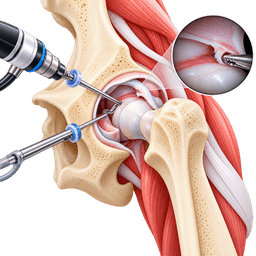
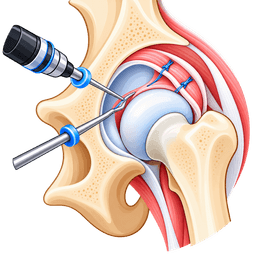
Hip labral repair reattaches the torn labrum to the rim of the socket using tiny anchors threaded with strong stitches. The surgeon often places 2 to 5 anchors, depending on the length of the tear. Where bone shape is the cause, it is reshaped during the same operation, otherwise the repair may be loaded again in the same way that caused the tear.
You can read about how this is done locally on our hip labral repair in turkey page. The hip labral repair cost guide explains what shapes the overall quote.
What is hip arthroscopy?
Hip arthroscopy is the keyhole technique used to reach the joint. A camera and fine instruments enter through 2 or 3 cuts of around 1 cm while gentle traction opens the joint. Most repairs are done this way. See the hip arthroscopy in turkey page and the hip arthroscopy cost guide for details.
Debridement, repair or reconstruction?
- Debridement: trimming a frayed edge; quick recovery but less sealing function, so used for small tears.
- Repair: reattaching healthy tissue, the most common choice for tears that can hold a stitch.
- Reconstruction: rebuilding a badly damaged labrum with a tendon graft, kept for special cases.
- Treating the cause: reshaping a cam bump or trimming the rim, which protects the repair.
What is recovery like?
After a repair, protect the stitches for the first 4 to 6 weeks. You may walk with crutches, avoid deep hip bending and begin gentle physiotherapy right away. The typical hip labral tear recovery time is about 4 to 6 months for return to running and cutting sport, and up to 9 to 12 months for a full return to demanding activity. Debridement alone can have a faster recovery, often a few weeks shorter.
What are the trade-offs?
Repair preserves the labrum but demands patience with crutches and rehabilitation. Debridement is quicker but may be less durable. Reconstruction adds a graft site and a longer recovery. Your surgeon will balance these against the state of the cartilage, and when arthritis is already advanced, replacement of the joint may be a better option than labral surgery.
When surgery is considered
Consider surgery when symptoms from a confirmed tear keep limiting life despite sensible non-surgical care, or when there is locking or a clear injury with a displaced tear. Many tears never need an operation.
Which signs favour surgery?
- Pain and catching that continue after 3 to 6 months of guided rehabilitation.
- Mechanical symptoms such as locking, which suggest a flap that is trapped.
- An MR arthrogram that shows a tear matching the area of pain.
- Good cartilage, with little or no arthritis on X-ray.
- A strong wish to return to sport or to heavy work that the hip currently prevents.
Which signs argue for caution?
Surgery is less likely to help in people over about 50 with joint-space loss, in those with widespread cartilage damage, or when the pain pattern does not match the tear. Hip dysplasia needs special care, since removing bone or capsule can increase instability. In these hips, other procedures or a longer trial of non-surgical care may be wiser.
How do you decide?
Ask the surgeon to show your scan and explain how the tear relates to your symptoms. Discuss the likely rehabilitation time and your calendar, such as work or competition dates. If travel for surgery is an option, read our treatment planning guide and the questions to ask before surgery abroad.
What questions help?
- Is my tear repairable, or will the tissue need to be trimmed?
- What is causing the tear, and will that cause be corrected too?
- How many weeks on crutches should I expect?
- What if I do not have surgery? What are the realistic outcomes?
Procedures
Procedures that may treat hip labral tear
Costs
Hip labral tear treatment cost in Turkey
| Procedure | Turkey package | US self-pay | Saving |
|---|---|---|---|
| Hip Arthroscopy | $4,500 – $7,500 | $27,500 | ~78% |
| Hip Labral Repair | $5,000 – $8,000 | $27,575 | ~76% |
Packages are contracted partner prices with validity dates; benchmarks are source-backed estimates. Open a cost guide for the full country comparison.
In Turkey
Treating hip labral tear in Turkey
Hip labral tear treatment in turkey is an option for planned, non-urgent surgery when your diagnosis is confirmed and your records have been reviewed by the treating team. It is a complement to your home care, not a replacement for it.
When does it make sense to travel?
People consider hip labral tear surgery in turkey when waiting lists at home are long, when they want a surgeon with a large hip arthroscopy practice or when they prefer to combine surgery with a recovery break. Orthopedic centres operate in Istanbul, Ankara, Izmir and Antalya, and our turkey orthopedics overview describes the system. The why turkey guide outlines the main reasons patients choose it.
What is the typical pathway?
- Send your records: use the free case review to submit scans, X-rays and a short history.
- Specialist assessment: the surgical team checks the tear, the bone shape and the cartilage and advises on repair, trimming or no surgery.
- Pre-operative tests: blood tests and an anaesthetic review are done once you arrive.
- Surgery: usually arthroscopic repair, with a hospital stay of 1 or 2 nights.
- Early rehabilitation: supervised physiotherapy begins before you leave.
- Return home: your own physiotherapist continues the plan, backed by remote reviews.
What happens on the day of surgery?
You usually arrive early in the morning, having fasted, and meet the surgeon and anaesthetist. The operation commonly takes 1.5 to 3 hours, depending on how much bone needs reshaping. A nerve block may be added for comfort in the first hours. Afterwards you rest on the ward, begin gentle movement on the same day and are shown how to use crutches safely.
How do you check quality and safety?
Ask which accreditations the hospital holds, how often the surgeon performs hip arthroscopy and what protocols exist for infection control and clot prevention. Request a written plan, including whether the labrum is expected to be repaired or trimmed. Read about hospital admission and surgery day to know what to expect.
How long should you plan to stay?
Many patients stay around 7 to 10 days. This allows the first wound check, early crutch training and several physiotherapy sessions. Check the flying after surgery guide for advice about clot prevention, and the travel and accommodation guide and companion guide for practical help.
When should you not travel?
Do not travel if you have a recent blood clot, an infection, uncontrolled heart or lung disease, or if you cannot arrange rehabilitation at home. Travel is also not appropriate right after a major injury or a dislocation, when urgent local care comes first. Plan aftercare using the rehabilitation guide and follow-up guide.
Complications
Complications of hip labral tear
The injury is not life-threatening, but it has consequences when it is ignored, and surgery has its own risks. Both are discussed honestly here, so that you can decide with full information.
What can happen if it is left alone?
Some tears stay quiet for years. Others keep catching, which can scuff the cartilage next to them. A tear that results from a shape problem may expose the rim to continued stress, and some studies link longstanding mechanical hip problems with earlier osteoarthritis. The link does not hold for every patient, but it is a reason to follow up persistent symptoms.
What are the risks of surgery?
Hip arthroscopy is widely performed, and serious complications are uncommon. Possible problems include:
- Temporary numbness in the groin or thigh from traction, usually clearing within weeks.
- Stiffness or scar tissue, treated with physiotherapy and rarely with a second keyhole operation.
- Re-tear or failure of the repair, particularly when the underlying bone shape is not corrected.
- Ongoing pain, which occurs in a minority of patients and sometimes leads to further treatment.
- Infection, bleeding or blood clots, which are rare and minimised by sterile technique and clot prevention.
- Instability of the hip, which is more likely in very flexible people or those with a shallow socket.
How can the risks be reduced?
Choose an experienced hip surgeon, make sure the cause of the tear is dealt with and follow the protection rules for the first weeks. Stop smoking before surgery, since it slows healing. Report fever, calf pain or a wound that drains fluid at once, and keep all follow-up appointments.
Urgent care
When to seek urgent care for hip labral tear
- Severe hip pain after a fall or crash with inability to bear weight: go to the nearest emergency department, as a fracture or dislocation needs urgent local care before any travel.
- A hip that is visibly out of position or very deformed after injury: call emergency services immediately.
- Fever, shaking chills and a hot, swollen, very tender hip, particularly after an injection or surgery: seek same-day care for possible infection.
- A calf that is swollen and tender, or sudden chest pain or breathlessness after surgery: call emergency services for possible blood clot.
- A hip that locks and will not move for more than a few minutes: see a specialist urgently, since a trapped fragment may need to be released.
- New numbness around the groin or genitals, or any loss of bladder or bowel control: seek emergency care for possible nerve compression.
- A surgical wound that opens, bleeds heavily or leaks pus: contact the surgical team the same day.
Prevention
How to lower your risk of hip labral tear
Not every tear can be prevented, because bone shape and hip structure play a big part. Several habits do lower the risk of a tear or reduce the chance that an existing one grows.
What cannot be prevented?
A deep or shallow socket, a cam bump or inherited laxity cannot be changed with exercise. Some sports also demand repeated end-range hip positions by their nature. For these reasons, even well-trained athletes can tear the labrum, and it is not a sign of poor technique.
What lowers the risk?
- Hip and core strength: a balanced programme with glute, deep rotator and abdominal work helps the pelvis stay stable during pivots.
- Sensible training load: raise training time and intensity by no more than about 10% a week to avoid overload.
- Good technique: coaching in landing, cutting and kicking may lower stress on the front of the hip.
- Mobility without forcing: maintain a normal range of movement, but avoid aggressive stretching if you are hypermobile.
- Early review of groin pain: persistent pain over 3 weeks deserves assessment.
How can you protect a repaired labrum?
Follow the surgeon's rules for crutches and range of movement. Keep up strengthening for at least 6 months, and build running and sport gradually. Return to activity depends on strength and control more than on the calendar. Report new catching or pain promptly, since early correction is easier.
Can you prevent a second tear?
Treating the cause is the best protection. If impingement or dysplasia was present, it should be addressed at the time of repair or managed with a long-term exercise plan. Attention to the nearby hip as a whole, including the lower back and pelvis, improves the odds of a lasting result.
Outlook
Living with hip labral tear: outlook and recovery
The outlook is generally encouraging, particularly when the cause is identified and treated. Results vary, so it helps to know what is typical and what influences it.
What happens without surgery?
Many people reach a comfortable level with rehabilitation and activity modification, even though the tear remains. Some have recurring flares, especially with pivoting sport. A small number continue to catch and lock, and they usually choose surgery.
What happens after repair?
Studies of arthroscopic labral repair report that most patients improve in pain and function at 2 years, and many athletes return to their sport. Results are better when cartilage is healthy and the cause of the tear is corrected. People with arthritis at the time of surgery tend to do less well, and some later need a hip replacement.
What are typical milestones?
| Time after repair | Typical milestone |
|---|---|
| 0 to 2 weeks | Wound healing, crutches, gentle range of movement |
| 2 to 6 weeks | Protected loading, progressing to walking without crutches |
| 6 to 12 weeks | Strengthening, cycling, return to desk work and driving |
| 3 to 4 months | Jogging in a graded plan if strength allows |
| 4 to 6 months | Return to sport-specific drills; contact sport often later |
| 9 to 12 months | Full return to demanding activity and continuing gains |
What affects the result most?
Four things matter more than anything else. The first is the health of the cartilage at the time of surgery. The second is whether the underlying bone shape is corrected. The third is the surgeon's experience with this particular operation. The fourth, and often forgotten, is how closely you follow the rehabilitation plan, including strengthening that continues after the formal programme ends.
Younger patients with a clear mechanical cause and a short history tend to do best. Longstanding symptoms, widespread cartilage wear and untreated instability reduce the chance of a good result, which is why honest counselling matters before you commit.
What about the long term?
A repaired hip can last for many years, and strengthening remains important. If cartilage wear develops later, you can read about the hip osteoarthritis pathway for the next steps. Keeping muscles strong, weight steady and sport varied gives the hip its best chance.
Surgeons
Specialists who treat hip labral tear
FAQ
Hip labral tear: frequently asked questions
What is a hip labral tear?
What are the typical hip labral tear symptoms?
Can a torn hip labrum heal on its own?
How is a hip labral tear diagnosed?
What is the hip labral tear recovery time?
Which hip labral tear exercises are safe?
Do all hip labral tears need surgery?
Can a labral tear lead to arthritis?
Is hip labral tear treatment in turkey safe?
How long should I stay in turkey after surgery for a labral tear?
What should I send for a hip labral tear review?
Can I run with a labral tear?
Sources
Sources for this hip labral tear guide
Peer-reviewed guidance and institutional sources used to write and review this page.
- 01Osteoarthritis
Cleveland Clinic, 2023
https://my.clevelandclinic.org/health/diseases/5599-osteoarthritis
- 02Hip Arthroscopy
American Academy of Orthopaedic Surgeons (OrthoInfo), 2022
https://orthoinfo.aaos.org/en/treatment/hip-arthroscopy/
- 03Femoroacetabular Impingement
American Academy of Orthopaedic Surgeons (OrthoInfo), 2023
https://orthoinfo.aaos.org/en/diseases--conditions/femoroacetabular-impingement/
- 04
- 05Hip impingement
Mayo Clinic, 2023
https://www.mayoclinic.org/diseases-conditions/hip-impingement/symptoms-causes/syc-20353830
- 06
- 07Osteoarthritis
National Institute of Arthritis and Musculoskeletal and Skin Diseases, 2023
https://www.niams.nih.gov/health-topics/osteoarthritis