

Lower Back Pain on the Right Side: Causes and When to Worry
This article explains causes, symptoms, and treatments for lower back pain on the right side, helping you understand when to seek medical advice.
Key takeaways
- 1Lower back pain on the right side often results from muscle strain or spinal problems.
- 2Kidney issues can cause right lower back pain and require prompt medical attention.
- 3Most cases improve with conservative treatments like rest, pain relief, and physiotherapy.
- 4Seek urgent care if you experience fever, numbness, weakness, or loss of bladder control.
- 5Surgery is rarely needed and considered only after conservative care fails.
What causes lower right back pain?
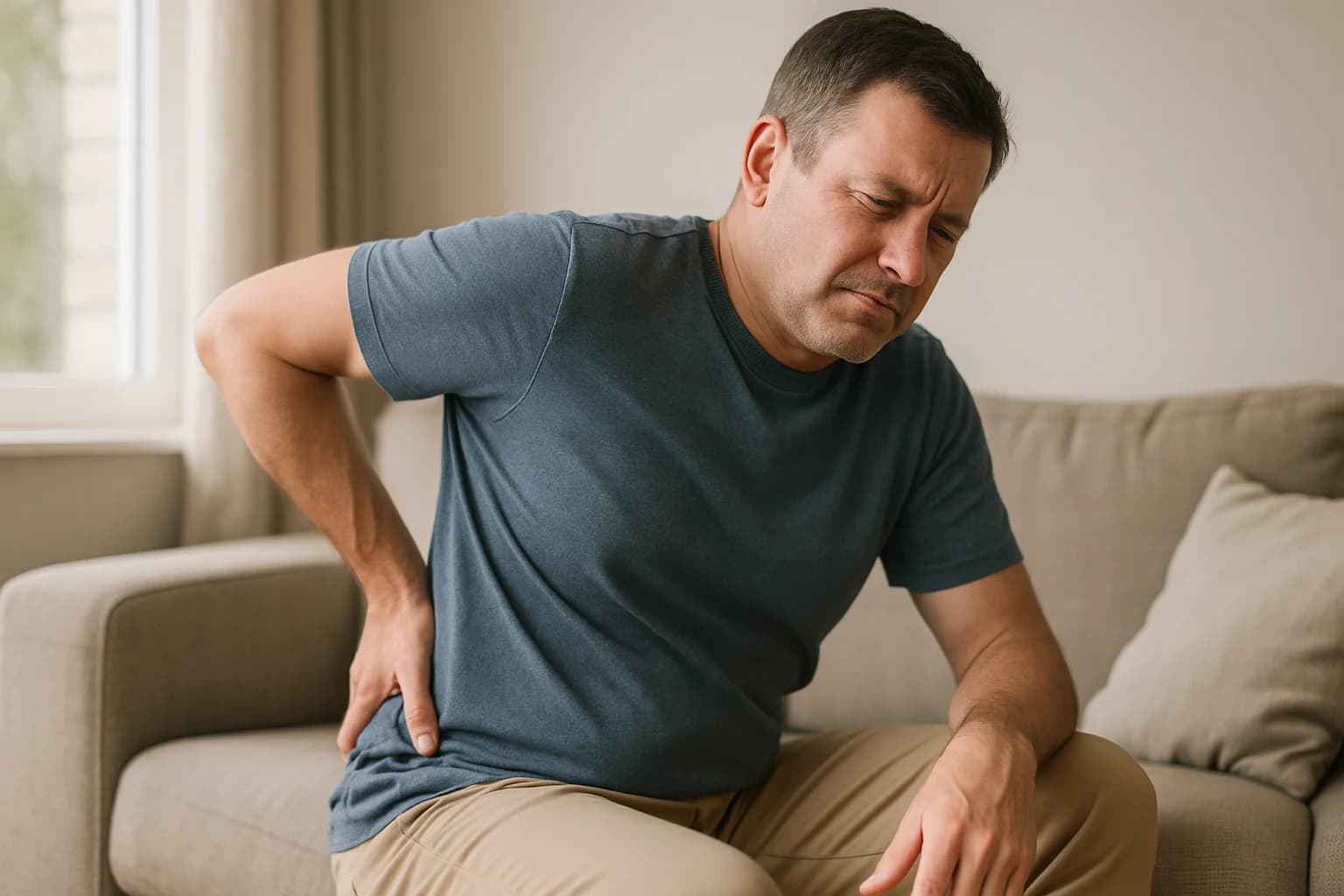
Lower right back pain is a common problem that can come from many different sources. The most frequent causes are issues with the muscles, joints, or spine, but pain can also come from organs near your back. Understanding these causes can help you decide what to do next and when to get medical help.
Here are the main causes of pain in your lower right back:
Muscle strain or ligament injury: The muscles and ligaments in your lower back can be stretched or torn by lifting heavy objects, sudden twisting, sports injuries, or even poor posture. This leads to localised aching or stiffness that is usually worse with movement and better with rest. Muscle strain is the most common cause of right lower back pain in adults of all ages.
Spinal problems:
Herniated disc: Discs are soft cushions between the bones (vertebrae) of your spine. If a disc bulges out or ruptures, it can press on nearby nerves, causing sharp or shooting pain on one side, sometimes with numbness or tingling in your leg.
Osteoarthritis: This is wear and tear of the joints in the spine. It causes gradual stiffness and pain, often worse in the morning or after sitting. Osteoarthritis is most common in people over 50.
Sciatica: The sciatic nerve runs from your lower spine down your leg. If it gets irritated or squeezed (often by a herniated disc), it can cause burning, electric, or shooting pain from your lower back down your right leg.
Kidney problems: The kidneys are just under your lower ribs, towards your back. Conditions like kidney stones or infections (such as pyelonephritis) can cause severe pain in your lower right back. This pain is often deep, cramping, and may come with fever, chills, or changes in urination.
Sacroiliac joint dysfunction: The sacroiliac joint connects the base of your spine to your pelvis. If it becomes inflamed or moves abnormally, it can cause one-sided lower back pain, sometimes spreading to the buttock or thigh. This pain often gets worse with standing, walking, or climbing stairs.
Other conditions: Less common causes include problems with organs near your spine. For example:
Appendicitis: Inflammation of the appendix can start as pain near your belly button, then move to the lower right abdomen and sometimes the back. It is usually sharp and comes with nausea, vomiting, or fever.
Gynaecological issues (in women): Problems with the ovaries (such as cysts) or other reproductive organs can cause pain felt in the lower right back.
Intestinal problems: Conditions like irritable bowel syndrome or constipation can sometimes cause discomfort in the lower right back.
There are also some rarer causes, such as tumours, infections of the spine, or referred pain from other organs. These are much less common but are important to consider if your pain is severe, persistent, or comes with other symptoms.
The following table compares common causes of lower right back pain by their typical symptoms and the age group most often affected:
Cause | Typical Symptoms | Common Age Group |
|---|---|---|
Muscle strain/ligament injury | Localised aching, worse with movement, improves with rest | Young to middle-aged adults |
Herniated disc | Sharp, shooting pain, may radiate down leg, numbness/tingling | 20–50 years |
Osteoarthritis | Dull, aching pain, stiffness, occasional swelling | Over 50 years |
Sciatica | Pain radiates from lower back to buttock/leg, burning or electric | 30–60 years |
Kidney stone/infection | Severe, cramping pain, may come in waves, fever, urinary symptoms | All ages (stones more common 30–60 years) |
Sacroiliac joint dysfunction | One-sided pain, worse with standing/walking, may affect buttock | Young adults to elderly |
Appendicitis | Lower right abdominal pain, may spread to back, nausea, fever | Teens to 30s (but can occur at any age) |
It is important to remember that most cases of lower right back pain are not serious and improve with simple care like rest, gentle exercise, and pain relief. However, if your pain is severe, comes with other symptoms like fever, numbness, or trouble passing urine, or does not get better after a few weeks, you should seek medical advice. Early diagnosis can help prevent complications and guide the best treatment for your situation.
Always see a doctor urgently if you have any of the following with your back pain:
Loss of control over bladder or bowels
Severe weakness or numbness in your legs
High fever, chills, or feeling very unwell
Blood in your urine
Unexplained weight loss or night sweats
What does pain in lower back on the right side feel like?
Pain in the lower back on the right side can feel different depending on the cause, your age, and your activity level. Noticing how your pain feels, where it is, and what makes it better or worse can help your doctor work out what is going on.
Here are the most common ways lower back right side pain is described:
Dull ache: A deep, steady pain that feels sore, stiff, or tight. This is typical with muscle strain, ligament injury, or arthritis. It often gets worse after activity or sitting for a long time.
Sharp or stabbing pain: Sudden, intense pain that can make it hard to move or stand up straight. This may happen with a muscle tear, herniated disc, or kidney stone. The pain might come on suddenly after bending, lifting, or twisting.
Radiating pain: Pain that starts in your lower back and travels into your buttock, hip, or down your leg. This is often due to nerve involvement, such as sciatica or a herniated disc pressing on a nerve root.
Burning, tingling, or numbness: If a nerve is irritated or compressed, you might feel burning or tingling in your back, hip, or leg. Numbness or weakness can also happen, especially if the nerve is pinched.
Constant vs. intermittent pain: Some causes, like arthritis or muscle strain, tend to cause constant pain. Others, like kidney stones, cause pain that comes and goes in sudden waves (colic).
Different causes of pain in your lower back right side produce different patterns:
Muscle or ligament problems: Usually a dull, aching pain that gets worse with movement and better with rest. You might notice tightness, muscle spasms, or difficulty moving your back.
Nerve pain (sciatica, herniated disc): Often sharp, shooting, or electric. Pain may start in your back and travel down your leg, sometimes with numbness, tingling, or muscle weakness. You might also find it hard to lift your foot or toes (foot drop) in severe cases.
Kidney pain: Usually a deep, severe ache in the side and back, sometimes with sharp cramping. The pain may spread to your lower abdomen or groin. It often comes with other symptoms like fever, chills, nausea, or changes in urine.
Sacroiliac joint pain: Usually felt deep in one buttock or the lower back, often worse when standing, walking, or climbing stairs. The pain may be sharp or aching and can make it hard to sit or lie on one side.
Referred pain from organs: Problems with organs such as the appendix, intestines, or (in women) ovaries can cause pain that starts in the abdomen but is also felt in the lower right back. This pain is often sharp, cramping, or comes with other symptoms like nausea or fever.
Other symptoms that may come with right side lower back pain include:
Stiffness or reduced movement in your back
Muscle spasms or cramps
Pain when coughing, sneezing, or bending
Pain spreading to your hip, buttock, or leg
Numbness, tingling, or weakness in your leg or foot
Fever or chills (may suggest infection)
Changes in urination (pain, blood, frequent urges, or difficulty passing urine)
Nausea, vomiting, or loss of appetite
Unexplained weight loss or night sweats
Paying attention to these details can help your doctor narrow down the possible causes of your pain. For example, pain that gets worse with movement and improves with rest is more likely to be musculoskeletal. Pain with fever, chills, or urinary symptoms could point to a kidney or infection problem.
Most cases of back pain lower right side are mild and improve with self-care. However, if your pain is severe, sudden, or comes with symptoms like numbness, fever, or trouble passing urine, you should see a healthcare professional. Early treatment can prevent complications and help you return to normal activities sooner.
What are the common risk factors for right side lower back pain?
Right side lower back pain is often linked to certain risk factors. Understanding these can help you prevent or manage lower right side back pain. While not all causes can be avoided, many relate to lifestyle choices and everyday habits.
Poor posture is a leading risk factor for back pain lower right side. Sitting or standing with your back slouched puts extra strain on the muscles and joints of your lower back. Over time, this can lead to pain, especially on one side if your posture is uneven.
Heavy lifting, especially with poor technique, is another common cause. Lifting objects that are too heavy, or twisting while lifting, can strain the muscles and ligaments in your lower back. This type of injury often causes pain on one side, such as lower right side back pain.
Obesity increases the risk of right side lower back pain. Extra body weight puts more pressure on your spine and the supporting muscles. This can lead to both chronic and sudden pain in the lower back, including the right side.
Age also plays a role. As you get older, the discs (cushions) between the bones in your spine can wear down. This is called degenerative disc disease. It can cause pain on one or both sides of your lower back. Ageing also makes you more likely to develop arthritis in the spine, which can trigger lower back pain on the right side.
A previous back injury makes you more likely to have future episodes of pain. Scar tissue, weakness, or changes in the way you move can all contribute to new pain in the same area, including the right lower back.
Kidney infections can sometimes cause pain in the lower back on the right. This is because your kidneys sit just below your ribcage, one on each side of your spine. If only the right kidney is affected, you may feel pain on that side. Kidney stones can also lead to lower back right side pain, though this is less common than muscle or joint causes.
Other risk factors include:
Lack of regular exercise, which weakens back and core muscles
Smoking, which reduces blood flow to spinal tissues
Repetitive movements at work or during sport
Stress, which can cause muscle tension in the back
Most cases of right side lower back pain are linked to the musculoskeletal system. However, kidney infections and other conditions can also be involved. Keeping your back strong and maintaining healthy habits can lower your risk.
When should I worry about lower back pain on right side?
Most cases of lower back pain on right side are not dangerous and improve with rest and simple care. However, some symptoms mean you should seek medical help straight away. These are called "red flags" because they may signal a serious cause of right lower back pain. Recognising these warning signs is important, as early treatment can prevent lasting damage.
See a doctor urgently if you have any of the following:
Red Flag Symptom | What it Could Mean |
|---|---|
Fever, chills, or feeling very unwell | Infection, such as kidney infection or spinal infection |
Numbness or tingling in the groin or genitals | Nerve problem (cauda equina syndrome) |
Loss of bladder or bowel control | Severe nerve compression |
Severe, sudden, or worsening pain that does not improve with rest | Fracture, infection, or tumour |
Weakness in one or both legs | Nerve or spinal cord problem |
Pain after a fall, accident, or injury | Broken bone or serious injury |
Unexplained weight loss | Possible cancer or infection |
History of cancer | Spread of cancer to the spine |
Pain that wakes you at night or is present at rest | Infection, tumour, or inflammation |
If you notice any of these red flag symptoms with pain in lower back on the right, you should seek urgent medical care. These signs do not always mean something is seriously wrong, but they do need checking by a doctor without delay. Acting quickly can be the difference between a simple treatment and a long-term problem.
For most people, right lower back pain is caused by muscle strain, ligament sprain, or minor joint problems. These are common and usually get better within a few days to weeks. However, there are times when even mild symptoms should prompt you to see a doctor. You should book an appointment if:
The pain is severe or getting worse, not allowing you to sleep or move comfortably
The pain does not improve after 2–4 weeks of self-care, such as rest, gentle movement, and over-the-counter pain relief
You have trouble doing your normal activities, like walking, working, or caring for yourself
You have a history of osteoporosis (thin, fragile bones), long-term steroid use, or a weakened immune system (such as from HIV, chemotherapy, or certain medicines)
You notice swelling, redness, or warmth over your lower back, which could signal infection or inflammation
Kidney problems can also cause pain in lower back on the right. It is important to know the difference between musculoskeletal pain (from muscles, bones, or joints) and pain from your kidneys or other organs. Kidney pain is often a dull ache deeper in your back, sometimes spreading to the side or groin. If your pain comes with:
Fever
Burning or pain when you urinate
Blood in your urine (pink, red, or brown urine)
Needing to urinate more often or urgently
see a doctor promptly. These could be signs of a kidney infection (pyelonephritis) or a kidney stone. Kidney infections can become serious quickly and may need antibiotics and sometimes hospital treatment. Stones can cause severe, cramping pain and may need urgent care if you also have fever, vomiting, or cannot pass urine.
Other rare but serious causes of lower right back pain include problems with the large intestine (bowel), such as appendicitis or diverticulitis, or problems with blood vessels (like an aortic aneurysm). These are uncommon but can be life-threatening. Severe, sudden pain that spreads to your abdomen, or pain with vomiting or fainting, always needs urgent medical attention.
Most lower back pain on right side is not dangerous and will settle with rest and gentle movement. But do not ignore red flag symptoms. Early treatment can prevent permanent problems if the cause is serious. If you are unsure, it is safest to get checked by a healthcare professional. This article is for information only and does not replace a medical consultation.
When to Seek Help | Action |
|---|---|
Red flag symptoms (see table above) | Seek urgent medical care |
Pain with fever, urinary changes, or blood in urine | See a doctor promptly |
Pain after injury or fall | See a doctor as soon as possible |
Pain not improving after 2–4 weeks | Book a routine appointment |
Uncertain or worried about your symptoms | Err on the side of caution and get checked |
How is lower back pain right side diagnosed?
The diagnosis of lower back pain right side starts with a careful clinical history and physical examination. Your doctor will ask about your symptoms, when they started, and what makes them better or worse. This helps narrow down the possible causes of lower right back pain.
During the physical exam, your doctor will check your back for tenderness, swelling, or muscle spasm. They may ask you to move, bend, or walk to see how your back responds. They will also look for signs of nerve involvement, such as weakness, numbness, or changes in reflexes. This is important for identifying problems like a slipped disc or nerve compression.
Most cases of right side lower back pain do not need immediate imaging. If your symptoms are mild and there are no red flags (such as fever, weight loss, severe pain, or problems with bladder or bowel control), your doctor will likely recommend simple treatments first. Imaging tests are usually only ordered if:
Your pain is severe or getting worse
You have symptoms of nerve damage (such as numbness, weakness, or tingling in your leg)
You have a history of cancer, osteoporosis, or recent injury
Your doctor suspects infection or another serious cause
Common imaging tests include:
X-ray: Useful for checking bones and joints. It can show fractures, arthritis, or other bone changes, but it does not show muscles or discs well.
MRI (Magnetic Resonance Imaging): Gives detailed images of soft tissues, such as discs, nerves, and muscles. MRI is used if your doctor suspects a herniated disc, nerve compression, or infection.
Ultrasound: Sometimes used to look at organs near the spine, such as kidneys, especially if your doctor thinks your pain may be coming from outside the spine.
Blood tests are not routine for lower back pain on the right side, but they may be used if your doctor suspects infection, inflammation, or kidney problems. These tests can include:
Complete blood count (CBC) to look for infection
Markers of inflammation, such as C-reactive protein (CRP) or erythrocyte sedimentation rate (ESR)
Kidney function tests (such as creatinine, urea, and electrolytes) if kidney involvement is suspected
Urine analysis to check for blood, protein, or signs of infection in the urine
If your doctor thinks your kidneys may be involved, they may order an ultrasound or CT scan to look at the size, shape, and structure of the kidneys. These tests can help diagnose kidney stones, infection, or other kidney conditions that can cause lower right back pain.
In summary, most people with right side lower back pain will be diagnosed based on their history and examination alone. Imaging and blood tests are only needed in certain cases, especially if there are red flags or the pain is not improving. This approach helps avoid unnecessary tests and focuses on finding the real cause of your pain.
Test | When is it used? | What does it show? |
|---|---|---|
X-ray | Suspected bone injury or arthritis | Bones, joints |
MRI | Suspected nerve or disc problem, infection | Discs, nerves, soft tissues |
Ultrasound | Possible kidney or abdominal causes | Organs near the spine |
Blood/urine tests | Suspected infection, inflammation, kidney problem | Infection, kidney function, inflammation |
What are the treatment options for lower back pain on the right side?
Most cases of lower back pain right side improve with simple, non-surgical treatments. Your doctor will usually recommend conservative care first, especially if the pain is mild or started recently. Conservative care means treatments that do not involve surgery or injections. The main options include rest, pain relief medicines, physiotherapy, heat or cold therapy, and specific exercises.
Rest and activity modification
Short-term rest can help if your lower right back pain is severe, but it is important not to stay in bed for more than a day or two. Gentle movement is encouraged as soon as you are able. Avoid heavy lifting, twisting, or activities that make the pain worse. Staying active helps your back heal and prevents stiffness.
Pain relief medicines
Over-the-counter painkillers, like paracetamol or non-steroidal anti-inflammatory drugs (NSAIDs), can help manage pain. These medicines reduce swelling and ease discomfort in the right lower back. Always follow the advice of your doctor or pharmacist and read the package instructions carefully. If you have concerns or other health problems, talk to your doctor before starting any medicine.
Heat and cold therapy
Applying a heat pack or warm towel to the sore area may relax muscles and ease stiffness. Cold packs can help reduce swelling and numb sharp pain. You can use either method for 15–20 minutes at a time, several times a day. Do not put ice or heat directly on the skin; wrap them in a cloth to avoid burns or frostbite.
Physiotherapy
Physiotherapists are experts in movement and rehabilitation. They can design a programme of gentle stretches and strengthening exercises tailored to your needs. Physiotherapy helps restore normal movement, reduce pain, and prevent future episodes of lower back pain on the right side. Your therapist may use hands-on techniques (manual therapy) and teach you how to protect your back during daily tasks.
Exercises and self-care
Exercise is one of the most effective treatments for pain in lower right back. Gentle stretching, walking, swimming, or cycling can help. Your physiotherapist may suggest core-strengthening exercises to support your spine. It is best to start slowly and increase activity as your pain improves. Avoid exercises that make the pain worse. Simple self-care steps—like good posture, ergonomic chairs, and lifting objects safely—can also help recovery and prevent future pain.
Table: Conservative treatment options for lower back right side pain
Treatment | How it helps | When to use |
|---|---|---|
Rest/activity change | Reduces strain on injured tissues | First 1–2 days if pain is severe |
Pain relief medicines | Decreases pain and inflammation | As needed for mild to moderate pain |
Heat/cold therapy | Relaxes muscles, reduces swelling | Short-term relief, several times a day |
Physiotherapy | Restores movement, strengthens muscles | Ongoing, especially for recurring pain |
Exercise/self-care | Improves flexibility, prevents recurrence | Ongoing, as pain allows |
When are injections or other interventions used?
If your right side lower back pain does not improve with conservative care after several weeks, your doctor may discuss other options. These include:
Injections: Corticosteroid injections can reduce inflammation around nerves or joints in the spine. These are used for some types of persistent or severe pain, especially if nerve irritation is present.
Manual therapy: Some people benefit from spinal manipulation or mobilisation by a trained therapist. This is most helpful for short-term pain relief.
Other procedures: Rarely, procedures such as nerve blocks or radiofrequency ablation (using heat to disrupt pain signals) may be suggested for ongoing pain not responding to other treatments.
When to see a doctor
Most people with lower back right side pain feel better within a few weeks. See your doctor if pain lasts more than 4–6 weeks, is very severe, or stops you from doing daily activities. Always seek urgent care if you have red flag symptoms such as:
Fever, chills, or unexplained weight loss
Loss of bladder or bowel control
Numbness or weakness in your legs
Severe pain after a fall or injury
Your doctor can help you plan further treatment or refer you to a specialist if needed.
How can I manage lower right back pain at home?
You can often manage lower right back pain at home with self-care. Most cases of right lower back pain improve within a few weeks if you stay active and follow practical advice. However, if your pain is severe, not improving, or you have other worrying symptoms, see a doctor for assessment.
What should I do if I have pain in my lower right back?
Start by listening to your body. Rest for short periods if needed, but try not to stay in bed for more than a day or two, as this can slow recovery. Gentle movement helps most people get better faster.
Keep moving: Stay as active as you can. Walking and light daily activities are usually safe and helpful.
Practice good posture: Sit and stand with your back straight and shoulders relaxed. Use a chair with lower back support if sitting for long periods.
Apply heat or cold: Use a warm pack or a hot water bottle on your lower right back for 15–20 minutes at a time. Some people find an ice pack more soothing, especially if pain follows an injury.
Try gentle exercises: Stretching and strengthening exercises can help. Start with gentle stretches for your back, hips, and legs. The NHS and similar sites offer simple routines. Avoid any movement that increases your pain.
Use pain relief if needed: Over-the-counter painkillers such as paracetamol or ibuprofen can help you stay active. Always follow the instructions, and check with your doctor or pharmacist if you have other health conditions.
Support your back: Use a cushion or rolled towel in the small of your back when sitting. Sleep on a comfortable mattress, and try lying on your side with a pillow between your knees.
Stay hydrated and eat well: Good nutrition and hydration support healing and help prevent constipation, which can worsen back pain.
What should I avoid with lower right back pain?
Do not rest too much: Prolonged bed rest can weaken muscles and delay recovery.
Avoid heavy lifting: Do not lift or carry heavy objects, especially if you feel pain during the activity.
Do not ignore severe symptoms: If you have numbness, tingling, weakness in your legs, trouble controlling your bladder or bowels, fever, or severe pain, seek urgent medical help.
Do not overdo exercises: Start gently and build up as your pain allows. Stop any exercise that makes your pain worse.
Do not use strong painkillers without advice: Avoid opioids or muscle relaxants unless prescribed by a doctor for a short time.
Do not rely on back supports long-term: Braces and belts may help short-term, but using them too much can weaken your muscles.
Practical tips for everyday life
When getting up from bed, roll onto your side, then push up with your arms.
When lifting, bend your knees and keep your back straight. Hold objects close to your body.
Take regular breaks from sitting or standing for long periods. Move around every 30–60 minutes.
Wear comfortable shoes with good support.
Consider gentle activities like swimming, walking, or yoga once your pain improves.
Summary table: Do's and Don'ts for Lower Right Back Pain
Do | Don't |
|---|---|
Stay active with gentle movement | Rest in bed for more than 1–2 days |
Use heat or cold packs | Lift heavy objects |
Practice good posture | Ignore severe or new symptoms |
Try simple stretches and strengthening | Push through intense pain during exercise |
Use pain relief as needed | Rely on strong painkillers or braces long-term |
Most people with pain in lower right back will feel better within a few weeks. If your symptoms last longer than that, or if you have any red flag symptoms, see a healthcare professional for advice.
Can kidney problems cause lower back pain on the right side?
Kidney problems can sometimes cause lower back pain right side, but this is less common than muscle or spine causes. Your kidneys are two bean-shaped organs located deep in your back, just below your ribcage, one on each side of your spine. When something goes wrong with the right kidney, you might feel pain in the lower back on the right. However, kidney pain often feels different from typical back pain.
How kidney pain feels different from musculoskeletal pain
Location: Kidney pain is usually felt higher up, just below the ribs or in the flank (the side of your body), rather than directly in the lower back.
Type of pain: Kidney pain is often dull, aching, and deep. It may come in waves (colicky pain) if caused by kidney stones. Musculoskeletal pain is more likely to feel sore, stiff, or sharp, and is often linked to movement.
Associated symptoms: Kidney problems often cause symptoms elsewhere in the body, such as fever, chills, nausea, vomiting, or changes in urine (colour, smell, blood, or pain when urinating). Back pain from muscles or joints rarely causes these symptoms.
Common kidney problems that cause lower right side back pain
Kidney infection (pyelonephritis): This is a bacterial infection of the kidney. It can cause sudden, severe pain in the flank or lower back on the right, fever, chills, feeling ill, and pain or burning when passing urine. You may also see blood in your urine.
Kidney stones: Stones in the right kidney or ureter (the tube connecting kidney to bladder) can cause severe, cramping pain that comes and goes. The pain often spreads from the back to the side, groin, or lower abdomen. You may also feel sick, need to urinate more often, or notice blood in your urine.
How to tell if your back pain is likely from the kidney
The pain is higher up, not just in the lower back right side.
You have fever, chills, or feel generally unwell.
Your urine looks, smells, or feels different.
The pain is severe, comes in waves, or spreads to the groin or lower abdomen.
You have a history of kidney stones or urinary infections.
When to seek urgent care for lower back pain right side
See a doctor urgently if you have: |
|---|
|
If you have lower right side back pain with these symptoms, see a doctor as soon as possible. Kidney infections and stones can be serious and may need urgent treatment. Delaying care can lead to complications, such as kidney damage or infection spreading to your blood.
Summary: Kidney problems can cause pain in the lower back on the right, but this is less common than muscle or spine issues. Look for signs such as fever, changes in urine, or severe pain. If you are unsure or feel very unwell, it is always safest to seek medical advice promptly. Remember, most lower back pain right side is not due to the kidneys, but recognising the difference is important for your health.
What is the outlook for lower back pain on the right side?
Most people with lower back pain right side recover well with simple treatments. How quickly you improve depends on the cause, your overall health, and how soon you start the right care. The good news is that the vast majority of cases are not serious and improve within a few weeks.
Typical recovery times for common causes
Muscle strain or ligament sprain: These are the most common causes of right side lower back pain. Most people start to feel better within a few days, and the pain often goes away completely in two to six weeks with rest, gentle activity, and home care.
Joint or disc problems: Conditions such as facet joint irritation or a herniated disc can cause lower back right side pain. Recovery may take several weeks to a few months, especially if nerve irritation is present. Physiotherapy and staying active help speed up healing.
Chronic conditions: Some people develop ongoing (chronic) back pain, which lasts longer than 12 weeks. This is less common and often linked to underlying spinal changes, arthritis, or long-term strain. Managing chronic pain usually involves a team approach, including exercise, pain management, and sometimes specialist input.
When does lower back pain become chronic?
Pain that lasts longer than three months is considered chronic.
Chronic pain is more likely if you have ongoing stress, poor sleep, or avoid activity because of pain.
Early treatment, staying active, and addressing risk factors (such as weight, posture, or smoking) reduce the chance of chronic pain developing.
Why early treatment matters
Getting advice early helps rule out serious causes and gives you the best chance of a quick recovery.
Most people with lower back pain right side do not need scans or surgery. Simple measures are usually enough.
Ignoring severe or worsening pain, or waiting too long to seek help, can lead to longer recovery and more disruption to your life.
Summary: The outlook for right side lower back pain is generally very good. Most people recover in days to weeks with the right self-care and advice. If your pain is severe, getting worse, or not improving after a few weeks, see your doctor for further assessment. Early action helps prevent long-term problems and gets you back to normal life sooner.
When does surgery make sense for lower back pain right side?
Surgery for lower back pain right side is only considered when non-surgical treatments have not helped and there is a clear problem that surgery can fix. Most people with right lower back pain or lower right back pain will never need an operation. Surgery is usually reserved for people with severe nerve compression (such as sciatica causing weakness, numbness, or bladder problems) or spinal instability (bones or discs moving abnormally).
You may be a candidate for surgery if:
Your pain is caused by a slipped disc (herniated disc) pressing on a nerve, and symptoms do not improve after several weeks of physiotherapy and medication.
You have spinal stenosis (narrowing of the spinal canal) that is causing nerve symptoms, such as numbness, tingling, or weakness in your legs.
You have spinal instability, such as from spondylolisthesis (when one vertebra slips over another), which may cause pain or nerve problems.
You have severe, ongoing pain that stops you from living your normal life, and other treatments such as injections, physiotherapy, and medications have failed.
You develop red flag symptoms, like loss of bladder or bowel control, or significant weakness—these may require urgent surgery.
Common surgical procedures include:
Discectomy: Removing part of a herniated disc to relieve nerve pressure. This is often done for sciatica or leg pain caused by a disc pressing on a nerve root.
Laminectomy: Removing part of the bone or ligament to widen the spinal canal. This is usually done for spinal stenosis to relieve pressure on the nerves.
Spinal fusion: Joining two or more vertebrae to stabilise the spine. This may be recommended for instability, certain fractures, or severe degenerative changes.
Before considering surgery, your doctor will usually recommend:
Physiotherapy (exercise, stretching, and strengthening)
Pain relief medicines (paracetamol, non-steroidal anti-inflammatory drugs)
Activity modification (avoiding things that make the pain worse)
Injections (such as steroid injections) if appropriate
Surgery carries risks such as infection, bleeding, blood clots, and nerve injury. Recovery can take weeks to months, depending on the procedure. Most people recover well, but there are no guarantees. Even after surgery, some people continue to have pain or limited movement. Your doctor will discuss if the potential benefits outweigh the risks for your case. A shared decision is important, and you should feel comfortable asking questions about your options and expected recovery.
Many choose to have spine surgery in Turkey because of high-quality care, experienced surgeons, shorter waiting times, and clear, upfront costs. If you are considering surgery, you can get a free X-ray review by our orthopedic surgeons to see if surgery might help you. This can help you understand your options and whether surgery could improve your quality of life.
When to Consider Surgery | What it Means |
|---|---|
Severe nerve compression (e.g. loss of bladder control) | May need urgent surgery |
Persistent pain after months of non-surgical care | Surgery may be an option |
Spinal instability (bones slipping or moving abnormally) | Fusion or stabilisation may help |
Pain severely limits daily life | Surgery may be considered |
No clear cause found, or pain manageable | Surgery usually not recommended |
When surgery makes sense
Surgery is only recommended for lower right back pain when conservative treatments have failed and there is a clear cause, such as nerve compression or spinal instability. Candidates for surgery often have symptoms like severe leg weakness, numbness, or loss of bladder control, or ongoing pain that does not respond to physiotherapy or injections. Common procedures include discectomy (removal of part of a slipped disc), laminectomy (removal of bone to relieve nerve pressure), and spinal fusion (joining vertebrae for stability).
Turkey is a popular choice for spine surgery due to its modern hospitals, skilled surgeons, shorter waiting times, and transparent costs. Many patients appreciate the ability to plan their care with confidence, knowing what to expect at each step. If you are unsure whether surgery is right for you, you can request a free x-ray review by our orthopedic surgeons for expert advice and next steps.
48h
Free X-ray or MRI review by an orthopedic surgeon within 48 hours
Upload your scans and reports. A partner surgeon in the right subspecialty tells you whether surgery is justified, which procedure fits, and what a fixed-price package in Turkey would cost.
Sources
Peer-reviewed guidance and institutional sources used to write and review this page.
- 01
- 02
- 03Low Back Pain
American Academy of Orthopaedic Surgeons (OrthoInfo), 2022
https://orthoinfo.aaos.org/en/diseases--conditions/low-back-pain/
- 04Management of acute low back pain: a systematic review
Cochrane Database, 2017
https://www.cochranelibrary.com/cdsr/doi/10.1002/14651858.CD000368.pub3/full
Frequently asked questions
Can lower right back pain be caused by poor posture?
How long does lower back pain on the right side usually last?
When should I see a doctor for right lower back pain?
Can exercises help with lower right back pain?
Is lower back pain on the right side always related to the spine?
Are injections effective for treating lower right back pain?
Medical information on this page is educational and does not replace a consultation with a qualified clinician. .