

Total Elbow Replacement in Turkey
Total elbow replacement in Turkey is surgery that swaps a damaged elbow joint for a metal and plastic hinge implant. It eases pain and restores a usable arc of movement, and most patients plan a 7-day trip with 2 nights in hospital.
Partner package
v2 · valid to 30 يناير 2027$9,500 – $14,500
Total Elbow Replacement - All-inclusive package
- In Turkey
- 7 days
- Hospital
- 2 nights
- Follow-up
- 12 months
Key takeaways
- 1Total elbow replacement removes the worn ends of the upper arm bone and forearm bone and fits a hinged implant, which eases pain and restores everyday movement.
- 2The operation takes about 120 minutes under general anaesthesia with a regional nerve block, and most patients stay 2 nights in hospital.
- 3Most patients who plan total elbow replacement in Turkey spend about 7 days in the country for assessment, surgery, early therapy and clearance to fly.
- 4The main recovery lasts about 16 weeks, and strength and comfort keep improving for up to a year.
- 5A lifelong lifting limit applies, usually about 2 to 5 kilograms for repeated lifting, because heavy loads can wear or loosen an elbow implant.
- 6Injections, bracing, therapy and elbow arthroscopy come first, and replacement suits people with severe pain or a joint that fracture or arthritis has destroyed.
- 7Risks include infection, stiffness, nerve irritation, a fracture around the implant and loosening, and this operation needs a surgeon who does it regularly.
Total elbow replacement in Turkey: an overview
Total elbow replacement is surgery that replaces a damaged elbow joint with an artificial hinge made of metal and plastic. This page explains total elbow replacement in Turkey: what the operation does, who needs it and how a 7-day trip with 2 hospital nights works. It is general information, not personal medical advice, and your own surgeon's instructions always come first.
What does total elbow replacement fix?
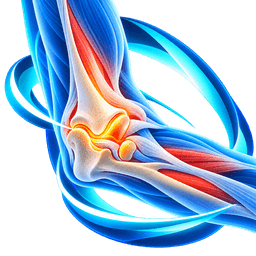
The elbow is a hinge joint. Three bones meet there: the humerus in the upper arm, and the ulna and radius in the forearm. Smooth cartilage covers the joint surfaces and lets them glide. Rheumatoid arthritis, wear-and-tear arthritis, an old injury or a bad break can destroy that cartilage. The joint then hurts, stiffens or feels loose. Simple jobs such as eating, washing your hair or opening a door become hard.
Your surgeon removes the damaged bone ends through a cut at the back of the elbow. They fit a stem into the humerus and another stem into the ulna, then link them with a hinge. Most elbow implants are cemented in place. The result is a smooth, pain-free arc of movement for light daily tasks. Surgeons use the operation for elbow osteoarthritis that has failed other care, and for elbow fractures in older adults when the bone is too broken to repair.
What are the alternatives?
Many people avoid replacement. Anti-inflammatory medicines, therapy, activity changes, bracing and steroid injections come first. Keyhole surgery, called elbow arthroscopy in Turkey, can clean a stiff or catching elbow. Surgeons also remove loose fragments, release scar tissue or fix a fracture. Replacement is a last-step operation for severe pain, because the implant has limits. You must avoid heavy lifting and hard impact for life.
What does the Turkey pathway look like?
Most people spend 7 days in Turkey. You arrive on day 1 and meet your surgeon on day 2. Surgery follows on day 3, and you spend 2 nights in hospital. You start gentle therapy, have a wound check and fly home when the surgeon agrees. Main recovery lasts about 16 weeks. We coordinate records, hotel, transfers and 12 months of remote follow-up. The total elbow replacement procedure guide covers the surgical details.
Why patients choose total elbow replacement in Turkey
Many patients choose total elbow replacement in Turkey because elbow replacement is a rare operation, and they want an upper limb surgeon who does it regularly without a long wait. Our partner teams work in accredited hospitals and coordinate everything in one pathway. The sections below explain what we offer and where the limits are.
Why does surgeon experience matter for an elbow implant?
Hip and knee replacements are common. Elbow replacements are far rarer, so few surgeons build large personal numbers anywhere in the world. That makes experience the key question. Ask your surgeon how many elbow replacements they perform each year, how many revisions they have done and what they do when the bone is weak. Our partner upper limb surgeons work in Turkey's large private and university-linked centres, where they see rheumatoid disease and fracture patients regularly. Our surgeons page explains how we select teams.
Which implants and techniques do teams use?
Partner teams commonly use a linked, semi-constrained implant. In this design, a hinge pin or snap joins the humerus part to the ulna part, which keeps the elbow stable even when ligaments are weak. Some surgeons use an unlinked design when the ligaments and bone are healthy. Surgeons cement both stems with bone cement. They usually work through a cut at the back of the elbow and move the ulnar nerve gently to the side, to protect it. Your surgeon picks the design for your bone and ligaments.
Is Turkey a sensible place to have a rare operation?
It can be, if you check the surgeon's volume and the hospital's records. Turkey has many private hospitals that treat international patients. Some hold Joint Commission International (JCI) accreditation. Specialist upper limb surgeons often train in several countries and attend international meetings. A rare operation needs a team that handles revision and fracture work, so ask about backup support. If your case is complex, our treatment planning guide explains how we match you with a surgeon.
Why does one coordinated pathway help?
- One coordinator gathers your X-rays, CT scan and medicine list.
- An interpreter joins you for consent and discharge.
- A written package states what the cost includes.
- Direct flights from many European and Gulf cities take 3 to 5 hours.
- Remote follow-up continues for 12 months, with wound photos and movement videos.
People who search for the best hospitals for total elbow replacement in Turkey should look at the surgeon's elbow volume first and the building second. If a trusted local surgeon can operate soon and follows you closely, staying home may be simpler.
Accredited hospitals
JCI or equivalent accreditation with dedicated international patient departments.
High-volume surgeons
Fellowship-trained subspecialists who perform this operation weekly.
Fixed-price packages
Surgeon, implants, hospital stay, transfers and follow-up in one price.
Direct flights
Istanbul connects to 300+ destinations; Antalya and Izmir add coastal recovery.
What the total elbow replacement package in Turkey includes
Inclusions are contractually fixed with the partner hospital. Compare like with like when you evaluate other quotes.
Included
- Surgeon and anaesthetist fees
- Implant and consumables
- 2 nights private room
- Pre-operative tests
- In-hospital physiotherapy
- Airport and hospital transfers
- Coordinator and translation
- 12-month remote follow-up
Not included
- Flights
- Hotel
- Companion costs
- Travel insurance
Implant assumption
linked semi-constrained elbow prosthesisOther packages
- Total Elbow Replacement - Premium package$10,950 – $16,700
Total elbow replacement cost in Turkey compared with other countries
Total elbow replacement cost in Turkey depends mainly on the implant, the nights in hospital and the surgeon's time, and it is usually lower than home prices for the same operation. Because the implant is a precision device, the hospital bill is bigger than for a soft tissue operation. For live numbers, use the price comparison chart on this page and read our total elbow replacement cost guide.
What drives the cost of this operation?
Several choices change the total. A linked implant from a well-known maker costs more than a basic design. A bone graft, a fracture implant or a revision kit adds more. The operation needs about 120 minutes of theatre time and a regional block alongside general anaesthesia. A private room and extra nights also raise the bill. Tests, nerve checks and a custom splint appear on some invoices.
How is a Turkey package built?
A package usually bundles the surgeon, theatre, anaesthesia, the implant, 2 hospital nights, early therapy, transfers, hotel nights, a coordinator and an interpreter. Our packages also include remote follow-up for 12 months. Ask for a line-by-line list in writing, with a validity date. Compare it with the elbow quote at home, item by item.
Why is Turkey lower without lower safety standards?
Staff wages, property costs and many supplies cost less in Turkey than in the UK, Germany or the US. A favourable exchange rate also helps visitors who earn in pounds, euros, dollars or Gulf currencies. Private hospitals handle many international patients, which spreads fixed costs. A lower price does not mean lower safety by itself. Standards still differ between hospitals, so licensing and surgeon checks matter more than the quote. Read our Turkey orthopedics overview for context.
What should you compare between quotes?
- The implant brand and design, and whether it is linked or unlinked.
- Whether the quote names a surgeon who performs elbow replacement regularly.
- How many hospital nights and hotel nights it assumes for your 7-day trip.
- Whether early therapy, a splint and a wound check are included.
- What the quote says about a complication or a repeat operation.
Which hidden costs should you ask about?
Ask about extra nights, a bone graft, revision parts, medicines after discharge and imaging. Ask whether a deposit comes back if the surgeon decides that replacement does not suit you.
Typical self-pay range by country
Total elbow replacement in Turkey vs the UK, US and Germany
Total elbow replacement in Turkey differs from surgery in the UK, US or Germany mainly in waiting time, payment and follow-up logistics. The implant types are similar everywhere. The table gives a fair, qualitative comparison, and the notes below explain when staying home is the better choice.
| Factor | Turkey | UK | US | Germany |
|---|---|---|---|---|
| Waiting time | Usually days to a few weeks | Public waits can last months | Short with insurance approval | Usually short |
| Cost structure | Single package, paid by you | Free in the NHS, or private fees | Insurance plus out-of-pocket costs | Insurance or private fees |
| Surgeon choice | Named upper limb surgeon in private care | Often limited by referral | Wide, network-limited | Wide |
| Technology | Linked and unlinked implants | Mostly in specialist centres | Wide choice of designs | Wide choice of designs |
| Aftercare | Short review, then remote follow-up | Local clinic and therapy | Local clinic and therapy | Local clinic and therapy |
| Legal position | Turkish law applies, and insurance may differ | Home legal system | Home legal system | Home legal system |
How does the wait compare?
In some public systems, you may wait many months for an elbow replacement, because few centres perform it. A painful arm during that time limits work and sleep. In Turkey, your date depends on records, tests and travel plans, so many people operate within a few weeks. A quick date should still follow a proper diagnosis and a clear check of your bone quality.
How do surgeon volume and technology compare?
Elbow replacement is a specialist operation in every country. In the UK and Germany, surgeons often concentrate it in a few centres. In the US, shoulder and elbow surgeons perform most cases. In Turkey, partner surgeons offer both linked and unlinked designs, and they work with rheumatology teams. The best choice is the surgeon who does it most often. Ask directly, in writing.
What are the legal and insurance differences?
If something goes wrong, you deal with a hospital in another country. Turkish law and complaint routes apply, and your home insurer may not cover complications abroad. Check your travel insurance, and ask who treats a wound problem or a loose implant if it appears after you fly home.
When is staying home the better choice?
Staying home is often better if a local specialist can operate soon, if you have active rheumatoid disease that needs close local review, or if you expect complex bone loss. Home is also wise if you live far from any follow-up clinic. See our guide to questions to ask before surgery abroad before you decide.
Is total elbow replacement in Turkey right for you?
Total elbow replacement in Turkey suits adults with severe elbow pain or loss of function from arthritis or an old injury, imaging that confirms joint damage and good general health for a 7-day trip. It is not right for every sore elbow. Most people who need it are over 60, or have rheumatoid arthritis, or have a fracture that cannot be repaired. Younger, heavy-use patients usually try other options first.
Who is a good candidate?
- Constant elbow pain that wakes you at night despite tablets and injections.
- X-rays or CT scans that show a worn joint, or a badly broken and healed joint.
- Rheumatoid arthritis that has damaged the elbow, with disease under medical control.
- Difficulty feeding yourself, washing or dressing because the elbow will not bend or straighten.
- A willingness to accept a lifelong lifting limit.
Who should not travel for surgery?
Check with your own doctor first if you have an active infection, uncontrolled diabetes, unmanaged heart disease or poor skin over the elbow. Heavy manual workers and people who rely on crutches for walking put extra load on an elbow implant, so surgeons often advise care. Fresh elbow injuries need local urgent care, not travel. If you have a recent break, see elbow fracture surgery in Turkey, and ask whether repair is the better choice. People with ulnar nerve symptoms should also ask about ulnar nerve decompression in Turkey.
What should you try first?
Most guidelines suggest rest, anti-inflammatory medicine, therapy, bracing and sometimes injections for several months. Rheumatology review and drug changes can slow joint damage. Keyhole cleaning may help if you have catching, loose fragments or stiffness without severe wear. Replacement makes sense when these steps fail, or when the joint is destroyed.
What questions should you ask your surgeon?
- Why do I need replacement rather than arthroscopy, fracture repair or fusion?
- Which implant do you use, and why is it right for my bone?
- How many elbow replacements do you perform each year?
- What lifting limit will I have for life?
- What happens if the implant loosens or becomes infected?
Our medical record review guide explains how we check suitability.
Best cities in Turkey for total elbow replacement
Our current partner hospitals for this operation are in Istanbul, Ankara, Izmir and Antalya. The best city depends on your flight, your preferred pace and your surgeon. Because you walk normally after an elbow operation, hills and stairs matter less than after a leg operation.
| City | Best known for | Recovery setting | Transfers |
|---|---|---|---|
| Istanbul | Most flights, widest choice of surgeons | City hotel near the hospital | Short road transfer from IST or SAW |
| Ankara | Large university hospitals | Quiet city stay | Transfer from Esenboga Airport |
| Izmir | Aegean coast and mild air | Seaside hotel | Transfer from Adnan Menderes Airport |
| Antalya | Mediterranean climate | Resort-style hotel | Transfer from Antalya Airport |
Why choose total elbow replacement in Istanbul?
Total elbow replacement in Istanbul gives you the widest choice of flights and the shortest transfer. Istanbul Airport (IST) and Sabiha Gokcen (SAW) both serve the city. You keep the arm in a sling or splint, so choose a hotel with lifts and a wide bed. Ask your coordinator for a room where you can sleep half upright. See our Istanbul page.
When does Ankara make sense?
Ankara has major university hospitals with rheumatology, anaesthesia and intensive care services under one roof. That suits people with active rheumatoid arthritis, heart disease or other conditions that need a wider team. The city is inland, so the climate is drier and hotter in summer and cold in winter. See the Ankara page.
What about Izmir and Antalya?
Izmir and Antalya suit people who want a calm recovery by the sea. Short walks help circulation and mood while your arm rests. Heat and humidity can make a bandaged arm feel sticky in summer, so spring and autumn are more comfortable. Read the Izmir page and the Antalya page.
In every city, we arrange transfers and your hotel, so you only need to carry a small bag with your free hand.
Hospitals offering total elbow replacement in Turkey
Antalya Yaşam Hospital
Private hospital in Muratpaşa, Antalya, with an orthopedics and traumatology department
BHT Clinic Istanbul Tema Hospital
Large private hospital in Atakent, Küçükçekmece, with an orthopedics and traumatology unit
Biruni University Hospital
University hospital in Küçükçekmece, Istanbul, with a published orthopedics and traumatology department
Surgeons for total elbow replacement in Turkey
Independent profiles with training, memberships, volumes and hospital affiliations.
Preparing for total elbow replacement in Turkey
Good preparation for total elbow replacement in Turkey starts about four weeks before you fly and focuses on records, medicines and getting your skin and general health ready. This is a joint implant operation, so the checks are thorough. Always follow your surgeon's instructions over general advice.
Which records and imaging should you send?
- Elbow X-rays from the front and the side, taken in the last 6 months.
- A CT scan, if you have one, because it shows bone loss and old fractures.
- Operation notes from any earlier elbow surgery, including implants and plates left in place.
- A rheumatology letter and a list of disease-modifying drugs, if you have inflammatory arthritis.
- A list of medicines, allergies, heart conditions, diabetes and past reactions to anaesthesia.
Our medical record review checks your file before you book.
What health checks come first?
Expect blood tests, an ECG and a chest check, with a heart review if you are older or have heart disease. Your team checks kidney function, blood sugar, anaemia and sometimes vitamin D. Ask your dentist to treat any gum infection or loose tooth before travel, because bacteria from the mouth can reach an implant. Check the skin around the elbow for cuts, rashes or eczema. If you smoke, stopping at least 4 weeks before surgery lowers the risk of wound and bone problems.
What about medicines and blood thinners?
Never stop or change a medicine on your own. Rheumatoid arthritis drugs, steroids, aspirin, blood thinners and anti-inflammatory tablets all need a plan from your surgeon and your own doctor. Some drugs pause before surgery and restart after wound healing. Tell the team about every tablet, patch and herbal product.
How can you prepare your arm and body?
Keep the elbow moving within your comfortable range, and keep your shoulder and wrist strong with gentle exercises. Practise one-handed tasks such as dressing, brushing teeth and using a phone, because you will favour the other hand for weeks. Work on a healthy weight and good sleep. A strong core and legs help you sit up and get out of bed without pushing through the new elbow.
What should you pack and set up at home?
Pack loose shirts with wide sleeves, a front-opening top, slip-on shoes, your medicine list and light luggage. At home, arrange help with cooking, shopping and driving for the first weeks. Move items to waist height, so you do not reach or lift above the shoulder.
What is the 4-week countdown?
- Four weeks before: send your scans, rheumatology letter and records, and begin your treatment plan discussion.
- Three weeks before: finish blood tests and heart checks, confirm medicine advice and check visa rules.
- Two weeks before: book flights and insurance, see your dentist and arrange help at home.
- One week before: pack, treat any skin problem, stop smoking completely and confirm airport transfers.
Your total elbow replacement journey in Turkey: 7 days, step by step.
A typical timeline. Your coordinator adapts it to your flights, your surgeon's schedule and your recovery.
- Before you travel1Before you travel
Medical record review
Our team and an upper limb surgeon review your X-rays, scans and medicines. They confirm that replacement suits you and suggest an implant type and a travel date.
- Before you travel2Before you travel
Planning and booking
You receive a written plan with dates, hospital, implant type, hotel and package details. You check visa rules, arrange insurance and decide whether to bring a companion.
- Day 13Day 1
Arrival in Istanbul
A driver meets you at the airport and takes you to your hotel. You rest, meet your coordinator and confirm the timetable for your hospital visits. Your city may differ.
- Day 24Day 2
Surgeon assessment
You meet the surgeon, who examines your elbow and checks your scans. You have blood tests and an ECG, sign consent and meet the anaesthetist.
- Day 35Day 3
Surgery day
You arrive fasting, and the team gives you a general anaesthetic with a nerve block. The operation takes about 120 minutes, and you wake in recovery with the arm in a splint.
- Day 46Day 4
Early therapy
A physiotherapist teaches finger, wrist and shoulder movements. Nurses check your wound, nerve function and pain, and you sit out of bed and walk freely.
- Day 57Day 5
Discharge
After your second night, the surgeon checks your arm and X-ray. You leave for the hotel with a sling, written instructions and a medicine supply.
- Day 68Day 6
Wound check
You rest, keep the arm raised and attend a check of the wound and swelling. The therapist reviews your movements and the surgeon confirms you can fly.
- Day 79Day 7
Flight home
A driver takes you to the airport. You travel with a sling, your operation note and the implant card, and you walk during the flight.
- After you fly10After you fly
Follow-up
Photo and video reviews follow at about 2 weeks, 6 weeks and 3 months. A local clinic removes stitches and starts therapy as your surgeon asked.
Your hospital stay for total elbow replacement in Turkey
Total elbow replacement in Turkey usually involves 2 hospital nights, with surgery on the first day and discharge after about 48 hours. The operation itself takes around 120 minutes. Details vary by hospital and surgeon, and the treating team's instructions win over any general summary.
What happens when you arrive?
You check in at the admissions desk, and nurses confirm your identity, allergies and medicines. The surgeon marks the correct arm. The anaesthetist reviews your tests and explains the plan. An interpreter stays with you through these steps. You change into a gown and remove rings, watches and jewellery from both arms.
What anaesthesia will you have?
Most patients have general anaesthesia with a regional nerve block. The general anaesthetic keeps you asleep and still. The block numbs the arm for 12 to 24 hours and lowers pain after you wake. The team also uses a tourniquet on the upper arm to limit bleeding. Some people feel numb and heavy in the arm that night, which is normal.
What does the surgeon do, step by step?
- The team cleans the arm and covers it with sterile drapes, and you may receive antibiotics.
- The surgeon makes a cut at the back of the elbow and moves the ulnar nerve gently out of the way.
- They open the joint and remove the damaged bone ends of the humerus and ulna.
- They shape the bone canals, test trial implants and check bending and straightening.
- They cement the final humerus and ulna parts, join them with the hinge and recheck movement.
- They close the wound over a drain if needed, then apply a dressing and a splint.
The operation usually takes around 120 minutes.
What happens in the first hours?
You wake in recovery with the arm raised on pillows. Nurses check your fingers for colour, warmth, feeling and movement every hour. They also check the dressing. Most people drink and eat a light meal that evening. An X-ray often follows the same day or the next morning.
How do teams control pain?
Pain control combines the nerve block, regular paracetamol and, if safe for you, anti-inflammatory tablets, with stronger medicine as needed. Raising the arm and using ice packs wrapped in cloth reduce swelling. Take your tablets before the block wears off, so pain does not catch up with you.
When can you leave?
You leave when your wound is dry, your pain is under control, your fingers move well and you can sit and walk safely. The physiotherapist teaches your first exercises. You receive written instructions and an emergency number. Read our hospital admission guide and the surgery day guide for more.
Recovery after total elbow replacement in Turkey
Total elbow replacement recovery in Turkey follows a staged plan, with main recovery over about 16 weeks. You leave hospital after 2 nights, and you usually fly home after about 4 days of local review. The elbow keeps improving for up to a year, and some lifting limits last for life.
| Phase | What you can do | What to avoid |
|---|---|---|
| Days 1 to 7 (Turkey) | Walk, move fingers, wrist and shoulder, raise the arm, light tasks with the other hand | Wetting the dressing, lifting, pushing up from a chair with the operated arm |
| Weeks 2 to 6 | Stitches out, gentle active elbow bending and straightening within the surgeon's limits | Lifting more than a cup, pulling, leaning on the elbow |
| Weeks 6 to 12 | Build light strength, use the arm for eating, washing and desk work | Carrying shopping bags, sudden jerks, sport |
| Weeks 12 to 16 | Return to most daily activities, drive if your surgeon agrees | Heavy lifting, hammering, pushing or pulling heavy loads |
| 4 to 12 months | Comfort and strength keep improving | Repeated lifting above your surgeon's limit, ignoring new pain or swelling |
How long does recovery take?
Most people need about 16 weeks for the main recovery. Pain from the arthritis usually eases early, but wound pain and swelling take weeks to settle. Movement and strength improve gradually over 6 to 12 months. Protocols vary, so follow the plan your surgeon writes for you.
What aids and dressings do you need?
You wear a bulky dressing and a splint or sling for the first days to weeks. Some surgeons use a brace that limits movement at first. You do not need crutches unless you have other problems, but do not lean on the arm to stand. A sling helps comfort, but it should not hold the elbow still for too long, because a stiff elbow is a common problem.
How do you care for the wound?
Keep the dressing clean and dry until your check visit. Stitches usually come out after 10 to 14 days. Do not soak the elbow in a bath or pool until the wound closes fully. Watch for redness, leaking or new swelling, and tell your team.
When can you return to work and driving?
Desk work is often possible within 3 to 5 weeks, if you can type with the other hand and keep the arm raised. Manual work may stay off limits for good, because heavy repeated lifting can wear the implant. Driving usually resumes after about 6 to 8 weeks, when you can control the wheel and your surgeon agrees. Check your insurer's rules.
When can you fly home safely?
Most people fly about 4 days after surgery, once the surgeon checks the wound and your circulation. Blood clots are less common after an arm operation than after a leg operation, but you still walk, drink water and keep the arm raised. Swelling can rise at altitude, so wiggle your fingers. Read the flying after surgery guide.
What about sport and hobbies?
Walking, cycling on smooth paths and swimming (breaststroke, after wound healing) often return from about 3 months. Golf, tennis, weights and contact sport usually stay off limits, or need specific surgeon advice. Ask about your hobbies before surgery.
Aftercare at home after total elbow replacement in Turkey
Aftercare for total elbow replacement in Turkey continues at home with a written therapy plan, wound checks and remote reviews from your surgical team. Elbow replacement needs careful rehabilitation, because stiffness is a common problem and the implant has lifelong limits. Follow the plan your surgeon gives you.
What is the follow-up schedule?
Expect photo or video checks at about 2 weeks, 6 weeks and 3 months, and a final review at 12 months. You send pictures of the scar, movement videos and a note about pain and strength. Your surgeon sets the exact dates. Many surgeons also ask for an X-ray at around 6 to 12 weeks and again at 12 months. Our follow-up guide lists what to prepare.
Do you need physiotherapy?
Yes, in most cases. A physiotherapist or hand therapist guides your movement and strength. Early sessions focus on gentle bending and straightening, forearm rotation and shoulder control. Later sessions add light strength work. Book a therapist before you travel, and bring the written protocol with you. Our rehabilitation guide explains typical goals.
What about medicines, stitches and imaging?
You use simple pain relief for a few weeks and sometimes a short course of blood thinner. A local nurse or doctor can remove stitches at about 10 to 14 days if your surgeon asks. Imaging checks the implant position and shows early loosening. Keep your implant card, which lists the brand and size.
Which warning signs need urgent care?
- Redness, heat, pus or a wound that opens.
- Fever above 38 degrees Celsius.
- Fingers that turn pale, blue or cold, or a sudden loss of feeling.
- Severe pain that rises despite tablets and a raised arm.
- A sudden pop, a visible change in arm shape or a loss of movement after a fall.
- Calf pain, leg swelling, chest pain or breathlessness.
How do teams handle complications?
Contact your coordinator and a local doctor on the same day. Go to an emergency department for severe symptoms. Your surgeon reviews photos and records, and a local team treats infection, swelling or injury nearby. If you need another operation, we share records quickly.
How do you hand over records?
Bring the operation note, implant sticker, anaesthetic record, X-rays and medicine list. Share them with your family doctor and therapist, and keep a copy yourself. Carry the implant card in your wallet.
Total elbow replacement in Turkey: results and success rates
Success after total elbow replacement in Turkey usually means less pain, a stable elbow and a movement arc that supports eating, washing and light work. Most people report clear pain relief, but results depend on your bone, your disease and your rehabilitation. Realistic expectations help you judge your own recovery.
How do doctors measure success?
Surgeons ask about pain, movement, stability and daily tasks. They measure how far you bend and straighten and how well you rotate the forearm. Scores and questionnaires track function, and X-rays show whether the implant sits well. Many studies count the percentage of implants that remain in place after 5 or 10 years.
What results can you expect?
Most people notice pain relief within weeks, and function builds over several months. A typical elbow replacement bends to about 30 degrees short of straight and to about 130 degrees of bend, enough for most daily tasks. A fully normal elbow is not a realistic goal. People with rheumatoid arthritis often see big gains in comfort. After a fracture, results vary with bone quality and nerve health.
How long does the result last?
Many elbow implants last 10 to 15 years or more, but they usually do not last as long as hip or knee implants. Wear, loosening or a fracture around the implant can need revision. Careful use and obeying the lifting limit help the implant last. Surgeons often follow patients with regular X-rays for life.
What affects your result?
- The cause of the damage, such as rheumatoid arthritis, wear or a fracture.
- Bone quality, nerve health and the state of the surrounding muscles.
- Your willingness to follow the lifting limit and therapy plan.
- Infection, smoking, diabetes and steroid use.
- Surgeon technique and implant choice.
When can you return to activity?
Most people return to light daily tasks within 6 to 12 weeks and a settled routine by about 4 months. Heavy work and impact sport stay limited. If you wonder whether a different elbow operation fits better, see our pages on distal biceps repair in Turkey and elbow ligament reconstruction in Turkey.
Is total elbow replacement in Turkey safe?
Total elbow replacement in Turkey can be safe when you choose a licensed facility and a surgeon who performs elbow implants regularly, but every operation carries risk. Elbow replacement has a higher complication rate than hip or knee replacement, so surgeon experience matters. Careful technique and a clear aftercare plan reduce risk without removing it.
How are hospitals licensed and accredited?
The Turkish Ministry of Health licenses hospitals, and some also hold Joint Commission International (JCI) accreditation. Ask for the licence number and any accreditation certificate, and check them with the issuer. Accreditation is helpful but optional, and it does not replace surgeon checks. See our hospital directory.
How do you check a surgeon?
Ask for the surgeon's training, specialist registration and whether they focus on shoulder and elbow or upper limb surgery. Ask how many elbow replacements they do each year, how they manage infection and what revision options exist. A good surgeon answers with numbers and does not rush you.
How do teams prevent infection, clots and implant problems?
Teams clean the skin, use sterile theatres and give antibiotics around the time of surgery. Surgeons use bone cement that sometimes contains antibiotic. Early walking, hydration and sometimes a short course of blood thinner lower clot risk. Hospitals record the implant brand, size and batch in your notes, so a later team can trace it. You receive an implant card.
What are the real risks of this operation?
- Infection, which can need washout, antibiotics or removal of the implant.
- Stiffness or weak extension of the elbow, which therapy often improves.
- Nerve irritation, especially of the ulnar nerve, causing tingling in the ring and little fingers.
- Loosening or wear of the implant over time, which may need revision.
- A fracture around the implant during surgery or after a fall.
- Wound healing problems, particularly with steroid use or rheumatoid skin.
- Instability or dislocation, which is uncommon with linked implants.
- Blood clots, bleeding and anaesthetic complications.
Your surgeon explains how often each occurs for your case.
What are the red flags of a poor provider?
- No named surgeon or no upper limb training.
- No clear diagnosis, X-rays or CT before a quote.
- Pressure to book fast or pay a large deposit.
- No plan for follow-up, revision or complications after you fly home.
If you want a personal review, request a free quote and case review.
Travel and accommodation for total elbow replacement in Turkey
A trip for total elbow replacement in Turkey is a short one, about 7 days door to door, and the main puzzle is your arm rather than your legs. You walk freely, but one hand stays in a bulky dressing and a sling, so every bag, door and seat belt needs a plan. Sorting those small jobs before you leave makes the flight home much calmer.
Which entry rules apply to your passport?
Entry rules differ by nationality. Some travellers enter visa-free and others apply for an online e-Visa. Look at the official e-Visa site, evisa.gov.tr, and your own government's travel advice before you book. Make sure your passport stays valid for the full stay, and keep a printed copy of the hospital letter in your hand luggage.
What should you know about the flight with a sling?
London is about 4 hours away, Frankfurt about 3, the Gulf 4 to 5 and New York around 10. Direct flights land at Istanbul Airport (IST) or Sabiha Gokcen (SAW), and Ankara, Izmir and Antalya have their own terminals. Clocks in Turkey stay on GMT+3 all year. Pack one wheeled case that a companion can pull, because you must not lift or drag a load with the new elbow. Ask the cabin crew to stow your bag overhead for you. Choose a window seat so nobody brushes the arm in the aisle, and rest it on a pillow at heart height to limit swelling.
Where do you sleep after you leave the ward?
Pick a hotel near the hospital with a lift and a firm, wide bed. Most patients sleep half upright with the arm on pillows for the first week. A relative or friend helps with buttons, shirts, cutting food and washing your hair. We arrange transfers and suggest hotels. Our travel and accommodation guide and companion guide give practical checklists.
How do you cover insurance, cash and language?
Check that your travel policy covers complications of planned surgery, since many policies exclude them. Cards work in most shops, and a little cash helps in markets and taxis. A pharmacy is called an eczane, and the pharmacist can advise on simple remedies. Your interpreter handles Turkish at the hospital, and most staff speak some English.
Does the season matter for an arm in a sling?
Yes, a little. Spring and autumn feel mild. In summer a dressing under a sling gets hot and itchy, so pack loose, short-sleeved tops with front buttons. In winter you need a wide coat with one sleeve you can drape over the arm. A spare scarf works as a back-up sling.
Ready to start? Send your records and request a quote.
Total elbow replacement in Turkey: your questions
Is total elbow replacement in Turkey safe?
How long do you stay in Turkey for total elbow replacement?
When can you fly home after elbow replacement in Turkey?
Is there an age or fitness limit for total elbow replacement in Turkey?
How do you choose the best hospital for total elbow replacement in Turkey?
What if a complication happens after I fly home?
Is there a warranty on an elbow implant?
Will language be a problem during my stay?
Can a companion come with me for elbow replacement in Turkey?
Do you need a visa for total elbow replacement in Turkey?
How painful is elbow replacement surgery?
When can you return to work and sport after total elbow replacement?
How does surgery in Turkey compare with surgery at home?
Sources for total elbow replacement in Turkey
Peer-reviewed guidance and institutional sources used to write and review this page.
- 01Elbow replacement
OrthoInfo, American Academy of Orthopaedic Surgeons, 2025
https://orthoinfo.aaos.org/en/treatment/total-elbow-replacement/
- 02Osteoarthritis of the Elbow
OrthoInfo, American Academy of Orthopaedic Surgeons, 2025
https://orthoinfo.aaos.org/en/diseases--conditions/osteoarthritis-of-the-elbow/
- 03
- 04
- 05Turkey travel advice
UK Foreign Commonwealth and Development Office, 2025
https://www.gov.uk/foreign-travel-advice/turkey
- 06
- 07
- 08
Your total elbow replacement in Turkey plan, reviewed by a surgeon.
- 01Upload imaging after you submit; we send a secure link.
- 02A subspecialist reviews and confirms the plan within 48 hours.
- 03You receive a written opinion and a fixed package price with validity dates.
- 04No fee, no obligation.
Prefer to talk? Open the full contact page.
Benchmark prices are estimates from approved records and are not quotes. Turkey partner prices are contracted with validity dates and may change between versions. Medical information on this page is educational and does not replace a consultation with a qualified clinician. .