





Key takeaways
- 1Tendon repair in the hand rejoins a cut or ruptured tendon with strong sutures so that a finger can bend or straighten, and the result depends as much on rehabilitation as on the stitches.
- 2A fresh cut to the palm side of a finger or hand needs urgent local assessment, usually within days, and planned treatment abroad is only for stable patients whose wound has already been managed.
- 3The operation usually takes about 75 minutes, is done under regional or general anaesthesia and is normally a day case with 0 hospital nights.
- 4Rehabilitation is long: a protective splint for about 6 weeks, guided therapy for about 12 weeks and full strong use often only at 3 to 6 months.
- 5The main hand tendon repair risks are stiffness from scar adhesions, rupture of the repair and injury to the finger nerves, so therapy and careful splint use matter.
- 6Flexor tendons, which bend the finger, are harder to repair and rehabilitate than extensor tendons on the back of the hand.
- 7Planned or secondary tendon repair in turkey can suit stable patients with full records, and a stay of about 10 to 14 days allows the first splint changes and therapy before flying.
Overview
Hand tendon repair is surgery that reconnects a divided or ruptured tendon in the hand or forearm, or replaces it with a graft when the ends cannot be joined. Tendons are the cords that link muscle to bone and let the fingers move. The operation takes about 75 minutes, is usually a day case and is followed by a carefully controlled rehabilitation programme.
What is tendon repair in the hand?
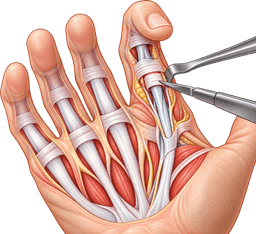
Each finger has two long tendons on its palm side, called flexors, which bend the joints, and a thin extensor tendon on the back that straightens it. The flexors run inside a snug sheath, close to the skin of the palm. A deep cut can divide one or both, leaving the finger unable to bend at the tip or middle joint.
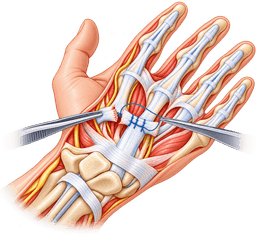
In tendon repair the surgeon finds the two ends, brings them together and sews them with a strong core stitch plus a finer running stitch around the outside. If the gap is too large or the tendon is too damaged, a graft taken from the forearm or foot can bridge it. The same word is used on our Achilles tendon repair page for a very different operation at the heel.
What problems does hand tendon repair treat?
It treats cuts from glass, knives or saws that divide a flexor or extensor tendon, a tendon that has ruptured from sudden force or a jammed finger, and ruptures caused by long-standing disease such as rheumatoid arthritis. It also covers ragged tendon injuries from machinery after the wound has been cleaned.
It does not treat tendon inflammation, which is usually managed without surgery. For example, De Quervain's tenosynovitis affects the thumb-side extensor tendons and is a different problem from a divided tendon.
Why is a fresh tendon injury an urgent problem?
A cut tendon does not heal by itself, because the ends retract into the arm like a snapped elastic band. A fresh cut with inability to bend or straighten a finger needs urgent local assessment, usually within hours to days, together with wound cleaning, antibiotics if the wound is dirty and checking of the nerves and blood supply. Primary repair is often done within about 1 to 2 weeks for best results.
Do not delay emergency care to organise travel. Treatment abroad is only suitable for stable patients, such as people whose wound has been closed and splinted locally and who need a planned or secondary operation.
How does tendon repair work?
The repair works by holding the tendon ends together long enough for the body to knit them with new collagen. The stitch strength must withstand gentle movement, because motion in the first weeks stops scar from gluing the tendon to its sheath. The balance between protection and movement is the heart of hand tendon repair, and it is why splints and therapy are part of the operation.
Is tendon repair a major operation?
The surgery is moderate in length, but the commitment is large. Most people go home the same day, yet the rehabilitation is among the longest in hand surgery, because the tendon is weakest at about 2 to 3 weeks and takes months to reach full strength. Think of it as a 3 to 6 month project that begins with a 75-minute operation.
How common are tendon injuries and who has them?
Hand tendon injuries are common in working-age adults, particularly men, and often follow kitchen knife injuries, broken glass, machinery, sports such as rock climbing and falls. Extensor tendon cuts and mallet finger injuries on the back of the finger are more frequent than flexor injuries. Rheumatoid arthritis and long-term steroid use raise the chance of spontaneous rupture.
How is this different from other hand operations?
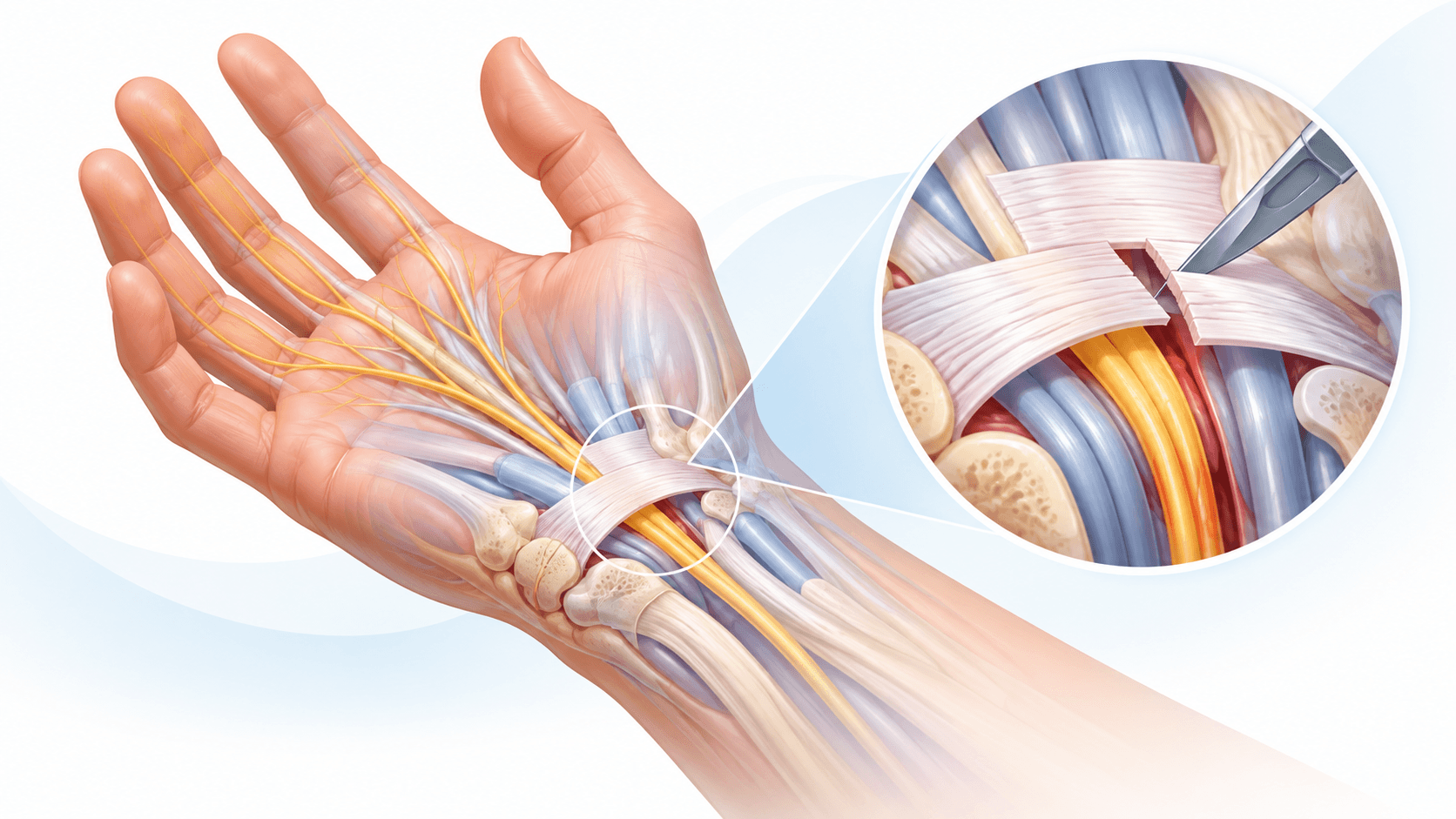
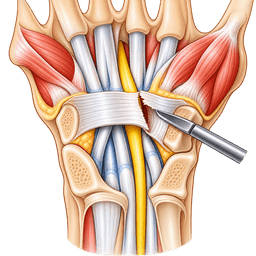
Unlike carpal tunnel release, which frees a nerve, or trigger finger release, which opens a pulley so a normal tendon glides, tendon repair rejoins a tendon that is physically divided. It has a longer recovery than Dupuytren's surgery. Broken bones in the same injury are covered under hand and wrist fracture surgery.
What are the benefits, trade-offs and who should think twice?
The benefit is the return of finger movement and grip that is otherwise lost. The trade-offs are weeks of splinting, a demanding therapy plan, scar stiffness and a small chance of the repair failing. Think twice about repair if the injury is old, the tendon is badly scarred or the patient cannot commit to rehabilitation, since a different option, such as a joint fusion or a staged reconstruction, may suit better.
Conditions treated
Who it's for
- A cut flexor tendon that leaves the fingertip or middle joint unable to bend, which is the classic sign of a divided deep or superficial tendon.
- A cut extensor tendon on the back of the hand or finger that leaves a finger unable to straighten.
- A tendon that has ruptured from sudden force, such as a forced extension of a bent finger, with a loss of active movement.
- A spontaneous rupture caused by rheumatoid arthritis, bony roughness at the wrist or long-term steroid exposure.
- A mallet finger with an extensor avulsion that has failed splinting or has a large bone fragment.
- A tendon injury seen after a delay, when direct repair is not possible and a graft or tendon transfer is planned.
- A failed earlier repair that has ruptured, in a hand with good joint movement.
- A tendon divided during another hand operation or injury, in which a repair is carried out at the same sitting.
Good candidates
Good candidates for hand tendon repair are people with a clean or moderately clean tendon injury, a finger with supple joints and a willingness to follow a strict rehabilitation plan. Those with old, scarred, infected or stiff fingers may need a staged or different procedure. The decision depends on the type of tendon, the zone of injury and the timing.
Who is a good candidate for tendon repair?
You are a good candidate when the finger has lost active bending or straightening, the passive range of the joints is good, the wound is clean and healing and you can attend therapy several times in the first 6 weeks. Children can have repairs too, with adapted splinting. Age is not a limit, but poor circulation or heavy smoking reduces the chance of a good result.
Who should avoid or delay repair?
Repair should wait if the wound is infected, there is a large area of contaminated tissue or the skin cover is poor, because the tendon needs a clean bed. Patients who are very stiff because of earlier injury may need therapy first. If a bone, nerve and artery are also injured, the surgeon plans the order of repairs, and this may be a multi-stage reconstruction.
Anyone with a new cut should not wait for a remote opinion before seeing a local emergency team. Planned patients can still use our medical record review to check whether a second operation is sensible.
How are flexor and extensor injuries classified?
Surgeons divide the hand into zones, because the zone predicts difficulty. Flexor zone 2, the palm-side area of the finger inside the tight sheath, is historically the hardest, with the greatest risk of stiff adhesions. Extensor injuries are zoned from the fingertip to the forearm, and those over the finger joints behave differently from those in the hand.
| Situation | Repair likely appropriate | Non-surgical first | Not advised |
|---|---|---|---|
| Flexor tendon fully cut, clean wound | Yes, usually within days | None, the ends retract | Waiting for months without a plan |
| Partial flexor tendon laceration over 60 percent of width | Often yes | Smaller cuts may be splinted | Ignoring triggering or rupture risk |
| Extensor tendon cut over the hand or wrist | Yes | None | Leaving a drop finger |
| Mallet finger without a large bone fragment | Rarely | Splint for about 6 to 8 weeks | Surgery as a first step |
| Old injury with scar and stiffness | Staged graft or transfer | Therapy to loosen joints first | Direct repair of a retracted tendon |
| Infected or heavily contaminated wound | Not yet | Cleaning, antibiotics, delayed repair | Immediate suture in dirty tissue |
Where does this fit among other hand problems?
Tendon injuries are one part of the wider field of hand and wrist surgery, where the same therapist-surgeon teamwork applies to fractures, nerve problems and joint disease.
Does the choice of surgeon matter?
Yes. Hand tendon repair, particularly in the flexor sheath, rewards experience and a good hand therapy team. Ask whether the surgeon repairs tendons regularly, which rehabilitation protocol is used and who will supervise therapy. Our guide to surgeons shows how profiles are presented, and the questions to ask before surgery abroad guide lists practical checks.
Before surgery
Preparation for tendon repair depends on whether the injury is fresh or old. After a fresh cut, preparation means getting to an emergency department, keeping the hand clean and raised and fasting for surgery. For planned secondary repair, preparation involves a full clinical assessment, loosening stiff joints with therapy and arranging weeks of one-handed living.
What should I do right after a hand cut?
Press a clean cloth on the wound and raise the hand above the heart. Do not remove deep objects. Do not try to test the tendon by wiggling the finger repeatedly. Go to an emergency department the same day, and take any tetanus record. Avoid eating or drinking if you may need an operation. If a fingertip or a part of the hand is amputated, wrap it in damp gauze and keep it cool in a bag, not on ice.
What assessments are done?
The surgeon examines each tendon by asking you to bend the fingertip and middle joint separately, and by watching the resting posture of the finger, which falls out of its normal gentle curve when a flexor is cut. Sensation and blood flow in the fingertip are tested. An X-ray checks for bone fracture or glass, and ultrasound or MRI can show a gap in the tendon if the diagnosis is unclear.
How do I optimise my health?
Stop smoking if you can, because nicotine reduces blood supply to the healing tendon. Keep blood sugar steady if you have diabetes. Tell the team about blood thinners, steroid treatment and allergies, especially to antibiotics. Good nutrition with enough protein supports wound healing. Do not stop prescribed medicines without advice.
What is needed for a remote review before planned surgery?
Send the date and mechanism of injury, previous operation notes, photographs of the hand at rest and with attempted bending, X-ray or ultrasound images, therapy reports and a medicine list. A short video showing what the finger can and cannot do is very valuable. These items let the surgeon judge whether a secondary tendon repair or graft is realistic.
How do I plan home and work?
Expect to use the hand very little for 6 weeks and to need guided therapy up to 12 weeks. A desk worker can often return with the hand in a splint at about 2 weeks, while manual workers need 12 weeks or more. Arrange help with cooking, washing and dressing, and plan transport since you cannot drive in a splint. A therapist near home should be booked before you travel.
What do I bring on the day?
Bring loose clothing, your medicine list, records and X-rays. Remove rings. Fasting instructions apply for general anaesthesia and for most regional blocks. Arrange a companion to take you home and to help with the first night, when the splint and the raised hand make sleeping awkward.
How the operation is performed
In a typical hand tendon repair, the arm is anaesthetised, a tourniquet creates a clear field and the surgeon extends the wound to find both tendon ends. A core suture of 4 strands is placed across the tendon, followed by a fine running stitch around the surface, and the finger is checked for smooth gliding before closing. The operation takes about 75 minutes for a single tendon.
How is the anaesthetic given?
Many surgeons use a regional block of the arm, sometimes with sedation, which keeps the hand numb for several hours. General anaesthesia is used for multiple injuries or if you prefer. A wide-awake method with local anaesthetic is possible in some centres and lets the surgeon watch the tendon glide as you bend the finger, which helps to test the repair.
What are the steps of a flexor tendon repair?
The surgeon widens the wound with zigzag incisions along the finger, opens the tendon sheath in a window and finds the cut ends. The proximal end is often retracted into the palm and is retrieved with a fine instrument or a small cut in the palm. The nerves and arteries on each side of the finger are inspected and repaired if needed.
The core suture is the strength of the repair. Modern techniques use 4 or more strands of braided or monofilament material, locked into the tendon so they do not pull through. A fine epitendinous running suture is then added to smooth the junction. The surgeon pulls on the tendon and bends the finger to check that the repair slides under the pulleys without catching.
What are the steps of an extensor tendon repair?
Extensor tendons are thinner and flatter, and lie directly under the skin on the back of the hand. The ends are sutured with strong interrupted or figure-of-eight stitches. Over the finger, the tendon is so thin that the repair may involve the skin and the underlying bone, and the joint above is pinned or splinted in extension for several weeks. Recovery is shorter than for flexors, but stiffness can still occur.
What are the main tendon repair techniques?
The surgeon chooses among techniques according to the tendon, the zone, the delay and the state of the tissues. The table gives a simple overview.
| Technique | What is done | Typical use | Main trade-off |
|---|---|---|---|
| Primary direct repair | Core and epitendinous suture within days | Clean, fresh flexor or extensor cuts | Needs a clean wound and early therapy |
| Delayed primary or early secondary repair | Repair after 1 to 3 weeks | Contaminated wounds or delayed arrival | Contracted tendon needs more dissection |
| Tendon graft (one stage) | Palmaris or plantaris graft bridges a gap | Late injuries, lost length | Two junctions, longer therapy |
| Staged reconstruction | Silicone rod first, graft months later | Scarred sheath, failed repair | Two operations over 3 to 4 months |
| Tendon transfer | Healthy tendon redirected to replace function | Irreparable rupture, rheumatoid cases | Needs relearning movement |
| Tenolysis | Release of adhesions after healing | Stiff finger after repair | Done after 3 to 6 months, needs prompt therapy |
When is a graft or transfer used?
A graft is used when too much time has passed for the tendon to be brought together without tension, or part of it has been lost. Common donors are the palmaris longus in the forearm, which most people can do without, and plantaris at the calf. A transfer redirects a working tendon so that it takes over the task, which is common for ruptured extensor tendons in rheumatoid arthritis.
How are the pulleys and sheath protected?
The flexor sheath contains a series of pulleys that hold the tendon against the bone. The surgeon opens only as much of the sheath as needed to see the ends, and keeps the A2 and A4 pulleys, which matter most for the finger's strength and shape. If a pulley has been cut by the injury, it is repaired or rebuilt with a small tendon strip so the tendon does not bowstring afterwards.
How is the repair tested before closing?
Before closing, the surgeon bends and straightens the finger passively and watches the repair slide through the sheath. A bulge, a gap or a catch under a pulley is corrected on the spot, with a few additional stitches or a trimmed edge. In a wide-awake operation, you may be asked to actively bend the finger as the final check.
How long does tendon repair take?
Repair of a single tendon usually takes about 75 minutes. Several tendons, a graft or accompanying nerve and artery repairs can bring it to 2 to 3 hours. Longer times reflect more structures injured, not a poorer result. Careful handling of the tendon, which is easily damaged by rough instrument use, matters more than speed.
How is the wound closed and splinted?
After the repair is tested, the tourniquet is released, bleeding is controlled and the skin is closed with fine stitches. A bulky dressing and a plaster or thermoplastic splint is applied, with the wrist bent forward and the knuckles bent in a dorsal blocking position for flexor repairs. The splint protects the repair from stretching during the first weeks.
Hospital stay
Hand tendon repair is generally a day case with 0 hospital nights. You wake in the recovery area with the arm raised and the hand in a splint, and you go home the same day once the fingers are warm and pink and pain is controlled. An overnight stay is possible if there are several injuries, a wound infection or other medical needs.
What happens on the day of surgery?
You meet the surgeon and anaesthetist, who confirm the injury and mark the hand. After the operation the nurses check the colour and warmth of the fingertips, the movement of the thumb and other digits and the feeling in the arm. A hand therapist often sees you the same or next day to check the splint and show the first exercises.
How is pain managed?
The block lasts for 8 to 12 hours, and you start regular paracetamol and an anti-inflammatory before it fades. A short course of a stronger painkiller may be added for 2 to 3 days. Keeping the hand above heart level reduces throbbing. Pain that suddenly increases, or a feeling of tightness in the splint, needs a call to the team.
What are the discharge criteria?
Discharge needs stable observations, a warm pink hand, pain controlled by tablets and a splint that fits comfortably. You leave with instructions on splint wear, finger positions to avoid, a therapy appointment and the date for the first wound check, usually at 3 to 7 days. Someone should stay with you for the first night.
How do I care for the wound and splint?
Never remove the splint unless told to. Keep it dry using a bag in the shower, or wash with a cloth. Do not drive, lift or pull on the fingers with the other hand. Move the thumb and uninvolved fingers as the therapist advises. A sudden sharp snap, followed by a loss of finger movement, may mean the repair has ruptured and needs urgent review.
Can international patients have tendon repair in turkey?
Planned or secondary tendon repair in turkey can suit stable patients whose original wound was treated locally. A stay of about 10 to 14 days is usual, which allows the first splint check, early therapy with the treating team and an operation note to be handed to your home therapist. A fresh injury should be dealt with at the nearest emergency unit and not delayed for travel.
See our guides on hospital admission, rehabilitation and flying after surgery, or read the dedicated page on hand tendon repair in turkey.
Recovery
Recovery from tendon repair is a phased programme. The tendon is protected in a splint for about 6 weeks, moved in controlled ways under a hand therapist, then strengthened from about 8 to 12 weeks. Most people use the hand for light tasks at about 6 to 8 weeks and return to heavy work at 3 to 6 months. The therapy matters as much as the operation.
What is the tendon repair recovery time?
The overall tendon repair recovery time is about 12 weeks to reach functional use, with strength and endurance continuing to improve for 6 months. Extensor repairs are often quicker, at about 8 to 12 weeks, whereas flexor repairs in the sheath usually need the full 12 weeks. Multiple tendons, grafts and associated nerve injuries lengthen the plan.
What is the therapy protocol after flexor repair?
Therapists use one of several protocols. In early passive motion, the therapist or a pulley system moves the finger for you while the splint keeps it safe. In early active motion, you gently contract the muscle in a small range, which is allowed because modern 4-strand repairs are strong enough. Both aim to keep the tendon sliding so that adhesions do not form.
Typically, the splint holds the wrist and fingers in a protected position for the first 3 to 4 weeks, with careful exercises several times a day. The splint is then reduced to a wrist hold, and by about 6 weeks, protected use is replaced by gradual active use. Strength work begins at about 8 to 12 weeks.
What is the therapy protocol after extensor repair?
For extensor tendons in the hand, a splint holds the wrist and knuckles in extension, and early short-arc movement may be allowed. For a repair over a finger joint, the joint stays straight in a splint for about 6 weeks, with the neighbouring joints free. Bending is introduced in stages, because a repair that is stretched early can sag and leave a lag.
How much pain and swelling is normal?
Pain is moderate in the first week and then fades to an ache with exercises. Swelling is common for 4 to 8 weeks, and it eases with elevation and light movement. The finger may look puffy, bruised and stiff, which is normal. Contact the team if swelling is accompanied by fever, increasing redness or throbbing pain.
What can I do and not do during the splint stage?
Do not grip, lift, push or pull with the repaired hand. Do not remove the splint, even to rest the finger. Do not use the other hand to force the finger open or closed. You can move the thumb and unaffected fingers, type with the free fingers if the therapist allows it and walk normally. Showering needs a waterproof cover.
When can I drive, work and exercise?
Driving is usually not possible in the first 6 weeks, because a splint blocks grip and fast reaction. Many people drive again at about 8 to 12 weeks, once they have a safe grip, good control and the surgeon's approval. Desk work may restart at 2 to 3 weeks with the splint on. Manual work, climbing and sports need 3 to 6 months.
What does normal healing look like?
| Time | What you will usually notice | What you will usually do |
|---|---|---|
| 2 weeks | Stitches out, swelling, finger held in a curve by the splint | Protected exercises, no gripping |
| 6 weeks | Tendon stronger, finger moves more freely, stiffness remains | Splint reduced, active exercises |
| 12 weeks | Good active range, grip building, scar softening | Strengthening, return to most work |
| 6 months | Near-final movement and strength | Heavy work, sport, full grip |
What are the red flags?
Contact the team promptly after a sudden pop or sharp pain followed by loss of finger movement, which suggests rupture. Also report fever, spreading redness or pus, a fingertip that turns pale or blue, numbness that is getting worse or a splint that rubs or leaves pressure sores. Early review of a ruptured repair gives the best chance to fix it.
Recovery timeline
- Protect and elevate1Protect and elevate
Days 0–7
Keep the hand in the splint and above heart level. Take regular painkillers. Move the unaffected fingers and thumb. Do not grip or lift. A first wound check and splint review happen at about 3 to 7 days. Watch the fingertips for colour, warmth and feeling, and call the team if the splint feels too tight.
- Early guided movement2Early guided movement
Weeks 1–3
Stitches come out at about 10 to 14 days. The therapist starts the chosen exercise protocol, which may be passive motion or very small active movements several times a day. The splint stays on, including at night. Desk tasks with the free fingers are fine. Swelling is at its height, so elevate often.
- Splint stage continues3Splint stage continues
Weeks 3–6
The tendon is still weak at this point, and the risk of rupture is highest around weeks 2 to 4. Exercises widen gradually. Some therapists change the splint to a wrist-only design near 4 to 6 weeks. Scar massage begins once the wound is fully closed. Keep appointments, since the plan is adjusted from week to week.
- Free active movement4Free active movement
Weeks 6–8
The protective splint is stopped or used only in risky settings. You begin active movement of the whole finger and light everyday tasks, such as holding a cup. Gripping heavy objects, lifting and sudden pulls are still avoided. Stiffness is normal, and gentle stretching of the joints starts.
- Strengthening5Strengthening
Weeks 8–12
Resisted exercises, putty and light weights are introduced. Grip strength returns slowly. Many people go back to light manual work. Joints that remain stiff may be treated with dynamic splints. The surgeon reviews the range of movement and decides if the repair is strong enough for loading.
- Return to full use6Return to full use
Months 3–6
Heavy work, climbing, racquet sports and weights restart in stages. The scar softens and the finger gains the last 10 to 20 percent of range. If movement has plateaued with a stiff finger, the surgeon may discuss tenolysis, usually after 3 to 6 months of therapy.
Outcomes and success rates
Success in hand tendon repair means a finger that bends and straightens enough for real tasks, with a grip you trust and no repeat rupture. Perfect movement is not always achievable, particularly after flexor injuries in the finger sheath, but most people regain a useful, functional hand. Results depend on the injury, the repair, the therapy and the person.
What is the tendon repair success rate?
Studies suggest that most people regain good or excellent function after a clean, timely flexor repair with proper therapy, though a meaningful minority have stiffness that limits full fist closure. Extensor repairs generally do well, and results are best over the hand and wrist. Rates vary with the zone, the number of tendons, associated injuries and how success is measured, so general expectations are more helpful than a single figure.
What affects the result of hand tendon repair?
The most important factors are the zone of injury, the cleanliness of the wound, the timing of repair, damage to other structures, age and adherence to therapy. Crush and contaminated injuries scar more. A good surgeon and a hand therapist who communicate well make a measurable difference.
| Factor | Tends to improve the result | Tends to worsen the result |
|---|---|---|
| Injury type | Clean cut, single tendon | Crush, multiple tendons, nerve and artery injury |
| Zone | Extensor in the hand, flexor outside the sheath | Flexor within the finger sheath |
| Timing | Repair within days | Long delay, tendon contracted |
| Rehabilitation | Supervised therapy, splint compliance | Missed visits, early heavy use |
| General health | Non-smoker, good circulation | Smoking, diabetes, poor circulation |
How strong is the repair over time?
A repaired tendon is at its weakest between about 5 days and 3 weeks, when the original stitches are the only support and new collagen has not yet formed. Strength rises through weeks 6 to 12 as scar remodels, and continues to improve for several months. That timeline explains why therapy is gentle at first and why heavy gripping is delayed.
Will the finger be completely normal?
Many people regain most of their movement, although a slight lack of full straightening or a small loss in fist closure is common, especially after flexor repair in the finger. Grip strength typically recovers to a high proportion of the other hand. People who play instruments or do fine work should speak early with the surgeon about realistic goals.
Can a repair fail, and what then?
A repair can rupture, usually within the first 3 to 6 weeks, or it can heal with so much scar that the finger cannot glide. Rupture needs urgent review, and early re-repair is possible if caught within days. Stiffness after 3 to 6 months of therapy may be treated with a tenolysis, which frees the tendon from scar, or by a staged graft.
How satisfied are people with the result?
Satisfaction is generally good where the finger regains useful movement, and it is lower after complex injuries with nerve damage or after long delays. Patients who understand the length of rehabilitation from the start are typically more content. Cold sensitivity, scar tenderness and mild stiffness are the common grumbles, and they usually fade over a year.
Implants and technology
Technology in tendon repair centres on suture materials, magnification and the splint systems that protect the repair. There is no implant left in the hand after a standard repair. The strength of modern core sutures has made earlier movement possible, which is the main reason outcomes have improved over recent decades.
What suture materials and patterns are used?
Surgeons use strong, braided or monofilament non-absorbable sutures, usually 3-0 or 4-0 for the core and 5-0 or 6-0 for the epitendinous layer. Patterns with 4 or more strands, such as a modified Kessler or a cruciate design, increase the pulling strength. The more strands that cross the repair, the earlier gentle active movement can safely begin.
Why does magnification matter?
Loupes with 3.5 times magnification or an operating microscope allow the surgeon to handle a tendon that is about 3 to 5 mm wide without damaging its surface. Roughened tendon surfaces form adhesions, so gentle handling with fine instruments is important. The microscope is also used when nerves and arteries are repaired at the same time.
Are tendon grafts, rods or substitutes used?
For gaps, a graft from the patient's own palmaris longus or plantaris tendon is most often used. In staged reconstruction, a silicone rod is placed first to build a smooth tunnel, and a graft replaces the rod several months later. Artificial tendons exist but are rarely used because natural grafts perform better.
What do splints and therapy devices do?
A custom thermoplastic splint is moulded to the hand and holds the wrist and knuckles in a safe position, limiting the load on the repair. Rubber-band traction splints, in some protocols, pull the fingers gently into flexion to allow active extension against light resistance. Silicone sheets, compression sleeves and ultrasound are used for scar and stiffness.
Is ultrasound or imaging useful?
Ultrasound can show a gap in a tendon repair, tendon gliding and adhesions, without radiation. MRI is used less often but can map a delayed rupture or a retracted tendon end. Some centres use ultrasound during therapy to see whether the repair is sliding. Imaging does not replace a good clinical examination.
Is robotics or navigation used?
No. Hand tendon repair is done by hand under direct vision with magnification. The technology that influences outcomes most is the quality of the suture, the design of the rehabilitation programme and the communication between surgeon and therapist.
Risks and how they are managed
All surgery carries risk. Partner hospitals follow enhanced-recovery and infection-prevention protocols, and your surgeon will discuss the risks specific to your case before consent.
- Stiffness and adhesions: scar can bind the tendon to its sheath so the finger cannot glide. Strong core sutures, early guided movement and a skilled therapist lower the risk, and tenolysis can free the tendon later.
- Rupture of the repair: the tendon can pull apart, usually in the first 3 to 6 weeks, causing sudden loss of movement. Protective splinting, avoiding gripping and urgent review reduce harm, and early re-repair is often possible.
- Digital nerve injury: the finger nerves lie right beside the flexor tendons and may be cut with the injury or stretched during surgery. Surgeons check sensation, repair divided nerves under magnification and explain that recovery can take months.
- Infection: wounds from knives, glass or animals carry bacteria. Cleaning, antibiotics, sterile technique and early review lower the risk, and a deep infection may require washout.
- Flexion contracture or extension lag: the finger may not fully straighten or bend, particularly at the middle joint. Splinting, stretching and therapy treat it, and some people need further surgery.
- Bowstringing: loss of a pulley can make the tendon lift away from the bone. Surgeons preserve or reconstruct the key pulleys during repair.
- Scar tenderness and cold sensitivity: the scar and fingertip may be tender or sensitive to cold for months. Desensitisation, massage and gradual loading help most people.
- Complex regional pain syndrome: a minority develop disproportionate pain, swelling and stiffness. Early recognition, therapy and specialist pain care improve the course.
- Graft donor problems: a graft from the forearm or foot can leave a scar or tenderness. These are usually minor and settle within weeks.
- Anaesthetic and tourniquet effects: temporary arm numbness, nausea or nerve irritation can occur. Experienced anaesthetists and monitored cuff pressure keep these short-lived.
Alternatives
- Splinting and observation: a small partial tendon cut or a closed mallet finger injury can heal in a splint. It is chosen when the tendon remains continuous, so the repair is not needed.
- Early direct repair: the standard choice for a clean, fresh complete cut, done within days. It is chosen whenever the ends can be joined without tension.
- Delayed primary repair: waiting 1 to 3 weeks for a contaminated or complex wound to settle, then repairing the tendon. It is chosen to reduce infection and swelling.
- Tendon graft or staged reconstruction: used when the gap is large or the sheath is scarred. It is chosen for late presentation or failed repair, and takes months.
- Tendon transfer: a healthy tendon replaces a lost one. It is chosen for irreparable ruptures, such as in rheumatoid arthritis, and needs retraining of movement.
- Joint fusion or tenodesis: stabilising the fingertip joint so the finger works as a stable post. It is chosen for a damaged, stiff tip when function matters more than movement.
- Therapy-only management: for old injuries where patients accept a stiff finger, therapy and splints can improve function without more surgery.
What hand tendon repair costs
The contracted Turkey partner package next to approved self-pay benchmarks. Benchmarks are 20th–80th percentile ranges of approved records, normalised to USD.
Turkey package
$2,500 – $5,000
United States self-pay
$8,250 – $22,750
United Kingdom self-pay
$3,500 – $11,350
Germany self-pay
$2,800 – $9,450
Typical self-pay range by country
Surgeons who perform hand tendon repair
All surgeonsHospitals offering this procedure
Antalya Yaşam Hospital
Private hospital in Muratpaşa, Antalya, with an orthopedics and traumatology department
BHT Clinic Istanbul Tema Hospital
Large private hospital in Atakent, Küçükçekmece, with an orthopedics and traumatology unit
Biruni University Hospital
University hospital in Küçükçekmece, Istanbul, with a published orthopedics and traumatology department
Çankaya Hospital for Orthopedic Care
Çankaya Hospital for Orthopedic Care is an orthopedic hospital in central Ankara with robotic-arm assisted surgery
Sources and references
Peer-reviewed guidance and institutional sources used to write and review this page.
- 01Flexor Tendon Injuries
American Academy of Orthopaedic Surgeons (OrthoInfo), 2022
https://orthoinfo.aaos.org/en/diseases--conditions/flexor-tendon-injuries/
- 02Extensor Tendon Injuries
American Academy of Orthopaedic Surgeons (OrthoInfo), 2022
https://orthoinfo.aaos.org/en/diseases--conditions/extensor-tendon-injuries/
- 03Flexor Tendon Injury
American Society for Surgery of the Hand (HandCare), 2022
https://www.assh.org/handcare/condition/flexor-tendon-injuries
- 04
- 05Flexor Tendon Repair
StatPearls, National Library of Medicine, 2023
https://www.ncbi.nlm.nih.gov/books/NBK557587/
- 06Mallet Finger
American Society for Surgery of the Hand (HandCare), 2022
https://www.assh.org/handcare/condition/mallet-finger
- 07