

Key takeaways
- 1Bunion surgery corrects the alignment of the first metatarsal and big toe, so it does much more than shave off the visible bump.
- 2The operation usually takes about 60 minutes and is most often a day case, with 0 hospital nights.
- 3Most people walk in a protective shoe straight away, return to desk work after 2 to 3 weeks and need around 8 weeks before shoes feel close to normal.
- 4Swelling can last 6 to 12 months, so the final appearance of the foot is judged long after the stitches are out.
- 5Bunion surgery is usually offered only after months of wider shoes and padding have failed to control pain, because bunions do not harm health when they are not painful.
- 6The main bunion surgery risks include stiffness, numbness, the bunion returning and, rarely, infection or a bone that heals slowly, and most are reduced by careful technique and by following the recovery plan.
- 7Planned bunion surgery in turkey can suit well-prepared patients who send full records and can stay for 7 to 14 days before flying home.
Overview
Bunion surgery is an operation that corrects a bunion, the bony bump at the base of the big toe, by realigning the bone and soft tissues that have drifted out of position. It is usually done through a small cut on the inner side of the foot, takes about 60 minutes and most often allows you to go home the same day. The medical name is hallux valgus surgery, or hallux valgus correction.
What is bunion surgery?
A bunion is not just an extra lump of bone. The first metatarsal, the long bone behind the big toe, angles inward, while the toe itself leans toward the second toe. The joint between them, the first metatarsophalangeal joint, then sticks out and rubs on shoes. You can read more about the condition on our bunions page.
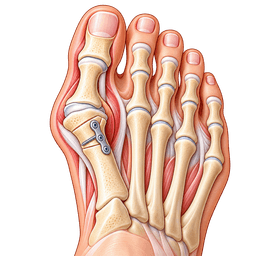
Bunion surgery, also called a bunionectomy, puts the bones back into a better line. The surgeon cuts the metatarsal in a planned way, which is called an osteotomy, shifts the bone and holds it with small screws or other fixation. The tight and loose tissues around the joint are then rebalanced.
What problems does bunion surgery treat?
The operation treats a painful, progressive bunion that makes walking or shoe wearing hard despite sensible non-surgical care. It also helps when the big toe pushes under or over the second toe, when the joint is swollen and sore, or when a bunion contributes to related toe problems such as hammertoe.
It is not meant for a bunion that looks unattractive but does not hurt. Studies suggest that a bunion is common, affecting roughly 1 in 4 adults to some degree, and many people live with one comfortably. Surgery is a choice about symptoms and daily function, not about the look of the foot alone.
How does bunion surgery work?
Most techniques follow one idea: move the metatarsal back toward the midline of the foot and let the big toe follow. The surgeon chooses where to cut the bone depending on how far it has drifted. Cuts near the toe suit mild bunions, cuts in the shaft suit moderate ones and cuts near the base suit larger deformities.
The soft tissue work matters as much as the bone. A tight tendon and joint capsule on the outer side may be released, and a stretched capsule on the inner side is tightened. In some people the joint at the base of the metatarsal is also fused, which is a more extensive operation.
Is bunion surgery major surgery?
It is a planned operation on bone, so it deserves respect, but it is usually described as intermediate rather than major. There is no need for a large hospital bed, a long stay or a big incision. Even so, the bone must heal, which is why the recovery takes around 8 weeks and not a few days.
Many people say the first 2 weeks are the hardest because of swelling and the need to keep the foot raised. After that, daily life becomes steadily easier. You can compare this with other foot operations on our forefoot surgery page, or browse all foot and ankle care.
How common is bunion surgery and who has it?
Bunions are more common in women, in people over 40 and in families where the foot shape is inherited. Narrow, high-heeled shoes can speed up the change, but they are not the only cause. Flat feet, loose joints and some forms of inflammatory arthritis also play a part.
Because only a minority of people with a bunion have pain that justifies an operation, the surgery is far less common than the condition. Most patients are aged between 30 and 70, though teenagers with a painful inherited bunion are sometimes treated too.
What are the main benefits and trade-offs of this operation?
The main benefits are less pain at the joint, a straighter toe and the ability to wear a wider range of shoes. The trade-offs are weeks of restricted walking, swelling that settles slowly and a small chance of stiffness, numbness or the bunion returning.
The aim is a comfortable, well-aligned foot, not a perfect foot. Realistic expectations are one of the strongest predictors of satisfaction. People who hope to wear very narrow fashion shoes every day are often disappointed, even when the bone heals well.
Who should think twice before having surgery?
People with poor circulation, active foot infection, uncontrolled diabetes or a habit of smoking should talk through the risks first, because healing can be delayed. Those with a bunion that causes no pain, or whose main pain comes from another cause such as arthritis in the big toe joint, may not benefit from realignment.
If you are planning bunion surgery in turkey, the same questions apply. Our overview of bunion surgery in turkey explains how an international plan is built around them. Urgent problems such as a broken toe or an infected foot need local care first.
Conditions treated
Who it's for
- Persistent pain over the bump or in the big toe joint that continues after 3 to 6 months of wider shoes, padding and spacers.
- Difficulty finding shoes that fit, even roomy ones, because the bump presses or rubs on the upper.
- A big toe that crowds, overlaps or pushes under the second toe and causes pain or calluses beneath it.
- Recurring skin breakdown, bursitis (a swollen sac of fluid) or inflammation over the bunion.
- Pain that limits walking, work, standing or exercise that matters to you.
- A deformity that is getting worse over time on weight-bearing X-rays, especially in younger people with a family history.
- Related toe problems, such as a hammered second toe, that are driven by the bunion and are unlikely to settle without correcting it.
Good candidates
A good candidate for bunion surgery is an adult with a painful bunion that limits daily life, who has tried sensible non-surgical care, understands the length of recovery and is healthy enough for an operation on bone. Age on its own is rarely the issue. Overall health, circulation and expectations matter more.
Who is a good candidate for bunion surgery?
Good candidates usually have pain at the bump, trouble with footwear, and X-rays that show a clear misalignment. They are able to keep weight off the forefoot for a short time, can raise the foot at home and are willing to attend physiotherapy and follow-up visits. A realistic view of the result is just as important.
Younger people with a fast-growing bunion and a strong family history may also be offered surgery earlier. Their joints may be flexible enough to allow a smaller correction, and delay can make the deformity larger and the operation more involved later.
Who is not a good candidate for the operation?
Surgery is usually postponed or avoided when the foot has poor blood supply, an active skin infection or ulcer, or uncontrolled diabetes. Smokers are strongly encouraged to stop for several weeks beforehand because nicotine slows bone healing. Bunions without pain and purely cosmetic goals are rarely a good reason to operate.
People whose pain comes mainly from arthritis in the joint, from a pinched nerve between the toes or from the ball of the foot may need a different operation. A clinician can tell these apart with examination and imaging, which is why a careful diagnosis comes first.
How is the decision to operate made?
The decision is shared between you and your surgeon. They look at your symptoms, examine the foot standing and sitting, and review weight-bearing X-rays. They measure the angle between the big toe and the first metatarsal and the angle between the first and second metatarsals, which grade a bunion as mild, moderate or severe.
Based on this they offer a technique and explain the recovery. You then weigh the benefits against the time off work and the risks. If you are unsure, a second opinion or a remote record review through our medical record review process can help.
| Situation | Surgery likely appropriate | Non-surgical care first | Not advised for now |
|---|---|---|---|
| Painful bunion with shoe problems after 3 to 6 months of care | Yes | Already tried | No |
| Bunion with a bump but little pain | No | Yes: wider shoes and padding | Yes, unless symptoms change |
| Mild bunion with early pain | Possibly later | Yes | No |
| Big toe stiffness with arthritis in the joint | Different operation may be needed | Yes | Realignment alone |
| Poor circulation or active infection | No | Treat the cause | Yes |
| Smoker with a moderate bunion | After stopping smoking | Yes | Until nicotine-free |
Does age matter when choosing surgery?
Age is not a barrier, but bone quality and general health are. In older adults, softer bone can make screw fixation less secure, so surgeons may choose a different technique or a longer period of protected walking. Teenagers whose growth plates are still open are usually watched, because early surgery can allow the bunion to return.
If you also have knee, hip or back problems, tell your surgeon. Walking aids and a protective shoe change how you load the whole leg, and a short delay can allow better planning.
Before surgery
Preparing for bunion surgery means confirming the diagnosis with weight-bearing X-rays, checking your general health, stopping smoking, reviewing your medicines and arranging help at home for the first 2 weeks. Good preparation lowers the chance of wound problems and makes the first weeks calmer.
What tests are done before bunion surgery?
You will usually have weight-bearing X-rays from the front and the side, because a foot that is loaded shows the true alignment. Some surgeons also take a view of the sesamoid bones, two tiny bones under the big toe joint. Blood tests, an ECG for older patients and a pulse check of the foot are common.
An ultrasound or MRI is rarely needed, but may be requested if the pain pattern is unclear or if there is a suspected nerve or tendon problem. Hospitals that treat many foot patients often review these images together before surgery day.
How should I prepare my health for the operation?
Stop smoking and nicotine products at least 4 to 6 weeks before the operation if you can. Nicotine narrows small blood vessels and is linked with slower bone healing and more wound problems. If you have diabetes, bring recent blood sugar results and aim for steady control.
Tell the team about all medicines, including blood thinners, anti-inflammatory tablets, herbal products and hormone treatments. Some are paused for a few days before surgery. Never stop a prescribed medicine on your own. Treat any cut, fungal infection or skin problem on the foot beforehand.
What should I bring and arrange before the operation?
Bring loose trousers, a pair of supportive shoes for the other foot, any walking aid you already own and a list of your medicines. Arrange a ride home, because you cannot drive after sedation or with a protective shoe on your right foot.
At home, make the bathroom safe, put essential items at waist height and set up a place to sit with the foot raised above heart level. A rolling chair, a shower stool and a small backpack to carry things hands-free are useful. Plan for someone to help with shopping and meals during the first 2 weeks.
What should I send for a remote review of bunion surgery?
If you are considering care abroad, send a short history, current medicines and your most recent weight-bearing X-rays as image files, not just reports. Add clear photos of both feet from the front, the side and from behind while standing. Our team can pass these to a surgeon for an opinion before you commit to travel.
The process is explained in our medical record review guide, and you can start with the free quote form. A remote review cannot replace an examination in person, so the final plan is confirmed once you arrive.
How do I plan work, home and travel around the operation?
Desk workers often return after 2 to 3 weeks if they can raise the foot, while people who stand or walk all day usually need 6 to 8 weeks. Choose a time of year when you can wear a wide, protective shoe without difficulty, and avoid big events for the first 3 months.
If you live alone, arrange for a friend or relative to check in daily. Prepare meals in advance and buy simple painkillers as advised. For travel, read our guides on travel and accommodation and treatment planning early so that dates are realistic.
Will I need physiotherapy arranged beforehand?
A short visit before surgery is useful but not essential. A physiotherapist can teach you how to walk on the heel or outer edge of the foot, how to use a stick or crutches and how to climb stairs safely. Practising these skills before the operation, when you are not sore, makes them far easier on the day.
They can also show you toe and calf stretches to start once the surgeon allows. Learning the plan in advance helps you follow it later and builds confidence about the weeks ahead.
How the operation is performed
Bunion surgery is done under a nerve block at the ankle with sedation, or under a general anaesthetic, and usually takes about 60 minutes. The surgeon makes a cut over the bump, realigns the first metatarsal with a bone cut and fixes it with screws or plates, balances the soft tissues and closes the skin.
How long does bunion surgery take?
Most operations last 45 to 90 minutes, with about 60 minutes as a typical figure. A single bone cut with simple fixation is at the shorter end. Extra steps, such as correcting a second toe or fusing a joint at the base of the metatarsal, add time. You will be in the hospital for several hours in total, including waiting and recovery.
What anaesthesia is used for the operation?
Two options are common. In the first, an anaesthetist numbs the nerves at the ankle, which is called a regional block, and gives light sedation so that you are relaxed or asleep but breathing on your own. In the second, you have a general anaesthetic. The choice depends on your health, preference and the surgeon's routine.
A regional block has a useful side effect. The foot stays numb for roughly 8 to 18 hours afterwards, which gives a comfortable start while you take regular painkillers. A tourniquet around the ankle or calf is often used to keep the field dry.
How is bunion surgery performed step by step?
After the anaesthetic, you lie on your back with the foot raised and the skin cleaned. The steps below describe a typical open osteotomy, the most widely used approach.
- The surgeon makes a cut of about 3 to 6 cm along the inner edge of the big toe joint.
- The joint capsule is opened and the bony prominence is trimmed with a small saw.
- The first metatarsal is cut in the planned place, which is the osteotomy, and shifted toward the second toe.
- The new position is checked with live X-ray images and held with one or two screws, a small plate or staples.
- Tight tissue on the outer side of the joint may be released, and the stretched inner capsule is tightened and sutured.
- The skin is closed, a soft bandage holds the toe straight and you move to the recovery area.
What types of bunion surgery are there?
Dozens of named operations exist, but most fall into a few families. The table below compares the main ones. Surgeons choose by the size of the deformity, the flexibility of the joint, the quality of the bone, and their own training and results.
| Technique | Where the bone is cut | Typically used for | Notes |
|---|---|---|---|
| Distal osteotomy (such as Chevron) | Near the head of the metatarsal | Mild to moderate bunions | Small cut, quick return to walking, limited correction power |
| Shaft osteotomy (such as Scarf) | Along the length of the metatarsal | Moderate to severe bunions | Strong correction and stable fixation, more swelling afterwards |
| Proximal osteotomy | Near the base of the metatarsal | Larger deformities | Greater angular change, longer period of protection |
| First tarsometatarsal fusion (Lapidus) | Joint at the base of the metatarsal | Severe bunions or loose joints | Treats the root of instability, often a longer time off the foot |
| Minimally invasive osteotomy | Through very small cuts using a burr | Selected mild to moderate cases | Smaller scars, but needs experience and imaging |
| Soft tissue procedure alone | No bone cut | Very mild bunions | Now used rarely because results are less lasting |
What is minimally invasive bunion surgery?
Minimally invasive bunion surgery, also called percutaneous surgery, uses cuts of only a few millimetres. A tiny burr removes bone and makes the osteotomy, and screws are placed through the skin under X-ray guidance. The scar is smaller and early swelling may be lower, but the surgeon cannot see the bone directly.
Studies suggest outcomes can be similar to open surgery for suitable bunions, although the evidence is still developing. Complications unique to the method include screw problems and incomplete correction. It is best done by a surgeon who does it often. Ask about this in the planning stage.
How do surgeons choose the right technique?
The choice starts with the angles on weight-bearing X-rays. A mild deformity can often be fixed near the toe, while a severe one needs a more powerful correction. Surgeons also check how much the first joint moves, whether the base is loose, and whether the sesamoid bones sit under the metatarsal head.
They add the patient's age, bone quality, activity and need for a fast return to walking. No technique is best for everyone. Two methods may give very similar results in the right hands, so the surgeon's experience often matters more than the name.
What else may be done during the same operation?
Extra steps are common. The second toe may be straightened with a small bone shortening if it has curled, which links to our page on hammertoe. Other forefoot problems can be dealt with at the same time, and our forefoot surgery page explains some of them.
If a flat foot is driving the bunion, the surgeon may suggest treating that too, as described in flatfoot reconstruction. Extra procedures lengthen the operation and sometimes the time before full walking, so your surgeon should explain them in advance.
What happens at the end of the operation?
The wound is closed with stitches that either dissolve or are removed after about 2 weeks. A padded dressing and a splint or surgical shoe protect the foot. You are taken to a recovery area, where staff check your pain, circulation and blood pressure before you move to the ward or a chair.
Most people feel drowsy but comfortable. The toes should be warm and pink. Report any increasing tightness, blue colour or loss of feeling in the toes to the nurse, as the dressing may need loosening.
Hospital stay
Bunion surgery is most often a day case with 0 hospital nights. You arrive on the morning of surgery, go home within about 3 to 6 hours of the end of the operation and carry on recovering at home. An overnight stay is considered when pain, health conditions or travel make a longer observation safer.
What happens on the day of bunion surgery?
You arrive fasted, change into a gown and meet the surgeon and anaesthetist. The surgeon marks the correct foot, and a nurse checks your consent form, allergies and medicines. After the operation you rest in a recovery area, drink and eat lightly, and are helped to stand when the anaesthetic allows.
How is pain controlled after bunion surgery?
Pain control is planned in layers. The regional block gives hours of numbness, regular paracetamol (acetaminophen) and an anti-inflammatory tablet are usually added if you can take them, and a stronger painkiller is kept for breakthrough pain. Ice packs and keeping the foot raised matter as much as tablets.
Many people find the worst pain comes when the block wears off, often during the first night. Take your first tablets before the numbness fades, not after. Your team should explain how to use each medicine and which side effects, such as constipation or drowsiness, to watch for.
When can I walk after bunion surgery?
Most people are helped to stand within hours. With a stable osteotomy you may walk on the heel in a rigid or wedged surgical shoe straight away, using a stick or crutches for balance. Some fusion procedures need a longer period without weight on the foot.
A physiotherapist or nurse checks that you can manage stairs and the toilet safely before you leave. Short, frequent walks are better than long ones, and your foot should stay raised for most of the first 2 weeks.
What are the discharge criteria after the operation?
You are usually allowed home when your pain is controlled with tablets, you can pass urine, you are not dizzy and you can move with your walking aid. The toes should look healthy and the dressing should be dry. You leave with written instructions and a way to contact the team.
How should I look after the wound at home?
Keep the dressing clean and dry until your first review, usually at around 2 weeks. Cover it with a waterproof bag when showering. Do not remove bandages unless told to. Mild bruising spreading into the toes is common. Contact the team if the dressing is soaked with fluid or the wound smells.
What is bunion surgery like for international patients?
Travel is realistic once you have been assessed, your records are reviewed and a stay of about 7 to 14 days is planned. This allows the first dressing check, stitch review and a safe flight, ideally with a seat that lets you raise the foot. Read our guide on flying after surgery before booking.
Bring a companion if you can, as described in the companion guide, and confirm your hospital admission steps in advance. Before leaving, make sure you have your X-rays, operation note and wound-care plan, and arrange follow-up through our follow-up guide.
Recovery
Bunion surgery recovery takes about 8 weeks for the bone to heal and the foot to return to ordinary shoes, though swelling can last 6 to 12 months. Most people walk in a protective shoe from the first days, return to desk work after 2 to 3 weeks and resume impact sport after 3 to 4 months.
What is the bunion surgery recovery time?
The bunion surgery recovery time depends on the technique and on you. Typical points are: protective shoe for 4 to 6 weeks, X-ray check at about 6 weeks, ordinary soft shoes from 6 to 8 weeks and a gradual return to sport from 3 months. A fusion operation may take longer. Healing of the bone is slower than healing of the skin.
Many people feel better much sooner than the bone has healed, which is why following the plan matters. Overdoing it early is the most common cause of delayed healing, persistent swelling and a drifting toe.
Is bunion surgery painful afterwards?
Most people have moderate pain for the first 3 to 5 days, which is controlled with tablets, ice and elevation. After that, a dull ache, throbbing at the end of the day and tenderness over the scar are common. Pain usually fades through the first 2 to 3 weeks, though some soreness may last longer.
Unusual pain is different. Severe pain that is rising, not falling, or pain with a hot, red leg should be checked. Nerve irritation can cause tingling and burning that gradually settles.
How should I manage swelling after the operation?
Swelling is normal and is the main reason recovery feels slow. Keep the foot above heart level for much of the first 2 weeks, apply ice through a cloth for 15 to 20 minutes, and avoid long periods standing. Compression socks may be advised if your surgeon agrees.
The foot often swells more in the evening and after activity, even at 3 months. A puffy toe at 6 months is not unusual. The shape continues to refine for up to a year.
What is physiotherapy like after the operation?
Physiotherapy usually starts at about 2 to 6 weeks, once the surgeon is happy with the bone position. It begins with gentle toe movements, scar massage and walking practice. Later, you build calf strength, balance, and a normal heel-to-toe pattern. You can learn more in our guide to rehabilitation.
The big toe joint should move up and down but not be forced. Over-stretching early can undo the correction. Your therapist also advises on tape or a toe spacer to hold the toe in line.
When can I drive after the operation?
If you had surgery on the left foot and drive an automatic car, you may drive within about 1 to 2 weeks if you are off strong painkillers. For the right foot, most surgeons advise waiting about 6 weeks, until you can brake firmly without pain. Check your insurance terms and local law too.
When can I return to work after bunion surgery?
Desk workers often return after 2 to 3 weeks, with the foot raised under the desk when possible. Jobs with long periods of standing or walking usually need 6 to 8 weeks. Heavy manual jobs or climbing may need up to 12 weeks. Agree on a phased return with your employer in advance.
When can I exercise after the operation?
Swimming without a kick turn and stationary cycling with a stiff shoe are often allowed from about 6 weeks. Walking longer distances builds up from 6 to 8 weeks. Running and sport that involves jumping or quick turns usually wait for 3 to 4 months, and only if the X-ray shows the bone has healed.
Can I fly after bunion surgery?
Short flights are often allowed after 1 to 2 weeks if the wound is healing well, but longer flights raise the risk of leg swelling and blood clots. Walk and flex the ankle on the plane, drink water and wear compression stockings if advised. See our guide on flying after surgery.
What are the warning signs after surgery?
Get medical advice quickly for any of the following: fever, spreading redness, pus or a bad smell from the wound, severe pain that is rising, a hot swollen calf, chest pain or breathlessness, toes that turn blue or cold, or the bandage soaked with blood. Chest pain or breathlessness needs emergency care straight away.
What does normal healing look like at 2, 6 and 12 weeks?
The table below gives a rough picture. Every foot is different, and your surgeon's plan is the one to follow.
| Time | What is normal | Typical activity |
|---|---|---|
| 2 weeks | Moderate swelling, bruising, stitches out, wound closed | Short walks in the protective shoe, desk work with the foot raised |
| 6 weeks | Pain mostly settled, bone healing seen on X-ray, stiff big toe | Shoe changes, longer walks, gentle cycling, physiotherapy |
| 12 weeks | Ordinary shoes, some swelling at day end, good movement | Return to most sport, with surgeon approval |
| 6 to 12 months | Swelling and numbness fade, scar softens | Full activity, final shape of the foot |
Recovery timeline
- Rest and protect1Rest and protect
Days 0–3
Stay home with the foot raised above heart level most of the day. Take your painkillers on schedule and use ice through a cloth. Walk only short distances to the bathroom on the heel of the surgical shoe, using crutches or a stick. Keep the dressing dry. Swelling and bruising in the toes are normal and should peak around day 3.
- Control swelling2Control swelling
Days 4–14
Keep walking short and frequent. Elevate the foot for 45 minutes in every hour where possible. Pain falls steadily. Stitches are checked or removed around day 14 and the wound is reviewed. Desk work from home or in the office may start towards the end of this period if the foot can be raised.
- Wound healed, protective shoe3Wound healed, protective shoe
Weeks 2–4
The surgical shoe stays on for walking. Gentle toe movement and scar care may begin. Increase standing time slowly and avoid long walks. Showering becomes easier once the wound is sealed. Take care on uneven ground. Driving may restart for left-foot surgery if you are off strong painkillers and feel in control.
- Bone healing4Bone healing
Weeks 4–6
A check with X-ray shows whether the bone is uniting. Most people begin to put more weight through the whole foot and may wean off the stick. Physiotherapy builds up. Swelling returns after long days, so continue to raise the foot in the evening. Right-foot driving is usually allowed at about 6 weeks.
- Back into shoes5Back into shoes
Weeks 6–8
Move from the surgical shoe into a wide, soft trainer or similar shoe. Walking distance grows each week. Calf strength, balance and a normal heel-to-toe pattern are the focus. Toe tape or a spacer may be used to hold the alignment. Many people feel close to normal by the end of this phase.
- Rebuild strength6Rebuild strength
Weeks 8–12
Low-impact exercise such as cycling and swimming increases. Longer walks and standing work are comfortable for most people. The big toe joint continues to loosen. Swelling is still present at the end of the day, which is expected. Heavy manual work may be cleared in this phase.
- Return to sport7Return to sport
Months 3–6
Jogging, jumping and court sports are allowed in a staged way, only if X-rays show healing and strength is good. Wear well-fitting shoes with a wide toe box. Numbness around the scar often fades. Fusion operations may take at the upper end of this range.
- Final result8Final result
Months 6–12
Swelling, tenderness and scar sensitivity continue to settle. The final shape of the foot is judged at about 12 months. A last review checks alignment and function. Report any return of the bump or new pain, because early advice can stop small problems from growing.
Outcomes and success rates
Most people are satisfied with the result of bunion surgery, with less pain and a straighter toe, and many studies report that roughly 8 or 9 in 10 patients are pleased. Success means a comfortable foot that fits normal shoes, not a flawless appearance. A minority have lingering stiffness, numbness or a bunion that returns over the years.
What is the bunion surgery success rate?
The bunion surgery success rate depends on how success is defined. If the goal is less pain and better shoe wearing, most patients, often cited as around 85 to 90 in 100, report a good outcome. If the goal is a perfectly straight toe on X-ray, the numbers are lower. Rates vary between studies and techniques, so treat any single figure with caution.
Registries and trials also show that satisfaction rises when expectations are realistic and the technique suits the deformity. Ask your surgeon about their own results with the method they propose, not only published averages.
What does a good result look like?
A good result is a big toe that sits in a better line, a joint that no longer rubs on shoes, and a foot that bears weight evenly. The toe usually keeps most of its up-and-down movement, though it can feel a little stiffer than before. The scar on the inner foot fades to a thin line over months.
It is normal for the foot to look slightly different from the other side for a time. A wider forefoot may remain a little thicker than before, and the final shape is judged at around 12 months.
What factors improve or worsen bunion surgery results?
Results are better when the technique matches the deformity, the surgeon is experienced, the patient follows the protective plan and shoes with a wide toe box are used. They are worse with smoking, uncontrolled diabetes, a very loose joint, or an early return to heavy activity. The table gives a quick guide.
| Factor | Tends to improve the result | Tends to worsen the result |
|---|---|---|
| Choice of technique | Matched to the angles and flexibility of the joint | Under-correcting a large deformity |
| General health | Stable diabetes, non-smoker, good circulation | Smoking, poor circulation, uncontrolled diabetes |
| Recovery behaviour | Protective shoe, elevation, staged return | Walking long distances too early |
| Foot shape | Stable joints, normal arch | Loose joints, flat foot left untreated |
| Footwear after healing | Wide toe box, low heels | Return to narrow, pointed, high-heeled shoes |
| Expectations | Aim for comfort and function | Aim for a perfect cosmetic foot |
How long do the results of bunion surgery last?
Many people keep a good result for 10 years or more, and some for life. Bunions can return in a minority of patients, especially when the original deformity was large, when the joint is lax or when narrow shoes are worn again. Recurrence reported in studies varies widely, from a few in 100 to around 1 in 5, depending on technique and follow-up time.
Returning bunions are not always painful. Some people accept a mild recurrence, while others have a revision operation. Regular footwear choices and an annual check can help you decide early.
Will I need revision bunion surgery?
Revision is uncommon but possible. Reasons include a bunion that returns with pain, a bone that did not heal, a toe that points too far upward or toward the other side, or a painful screw. Revision operations are often more complex and may need a fusion, so the first operation should be planned and done carefully.
If you had bunion surgery elsewhere and are unhappy, you can send your scans for an opinion through the quote page before deciding on any further procedure.
Implants and technology
Bunion surgery relies on small metal or absorbable fixation devices, a bone saw or burr and live X-ray imaging to check alignment. Most people never need their implants removed. No joint replacement is used in the standard operation, and robotics is not routine for bunions, though 3D planning tools and custom guides are being studied.
What implants are used in bunion surgery?
The most common implants are small titanium or stainless steel screws, which hold the cut bone in its new position until it heals. Some surgeons use staples or a low-profile plate, especially for fusions and larger corrections. A few systems use absorbable pins or screws that dissolve over time.
Titanium is light and compatible with MRI scanning. Metal-sensitivity is rare. Metal hardware is generally left in place unless it irritates the skin or shoe, in which case removal is a short procedure.
How do surgeons check alignment during the operation?
A mobile X-ray machine called a C-arm lets the surgeon check the position of the bone and the screws during the operation. Images are taken from several angles before the skin is closed. This helps ensure that the first metatarsal is corrected enough, that the sesamoid bones sit in a better position and that fixation is secure.
What other tools are used in the operation?
The operation uses a sagittal saw or oscillating saw for open osteotomies, a high-torque burr for minimally invasive work, and fine instruments to protect nerves. A tourniquet reduces bleeding. Some centres use a cannulated screw system, which guides each screw over a thin wire. Ordinary sutures or skin glue close the wound. Foot surgeons also use small hand tools called osteotomes and elevators to protect the soft tissues while the bone is shaped.
Are new technologies changing this field?
Several newer developments are under study. They include 3D weight-bearing CT scans, which show the angles of the foot more accurately than plain X-rays, and patient-specific cutting guides. Minimally invasive systems have also improved. These are promising, but long-term evidence is still being collected, and traditional techniques remain well established.
A surgeon's skill and judgement matter more than the gadget. A newer tool does not replace correct planning. Ask why a particular tool or implant is being offered, what evidence supports it and whether an established alternative would do the same job.
Risks and how they are managed
All surgery carries risk. Partner hospitals follow enhanced-recovery and infection-prevention protocols, and your surgeon will discuss the risks specific to your case before consent.
- Pain and swelling: both are expected and can last for weeks to months, and swelling in the toe may linger for up to 12 months. Elevation, ice, regular painkillers and a staged return to walking reduce the problem.
- Wound infection: rare after a clean planned operation, but possible, especially in smokers and people with diabetes. It is lowered by skin care before surgery, antibiotics where advised, dry dressings and prompt treatment if redness or discharge appears.
- Bunion recurrence: the toe can drift back, particularly after a large deformity, a loose joint or a return to narrow shoes. Choosing the right technique, wearing wide shoes and attending follow-up help to limit this.
- Stiffness of the big toe: some loss of up-and-down movement is common. Early, gentle movement as advised by the surgeon and physiotherapist usually keeps most of the range.
- Numbness or nerve irritation: small skin nerves near the scar can be stretched or cut, causing numbness or tingling. This often improves over months. Careful dissection reduces the risk.
- Delayed or failed bone healing: the cut bone may heal slowly or not at all, especially in smokers. Protected walking, stopping nicotine and good fixation help, and a second operation is occasionally needed.
- Overcorrection or undercorrection: the toe may point too far inward (hallux varus) or remain partly bent outward. Planning, live X-ray checks and a balanced soft tissue repair reduce this problem.
- Transfer pain under the ball of the foot: shifting the load can cause soreness under the second toe. It is reduced by correct bone length and position, and treated with insoles or exercises.
- Blood clots: a clot in the leg or lung is uncommon after foot surgery, but is more likely after long flights or with a clotting history. Walking early, ankle exercises and blood-thinning treatment for higher-risk patients lower the risk.
- Hardware irritation: a screw or plate may rub against the skin or shoe, and may need removal after healing. Low-profile implants and good positioning help.
- Complex regional pain syndrome: a rare condition with prolonged burning pain, swelling and sensitivity. Early recognition, physiotherapy and pain specialist care improve the outlook.
Alternatives
- Wider, deeper shoes with a soft upper: the first step for nearly everyone. It reduces rubbing and pain but does not correct the angle. Chosen as the standard first treatment for most bunions.
- Padding, silicone sleeves and toe spacers: protect the bump and ease pressure for a time. They are chosen for mild symptoms or while waiting for surgery. They do not straighten the toe.
- Insoles or orthotics: may support a flat arch and slow progression in some people, although evidence for slowing bunions is limited. They are chosen when flat feet or foot strain contribute.
- Anti-inflammatory medicines and ice: simple pain relief for flare-ups, taken as advised by a clinician. They ease symptoms for a short time but do not change the shape of the foot.
- Physiotherapy and foot exercises: strengthen the muscles of the foot and calf and improve walking. They help comfort and function, but do not realign the bone. Used alongside other non-surgical care.
- Cortisone injection: occasionally used to calm an inflamed joint or bursa. It gives temporary relief and is not repeated often. Chosen when surgery is not suitable or is delayed.
- Hallux rigidus or fusion surgery: when the big toe joint has arthritis, joint fusion or other procedures may fit better than a realignment. Chosen after imaging shows joint damage, see <a href='/conditions/bunions'>bunions</a>.
- Watchful waiting: a bunion that causes no pain and does not interfere with life can simply be observed. It is chosen when symptoms are minor and no treatment is needed.
What Hallux valgus correction costs
The contracted Turkey partner package next to approved self-pay benchmarks. Benchmarks are 20th–80th percentile ranges of approved records, normalised to USD.
Turkey package
$3,000 – $5,500
United States self-pay
$6,400 – $21,800
United Kingdom self-pay
$3,350 – $11,050
Germany self-pay
$2,850 – $11,350
Typical self-pay range by country
Surgeons who perform Hallux valgus correction
All surgeonsHospitals offering this procedure
Antalya Yaşam Hospital
Private hospital in Muratpaşa, Antalya, with an orthopedics and traumatology department
BHT Clinic Istanbul Tema Hospital
Large private hospital in Atakent, Küçükçekmece, with an orthopedics and traumatology unit
Biruni University Hospital
University hospital in Küçükçekmece, Istanbul, with a published orthopedics and traumatology department
Çankaya Hospital for Orthopedic Care
Çankaya Hospital for Orthopedic Care is an orthopedic hospital in central Ankara with robotic-arm assisted surgery
Sources and references
Peer-reviewed guidance and institutional sources used to write and review this page.
- 01Bunions
American Academy of Orthopaedic Surgeons (OrthoInfo), 2023
https://orthoinfo.aaos.org/en/diseases--conditions/bunions/
- 02
- 03Bunions
Mayo Clinic, 2023
https://www.mayoclinic.org/diseases-conditions/bunions/symptoms-causes/syc-20354506
- 04Hallux Valgus (Bunion)
FootCareMD, American Orthopaedic Foot and Ankle Society, 2023
https://www.footcaremd.org/conditions-treatments/toes/bunions
- 05
- 06
- 07Hallux Valgus and Bunions
StatPearls, National Library of Medicine, 2023
https://www.ncbi.nlm.nih.gov/books/NBK553092/