

Key takeaways
- 1Scoliosis is a three-dimensional curve and twist of the spine, defined by a Cobb angle of 10 degrees or more on a standing X-ray.
- 2Most scoliosis in teenagers is idiopathic, which means that no single cause is found, and most curves stay small enough to be watched only.
- 3Growth is the main driver of progression, so a child with a moderate curve and plenty of growing left is followed more closely than an adult.
- 4Scoliosis bracing can reduce the chance that a growing curve reaches the surgical range, but it works only when it is worn as prescribed.
- 5Adult scoliosis is often a different problem, linked to disc and joint wear, and the leading complaint is usually back or leg pain rather than the look of the curve.
- 6Surgery is usually considered for curves beyond roughly 45 to 50 degrees, for curves that keep progressing, or for pain and nerve symptoms that do not settle.
- 7Planned scoliosis treatment in turkey can suit stable patients once imaging has been reviewed, but children and complex cases need careful planning with the home team.
Overview
What is scoliosis?
Scoliosis is a curve of the spine to the side, usually combined with a twist of the bones, that shows on a standing X-ray as an angle of 10 degrees or more. Many people with scoliosis have a mild curve and never need treatment. This page explains the types, tests and treatments, including scoliosis treatment in turkey.
What is scoliosis?
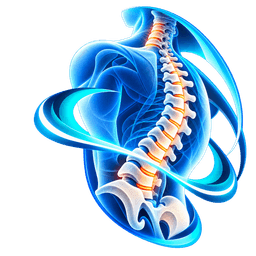
Seen from behind, a healthy spine runs straight down the middle of the back. With scoliosis the spine bends into an S or a C shape. The vertebrae (the stacked bones of the spine) also rotate, so one side of the rib cage or lower back can look more prominent than the other.
This is why scoliosis is called a three-dimensional condition. It is not simply poor posture, and it cannot be corrected by standing up straight. A person with a posture habit can straighten out. A person with true scoliosis cannot.
Who is affected by scoliosis?
Scoliosis can start at any age, but two groups are most common. The first is children and teenagers, where the curve appears around the growth spurt, often between 10 and 15 years of age. Girls are more likely than boys to have curves that progress and need treatment.
The second group is older adults. In people over 50 years, the spine can start to curve as discs and facet joints wear unevenly. This is called degenerative or adult scoliosis. Babies and young children can also be affected, but that is less common and needs a specialist team.
How serious is scoliosis?
Most scoliosis is not dangerous. Curves under 25 degrees rarely cause symptoms or health problems, and many never change. Larger curves matter because they can become visible, stiff and sometimes painful. Very large curves in the chest, usually well above 70 degrees, can reduce lung space and strain the heart. Early review helps decide who simply needs watching and who needs more.
How this page is organised
You will find anatomy, curve types, tests, look-alike conditions, non-surgical care, surgical options, when to consider surgery, and how treatment abroad works. If you are comparing options, the pages on scoliosis surgery and spinal fusion give procedure-level detail. For the wider picture of spine care, see the spine hub.
Anatomy
What happens in the body with scoliosis
The spine is a flexible column of 24 movable vertebrae plus the sacrum and tailbone, and in scoliosis that column curves sideways and rotates. Knowing the normal shape makes it easier to understand what the X-ray and the doctor are describing.
What does a normal spine look like?
From the side, a healthy spine has gentle curves: an inward curve in the neck (cervical lordosis), an outward curve in the upper back (thoracic kyphosis) and an inward curve in the lower back (lumbar lordosis). These curves absorb load and keep the head balanced over the pelvis.
From behind, the same spine is straight. The 7 neck vertebrae, 12 chest vertebrae and 5 lower back vertebrae line up, and a plumb line dropped from the base of the skull passes through the crease between the buttocks.
What holds the spine together?
Between each pair of vertebrae sits an intervertebral disc, a tough ring filled with a soft gel that works as a cushion. At the back, paired facet joints guide movement. Strong ligaments run along the column, and muscles on both sides keep it balanced. The 12 thoracic vertebrae also carry the ribs, so a curve in the chest drags the rib cage with it.
What changes in scoliosis?
In scoliosis, one section of the spine bends to one side and the vertebrae rotate toward the outside of the curve. In the chest, this pulls the ribs into a hump on one side (a rib prominence) and flattens the other. Curves are named by where the apex, the most tilted vertebra, sits.
Above and below the main curve, the spine often forms a smaller compensating curve so that the head stays over the pelvis. In growing children the bones on the inside of the curve grow more slowly than on the outside. That uneven growth is why a curve can worsen quickly during a growth spurt.
Why does the curve affect the rest of the body?
A twisted spine changes the shape of the trunk. Shoulders and hips can sit at different heights, a waistline can look uneven, and one shoulder blade may stick out. In larger chest curves, the lungs have less room on the concave side. In the lower back, an asymmetric curve loads discs and facet joints unevenly, which helps explain why adult scoliosis often leads to pain.
Symptoms & causes
Scoliosis symptoms and causes
Common symptoms
- A visible rib or shoulder blade prominence on one side, often first noticed by a parent, partner or physiotherapist rather than the person themselves.
- Uneven shoulders, where one sits higher than the other, which may show as a bra strap or shirt collar that keeps slipping.
- An uneven waist or hip line, with one hip looking higher, so that trousers or skirts hang crooked.
- A head that is not centred over the pelvis, so the person seems to lean to one side when standing relaxed.
- Back ache after long periods of standing or sitting, which is more common in adults than in children with the condition.
- Muscle fatigue across the lower back by the end of the day, caused by the muscles working harder to balance an uneven spine.
- Leg pain, numbness or tingling in adults when a curve narrows the space for the nerve roots, often worse on walking.
- Reduced walking distance in older people because stiffness, nerve pressure and poor balance combine.
- Shortness of breath on exertion in rare, very large chest curves where the rib cage limits lung expansion.
- Concern about appearance, which can affect confidence, clothing choices and sport participation, especially in teenagers.
Causes and risk factors
- Idiopathic scoliosis: in roughly 8 out of 10 cases no clear cause is found, although genes are thought to play a part because it often runs in families.
- Rapid growth: the curve most often worsens during the adolescent growth spurt, when the spine lengthens quickly.
- Congenital scoliosis: a vertebra that did not form properly before birth, such as a wedge-shaped or fused bone, forces the spine to bend.
- Neuromuscular conditions: cerebral palsy, muscular dystrophy and spina bifida weaken trunk muscles, so the spine may collapse into a long C-shaped curve.
- Degenerative change: in adults, uneven wear of discs and facet joints allows the spine to tilt and rotate gradually over many years.
- Syndromes affecting connective tissue, such as Marfan syndrome, which makes ligaments looser and the spine less stable.
- Previous spinal surgery, injury or radiation in childhood, which can disturb the way part of the spine grows.
- Leg length difference or pelvic tilt, which can cause a functional curve that often straightens when the underlying problem is corrected.
Types
Types and stages of scoliosis
Doctors classify scoliosis by age at onset, by cause and by curve size, because each of these changes the treatment plan. The main aim of classification is to predict whether a curve will progress.
What are the main types of scoliosis?
- Infantile and juvenile: onset before 10 years of age. These curves can progress during long growth periods, so early specialist care matters.
- Adolescent idiopathic scoliosis: onset from about 10 years of age until the end of growth. This is the most common type, and it is the one most people mean by idiopathic scoliosis.
- Congenital: present from birth because of a vertebral malformation, often found with scans of the kidneys and heart.
- Neuromuscular: linked to nerve or muscle disease, with a higher risk of progression into adulthood.
- Degenerative (adult scoliosis): develops in mid or later life from wear in discs and joints.
- Adult idiopathic: a curve that started in adolescence and was never treated, which can slowly worsen over decades.
How is curve size graded?
The standard measure is the Cobb angle. On a standing X-ray, lines are drawn along the top of the highest tilted vertebra and the bottom of the lowest tilted vertebra, and the angle between them is the Cobb angle. A different surgeon measuring the same film can differ by about 5 degrees, which is why a change must be larger than that to count as real progression. This approach to scoliosis curve measurement is the basis of nearly every treatment decision.
| Cobb angle | Usual description | Typical approach |
|---|---|---|
| Under 10 degrees | Not scoliosis, a normal variation | Reassurance |
| 10 to 24 degrees | Mild | Watch with repeat exams and X-rays |
| 25 to 40 degrees | Moderate | Bracing if still growing, otherwise observe |
| Over 45 to 50 degrees | Severe | Surgery is often discussed |
| Over 70 degrees | Very severe | Possible effects on breathing, surgery usually advised |
What other features guide the plan?
Doctors also consider skeletal maturity (how much growth remains), the location of the curve, whether the trunk is balanced, and the flexibility of the curve. A flexible curve that straightens on a bending X-ray is easier to correct than a stiff one. In adults, the shape of the spine from the side, the alignment of the pelvis and the presence of nerve compression are as important as the angle itself.
Diagnosis
How is scoliosis diagnosed?
Scoliosis is diagnosed with a physical exam and a standing X-ray of the whole spine, and the pattern of findings tells the doctor how likely the curve is to progress. Most cases are found at a school check, by a family doctor, or after a person notices an uneven back.
What happens in the clinical exam?
The doctor asks about age, growth, family history, pain, nerve symptoms, breathing and, in girls, the age at which periods began. This last detail helps estimate how much growth is left. The skin is checked for birthmarks or hairy patches over the spine, which can point to an underlying spinal cord problem.
You are then examined standing. The doctor looks at shoulder and hip height, the waist crease, and whether the head is centred. In the forward bend test (Adam's test), you bend forward with arms hanging. A rib or lower-back hump on one side suggests rotation of the vertebrae. A handheld device called a scoliometer can measure the tilt of the trunk.
Which imaging is used?
A full-length standing X-ray, front and side, is the standard test. It shows the curve, the Cobb angle and the balance of the trunk. Extra films taken while bending can show how stiff or flexible the curve is. In growing children the doctor also estimates bone age from the hand or from the pelvis.
MRI is not needed for every patient. It is used when there is unusual pain, nerve signs, a left-sided thoracic curve, very early onset or rapid progression, because those features raise the chance of a spinal cord or brain stem condition. CT scans are sometimes used before surgery to plan screw placement.
What should you send for a remote review?
For a remote opinion, send the original standing X-ray images in digital form (the DICOM files, not photographs of a printed film), the radiology report, and any previous X-rays so that progression can be measured. Add clinic letters, details of any brace, and a brief timeline of symptoms. Photographs of your back from behind, standing and bending forward, are a helpful extra. The medical record review guide explains how the process works.
Tests you may have
- Standing full-spine X-ray, front and side: shows the curve, measures the Cobb angle and checks trunk balance, and it is repeated over time to detect progression.
- Forward bend test (Adam's test): a quick bedside exam that shows rib or lower-back asymmetry caused by vertebral rotation.
- Scoliometer reading: a small handheld device that records trunk rotation in degrees and helps decide who needs an X-ray.
- Bending X-rays: films taken leaning left and right to show how flexible the curve is, which matters in surgical planning.
- Bone age assessment from a hand X-ray or the pelvis (Risser sign): estimates how much growth remains and so how likely the curve is to progress.
- MRI of the spine: used when pain, nerve signs or an unusual curve pattern raise concern about the spinal cord, nerves or a growth within the canal.
- CT scan: shows bone detail in complex or congenital curves and helps plan the placement of screws.
- Lung function tests: measure breathing capacity in patients with large chest curves or neuromuscular disease.
Look-alikes
Conditions that can feel like scoliosis
Several conditions can mimic scoliosis, and telling them apart matters because the treatments are different. A curve that looks like scoliosis in a mirror may be posture, a leg length difference or even muscle spasm, and an X-ray usually separates these quickly.
What can look like scoliosis?
| Look-alike condition | How it differs from scoliosis | How doctors tell them apart |
|---|---|---|
| Postural asymmetry | Uneven back from habit or a heavy bag, without vertebral rotation | Disappears on bending forward, and the X-ray Cobb angle is under 10 degrees |
| Leg length difference | A tilted pelvis creates a functional curve with no twist | The curve straightens when the person sits or a lift is placed under the short leg |
| Kyphosis | A forward rounding in the side view rather than a sideways curve | Side X-ray measures the thoracic angle, and both conditions can coexist |
| Spondylolisthesis | One vertebra slips forward over the next and can tilt the trunk | Lateral X-ray shows the slip, and flexion and extension films test stability |
| Spinal stenosis | Narrowed canal that causes leg pain on walking, often with a degenerative curve | MRI shows canal narrowing, and both can occur in adult scoliosis |
| Herniated disc | A disc bulge that can cause a protective lean to one side (sciatic list) | MRI shows the disc, and the lean resolves as the pain settles |
| Spinal tumour or infection | Rare, with night pain, fever or weight loss, and a stiff, painful curve | Blood tests, MRI and sometimes biopsy |
Why does an accurate diagnosis matter?
A teenager with a painful curve that began suddenly needs a different pathway from one with an idiopathic curve without pain found at a school check. Pain at night, a stiff back, a left-sided chest curve, or any change in bladder, bowel or leg strength means imaging beyond a simple X-ray. In adults, the pain may come from stenosis or arthritis rather than from the curve itself, and treating the wrong target leads to disappointment.
A good specialist will therefore describe both the shape of the spine and the likely source of symptoms. If you have already seen a specialist, bring that written opinion to any second review. Related spine problems, including degenerative disc disease, often travel with adult curves and are worth understanding alongside the curve.
Non-surgical
Non-surgical treatment for scoliosis
Most scoliosis is treated without surgery, and the first step for mild curves is simple observation. The plan depends on age, the amount of growth left and the size of the curve, so the right approach for a 12-year-old is very different from that for a 60-year-old.
When is observation enough?
For curves under 25 degrees in a growing child, the usual plan is to check back every 4 to 6 months with an exam and, when needed, a repeat X-ray. Many curves never progress. Observation is not neglect: it allows treatment to start at the right moment. In adults with a small curve that causes no pain, no treatment is usually needed beyond staying active.
How does scoliosis bracing work?
Scoliosis bracing is used for growing children whose curves are between about 20 and 40 degrees and who still have significant growth ahead. A rigid brace holds the spine in a better position while the bones grow. The aim is to stop the curve from getting worse, not to remove it. Braces are often worn for 16 to 23 hours a day, depending on the type, until growth finishes.
Large trials suggest that bracing lowers the proportion of curves that reach the surgical range, and more hours of wear are linked to better results. Night-time braces suit some smaller curves. Adolescents often find the brace hard emotionally, so support from family and a psychologist or physiotherapist can make a real difference.
What about physiotherapy and exercise?
Specific scoliosis exercises, often called physiotherapeutic scoliosis-specific exercises (PSSE), teach the person to correct their posture in three dimensions and strengthen the trunk. Programmes such as Schroth are used in many clinics. Evidence suggests that they may improve curve size and quality of life in mild curves, and they are often combined with a brace. General exercise does not cure a curve but helps back health, fitness and confidence.
Which medicines and injections help?
No medicine changes the shape of a curve. In adults, simple pain relievers, anti-inflammatory drugs (NSAIDs), and short courses of other pain medicines can help flare-ups. Epidural steroid injections or facet joint injections may reduce pain from nerve compression or joint wear for several weeks or months. These treatments relieve symptoms and do not alter the curve itself.
Do chiropractic and other alternative therapies work?
Studies have not shown that spinal manipulation, electrical stimulation, or magnet therapy reduce the size of a curve. A person may still enjoy manual therapy for muscle ache. The key is to avoid delaying a proper specialist review, particularly for a growing child, because the most useful window for bracing can be missed.
Self-care
Exercises and self-care for scoliosis
Self-care for scoliosis means staying strong, mobile and active, and it works best alongside medical care rather than instead of it. Always check with your doctor or physiotherapist before starting a new programme, especially if you wear a brace or have nerve symptoms.
Which exercises are commonly recommended?
Core strength matters because the trunk muscles help keep the spine balanced. Many programmes include these building blocks, each held or repeated gently:
- Plank and side plank: start with 10 seconds and build up to 30 seconds on each side as strength allows.
- Bird dog: on hands and knees, extend the opposite arm and leg and hold for 5 seconds, 8 to 10 repetitions per side.
- Pelvic tilts: lying on the back, flatten the lower back against the floor and release, 10 repetitions.
- Cat and camel stretch: slow movement between rounding and arching the back to keep joints moving.
- Swimming or water walking: low-impact exercise that most people with scoliosis tolerate well.
Good scoliosis exercises are usually taught individually. A physiotherapist can check that you strengthen the right side and do not simply reinforce the curve. Schroth-based teaching includes breathing into the narrow side of the rib cage, which is difficult to learn from a book.
What daily habits help?
Vary your position. Sitting for hours on one hip, carrying a bag always on the same shoulder, or sleeping curled on one side can all aggravate fatigue in the back. Take a short walk every 30 to 45 minutes when working at a desk. A medium-firm mattress and a supportive chair are reasonable, though no particular product has been proven to change a curve.
Maintain a healthy weight, avoid smoking (which slows bone and disc health), and keep calcium and vitamin D intake adequate. In adults, bone strength matters because osteoporosis can make a curved spine more prone to fracture. See vertebral compression fractures for how fragile bone affects the spine.
What should you avoid?
Avoid heavy, jarring loads or very deep twisting movements if they bring on pain. Contact sports are not forbidden in most cases, but ask your specialist, particularly if you wear a brace or have had surgery. Do not stop wearing a brace because it feels uncomfortable without talking to your team first, since the benefit depends on consistent use.
Stretching alone will not correct a structural curve. If a programme promises to "straighten" a spine with a few exercises, treat the claim with caution. Seek one that is realistic about aims such as strength, posture, comfort and function.
Check with your doctor or physiotherapist before starting new exercises, and stop any movement that causes sharp pain.
Treatment
Scoliosis treatment options
Surgery for scoliosis aims to stop a curve getting worse, correct part of the deformity and balance the trunk, and it is usually reserved for large or progressing curves. It is a major operation, so it is chosen only after non-surgical options have been considered.
What is spinal fusion for scoliosis?
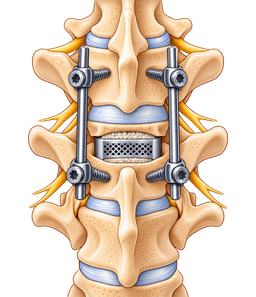
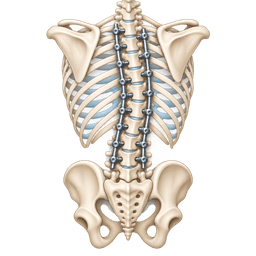
The most established operation is spinal fusion. The surgeon fits screws, and in some cases hooks, into the vertebrae and links them with metal rods that are shaped to straighten the spine. Bone graft is placed along the area so that the vertebrae heal into a single solid segment over several months. Once fused, that section no longer moves, but most people keep enough flexibility in the remaining segments for everyday life. The destination-specific page, spinal fusion in turkey, covers local logistics.
What does scoliosis surgery involve in practice?
The wider operation known as scoliosis surgery includes planning with full-length X-rays, sometimes CT scans, nerve monitoring during the operation, and careful anaesthesia. It usually takes 4 to 8 hours for larger curves. Hospital stay is often 4 to 7 days. The details of this work in turkey are described on the page for scoliosis surgery in turkey.
Which approaches exist?
- Posterior fusion: through the back, the standard approach for most adolescent curves.
- Anterior approach: through the side or front for selected lumbar or thoracolumbar curves.
- Growing rods and magnetic rods: for young children with early-onset curves, to allow growth while controlling the curve.
- Vertebral body tethering: a newer growth-modulating technique for selected adolescents, still offered by few centres and with limited long-term data.
- Osteotomy: cutting wedges of bone to restore balance in rigid or severely unbalanced curves, mainly in adults.
What are the trade-offs?
Fusion generally provides a lasting correction and stops progression, but it permanently stiffens part of the spine and carries surgical risks. Adults with degenerative curves may need decompression of narrowed nerves in addition to, or instead of, a long fusion. Shorter operations can relieve leg pain with less risk, but they do not alter the curve. The aim, the number of levels fused and the realistic gain should be discussed openly before you decide.
For help with expected expenses, see the scoliosis surgery cost guide and the spinal fusion cost guide.
When surgery is considered
Surgery for scoliosis is considered when a curve is large, still progressing, or causing pain or nerve symptoms that do not respond to proper non-surgical care. The decision is rarely urgent and can be taken over weeks or months with a second opinion.
What are the usual criteria?
- A growing adolescent with a curve beyond about 45 to 50 degrees, because such curves often continue to worsen even after growth ends.
- A curve that has progressed despite a well-worn brace, shown on at least 2 X-rays taken some months apart.
- A skeletally mature patient with a curve over 50 degrees in the chest, where the curve may keep increasing slowly across adult life.
- Adults with disabling back or leg pain, imaging that explains it, and a failed trial of exercise, medicine and injections for at least 3 to 6 months.
- Progressive imbalance, where the trunk leans forward or sideways so much that standing and walking become difficult.
- Breathing limitation from a very large chest curve, confirmed by lung tests.
How should you decide?
Ask what the expected correction is, how many vertebral levels will be fused, and what motion you will lose. Ask how nerve function is monitored during the operation and how often surgeons in the team have treated curves like yours. Compare the plan with the alternative of continued monitoring. A teenager's decision also involves the family, school and sport plans, so timing around exams or holidays can be relevant.
Adults over 65 years should also weigh general fitness, bone strength and heart or lung disease. Pre-operative assessment may show that an optimisation period, with bone-strengthening treatment or weight loss, will make surgery safer. The questions to ask before surgery abroad checklist is a useful starting point for any consultation.
When is a specialist referral the right next step?
See a spine specialist if a curve exceeds 20 degrees, if it has grown by 5 degrees or more between X-rays, if you or your child has pain, or if you are an adult with leg symptoms. An early visit gives you a baseline and a plan, even if no treatment follows.
Procedures
Procedures that may treat scoliosis
Costs
Scoliosis treatment cost in Turkey
| Procedure | Turkey package | US self-pay | Saving |
|---|---|---|---|
| Spinal Fusion | $10,000 – $18,000 | $77,942 | ~82% |
| Scoliosis Surgery | $20,000 – $35,000 | $180,975 | ~85% |
Packages are contracted partner prices with validity dates; benchmarks are source-backed estimates. Open a cost guide for the full country comparison.
In Turkey
Treating scoliosis in Turkey
Scoliosis treatment in turkey can suit people who need planned, non-urgent surgery and who are medically stable, after a remote review of their imaging confirms that the case is appropriate. It is a considered logistical choice, and it is not suitable for every patient or every curve.
What does the pathway look like?
The process usually begins with a free case review through our quote form. A spine team reviews your standing X-rays, scans and reports, and tells you whether they think surgery is advisable, what operation they would suggest and what risks are most relevant to you. If you agree to proceed, a date is set, and you travel for pre-operative tests on arrival.
After surgery in hospital, you remain in turkey for the early recovery, typically 10 to 14 days in total for adults and often longer for large operations, until the surgeon confirms that you can fly. Wound checks, early walking and X-rays are done before you leave. The treatment planning guide and the surgery day guide describe each stage.
Why do some patients choose turkey?
Patients choose scoliosis surgery in turkey for shorter waiting times, access to high-volume spine centres and modern equipment such as intra-operative nerve monitoring and navigation. Our overview of orthopedic care in turkey and the page on why turkey explain the system in more detail. Large cities such as Istanbul have the biggest concentration of spine units.
What should you check before you commit?
- That the hospital holds recognised international accreditation, and that the spine team performs deformity surgery regularly.
- That the surgeon will discuss the operation with you directly, before travel, and share a written plan.
- That nerve monitoring, blood management and intensive care are available on site.
- That you understand the plan for complications and who is responsible if you need further care at home.
Spinal fusion for scoliosis in turkey is a major operation, so it deserves the same scrutiny as it would at home. The cost guide explains what is typically included in a package, without quoting prices here.
When should you not travel?
Do not travel if you have a new weakness in the legs, loss of bladder or bowel control, fever, or rapidly worsening symptoms. Those need urgent local care first. Children with complex or early-onset scoliosis are usually best managed by their established team, with any overseas option discussed with that team first. Flying soon after surgery has its own rules, covered in the flying after surgery guide, and you need a plan for follow-up at home, as set out in the follow-up guide.
Complications
Complications of scoliosis
Untreated large scoliosis can lead to pain, stiffness, imbalance and, in the most severe chest curves, breathing problems, while surgery brings its own risks that should be understood before you decide. Most people with mild scoliosis never experience any of these.
What happens if scoliosis is not treated?
Small curves in adults often stay stable. Larger curves, especially those over 50 degrees, may go on increasing slowly by roughly 1 degree a year across adult life. Over time this can mean back pain, early disc and joint wear, and visible trunk change. In degenerative adult scoliosis, nerve pinching can cause leg pain and weakness, and balance worsens, which raises the chance of falls.
Very large thoracic curves can limit the space for the lungs and heart. This is rare and usually takes decades to develop, which is one reason surgical correction is offered to teenagers with severe curves.
What are the risks of bracing?
A brace is generally safe. Skin irritation, pressure marks and discomfort are the main complaints, and the psychological burden can be significant. Poor fit reduces effect, so regular adjustment as the child grows is important.
What are the risks of scoliosis surgery?
Spinal fusion is a well-established operation, yet serious problems can happen. Studies suggest that overall complication rates for adolescent surgery are low but not zero, and rates are higher in adults and in neuromuscular curves. Possible issues include:
- Bleeding, which may need a transfusion, and wound infection.
- Nerve injury, which is rare but serious, and the reason why nerve monitoring is used.
- Implant problems such as a loose screw or a broken rod, sometimes years later.
- Pseudarthrosis, where the bone does not fuse, which may need further surgery.
- Stiffness in the fused segment and, in some adults, wear in the levels next to the fusion.
- Blood clots, chest infection and the general risks of a long anaesthetic.
Your surgeon should explain which of these risks are most relevant to you. A frank conversation, written down, is a sign of a good team.
Urgent care
When to seek urgent care for scoliosis
- New weakness, numbness or heaviness in one or both legs: go to an emergency department the same day, because the nerves or spinal cord may be under pressure.
- Loss of bladder or bowel control, or numbness around the genitals or saddle area: treat this as an emergency and seek immediate medical help.
- Severe back pain that wakes you at night, especially with fever or unexplained weight loss: see a doctor within 24 hours to exclude infection or a tumour.
- A curve that is clearly getting worse over weeks, or a sudden change in trunk shape in a child: arrange an urgent specialist review.
- Increasing shortness of breath or chest tightness in someone with a known large chest curve: contact your doctor promptly.
- Fever, wound redness, discharge or new swelling after spinal surgery: call your surgical team at once and do not wait for the next appointment.
- Calf pain and swelling or sudden breathlessness after surgery or a long flight: seek emergency care because these can signal a blood clot.
Prevention
How to lower your risk of scoliosis
Idiopathic scoliosis cannot be prevented, but the harm it does can be reduced by finding curves early and treating those that progress. Healthy habits protect the spine and general health in all age groups.
Can scoliosis be prevented?
There is no known way to stop idiopathic scoliosis from developing, because its cause is not fully understood. Carrying a lighter school bag, better posture or special pillows do not prevent it. Parents sometimes worry that they caused the curve, and it is worth stating clearly that they did not.
How does early detection help?
The most useful step is screening. Children between 10 and 14 years of age benefit from a quick check of the back from a family doctor, school nurse or physiotherapist, particularly if a close relative has had scoliosis. A forward bend test takes about a minute. Referral at 15 to 20 degrees allows time for bracing before the curve becomes large.
If you are an adult with a known curve, an X-ray every few years may be suggested to track change, especially if a curve is over 30 degrees or symptoms change.
What protects the spine as you age?
- Bone health: adequate calcium and vitamin D, weight-bearing exercise and review of osteoporosis risk after the menopause or in later life.
- Muscle strength: regular core and back strengthening to support the spine and limit disc and joint stress.
- Healthy weight: extra weight increases load on discs and facet joints in a curved spine.
- No smoking: smoking is linked with faster disc degeneration and poorer bone healing after fusion.
- Safe lifting: bend at the hips and knees and keep loads close to the body.
What cannot be changed?
You cannot change your genes, your age or the way your spine grew. What you can control is how early a curve is found, how well treatment is followed and how fit your spine is for the future. Understanding related conditions such as lumbar radiculopathy also helps you recognise nerve symptoms promptly.
Outlook
Living with scoliosis: outlook and recovery
The outlook for scoliosis is generally good: most people live full, active lives, and those who need treatment usually do well. The path depends on age, curve size and the type of scoliosis.
What happens to curves over time?
In adolescents, curves tend to progress during growth and then slow when growth ends. Curves under 30 degrees at the end of growth usually stay stable. Curves over 50 degrees at that time may continue to worsen slowly. In adults, the risk of progression is higher for larger curves and those with marked rotation or lateral slip.
What is recovery after surgery like?
After spinal fusion for adolescent scoliosis, most patients stand and walk within 1 to 3 days. Many return to school or desk work in 4 to 6 weeks, and gentle activity such as swimming at around 3 months. Contact and high-impact sports are usually delayed for 6 to 12 months, until the surgeon confirms solid fusion on X-ray. Adults often need longer, with full recovery over 6 to 12 months.
Rehabilitation includes walking, posture training and gradual strengthening. The rehabilitation guide describes this process in steps.
How good are the long-term results?
Studies of people treated with fusion in adolescence generally report high satisfaction, good function and the ability to work, study, have children and play sport. Some experience ongoing stiffness or later back pain. Adult scoliosis surgery can reduce pain and improve walking and quality of life, although the complication rate is higher than in teenagers, and the recovery longer.
Can pregnancy and sport continue?
Women with scoliosis can usually have healthy pregnancies, and most women with mild to moderate curves are not at higher risk of complications. Sport is encouraged for fitness and mood. Talk to your specialist about particular activities if you have a brace or an operation planned.
Living well with a curve involves regular check-ups, staying active and seeking help quickly when something changes. If you are weighing treatment options, a free case review can give you a clear starting point.
Surgeons
Specialists who treat scoliosis
FAQ
Scoliosis: frequently asked questions
What is scoliosis?
What causes scoliosis?
Can scoliosis be cured or reversed without surgery?
At what angle does scoliosis need surgery?
Does scoliosis get worse with age?
Do scoliosis exercises really work?
How long must a scoliosis brace be worn?
What is adult scoliosis and how is it treated?
How long does recovery take after scoliosis surgery?
Is scoliosis treatment in turkey safe?
Who is suitable for scoliosis surgery in turkey?
Can I fly home after spinal fusion for scoliosis in turkey?
Can scoliosis affect pregnancy or lung function?
Sources
Sources for this scoliosis guide
Peer-reviewed guidance and institutional sources used to write and review this page.
- 01
- 02
- 03Scoliosis
Mayo Clinic, 2023
https://www.mayoclinic.org/diseases-conditions/scoliosis/symptoms-causes/syc-20350716
- 04
- 05Adult Degenerative Scoliosis
AAOS OrthoInfo, 2022
https://orthoinfo.aaos.org/en/diseases--conditions/adult-degenerative-scoliosis/
- 06