








Key takeaways
- 1Trigger finger, medically called stenosing tenosynovitis, happens when a flexor tendon thickens and catches on a tight pulley at the base of the finger.
- 2The hallmark is a painful click or catch as the finger bends, sometimes with the finger locking in a bent position until it is straightened with the other hand.
- 3Symptoms are usually worst on waking and ease as the hand warms up, and a tender lump can be felt in the palm at the base of the digit.
- 4Diabetes, rheumatoid arthritis, being aged 40 to 60 years and being female all raise the chance of developing trigger finger.
- 5Many mild cases settle with activity change, splinting or a single steroid injection, which helps roughly half to three quarters of people in studies.
- 6Trigger finger release is a day-case operation under local anaesthesia that divides the tight A1 pulley so the tendon can glide freely again.
- 7Planned trigger finger treatment in turkey suits patients with a clear diagnosis whose records can be reviewed before travel.
Overview
What is trigger finger?
Trigger finger is a problem of the tendon gliding system in the hand: a finger or thumb catches, clicks or locks when you try to bend or straighten it. It is one of the most frequent reasons for a hand clinic visit. Below you will find the causes, how doctors confirm it, the ladder of treatments and how care in turkey is arranged.
What is trigger finger?
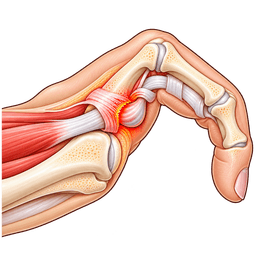
Your finger bends because a tendon pulls on it from the forearm, and the tendon is held close to the bone by a series of small fibrous loops called pulleys. The first loop, the A1 pulley, sits in the palm at the base of each digit. In trigger finger the tendon swells or grows a small nodule, and the pulley becomes thick and tight. The swollen part then has to squeeze through a narrow ring, and it catches.
When the finger snaps free it can be painful, and in more advanced cases the finger stays stuck bent, as if pulling a trigger. When the thumb is involved, doctors call the same problem trigger thumb.
Who gets trigger finger?
It appears most often between 40 and 60 years of age and affects women more than men. People with diabetes are especially prone, and may have several digits involved. It is also linked with rheumatoid arthritis, gout, carpal tunnel syndrome and repeated forceful gripping. Babies can be born with a locked thumb, which is a separate paediatric condition and is not covered here.
How serious is trigger finger?
It is not dangerous, and it does not damage the tendon in the way a rupture would. It can still be frustrating. A finger that locks at night, drops tools or hurts when you grip a steering wheel affects work and sleep. Left alone, mild cases sometimes settle in months, while others progress to a finger that will not straighten, and a stiff joint can follow. Early, simple treatment works best.
Anatomy
What happens in the body with trigger finger
To make sense of trigger finger it helps to picture the finger as a pulley system: muscles in the forearm pull on long tendons, and the tendons run through guides on the way to the fingertip.
What is the normal structure of the finger tendon system?
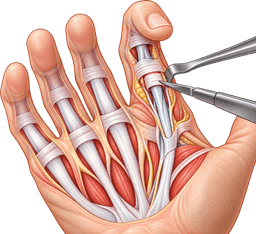
Each finger (except the thumb) has two flexor tendons. One attaches to the middle bone and the other continues to the fingertip. They run in a slippery sheath lined with a thin film of lubricating fluid. Along the sheath are about five annular pulleys, which hold the tendons close to the bones so that when the muscle contracts, the finger curls rather than the tendon bowstringing across the palm.
The A1 pulley lies just beyond the knuckle in the palm. It bears high forces every time you grip. You can feel the area as a small firm spot at the base of the finger, near the palm crease.
What changes when a finger triggers?
Repeated pressure irritates the tendon where it meets the A1 pulley. The tendon thickens, a small nodule can form and the pulley itself becomes thicker and tighter. The nodule passes under the pulley when the finger straightens and sticks when you bend. With more force the nodule jumps through with a snap, which is the click patients describe.
The thickened area is often tender, and the swollen tendon can make the whole sheath feel inflamed. In the long run, a locked finger can lose its straightness because the joint capsule tightens, which is why persistent locking should not be ignored.
Symptoms & causes
Trigger finger symptoms and causes
Common symptoms
- A painful catch, click or snap as the finger bends or straightens, felt at the base of the digit in the palm rather than at the fingertip.
- Locked finger in the morning: the finger stays bent after sleep and may need a push from the other hand to open, then loosens as the day goes on.
- A tender, pea-sized lump at the base of the finger in the palm, near the crease, that moves slightly when the finger flexes.
- Stiffness of the finger, especially when waking, that eases with warm water or gentle movement over 10 to 30 minutes.
- Pain on gripping, such as holding a steering wheel, a pair of scissors, a bag handle or garden tools, which can spread into the palm.
- Trigger thumb, with clicking or locking of the thumb at its middle joint and a tender spot at the base of the thumb in the palm.
- A finger that gets stuck in a bent position and has to be forced straight, sometimes with a sudden painful snap as it releases.
- Swelling or a feeling of fullness around the finger base, with warmth in more irritated cases but without fever or spreading redness.
- Loss of full finger straightening in long-standing cases, because the middle joint tightens in the bent position.
- Several fingers affected at once or in turn, which is more common in diabetes and inflammatory arthritis and is a clue to look for an underlying cause.
Causes and risk factors
- Repeated forceful gripping or pressure in the palm: tools, handlebars and tight grasping irritate the tendon where it meets the first pulley.
- Diabetes: raised blood sugar makes connective tissue thicker and stiffer, so people with diabetes develop trigger finger more often, in more fingers and with less response to injection.
- Rheumatoid arthritis and other inflammatory conditions: they thicken the tendon lining and the sheath and can cause multiple digits to trigger.
- Female sex and age 40 to 60 years: the condition is more common in women and in middle age, though the exact reasons are not clear.
- Previous hand conditions such as carpal tunnel syndrome and De Quervain's tenosynovitis, which often coexist and share some risk factors.
- Gout and amyloid deposits: uncommon, but crystal or protein deposits can thicken the tendon and sheath.
- Thyroid disease: both under- and overactive thyroid have been linked with tendon sheath problems in some studies.
- Small hand injuries or a direct blow to the palm, which may start swelling at the base of the finger and set the cycle going.
- Often no cause is found: the problem simply develops gradually in otherwise healthy hands.
Types
Types and stages of trigger finger
Doctors rarely talk about a single type of trigger finger. Instead they describe how severe it is, which digit is involved and whether it is a first or recurring episode.
How is the severity of trigger finger graded?
The most widely quoted classification is the Quinnell grading, which describes four stages. It helps you and your doctor choose the right treatment and measure progress.
| Grade | What happens | Typical first approach |
|---|---|---|
| 1 (pre-triggering) | Pain and a tender nodule in the palm, with no catching yet | Rest from the aggravating grip, splint, anti-inflammatory gel |
| 2 (active) | Catching occurs, but you can straighten the finger yourself | Splint, then steroid injection if it persists |
| 3 (passive) | The finger locks and needs help from the other hand to straighten | Injection or release surgery |
| 4 (contracture) | The finger is stuck bent with a fixed stiff joint | Release surgery with hand therapy |
Does the digit make a difference?
The ring finger and thumb are involved most often, followed by the middle finger. The little and index fingers are less commonly affected. Trigger thumb behaves slightly differently, because the thumb has a single flexor tendon and the locking happens at the joint nearest the tip. Treatment principles remain the same.
Why does the grade matter?
Grade 1 and 2 problems respond well to simple measures. Once a finger locks regularly, or a joint is beginning to stiffen, the chances that conservative care will work fall, and surgery becomes the more reliable path. People with diabetes or several affected fingers are more likely to need a procedure.
Diagnosis
How is trigger finger diagnosed?
Trigger finger is nearly always diagnosed in clinic from the story and a short examination, with no scans needed in the typical case.
What will the clinician ask about?
You will be asked which finger is affected, whether it catches or locks, what time of day it is worst, and how long it has been going on. The clinician will also ask about your work and hobbies, diabetes, thyroid disease, arthritis, any previous hand injuries and how the finger affects sleep and daily jobs.
What does the examination show?
The examiner presses gently over the base of the finger in the palm to find the tender nodule. You will then be asked to make a fist and open the hand slowly, so they can watch and feel for the catch. In many cases they can reproduce the click in the room. They also check whether the finger can be straightened passively, and look for stiffness in the middle joint, which affects the outlook.
Do you need scans or tests?
Imaging is usually unnecessary. Ultrasound can show a thick tendon sheath or a nodule and is useful when the story is unclear or if an injection needs guidance. X-rays are only needed if a fracture, arthritis or a bony problem is suspected. Blood tests for blood sugar, uric acid or inflammatory markers may be requested when several digits are involved.
What should you send for a remote review?
A short video of the hand opening and closing, with the affected finger visible, is extremely helpful. Add a written description of when the locking happens, photos of the palm, a list of treatments you have tried including any injections with dates, and your diabetes control results if relevant.
Tests you may have
- Palpation of the A1 pulley: pressing at the base of the finger in the palm finds the tender nodule and the thickened pulley that cause catching.
- Active fist-and-open test: slowly making a fist and opening reproduces the click, catch or lock, and shows which digit and joint are involved.
- Passive extension check: gently straightening the finger tests whether it still opens fully or whether a fixed bend has developed.
- Ultrasound of the tendon sheath: shows a thickened pulley, tendon swelling or a nodule, and can distinguish trigger finger from a cyst or other lump.
- Hand X-ray: ruled in when there is a history of injury, joint pain or suspected arthritis, and shows bone alignment and joint wear.
- Blood sugar and HbA1c: helps identify diabetes or poor control, which affects treatment choice and healing.
- Inflammatory and thyroid tests: considered when several digits are affected or other joints are swollen, to look for rheumatoid arthritis or thyroid disease.
Look-alikes
Conditions that can feel like trigger finger
Which hand problems look like trigger finger?
Several other hand conditions make a finger click, hurt or stiffen, so confirming the cause matters before treatment starts. The table compares the usual look-alikes.
| Look-alike condition | How it differs | How doctors tell |
|---|---|---|
| Dupuytren's contracture | A firm cord or pit in the palm that slowly pulls the finger into a bend; usually not tender, no snapping | Visible cords, positive tabletop test and absence of a click |
| Finger joint arthritis | Bony swelling and ache at the joint itself, with stiffness rather than snapping | X-ray changes and joint tenderness away from the palm |
| Carpal tunnel syndrome | Numbness and tingling in the thumb and first fingers, with no locking | Nerve symptoms, Tinel's and Phalen's tests |
| De Quervain's tenosynovitis | Pain on the thumb side of the wrist, not in the palm | Finkelstein's test and tenderness at the wrist |
| Ganglion cyst or palm mass | A lump that does not move with the tendon and does not catch | Ultrasound and the way the lump behaves on movement |
| Flexor tendon injury | Sudden loss of bending after a cut or forceful pull | History of injury and inability to flex a joint actively |
| Infection of the tendon sheath | Hot, swollen, very painful finger held bent with fever | Kanavel signs; this is an emergency and needs urgent care |
If your finger is tightening without clicking, read about Dupuytren's contracture. If you also have nighttime numbness, compare it with carpal tunnel syndrome.
Can trigger finger coexist with other problems?
Yes. It often shares the stage with carpal tunnel syndrome and De Quervain's disease, and arthritis of the finger joints can confuse the picture. Describing every symptom to your clinician, not just the most obvious one, helps them treat the right problem.
Non-surgical
Non-surgical treatment for trigger finger
Most people with trigger finger can start with non-operative care, and a good share never need surgery. The steps are ordered from simplest to most invasive.
What does rest and activity change achieve?
Easing off the activity that loads the palm gives the tendon time to calm down. This can mean padding tool handles, taking breaks from gripping tasks and avoiding resting the palm on handlebars. For mild early cases, 4 to 6 weeks of this approach may be enough. It is least likely to work when the finger already locks.
Can splinting help trigger finger?
A small splint that holds the affected joint straight, usually at the base joint of the finger or at the middle joint, prevents the tendon from catching, particularly at night. Splints are commonly worn for about 6 weeks, and studies suggest a meaningful share of people improve. A therapist can show you how to fit one. Take it off for gentle movement several times a day to avoid stiffness.
Are anti-inflammatory medicines useful?
Anti-inflammatory gels and tablets may ease soreness for some people, but there is little evidence that they change the underlying problem. They are a short-term comfort, not a cure. If you have stomach, kidney or heart conditions, check with a doctor first.
How does a trigger finger injection work?
A trigger finger injection places corticosteroid into the tendon sheath near the A1 pulley. It reduces swelling and often frees the tendon within a few days to 2 weeks. Studies suggest it helps roughly half to three quarters of patients after a first injection, and a second injection sometimes works for those who had a partial response. Results are less reliable in people with diabetes, in several digits and when the finger has been locked for long.
Possible side effects include temporary pain at the site, skin lightening or thinning, a short rise in blood sugar and, rarely, infection or tendon weakening. Most doctors limit injections to 2 or 3 in the same digit.
How long should you persevere with non-surgical care?
A fair trial usually means 6 to 12 weeks of splinting, activity change and, if needed, one or two injections. If the finger still catches after that, or if it relapses within a few weeks of each injection, further waiting rarely changes the result. A finger that has begun to lose full straightening should be reviewed sooner. Keeping a simple diary of locking episodes, with dates and treatments, helps your clinician decide when to move on.
Is hand therapy worthwhile?
A hand therapist can supply a splint, teach gentle gliding exercises and advise on activity pacing. Therapy alone may not free a locked digit, but it is a useful companion to the other measures, and it speeds the return of movement after an injection or operation.
Self-care
Exercises and self-care for trigger finger
Good self-care for trigger finger means protecting the base of the finger from repeated pressure and keeping the digit gently mobile. Talk to your doctor or hand therapist before starting a routine, particularly if the finger is locking daily.
What can you do at home?
- Soak the hand in warm water for 5 to 10 minutes in the morning to loosen a stiff finger before moving it.
- Pad pens, tools and bag handles with foam so the palm is not squeezed hard.
- Switch to a lighter, wider grip and avoid prolonged tight holding, such as long drives with a firm wheel grip.
- Wear a night splint if advised, so the finger cannot curl and lock while you sleep.
- Gently massage across the tender spot in the palm for a minute or two, without pressing hard.
Which exercises are used?
Your therapist may suggest tendon gliding. With the hand flat, move through a straight hand, hook position, full fist and straight fist, holding each for a few seconds. Repeat 5 to 10 times, 2 or 3 times a day, and stay below the point where the finger locks. Passive stretching of a stiff finger should be gentle and slow, never forced.
How do you progress?
As clicking settles over 2 to 4 weeks, you can add light grip activities, such as squeezing therapy putty, and gradually return to normal tasks. If the finger starts locking again, step back a stage for a week and reassess.
What should you avoid?
Avoid forcing a locked finger open with a violent pull, which can inflame the tendon more and tear tissue. Do not repeatedly click the finger deliberately, avoid squeezing hard tools without padding and do not ignore a finger that stays bent, because the joint can stiffen.
What about diabetes and other conditions?
Controlling blood sugar helps tendons and sheath tissue, and treating inflammatory arthritis lowers the chance of more digits triggering. Keep your diabetes team informed if you plan a steroid injection, since blood sugar may rise for a few days.
Check with your doctor or physiotherapist before starting new exercises, and stop any movement that causes sharp pain.
Treatment
Trigger finger treatment options
When a stuck tendon does not respond to simpler steps, trigger finger release is the reliable fix, and it is among the most common hand operations. Our page on the trigger finger release procedure explains the surgery, and the trigger finger release in turkey page describes how it is organised for international patients.
How does open trigger finger release work?
Under local anaesthesia, the surgeon makes a small cut of about 1 to 2 cm in the palm over the A1 pulley, protects the digital nerves and divides the tight pulley. You are often asked to bend and straighten the finger during surgery to confirm the catch has gone. The skin is closed with a stitch or two. The operation takes around 10 to 20 minutes.
What is percutaneous release?
In percutaneous release, a needle tip or a small blade is used through the skin to divide the pulley without an incision. It is quick and leaves almost no scar, and results are good in experienced hands, especially for the middle and ring fingers. It is less often used for the thumb or index finger, where the nerves lie closer to the pulley, and surgeons choose it carefully.
Which option suits which patient?
| Option | Best for | Trade-offs |
|---|---|---|
| Steroid injection | Early catching, first episodes, people wanting to avoid surgery | May need repeating; less reliable in diabetes |
| Open release | Locked fingers, failed injections, thumb or index finger, and revision cases | A small scar and a few weeks of palm tenderness |
| Percutaneous release | Selected middle and ring fingers in experienced hands | Less direct view; small risk of incomplete release |
What results are typical?
Release usually fixes the catching straight away or within days, and success rates are high in most series. A stiff joint may need weeks of therapy to straighten fully. Swelling and palm soreness can last for a few weeks.
What are the risks of surgery?
Risks are small and include infection, bleeding, scar tenderness, stiffness, nerve injury, bowstringing of the tendon if too much of the pulley system is cut and, occasionally, recurrence. You can read what a package includes in our trigger finger release cost guide.
When surgery is considered
Surgery is a reasonable next step for trigger finger once simpler options have failed or when the finger no longer moves normally. There is no deadline in mild cases, but some features make it more sensible to act sooner.
What signs point towards release?
- The finger locks regularly and needs the other hand to straighten it.
- Splinting for about 6 weeks, plus one or two injections, has not given a lasting result.
- The finger will not straighten fully, because the middle joint is tightening.
- Diabetes or several affected digits make injection less likely to work.
- The finger interferes with your job, instrument playing, sleep or safe driving.
Is it possible to wait?
Often yes. Mild trigger finger can settle slowly, and there is no harm in giving simple measures a fair trial. Long waiting is less sensible once locking is constant, because contracture of the joint can make recovery slower after surgery.
What should you ask your surgeon?
Ask which technique they recommend and why, how many releases they perform each year, how likely the finger is to straighten completely, and what the plan is if you have diabetes. Ask when hand therapy begins, when you can use the hand for work and who to contact if the wound looks wrong. The hand and wrist section explains related care.
How do you weigh the decision?
Think about how often the finger locks, how much it limits what you need to do, and how you feel about a small operation compared with repeating injections. Some people accept a clicking finger that does not hurt, and that is a reasonable choice. Others prefer a single definitive procedure so they can sleep, work and grip without worry. Both choices are valid when they are made with full information.
Which specialist should you see?
A hand surgeon, plastic surgeon with a hand practice or an orthopedic surgeon trained in hand surgery can manage trigger finger. Your family doctor can start treatment while you are being referred.
Procedures
Procedures that may treat trigger finger
Costs
Trigger finger treatment cost in Turkey
| Procedure | Turkey package | US self-pay | Saving |
|---|---|---|---|
| Trigger Finger Release | $1,200 – $2,200 | — | — |
Packages are contracted partner prices with validity dates; benchmarks are source-backed estimates. Open a cost guide for the full country comparison.
In Turkey
Treating trigger finger in Turkey
Trigger finger treatment in turkey is practical for patients whose finger has not responded to injections or splints and who want planned release surgery with a clear schedule. This section explains the steps and the limits.
Why do patients choose turkey for hand surgery?
Short waiting times, experienced hand teams and package-style planning make timed trips possible. Release is a brief procedure, so the travel burden is small compared with major joint surgery. Our overview of orthopedics in turkey describes how hospitals and coordinators work.
What does the pathway look like?
- Share a short video, photos and your treatment history through the free case review.
- A hand surgeon reviews the records, confirms that release is appropriate and suggests an open or percutaneous approach.
- You receive a written plan with arrival date, procedure and follow-up.
- On arrival, the surgeon examines the finger, and the operation is usually performed the next day or sooner.
- You attend a wound check, usually 2 to 5 days later, and receive written aftercare and exercises.
- Remote reviews continue at home, following our follow-up after returning home guide.
What should you check before booking?
Ask about accreditation of the facility, the surgeon's hand-surgery training and how often they treat trigger finger. Request the proposed technique, the anaesthesia plan and a clear description of what the package includes. The questions to ask before surgery abroad guide gives a full checklist, and the cost guide explains inclusions.
How long is the trip?
A typical stay for a single-digit release is 3 to 5 days, including consultation, surgery and the first dressing check. Multiple digits or diabetes may need a longer window. Your coordinator can plan arrival around your work and the time you need before flying home. Read about flying after surgery for advice on keeping the hand raised during the journey.
Which cities can you choose?
Many international patients choose Istanbul, which has direct flights from most regions, and Ankara is another option. The right choice depends on your route and the surgeon who reviews your case.
When should you not travel?
Postpone travel if the finger is hot, red and swollen with fever, because this may be an infection that needs urgent local care. Also avoid planning surgery abroad if blood sugar is poorly controlled, if the diagnosis is uncertain or if you cannot arrange follow-up at home.
Complications
Complications of trigger finger
Trigger finger is not dangerous, yet it can lead to a stiff, permanently bent digit if it is ignored, and each treatment carries its own small risks.
What happens if trigger finger is left untreated?
Some people improve on their own over months. Others progress from a click to a locked finger and then to a fixed bend, and the middle joint becomes stiff. Stiffness can take weeks of therapy to reverse, and in a minority of long-standing cases some loss of straightening remains. Pain at night and difficulty gripping can also affect work and mood.
What can go wrong with injections?
Most people have only mild soreness for a day or two. Less often there is skin lightening or thinning at the injection site, a temporary rise in blood sugar in people with diabetes, a flare of pain and, rarely, infection or tendon weakening. Repeating injections many times in the same place is not recommended.
What are the risks of release surgery?
- Scar tenderness in the palm, which tends to settle over several weeks to months.
- Stiffness of the finger, reduced by early movement and therapy.
- Infection or bleeding, uncommon with correct wound care.
- Injury to a digital nerve, a rare cause of numbness at the side of the finger.
- Bowstringing, in which the tendon lifts away from the bone if too much of the pulley system is cut.
- Recurrence or persistent triggering, which may need further treatment.
- Complex regional pain syndrome, very rare, and best caught early.
How do you reduce these risks?
Choose an experienced surgeon, keep the dressing clean and dry, move your fingers from the first day and tell your team promptly about increasing redness, discharge or fever. Good diabetes control reduces infection risk and speeds healing.
Urgent care
When to seek urgent care for trigger finger
- A hot, red, very painful finger held slightly bent, with fever and pain on straightening: this may be a tendon sheath infection, so go to emergency care immediately.
- Sudden inability to bend a finger after a cut, a heavy pull or an injury: seek urgent hand surgery care, because a tendon may have torn.
- Spreading redness, discharge or fever after an injection or surgery: contact your surgeon or emergency services the same day.
- A finger that stays locked and cannot be straightened at all for more than a day: see a hand specialist promptly to avoid permanent stiffness.
- A cold, pale or blue finger with numbness: seek emergency help, as circulation may be compromised.
- New numbness at the side of a finger after surgery: tell your surgeon within days, so nerve recovery can be monitored.
Prevention
How to lower your risk of trigger finger
Trigger finger cannot always be prevented, since age, sex and general health influence it, but some habits lower the load on the tendon and reduce the chance of flare-ups.
What reduces the chance of trigger finger?
Vary hand tasks and avoid long periods of tight, repeated gripping. Choose tools with soft, wide handles, wear padded gloves for vibrating equipment and take short breaks to open and stretch the hand. When you notice a sore spot at the base of a finger, rest from the activity early, since small irritations are easier to settle than a locked finger.
Which health measures help?
Good blood sugar control in diabetes is the most important health step, because high glucose levels thicken tendon sheaths. Treating inflammatory arthritis, thyroid disease and gout also lowers risk. If you have carpal tunnel syndrome, treating it may help the whole hand.
Do hand exercises protect you?
Regular gentle hand mobility work keeps tendons gliding, though research showing that exercise prevents trigger finger is limited. Treat it as a sensible habit, not a firm protection.
What cannot be prevented?
Age, sex, genetics and many medical conditions cannot be changed. If you have had trigger finger in one digit, the chance of developing it in another is higher, particularly with diabetes, so early attention to symptoms is wise.
How do you avoid recurrence after treatment?
After a release, the same finger rarely triggers again, but other digits may. Keep padding tools, vary tasks and manage diabetes. If clicking returns, a quick review often allows simple measures to work before locking sets in.
Outlook
Living with trigger finger: outlook and recovery
The outlook for trigger finger is good, and most people regain a smoothly moving finger with injection or a short operation. Recovery depends on how long the finger has been locked and on general health.
What is the natural course of trigger finger?
Mild cases may settle in months, but many persist or worsen slowly. A finger that locks regularly is unlikely to resolve without treatment. People with diabetes have a higher chance of persistent or recurrent problems.
What does recovery after release look like?
| Time after surgery | What to expect |
|---|---|
| Day 0 to 2 | Light dressing, finger moved gently from the first day, hand kept raised |
| Week 1 to 2 | Catching has usually gone; palm soreness settles; stitches removed at about 10 to 14 days |
| Week 2 to 6 | Return to most daily tasks and desk work; swelling fades; grip strength builds |
| Week 6 to 12 | Return to heavy gripping, sport and manual work in most people |
| 3 to 6 months | Scar tenderness resolves; stiff joints continue to improve slowly |
When can you drive and return to work?
Most people drive within about 1 to 2 weeks and return to office work within days. Manual workers and musicians typically need 4 to 6 weeks. Let your surgeon guide the pace.
How does diabetes change the outlook?
People with diabetes are more likely to have several digits involved and to need more than one injection or a release. They can also heal more slowly and have a higher infection risk. None of this rules out good results. Aim for stable blood sugar before elective surgery, tell your surgical team about your medicines, and expect a little more patience with swelling and stiffness in the first weeks.
What are the long-term results?
The great majority of patients are free of locking after release. A smaller group has mild stiffness or scar tenderness, usually temporary. Recurrence in the same digit is uncommon, but new triggering in a different digit can occur over time. Regular follow-up and early treatment keep the hand working well.
Surgeons
Specialists who treat trigger finger
FAQ
Trigger finger: frequently asked questions
What causes trigger finger?
Why is my finger locked in the morning?
What is trigger thumb?
Will trigger finger go away without treatment?
Does a trigger finger injection work?
How long does trigger finger release take to heal?
Is trigger finger surgery painful?
Can trigger finger come back?
Is trigger finger surgery in turkey safe?
How long should I stay in turkey for trigger finger release?
Can I get trigger finger treatment in turkey if my finger is locked?
Can I use my hand normally after trigger finger release?
Sources
Sources for this trigger finger guide
Peer-reviewed guidance and institutional sources used to write and review this page.
- 01Trigger Finger
American Academy of Orthopaedic Surgeons (OrthoInfo), 2023
https://orthoinfo.aaos.org/en/diseases--conditions/trigger-finger/
- 02
- 03Trigger finger
Mayo Clinic, 2023
https://www.mayoclinic.org/diseases-conditions/trigger-finger/symptoms-causes/syc-20365100
- 04Trigger Finger
American Society for Surgery of the Hand, 2023
https://www.assh.org/handcare/condition/trigger-finger
- 05
- 06